


You've finished dinner, the pans are cooling, and the house still smells like you've been chopping onions for hours. Opening a window helps a little, but the odor keeps drifting into the living room, clinging to towels, and hanging around the next morning. That's the point where many waste time on candles, sprays, or simmering something stronger, then wonder why the smell keeps coming back.
The fix is simpler, but the order matters. Ventilate first, absorb second, deep-clean third. Onion odor is driven by volatile sulfur compounds, and those compounds move through air, settle into fabrics, and stick to porous surfaces, which is why masking the smell almost never solves the problem. A practical cleanup sequence beats a prettier product every time, and the fastest results come from getting the air moving before you touch the surfaces.
Why Onion Smell Lingers and How to Remove It
The most common mistake after an onion-heavy meal is reaching for a scented spray before the kitchen has cleared. That adds another smell on top of the one already there. If you've ever had a family dinner where the house still smelled like onions two days later, the problem was usually the cleanup order.
The sequence that works
Onion odor comes from volatile sulfur compounds, and those compounds do not just sit in the air. They drift into curtains, sofa fabric, cabinet crevices, dish towels, and anywhere else air can reach. That is why a kitchen can smell fine for a few minutes, then the odor seems to return when the oven kicks on or a damp towel gets picked up.
A better way to read the problem is simple. Airborne odor is the easy part. What stays behind is the residue on surfaces and in fabrics. If you only spray fragrance, you are covering the symptom while the source keeps releasing smell back into the room.
Practical rule: if the smell is still noticeable after the cooking pan is washed, the problem has moved into the room itself, not just the stove area.
A home can also hold onto odor longer than people expect because porous materials act like sponges for smell. A wooden cutting board, a cloth towel, or a carpeted hallway can keep releasing onion odor every time humidity rises or a room warms up. For a useful vinegar-based cleanup reference, the distilled vinegar cleaning guide is a solid companion read.
Start with moving air, then remove what settled, then treat the soft materials that keep holding the smell. That order matters more than the product brand. If you skip straight to wiping and absorbing before the air has cleared, you often spread odor around instead of removing it.
A practical example. A family makes onion-heavy burgers on Friday night, opens one window, sprays air freshener, and leaves the cloth napkin on the table. The kitchen smells better for an hour, but by Saturday morning the smell is back in the living room because the napkin, towel, and counters never got cleaned in the right order. The odor did not disappear. It moved to another room.
The good news is that the right sequence works fast when you stick to it. Airflow clears the easiest part first, surfaces get the residue off next, and fabrics stop acting like hidden odor reservoirs after that.
Ventilation Strategies That Clear the Air Fast
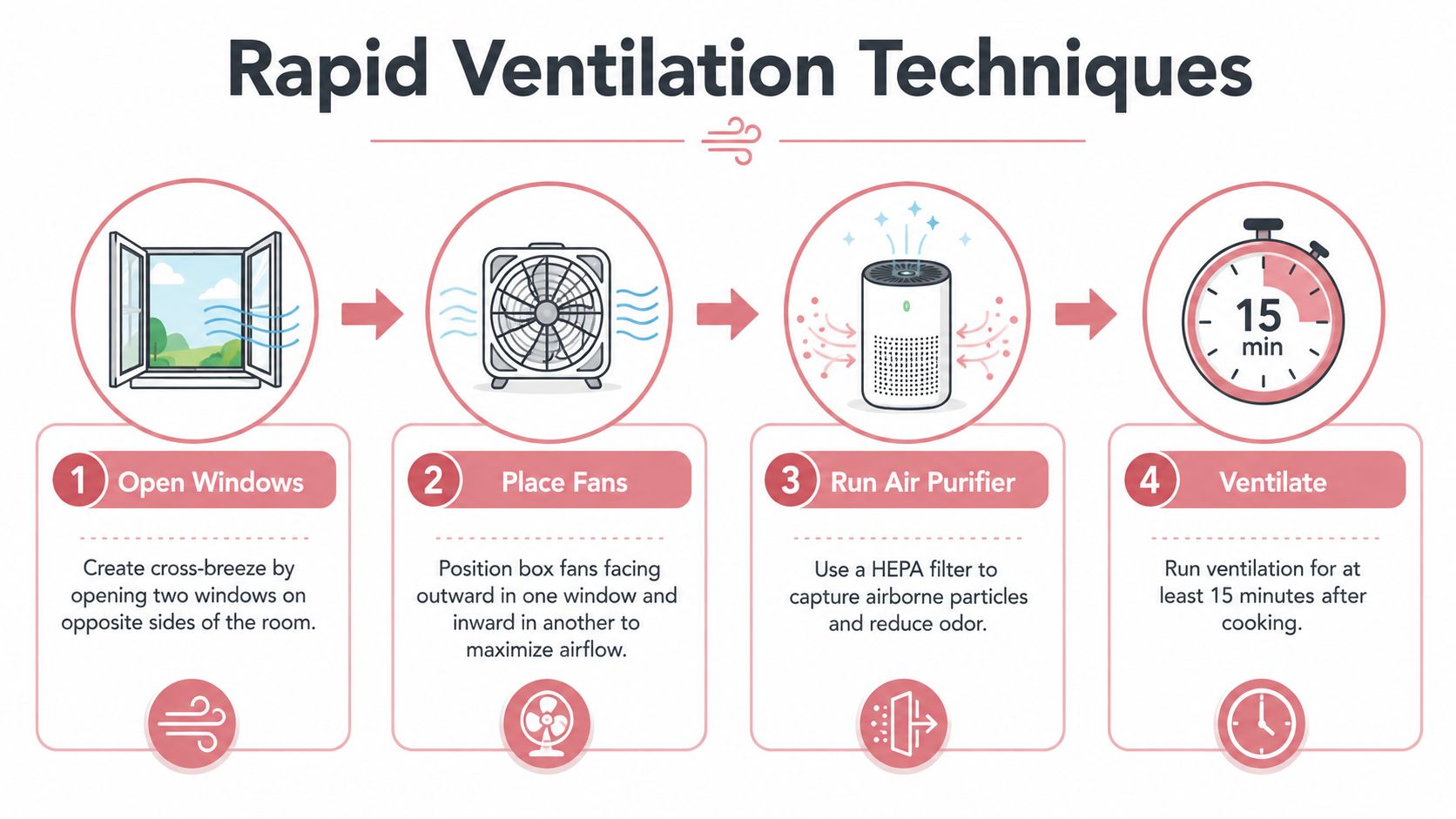
Open the windows first, before the smell settles deeper. Onion odor leaves faster when fresh air has a clear path through the room, and the goal is to move that odor out, not just spread it thinner. Cross-ventilation works best, with one opening bringing in air and another sending it out, because a moving stream clears sulfur compounds faster than a stagnant kitchen ever will. A practical cozyhomeclub ventilation guidance note also points to keeping ventilation going after cooking, which fits what I see in real homes, the smell still hangs in the air after the pan is off the heat.
Set up airflow the right way
Open two windows on opposite sides of the room if you can. Put a box fan in one window facing outward so it pushes odor out, then use the opposite opening to pull in fresh air. That creates a moving path instead of letting the smell pool in corners, cabinets, and fabric-covered chairs.
If the kitchen has a range hood or extractor hood, leave it on during cooking and keep it running afterward. That extra run time matters because onion odor does not vanish when the burner goes off, and a hood that stays active helps catch the fumes while they are still in the room. If the room has an air purifier, place it where air is already moving, not tucked behind a chair or shoved into a dead corner. It works better as support for ventilation than as a replacement for it.
Apartment kitchens need a slightly different setup. Crack the nearest window, run the kitchen exhaust fan, and keep bedroom doors closed so the smell does not drift through the hallway or get pulled through the whole unit. If the central HVAC is moving air hard while the odor is still concentrated, turn that down if you can, because a strong system can carry the smell farther before it has a chance to clear.
Match the timing to the meal
Start ventilating before the last onions hit the pan if possible. That small head start makes a real difference because the odor load never gets a chance to build up in the first place. Once cooking is done, keep the air moving until the kitchen no longer smells sharp when you stand still in it. If the meal used a lot of onion, give the room the longer stretch, because heavier cooking leaves more odor in the air and on nearby fabrics.
A common mistake is shutting everything off as soon as the food is served. The room may seem fine for a few minutes, then the smell comes back as warm air rises from the stove area and soft materials start releasing what they caught. Fresh air first, then surface cleanup, then fabric washing. That order clears the odor instead of letting it drift from room to room.
Surface Wiping and Fabric Laundering Sequence
Once the air has been cleared, remove what settled on surfaces and fabric. Onion odor clings to countertops, cutting boards, cabinet handles, towels, oven mitts, and rugs, which is why wiping the stove by itself rarely finishes the job. The practical sequence is to isolate the source first, ventilate while the smell is still active, wipe hard surfaces next, then treat fabrics before the odor has time to keep cycling back into the room.
Start in the kitchen, then move outward
Work from the highest-contact kitchen surfaces outward. Clean countertops, the cutting board, the area around the sink, cabinet pulls, backsplash edges, and the top of the trash can lid if onion scraps or juice reached it. If a wooden board still carries a strong smell after washing, it often needs repeated treatment or replacement, because wood holds odor much more readily than a smooth plastic surface.
Dish towels are a common problem spot. A towel used to wipe onion juice off hands while cooking can smell fine when dry, then release the odor again as soon as it gets damp. That towel should go straight into the next wash cycle, not back on the oven handle where it can keep spreading the smell.
Use the right cleaner on the right material
For hard surfaces, a vinegar-water solution is the cleaner I reach for first. The cleanup table in the Alibaba neutralization guide reports vinegar-water spray (1:3) at 78% effectiveness at 30 minutes and 92% at 2 hours, with activated charcoal bowls at 65% and 88%, and coffee grounds at 72% and 85% over the same time windows. The practical rule is simple, wipe the source area first, then let absorbers handle what is still hanging in the air or sitting in porous materials.
For fabrics, wash anything that touched the smell as soon as possible. Dishcloths, towels, oven mitts, and nearby rugs should not sit around waiting for the next laundry day. Deep-clean carpets and upholstery within 24 hours with an enzyme-based solution if the odor reached soft furniture or carpeted areas. If you are dealing with bulky household fabrics, comforter cleaning guidance is useful for handling larger items without trapping the smell inside the fill.
Practical rule: if a fabric item sat near onion prep and still smells after drying, it usually needs laundering, not another spray.
That is also the point where some households bring in outside help. Aquastar Cleaning Services, LLC handles whole-home cleaning and can include targeted kitchen and fabric areas when odor has spread beyond one room. For some homes, that is the simplest way to reset the space without turning the whole weekend into a cleaning project.
Comparing Passive Odor Absorbers by Effectiveness
Passive absorbers work best after the room has already been ventilated and wiped down. They're not the first move, they're the finishing move that helps with what's still hanging in the air or sitting in porous materials. The right absorber depends on whether you need the smell gone before guests arrive tonight or whether you can leave it overnight.
What performs best when time matters
| Odor Absorber Effectiveness Comparison | Absorber Type | Effectiveness at 30 Minutes | Effectiveness at 2 Hours | Best Use Case |
|---|---|---|---|---|
| Vinegar-water spray | Vinegar-water spray (1:3) | 78% | 92% | Quick wipe-downs and faster room treatment |
| Activated charcoal bowls | Activated charcoal bowls | 65% | 88% | Overnight odor control in enclosed rooms |
| Coffee grounds | Coffee grounds | 72% | 85% | Short-term absorption with a familiar kitchen item |
The practical takeaway is simple. Vinegar-water spray gives the strongest fast reduction in the comparison data, while charcoal catches up well over time. Coffee grounds sit in the middle and can help in a pinch, especially when you already have them on hand.
Place absorbers where odor actually collects
These products work best in shallow bowls or bags placed in enclosed spaces, not scattered randomly across the room. Set bowls near the kitchen, the adjacent dining area, or the room where the smell is strongest, then leave them in place for several hours or overnight before removing or replacing them. A practical home-cleaning example of this approach can be found in the baking soda furniture guide.
If children or pets are in the home, keep bowls where they won't be knocked over or eaten. Vinegar spray is useful for surfaces, while charcoal and baking soda are better for passive air treatment, but bowls should still be positioned with common sense. Do not sprinkle absorbers across carpet or counters, because that creates cleanup work without improving performance.
A good real-world setup after onion-heavy meal prep is one charcoal bowl in the kitchen and one in the adjacent living room. That's especially helpful after a heavy meal prep session where the odor drifted past the kitchen doorway but ventilation already cleared the main source.
Tackling Stubborn Areas Like Drains and HVAC Systems
Some onion smell problems are not really room problems, they're hidden-system problems. The disposal, the drain, the HVAC filter, and the carpet all keep odor alive after the visible mess is gone. If the kitchen smells better but the hallway or bedroom still carries it, those hidden spots are usually why.
Start with the drain and disposal
Onion scraps that sit in a garbage disposal or sink drain can keep releasing sulfur odor as they break down. Flush the disposal with ice and citrus to clear debris and freshen the chamber, then rinse the sink area well so nothing is left to rot in the trap. A kitchen drain reference can help with deeper sink cleanup if the smell has become persistent, kitchen drain cleaning guide.
If the sink is part of the smell, don't ignore it because the room “mostly” smells better. Odor trapped in the drain can reappear after water runs, especially in older homes or apartments where plumbing holds residue longer.
Deal with HVAC and carpeted areas
If the odor reached the heating or cooling system, replace the HVAC filter after a heavy onion session. Filters can hold onto odor and then circulate it back into bedrooms and living rooms, especially in open floor plans. Close off rooms you don't need to ventilate while you're cleaning so the smell doesn't get pushed farther than necessary.
Carpets need more than a quick pass with a vacuum if the smell settled in. Use an enzyme-based carpet treatment for odor that reached fibers, because it targets the residue instead of covering it up. That matters in move-out situations too, where a renter needs the place to smell neutral before inspection but can't change the building's ventilation setup.
If the smell has moved into the HVAC or the carpet padding, masking it won't hold. You have to remove the residue, not cover the air.
Open floor plans need extra attention because the kitchen air doesn't stay in the kitchen. In those homes, keep the source area isolated, run extraction longer, and treat the adjacent room as part of the cleanup zone, not as a separate afterthought.
Prevention Habits and Weekly Maintenance Routine
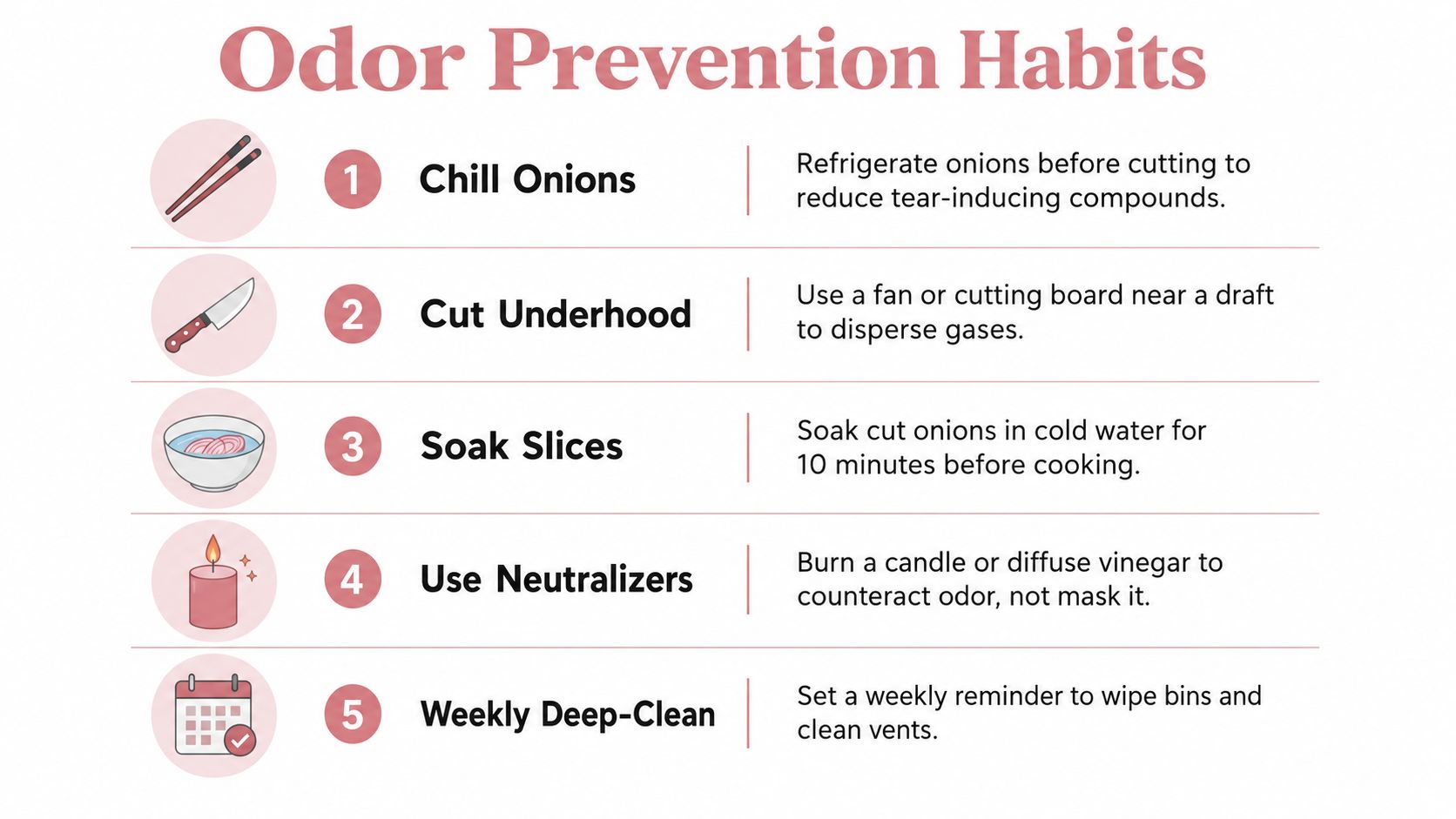
The easiest onion smell to remove is the one that never gets much chance to spread. A few small habits keep odor from drifting through the house in the first place, and they fit into a normal family cooking routine without turning dinner into a project. The goal is not perfection, it's reducing the amount of odor that gets into fabric, vents, and soft surfaces.
Build the habit around cooking, not after it
A realistic routine starts before the first onion is cut. Run the exhaust fan or open a window near the prep area, keep bowls and tools easy to wash, and rinse dishes right after cooking instead of leaving them for later. The cooking-smell guidance from Molekule also recommends cleaning surfaces promptly, washing cookware as soon as it cools, and cleaning the trash can and sink regularly so odor does not keep recycling through the room. cooking smell cleanup guidance
A simple weekly checklist keeps the house fresher:
- Check the hood or exhaust filter: Wipe grease and odor residue before it builds up.
- Wash lingering fabrics: Towels, oven mitts, dishcloths, and nearby washable covers belong in the laundry.
- Refresh drains and disposal: Clear sink odors before they spread into the kitchen.
- Wipe bin lids and trash touchpoints: Onion peels and food scraps leave more smell than you might expect.
- Inspect carpets and soft furniture near the kitchen: If the odor has soaked in, treat it early instead of waiting.
Practical rule: if you cook onions weekly, your ventilation and laundry habits need to be weekly too.
Storage matters as well. Keep onions where the ambient smell will not build up in closed containers near fabrics, and use the easiest-to-clean prep tools you already own. A simple cutting board, a washable knife handle, and a nearby towel for immediate cleanup reduce how much odor spreads beyond the kitchen.
If weekly upkeep still is not enough, or if the smell keeps returning after cleaning, that is when a professional deep clean makes sense. Aquastar Cleaning Services, LLC offers recurring and deep-clean options for homes that need a full reset, including kitchens, laundry areas, and odor-prone surfaces. For a house cleaning schedule for a busy family that fits regular upkeep into the week, use a plan that ensures the kitchen is cleaned before odor has time to settle in.