


You've finally got the renovated kitchen back. The cabinets are installed, the counters are gleaming, and the contractor has packed up. Then morning light hits the room, revealing drywall dust on the marble, sticker residue on the windows, scraps of packaging near the island, and a faint film on surfaces that looked clean the night before. Your HVAC system may also be carrying fine particles into rooms that weren't renovated.
That's when most homeowners discover that a construction cleanup service isn't a single sweep-out. It's a staged process that protects indoor air quality, removes job-site hazards, prepares the property for inspection, and makes the space livable. The three stages are rough cleanup, final cleanup, and touch-up cleanup. Each has a different purpose, and skipping one usually leaves the next crew working around dust and residue.

A homeowner can handle light organizing and some low-risk wiping, but fine construction dust demands better tools and a more deliberate sequence. This construction dust cleaning guide reflects the right principle: capture dust instead of redistributing it.
The Day After the Contractor Leaves
The contractor's truck pulls away, and the renovated kitchen feels finished until you run your hand across the island. A pale coating comes off on your fingers. New windows still carry labels and adhesive, the cabinet interiors hold sawdust, and small pieces of trim or plastic packaging remain behind appliances. In the hallway, the dust is less visible, but it has settled on baseboards, door frames, vents, and light fixtures.
A homeowner might reasonably ask, “Why can't I just vacuum and mop?” The answer is that construction residue behaves differently from ordinary household dirt. Drywall dust, tile residue, sawdust, and masonry particles settle into seams, grilles, tracks, and textured finishes. A standard broom can lift fine particles back into the air instead of removing them.
Practical rule: If the remodel involved sanding, cutting, demolition, or cabinet refinishing, treat the property as a work site until the dust has been captured from high surfaces, vents, walls, fixtures, and floors.
The right sequence starts while trades are still finishing. Rough cleanup removes bulky debris and clears access for painters, installers, and punch-list work. Final cleanup follows completed construction and removes fine residue from the home. Touch-up cleanup happens after corrections, inspections, or moving activity create new marks.
That timing matters. Cleaning floors before a painter finishes can mean cleaning the same floors again. Polishing fixtures before a plumber returns can leave fingerprints and tool dust behind. The staged approach keeps each visit tied to a real handoff point rather than treating cleanup as an afterthought.
Your first morning should be practical, not frantic. Photograph dusty surfaces, unfinished areas, window tracks, vents, and leftover materials. Ask the contractor what debris they're removing and what remains in the cleaning scope. Then decide whether you need a debris haul, a detailed construction clean, or a specialist for materials that ordinary cleaners shouldn't disturb.
What a Construction Cleanup Service Actually Does
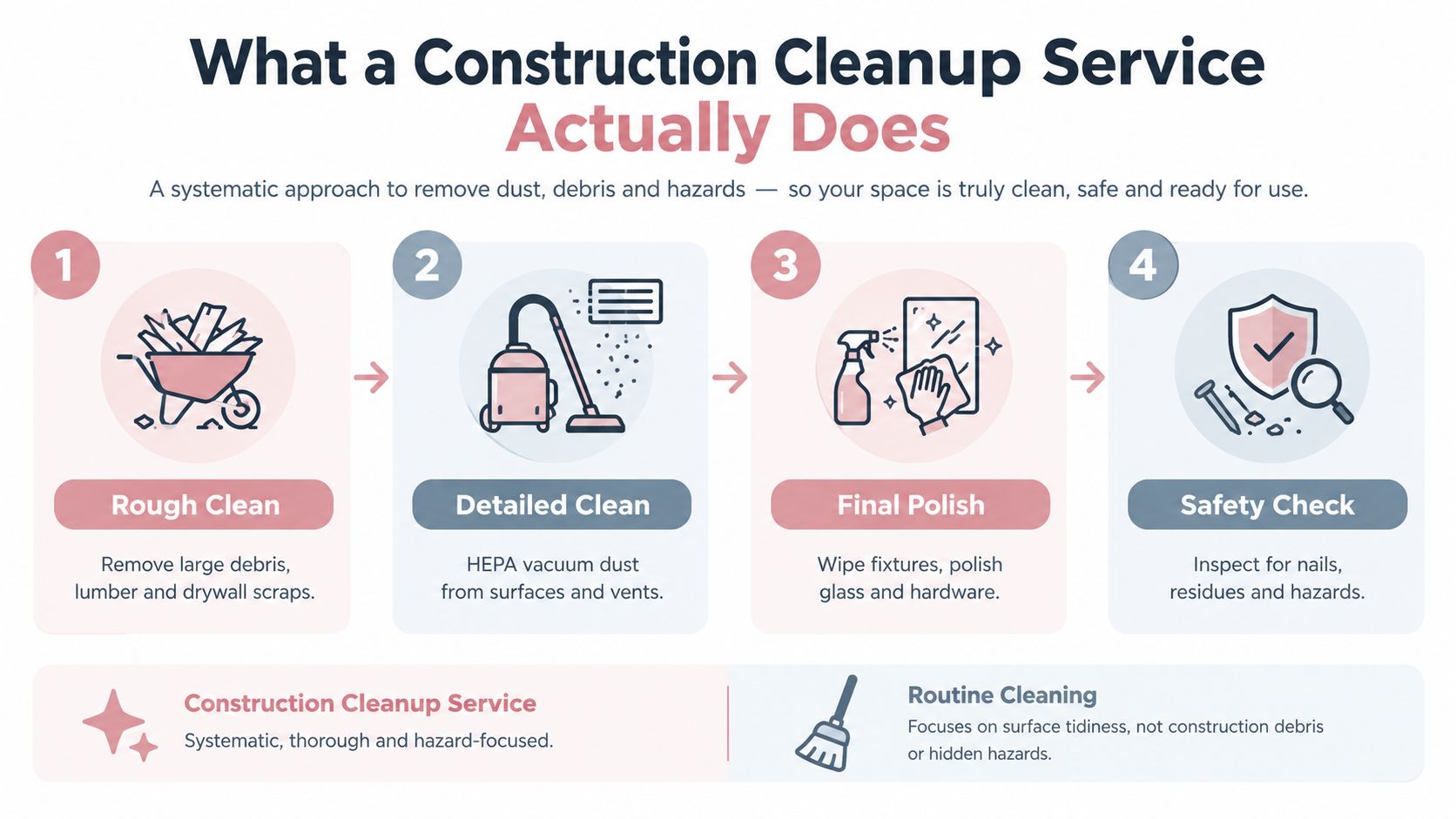
A construction cleanup service systematically removes the dust, debris, residue, and hazards left after building or remodeling. It isn't the same as routine housekeeping, which maintains an occupied home, and it isn't the same as junk hauling, which mainly removes bulky material.
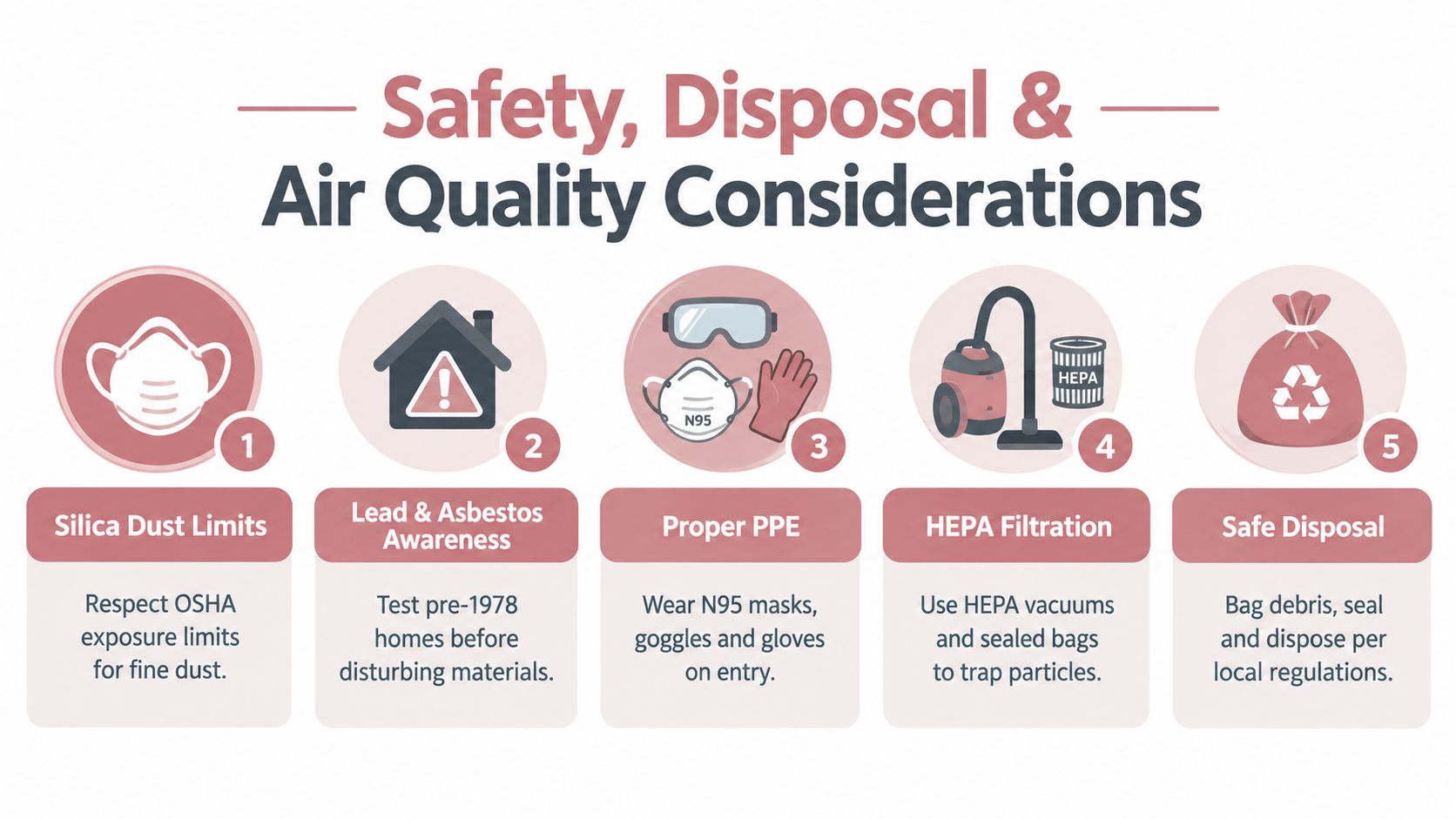
OSHA's construction housekeeping rule, 29 CFR 1926.25, requires construction sites to remain free of debris and hazards. OSHA's respirable crystalline silica standard sets a permissible exposure limit of 50 micrograms per cubic meter as an eight-hour time-weighted average. Cutting, grinding, and demolishing concrete, masonry, and similar materials can create respirable dust, so cleanup is directly connected to occupational safety, not just appearance. See the OSHA construction dust guidance for the regulatory context.
Particles below 10 micrometers are considered inhalable and can reach the trachea and bronchi. Guidance connected with environmental dust management associates inhalable dust exposure with reduced lung function and respiratory distress, which is why source control, containment, and HEPA capture are preferable to dry sweeping alone. The construction environmental dust management plan provides useful technical background.
The core deliverables
A professional crew should define its work in writing. A thorough scope commonly includes:
- Debris sorting: Bagging and organizing small construction waste, with large-material hauling confirmed separately.
- HEPA vacuuming: Capturing fine dust from floors, trim, cabinet interiors, vents, ledges, and fixtures.
- Residue removal: Addressing adhesive, tape, paint splatter, caulk, grout haze, and protective film with surface-appropriate tools.
- Top-to-bottom wiping: Cleaning ceiling-level fixtures first, then walls, trim, counters, cabinets, and floors.
- Glass and fixture detailing: Removing labels and residue from windows, polishing hardware, and cleaning light fixtures.
- Air-quality mitigation: Protecting HVAC pathways, replacing appropriate filters when included, and preventing settled dust from becoming airborne again.
The professional house cleaner duties guide helps distinguish ordinary cleaning responsibilities from the deeper, construction-specific work required here.
A construction cleaner can remove ordinary residue and dust. They shouldn't claim to perform asbestos abatement, lead abatement, mold remediation, or other hazardous-material work without the required specialization. If the job involves suspected hazardous materials, stop disturbing them and use a qualified specialist.
Service Tiers and What Each One Covers
The three-tier model works because construction creates different cleaning problems at different points. Rough cleanup clears the site. Final cleanup removes the fine residue. Touch-up cleanup corrects the marks created after final cleaning. Combining those jobs sounds efficient, but it usually forces a crew to clean around unfinished work and repeat labor.
Comparison table
| Tier | When It Happens | Core Tasks | Typical Crew | Homeowner DIY? |
|---|---|---|---|---|
| Rough cleanup | During construction or after trades leave | Bag debris, remove packaging, clear lumber and drywall scraps, organize remaining materials | Often one or more laborers, depending on debris volume | Light organizing and bagging, if materials are safe and disposal is allowed |
| Final cleanup | After construction and major punch-list work | HEPA vacuuming, damp wiping, scrubbing, window detailing, cabinet cleaning, fixture polish, floor care | A small professional crew is usually more practical than one cleaner | Low-risk wiping and basic organizing, but fine-dust removal is better assigned to trained workers |
| Touch-up cleanup | After inspection, corrections, or final walkthrough | Remove new smudges, dust, stickers, fingerprints, and small residues | A small crew or returning detail cleaner | Often manageable if the remaining work is genuinely minor |
DIY rough cleanup makes sense when the contractor has already removed hazardous and bulky materials. For example, you can collect clean cardboard, group unused hardware, and wipe accessible shelves. Don't sweep drywall dust through the house or carry unknown debris in open bags.
Final cleaning is where professional equipment earns its place. OSHA's Technical Manual identifies vacuuming as the most reliable method for cleaning dusty surfaces, and research on dust-control methods supports wet extraction and other controlled approaches. A systematic review found reductions in total dust fall rates ranging from 30.3% to 93% with water misting, 23.9% to 94% with foaming, and 36.7% to 99.04% with wet dust extraction (systematic review of construction dust controls). Those methods aren't interchangeable for every home, but they support the basic decision to capture and dampen dust rather than dry sweep it.
Touch-up cleaning is a good DIY task when the home has already received a proper final clean. Removing a missed window sticker or wiping a new fingerprint is different from trying to correct a whole house that was cleaned before sanding ended.
Best value: Pay for the correct tier at the correct time. A cheap combined visit often becomes two visits after dust settles or trades return.
A company offering premium maid services may handle routine and detail cleaning, but confirm that its post-construction scope includes HEPA equipment, residue removal, and staged scheduling.
A Room-by-Room Cleanup Walkthrough
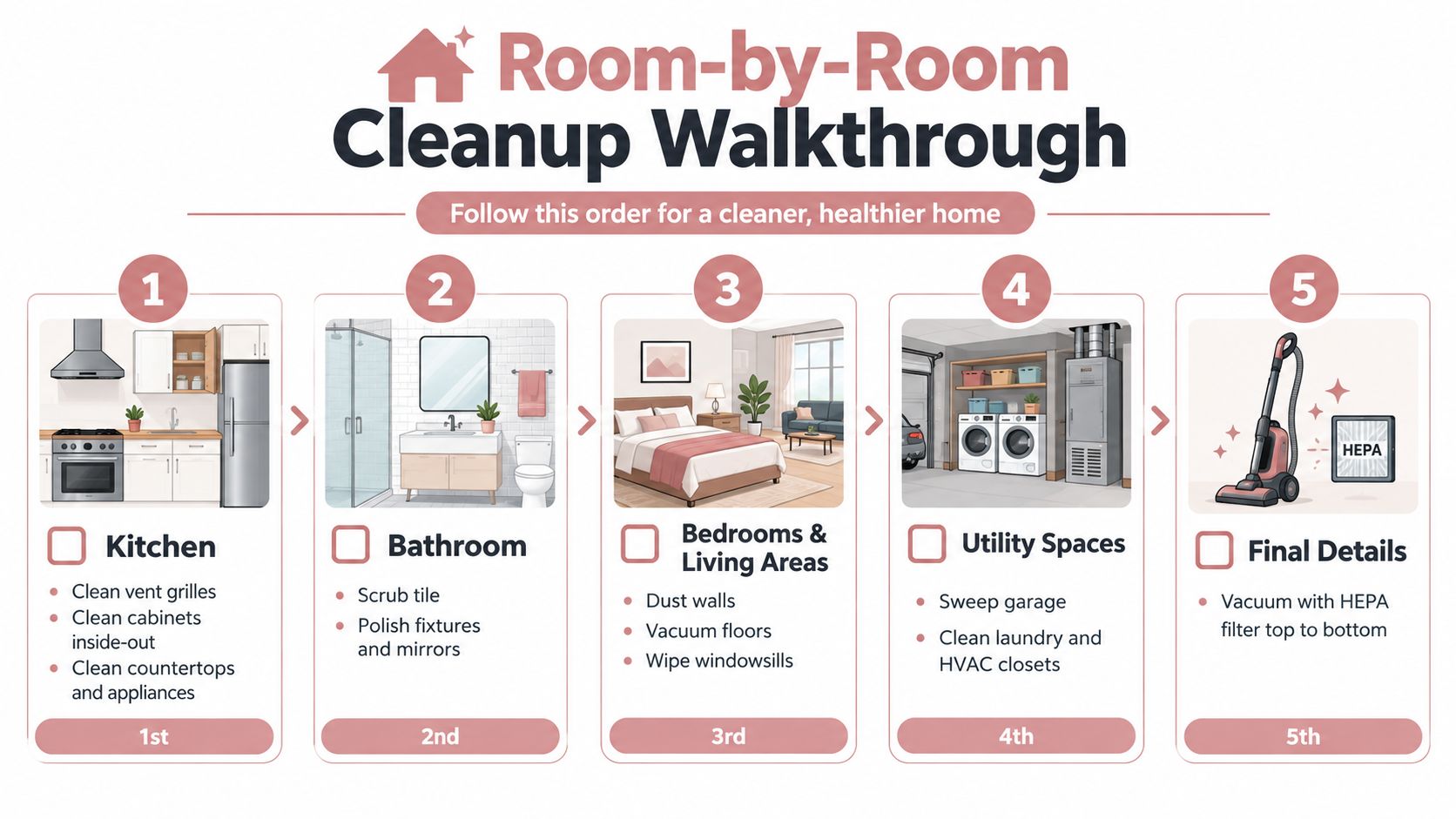
Clean every room from high to low. Start with vent grilles, ceiling fans, upper cabinets, and light fixtures. Move to walls, windows, trim, furniture surfaces, and floors last. This prevents overhead dust from falling onto areas you've already finished.
Kitchens
Begin with vent grilles and the top edges of cabinets. Use a HEPA vacuum with a soft brush, then wipe with a damp microfiber cloth. Clean cabinet interiors before exteriors, because dust from shelf corners can fall onto doors and counters.
Check drawers, appliance gaps, backsplash seams, and the area above the range. Degrease splash zones only after removing abrasive construction residue, since rubbing gritty dust across a finish can scratch it. Wipe appliance exteriors with a product approved for the material, and ask the cleaner to confirm whether refrigerator or oven interiors are included.
For adhesive on glass or metal, soften the residue first and use a scraper designed for that surface. Don't use a razor on a delicate coating or scrub a new stone counter with an unapproved abrasive.
Bathrooms
Vacuum ceiling corners, exhaust grilles, and light fixtures before cleaning mirrors or chrome. Inspect grout lines for haze, check caulk edges for excess material, and polish fixtures after the surrounding tile has been cleaned.
Glass shower panels need controlled residue removal. A professional may use a nonabrasive tool and a compatible solution, while a homeowner can handle light fingerprints and ordinary water marks. If grout haze remains widespread, bring in a crew that knows the tile manufacturer's care requirements.
Bedrooms and living areas
Closets, outlet covers, baseboards, windowsills, and trim collect dust even when the main floor looks clean. HEPA vacuum those edges, then wipe with a slightly damp microfiber cloth using straight, overlapping passes rather than circular motions that spread residue.
Protect floors according to their finish. Vacuum first, damp mop only after the fine dust is gone, and change rinse water or mop heads when they become visibly dirty. A homeowner can manage a small bedroom with minimal residue, but whole-home dust after drywall sanding is slower and safer with professional containment and filtration.
Utility spaces
Garage floors, laundry areas, storage rooms, and HVAC closets deserve their own pass. Remove loose debris, clean accessible shelving, and inspect filters and vent openings. Don't open or alter HVAC equipment beyond your competence. If dust entered ductwork, ask an HVAC professional whether duct cleaning or filter replacement is appropriate.
A final HEPA pass should move from upper surfaces to the floor. This kitchen cleaning service resource is useful for separating ordinary kitchen maintenance from the more demanding residue work required after remodeling.
Use this video as a visual reference for the room sequence, but follow product and finish instructions for your specific materials.
What Drives the Price and What to Expect to Pay
A construction cleanup quote should reflect labor and risk, not just floor area. Two homes with the same footprint can require very different work if one has light packaging residue and the other has drywall dust in vents, adhesive on glass, stone counters, and restricted access.
The main price drivers are:
- Square footage: More rooms mean more surfaces, edges, fixtures, and floor area.
- Dust severity: Sanding, grinding, demolition, and drywall work create a more demanding cleanup than a minor installation.
- Finish sensitivity: Marble, natural stone, new wood, specialty glass, and delicate hardware require slower, safer methods.
- Debris volume: Small residue cleanup differs from lumber, drywall, tile, and packaging removal.
- Access: Stairs, tight corridors, limited parking, and occupied areas add labor.
- Urgency: Same-day or after-hours scheduling can increase the quote.
A company may bill hourly, by square foot, or at a flat project rate. Hourly billing can be fair when the scope is uncertain, but a written flat-rate scope gives homeowners better control when the rooms and deliverables are clear. Ask whether disposal, consumables, HEPA filter charges, window work, appliance interiors, and return visits are included.
The research brief doesn't establish verified national or regional dollar ranges, so any company giving a universal “average” should be treated cautiously. Get itemized quotes for each tier instead of accepting a single number that hides what the crew will do.
| Tier | Typical Sq Ft Range | Average Cost (USD) | Key Price Drivers |
|---|---|---|---|
| Rough cleanup | Varies by project scope | Quote required | Debris volume, haul-away, stairs, disposal requirements |
| Final cleanup | Varies by project scope | Quote required | Dust severity, room count, finish sensitivity, windows, fixtures |
| Touch-up cleanup | Varies by punch-list scope | Quote required | Number of return areas, new dust, sticker residue, deadline |
DIY has costs too. You'll need suitable vacuum equipment, microfiber cloths, compatible cleaners, protective gear, bags, transportation, and your own time. A homeowner can reduce a quote by having the contractor remove bulky debris, clear access, and finish all dusty trades before the cleaners arrive. Don't reduce the scope by removing HEPA vacuuming or high-surface cleaning. Those are the parts ordinary mopping misses.
For context on routine residential cleaning rather than specialized construction work, review this average cleaning service cost guide. Construction cleanup needs a separate scope because it involves residue, dust control, and handoff readiness.
Safety, Disposal, and Air Quality Considerations
Start with a pre-clean inspection. Photograph the property, note unfinished work, identify rooms affected by sanding or demolition, and ask whether any suspect materials were disturbed. Keep the contractor's product documentation, safety data sheets, disposal receipts, and any waste manifests that apply to the project.
Construction dust control requires more than a mask and an open window. HEPA-filtered vacuums capture fine particles, while sealed bags reduce the chance that collected dust will escape during removal. Workers entering a dusty area should use appropriate PPE, including respiratory protection, eye protection, and gloves. The exact protection depends on the material and exposure conditions.
Lead and asbestos require a different response
For renovation in an older home, ask whether lead-based coatings or asbestos-containing materials could be present before disturbing them. EPA's lead-safe renovation guidance for DIYers recommends thorough mopping of uncarpeted floors, HEPA vacuuming or damp cleaning of walls, HEPA vacuuming of remaining surfaces and objects, and wet wiping until disposable cloths come clean.
EPA also distinguishes cleanup from abatement. If post-renovation dust-lead testing reaches or exceeds applicable action levels, the renovation firm must re-clean until the results fall below the relevant standards, as described in EPA's post-renovation dust-lead testing guidance.
Clearance sampling shouldn't happen immediately after the final wipe. EPA and HUD materials state that sampling should occur no sooner than one hour after final cleanup so dust can settle. The listed hazard standards include 10 micrograms per square foot for floors, 100 micrograms per square foot for window sills, and 400 micrograms per square foot for window troughs (HUD clearance guidance). Check window tracks and sills before returning a renovated room to occupants.
If you suspect asbestos, don't ask a general cleaning crew to investigate by scraping or sampling. A resource on an asbestos survey in LA explains why a qualified environmental professional should assess suspect materials before disturbance. Local rules also determine how construction debris must be bagged, transported, and discarded, so confirm disposal requirements with your municipality or waste provider.
Ventilate only after dusty work is controlled. Otherwise, fans can move particles into clean rooms. Protect supply and return vents during active demolition, then clean accessible grilles and address filters or ductwork through the appropriate HVAC professional.
How to Hire and Vet the Right Cleanup Team
Don't hire from a vague “deep clean” description. Require a written scope that names rough, final, and touch-up cleaning, identifies included rooms and surfaces, and explains what causes an upcharge.
The requirements are straightforward:
- Insurance: Request proof of general liability and workers' compensation coverage.
- Dust training: Ask how the crew handles silica-producing dust and what controls they use.
- Equipment: Confirm HEPA vacuums, microfiber systems, compatible scrapers, and damp-cleaning methods.
- Chemical documentation: Request a sample safety data sheet binder, especially for delicate new finishes.
- Scope clarity: Confirm who removes lumber, drywall, tile, packaging, and other large debris.
- References: Ask for two recent renovation-cleaning references, not only routine housekeeping clients.
- Inspection process: Look for photo documentation, a walkthrough, and a defined re-clean policy.
Reviews should mention the problems you have. Look for comments about drywall dust, window residue, cabinet interiors, floor protection, and missed vents. A company with excellent recurring-cleaning reviews may still lack the equipment or scheduling model for post-construction work.
Use Hand Vetted Co.'s screening advice as a reminder to verify identity, credentials, references, and background information before allowing a crew into your home.
Aquastar Cleaning Services, LLC provides post-construction cleaning in Kennesaw and North Atlanta, with insured and bonded teams, customizable scopes, and options for dust, debris, and fine surface residue. Its stated Kennesaw-area service model uses bundled rough, final, and touch-up tiers, green-seal certified products, photo-documented walkthroughs, and a satisfaction guarantee that provides a free re-clean within a set window. Treat that as a benchmark for the level of detail a good proposal should spell out, not as a reason to skip comparison shopping.
Schedule against the contractor's punch list. The cleaning crew should arrive after dusty trades finish, but before the property sits unused long enough for residue to settle into finishes and HVAC pathways.
Bringing It All Together
The decision rule is simple. Rough cleanup protects access and air quality during the build. Final cleanup prepares the property for inspection and punch-list review. Touch-up cleanup delivers the finished space for occupancy or handoff.
Don't default to the cheapest single visit. If the project involved drywall sanding, tile demolition, concrete cutting, or cabinet refinishing, fine particulate and chemical residue require more control than ordinary household dust. Bring in a specialist when the work affects vents, delicate finishes, occupied rooms, or anyone with respiratory concerns.
Before the crew arrives, document the condition with your contractor and confirm who handles debris, residue, windows, cabinets, fixtures, and floors. After cleaning, inspect high surfaces, vent grilles, window tracks, cabinet interiors, baseboards, and floors before releasing final payment. A construction cleanup service is successful when the property no longer feels like a job site and the family can use it without carrying the renovation into daily life.
If your remodel has left drywall dust, sawdust, paint residue, window film, or cabinet debris behind, visit Aquastar Cleaning Services, LLC to request a post-construction cleaning plan for your Kennesaw or North Atlanta home. Ask for a room-by-room scope covering the appropriate rough, final, or touch-up stage, and schedule the crew after your contractor completes the dusty work.