


You walk out to the driveway and notice what you've been ignoring: tire-track shadows near the garage, rust-colored drips beneath the air-conditioning unit, and dark mildew stripes spreading in from the lawn. The concrete still works, but it no longer looks cared for. That's when the question comes up, is a driveway pressure washing service worth booking, or can the stains wait another season?
The honest answer depends on the surface, the stain, and the cleaning method. Proper equipment can lift embedded grime without needlessly wearing the concrete, while the wrong nozzle or careless runoff can create new problems. A good service isn't just someone pointing a powerful wand at the slab. It's surface inspection, stain treatment, controlled rinsing, and responsible cleanup.
Why Homeowners Book a Driveway Pressure Washing Service
The driveway can make a cared-for home look tired in a few hours. Tire marks, green growth, and uneven discoloration occupy a broad area near the entrance, so visitors notice them before smaller exterior details. Homeowners often schedule cleaning before a property showing, during seasonal maintenance, or because arriving home feels better when the entrance looks orderly.
Appearance is only one reason. Algae and mildew can leave concrete slick after rain, particularly where shade, lawn edges, or poor drainage keep the surface damp. Washing removes growth from the slab, but it cannot solve the drainage condition that keeps carrying moisture back across the same spot.
Appearance is only part of the value
Oil, salt residue, organic growth, and similar contaminants can settle into concrete pores or collect between pavers. Time gives stains more opportunity to bond, so cleaning may improve some areas without making every mark vanish. Deep rust and oil that has soaked into concrete for years may lighten rather than disappear.
A clean driveway also helps before listing a home because it forms a large, visible part of the property presentation. It can work with washed siding, trimmed landscaping, and tidy entry steps to create a more finished arrival. That does not guarantee a higher offer or faster sale. It removes one avoidable negative impression.
Practical rule: Book cleaning to restore and maintain the surface, not to disguise cracks, settlement, failing sealer, or drainage defects.
The wider pressure washer market has become a multi-billion-dollar category. One market study valued it at USD 3.19 billion in 2025 and projected USD 4.03 billion by 2030, with a 4.8% CAGR. Those figures describe the broader equipment and service market rather than guaranteed local demand, but they help explain why exterior cleaning is now a routine maintenance option across residential, commercial, and industrial properties. Market overview and projections
The equipment choice matters as much as the reason for booking. A contractor may adjust PSI, select a wider or narrower nozzle, or switch from pressure washing to a gentler soft-washing method when the surface or nearby material calls for it. On the property side, the crew should protect plants, follow local runoff requirements, and keep dirty water from entering places it should not.
Before hiring, read Aquastar Cleaning Services testimonials and ask what the visit includes. A responsible crew identifies the material, matches treatment to the stain, explains realistic results, and handles cleanup instead of treating the driveway as an isolated slab.
How Driveway Pressure Washing Actually Works
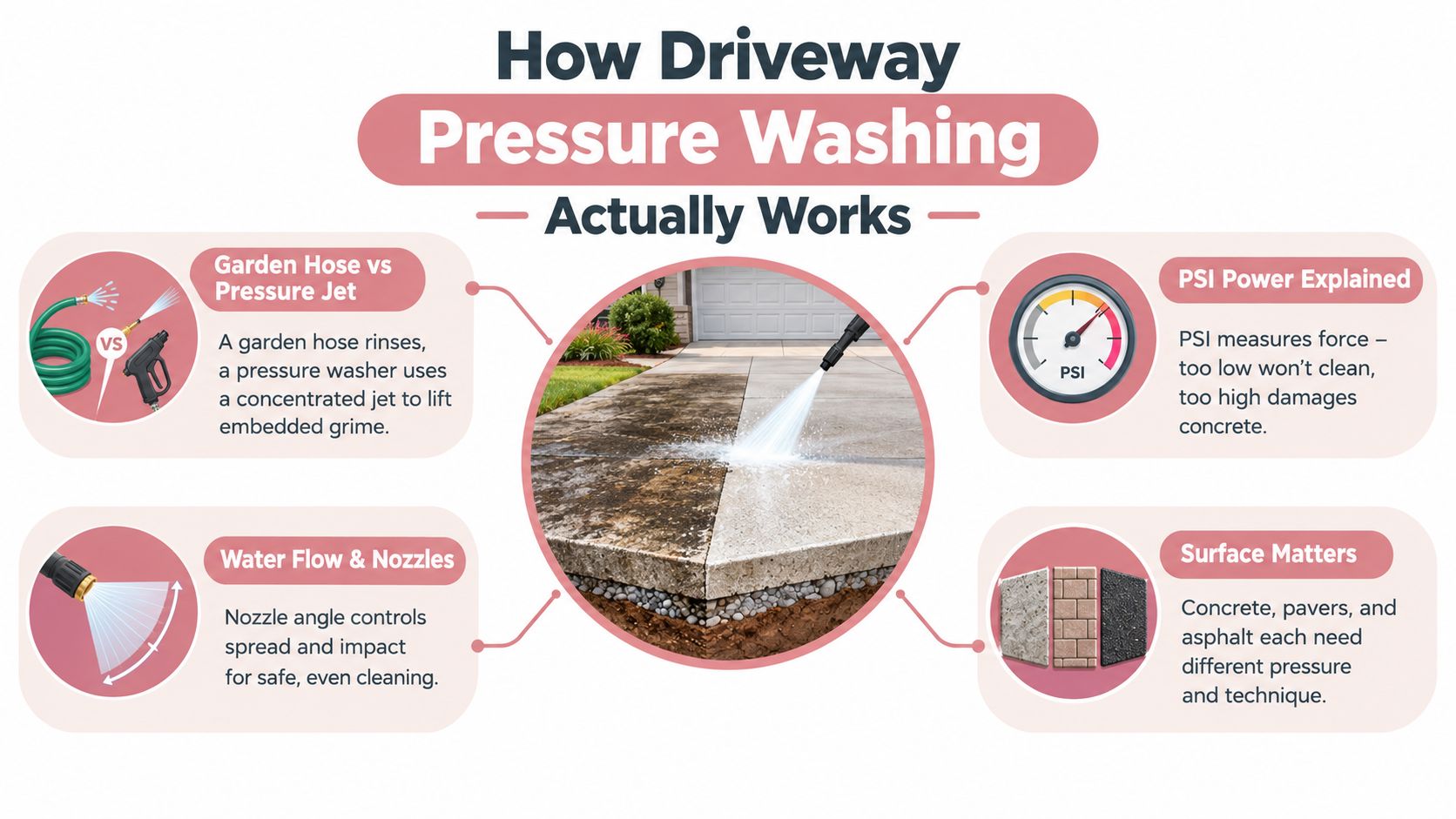
A garden hose mainly rinses away loose dirt. A pressure washer forces water through a smaller opening, creating a focused stream that can loosen grime caught in concrete pores, paver joints, and textured finishes. It works much like using a firm brush instead of a light sweep, except the operator must keep that force matched to the surface.
PSI, or pounds per square inch, measures water pressure. GPM, or gallons per minute, measures how much water the machine delivers. PSI helps separate dirt from the surface, while GPM carries the loosened material away. High pressure with weak flow may hit hard but rinse poorly. High flow without enough pressure may leave embedded residue behind.
Nozzle angle controls the risk
A 0-degree nozzle produces a pencil-thin stream. Its impact is concentrated in one tiny spot, which can etch concrete, cut softer material, or leave marks. It is rarely a sensible general-purpose choice for a driveway.
A 25-degree nozzle spreads water into a fan and is commonly used on standard cured concrete. One driveway guide recommends working about 6 to 10 inches from the surface with this nozzle. Controlled, overlapping passes help reduce streaks. Concrete driveway washing guidance
A 40-degree nozzle creates a wider, gentler pattern. It is better suited to delicate work and newer concrete than a narrow tip. A low-pressure soap nozzle lets the operator apply detergent first, helping loosen algae, mildew, and oily residue before rinsing.
Surface matching matters because concrete, brick pavers, stamped concrete, and exposed aggregate do not respond identically to the same pressure or distance. Decorative concrete also depends on texture and sealer condition. This stamped concrete stain removal guide explains why those details affect the cleaning approach.
For standard cured concrete, professional work commonly centers on 2,500 to 3,000 PSI. Pressure above roughly 3,000 to 3,500 PSI, particularly through a narrow nozzle, raises the risk of etching or exposing aggregate on older, weathered slabs. Driveway pressure guidance
The work around the driveway matters too. The crew may protect plants, control runoff, and shift to soft washing when the surrounding materials or contamination call for less force. Hot-water equipment can loosen greasy residue, while a downstream injector draws detergent into the water stream without sending concentrated chemical through the pump. A careful process follows the order of pre-treatment, dwell time, controlled cleaning, and rinsing, rather than trying to solve every stain with more pressure.
What a Driveway Pressure Washing Service Should Fix
You can usually identify the main driveway problem from the curb. The useful question isn't whether the surface looks dirty. It's what kind of dirt you're seeing and whether the cleaning method matches it.
Organic growth
Green algae often appears along damp lawn borders. Black mildew can form in shaded sections, and moss may return each spring where moisture remains trapped. These areas usually respond better to pre-soaping or a suitable algaecide followed by controlled rinsing than to an aggressive blast alone.
The crew should also look for growth in expansion joints and at the edge of the slab. If the surrounding soil stays wet or downspouts discharge across the drive, cleaning may improve the appearance without preventing recurrence.
Vehicle and metal stains
Oil drips, transmission fluid, and tire shadows require different treatment from ordinary dust. Rust bleed beneath fertilizer storage, metal furniture, or a leaking air-conditioning condenser can be stubborn because the color may have migrated into the concrete.
A thorough service should identify these spots before washing, apply a suitable degreaser or rust treatment where appropriate, allow dwell time, and then rinse carefully. One visit can make a strong improvement, but old oil and deep rust may only lighten. A contractor who guarantees complete removal without inspecting the stain is overpromising.
Environmental residue
Leaves release tannins that create brown discoloration. Hard-water deposits can leave pale mineral marks, while pavers may develop efflorescence, a whitish deposit caused by salts moving through masonry. These aren't all solved by the same detergent.
Pressure washing can remove loose surface residue, but efflorescence and mineral deposits may need a material-compatible treatment. Pavers also need careful attention around joints. The same surface-awareness used in fence washing techniques applies here, especially when plants, adjacent materials, and runoff paths are close to the work area.
Surface wear and neglected buildup
Dirt can pack into paver joints, polymeric sand can loosen, and concrete can develop a chalky film after years without maintenance. Washing can reveal the true condition of the surface, including cracks, spalling, worn sealer, or joint loss that grime had concealed.
For a practical comparison, look at how residue behaves on a basement slab in this guide to basement concrete floor cleaning. The key lesson is the same: cleaning restores the surface's appearance, but it doesn't rebuild damaged concrete or replace missing joint material.
Inside a Real Driveway Pressure Washing Visit
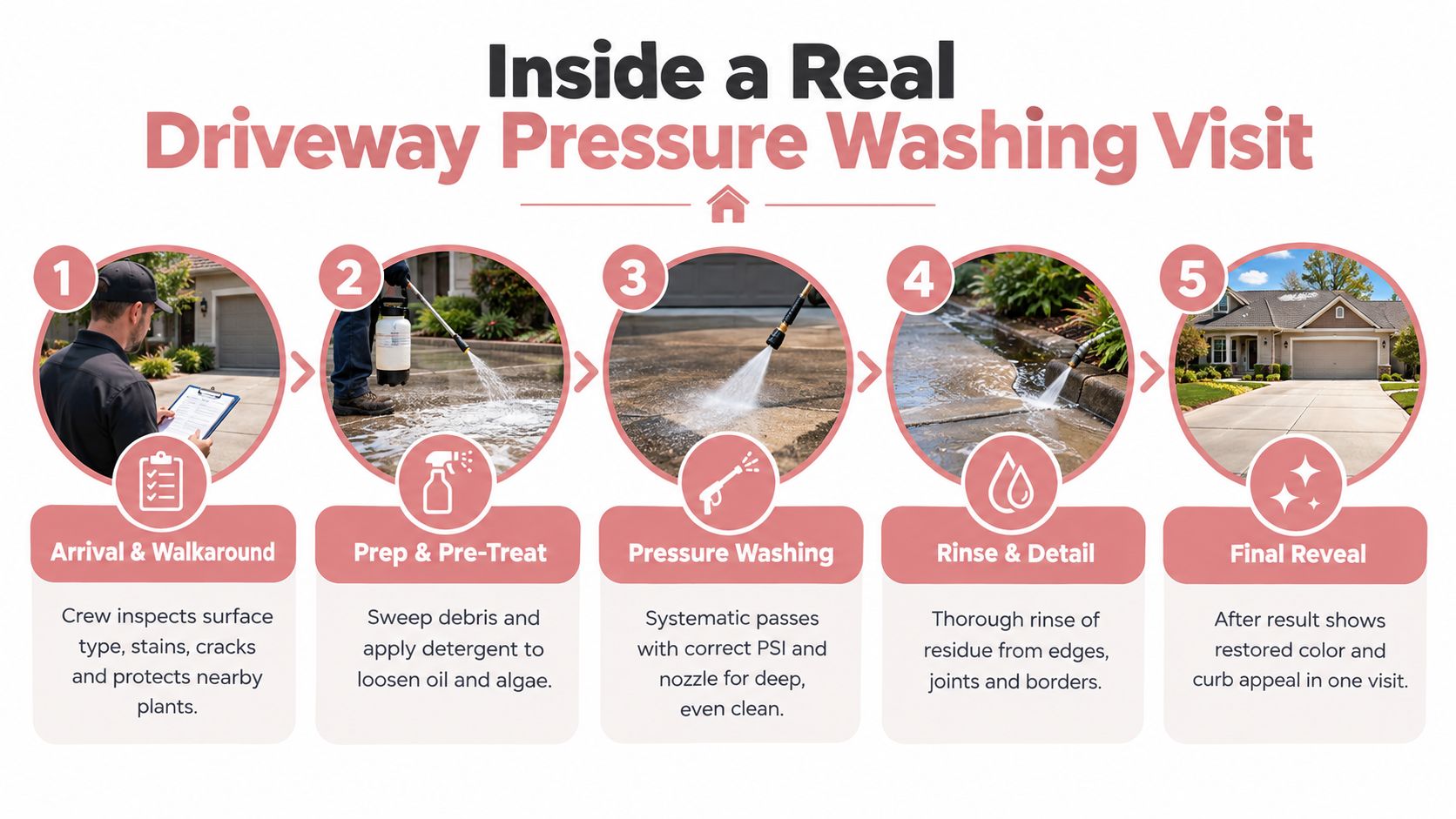
A professional visit should feel organized before the machine turns on. The crew arrives, walks the property, identifies the driveway material, notes oil, algae, rust, cracks, and drainage, then checks nearby cars, plants, doors, walls, and outdoor furniture. That short inspection determines whether the job needs standard pressure, a softer setup, chemical treatment, or extra runoff control.
A driveway visit in practical order
First, the crew blows or sweeps away leaves, stones, and loose debris. They pre-soak adjacent grass and shrubs, then apply a surface-appropriate detergent or algaecide. The solution sits for several minutes so it can loosen organic growth and grime before rinsing begins.
Next comes the cleaning pass. On ordinary cured concrete, the operator may use a 25-degree nozzle or a surface cleaner, keeping the tool moving and maintaining a consistent distance. Straight side-to-side passes with about 6-inch overlaps help prevent zebra striping on a typical two-car driveway. Pass and distance guidance
Pavers, stamped concrete, and exposed aggregate may require a wider fan or soft-wash setup. The operator should avoid lingering in one place, particularly around decorative textures, old sealers, edges, and cracks. A surface cleaner can produce an even result across broad concrete areas, while a wand handles borders, steps, and tight corners.
Watch the process in action before you book by reviewing the embedded demonstration below.
After cleaning, the crew rinses residue in a controlled direction and checks edges, joints, and borders. Landscaping should receive a post-rinse if detergent reached it. If paver joints lost sand, re-sanding may be available as an additional service.
Drying time depends on weather, shade, surface porosity, and how much water the crew used. Keep vehicles, toys, and heavy foot traffic off the driveway until the surface is dry. A final inspection should distinguish a remaining stain from a wet patch, and a reputable provider should explain whether a follow-up treatment is worthwhile. For visual examples of completed work, the before-and-after cleaning photos can help you judge the kind of finish to expect.
Driveway Pressure Washing Service Pricing and Eco-Friendly Options
A quote should reflect more than driveway size. Material, access, stain severity, pretreatment, edge work, wastewater controls, and whether the provider uses hot water all affect the job. The verified market information available for this topic doesn't establish reliable local price bands, so a contractor should provide a written, property-specific estimate rather than relying on a universal price chart.
That also means the comparison below should be read as a method guide, not a price promise. The table avoids invented dollar amounts while showing what to ask about.
| Driveway Size | Standard Pressure Wash | Soft Wash | Hot Water / Steam |
|---|---|---|---|
| Small | Suitable for ordinary dirt on sound concrete. Confirm minimum service charges and runoff handling. | Useful for delicate surfaces or organic growth. Ask about dwell time and detergent choice. | Consider when localized grease needs heat. Confirm whether equipment setup adds a service charge. |
| Medium | Efficient for broad cured-concrete areas with the correct nozzle and overlapping passes. | Better suited to pavers, stamped surfaces, and sensitive finishes. | Useful for heavier oil contamination when cold water leaves residue. |
| Large | Ask how the provider manages consistent cleaning, water use, edges, and collection. | Ask whether low pressure will be paired with enough rinse flow and surface-safe chemistry. | Ask about fuel use, access, heat control, and where contaminated water will go. |
Match the method to the stain
Traditional high-PSI washing uses mechanical force to remove embedded dirt from durable concrete. It can be the right choice for a sound slab, but excessive pressure can etch the surface.
Soft washing uses lower pressure with detergents. It can suit pavers, stamped concrete, delicate finishes, and organic growth, provided the chemicals are appropriate and the crew protects plants. Recent industry coverage reports that 65% to 75% of established contractors now offer soft washing, compared with about 45% to 55% in 2022 to 2023, indicating a move toward surface-matched methods rather than one-size-fits-all blasting. Industry soft-washing coverage
Hot-water or steam cleaning can help with oil-heavy areas because heat improves grease breakdown. It may require more equipment and fuel, so ask what problem the added heat solves before paying for it.
Eco-conscious practices include reclaim mats, water recovery, biodegradable surfactants, plant-safe algaecides, sediment control at storm drains, and fuel-efficient or electric equipment. Market reporting also describes movement toward electric and battery-powered tools, water-efficient machines, and eco-friendly cleaning agents. One industry summary projects battery-operated pressure washers as the fastest-growing product segment, with an 8.7% CAGR from 2026 to 2034. Pressure washer market trends
Don't accept a vague “green” label as proof. Request the product name, dilution information, runoff plan, and written method statement. Aquastar Cleaning Services, LLC lists driveway pressure washing and eco-friendly cleaning options among its residential services, so homeowners comparing providers can include those questions in an online quote conversation at Aquastar's eco-friendly cleaning page.
How to Choose the Right Driveway Pressure Washing Service
The lowest bid can become the most expensive option if the contractor etches the concrete, damages plants, leaves stripes, or ignores contaminated runoff. Door-knocking with a deep discount, no verifiable physical address, cash-only demands, and pressure to commit immediately should all make you pause.

Start with documents, not promises
Ask for proof of insurance and liability coverage before work begins. Request a written scope that identifies the driveway material, stains included, pretreatment, cleaning method, edge work, rinsing, and any exclusions.
A capable provider should explain its method in plain language. On a standard cured-concrete driveway, you might hear about a 25-degree fan tip, controlled distance, a surface cleaner, and overlapping passes. On pavers or stamped concrete, the explanation should change. If the contractor says every surface gets the same pressure, nozzle, and chemical, keep looking.
Before-and-after photos of similar driveways are more useful than generic house-washing images. Local references can also reveal whether the crew arrives on time, protects landscaping, handles concerns, and leaves the property orderly.
Ask questions that expose competence
Use these questions during the estimate:
- Surface matching: Which nozzle and pressure range will you use on my material?
- Stain treatment: Will oil, rust, mildew, or efflorescence receive separate pretreatment?
- Landscaping: How will you protect and rinse grass, shrubs, and nearby beds?
- Storm drains: How will you prevent detergent, sediment, and oily water from entering the drainage system?
- Quality control: What happens if a visible spot remains after the driveway dries?
- Damage responsibility: Do your written terms address etching or plant damage?
The contractor choice also depends on the operation. A solo operator may offer direct communication and lower overhead, but availability and backup capacity can vary. A small two-truck crew may balance responsiveness with equipment depth. A national franchise may provide standardized branding and systems, although the local operator still deserves the same document and method checks.
Runoff deserves special attention. San Diego County guidance says polluted power-washing water must not leave a property and enter streets or storm drains, and that only rainwater is allowed in those systems. Power-washing runoff guidance Local rules vary, so ask your provider how it contains and directs wastewater.
For broader cleaning-company vetting questions, this cleaning company selection guide offers a useful checklist mindset. A written process is a stronger signal than a flashy vehicle or a rushed discount.
Your Simple Action Plan for a Cleaner Driveway
A cleaner driveway starts before the equipment arrives. Give the contractor a clear record of the surface, stains, access points, and result you expect.
Photograph the trouble spots. Capture tire shadows, oil, rust, mildew, moss, lost paver-joint material, cracks, and areas that stay wet. Close photos help separate staining from surface damage.
Record the material and size. Note whether it is standard or stamped concrete, pavers, exposed aggregate, or another surface. Estimate the area and identify nearby lawns, shrubs, walls, vehicles, doors, and storm drains.
Match the method to the surface. Sound, cured concrete may suit controlled pressure washing. Newer, decorative, weathered, or delicate areas may require a wider fan, lower pressure, soft washing, or a test patch. Newly poured slabs under 12 months old should stay below 2,000 PSI with a 40-degree nozzle. Older concrete with an intact surface layer can often handle 2,500 to 3,000 PSI with a 25-degree nozzle. Concrete age and nozzle guidance
Get two or three written quotes. Ask each provider to list the pressure range, nozzle, detergents, dwell time, edge treatment, plant protection, runoff handling, and the plan for stains that improve but do not disappear.
Prepare the work area. Choose a dry weather window. Move vehicles, toys, tools, loose debris, and fragile items away from the driveway. Point out outdoor outlets, water access, drainage routes, and stains needing inspection.
Check the surface after drying. Wet concrete can hide missed edges and remaining marks. Once dry, look for stains, striping, exposed aggregate, or incomplete areas, then contact the provider promptly if the agreed scope was not finished.
Set up simple maintenance. Sweep loose dirt, address oil drips early, and keep downspouts from discharging across the slab. Ask whether sealing or joint maintenance fits the surface. If washing reveals cracks, arrange repair or sealing instead of treating cleaning as a structural fix.
Save the maintenance plan for the next service. Driveway care works best as a small, repeatable habit.
Aquastar Cleaning Services, LLC offers driveway pressure washing for exterior surface maintenance alongside residential cleaning services in Kennesaw and North Atlanta. Visit Aquastar Cleaning Services, LLC to request information about a driveway cleaning plan suited to your home's surfaces and maintenance needs.