


Weekly house cleaning usually costs $75 to $200 per visit, and a common range for many homes is $100 to $175. If you book weekly instead of monthly or one-time service, the per-visit price is often 5% to 20% lower because there's less buildup to tackle each time (HomeAdvisor recurring cleaning pricing).
If you're staring at crumbs under the breakfast bar, fingerprints on the fridge, and a bathroom that never seems to stay clean for more than a day, you're in the same spot as a lot of busy Kennesaw homeowners. The question usually isn't just how much does a weekly house cleaning cost. It's whether the price makes sense for the way your home gets lived in.
A weekly clean is usually a maintenance service, not a top-to-bottom rescue job. That's why the price often lands in a middle range instead of feeling like a luxury-only expense. Industry pricing guides show that weekly service in major U.S. markets often falls around $75 to $200 per visit, with one guide noting a weekly average of $160, and broader monthly equivalents often landing around $300 to $800 depending on home size and service level (HomeAdvisor maid service cost guide).
For a North Atlanta family, that often looks like this: two working adults, one or two kids, maybe a dog, and just enough clutter to slow a cleaner down if nobody does a quick pickup first. One house might stay near the lower end because it's tidy and easy to maintain. Another similar-size home can move higher because pet hair collects fast, toys cover the floors, and the kitchen gets heavy daily use.
If you want a broader look at what homeowners typically pay for recurring and one-time service, this average cleaning service cost guide helps put weekly pricing into context.
Introduction to Weekly House Cleaning Costs
A lot of people assume weekly house cleaning must be expensive because it happens every week. In practice, the opposite can be true on a per-visit basis. When cleaners return regularly, they spend less time fighting soap scum, grease buildup, and layers of dust, so the appointment is often simpler and more predictable.
Think about a Kennesaw household with a couple, two kids, and a shedding dog. If that home gets cleaned every week, the crew is usually maintaining order: wiping surfaces, sanitizing bathrooms, vacuuming fur, and mopping traffic areas. If the same home waits a month between visits, the cleaner often has to catch up before they can even begin the normal routine.
Why weekly service often feels more affordable than expected
The sticker shock usually comes from comparing the full monthly total to a single one-time appointment. That's not the right comparison. A better comparison is cost per visit for maintenance, and weekly plans are often discounted because the home stays in better shape between cleanings.
Here's the practical part:
- Smaller, routine jobs stay faster: Less buildup means less scrubbing.
- Recurring schedules are easier to price: The cleaner knows what condition the home will likely be in.
- Weekly service can replace weekend catch-up cleaning: Many families aren't buying perfection. They're buying consistency.
Practical rule: If your home gets messy fast, weekly cleaning often saves more effort than it adds cost.
What the numbers mean for a local homeowner
National guides are useful, but homeowners usually need help translating ranges into a real house. A tidy townhome with no pets doesn't price the same way as a busy two-story home where the mudroom, kitchen, and bathrooms get hammered every day.
That's why the range is broad. Pricing changes with square footage, room count, pets, clutter, and service scope. Later, I'll walk through concrete home examples so you can see how the numbers fit real-life situations rather than abstract averages.
What a Standard Weekly Cleaning Includes
Most confusion about pricing starts with one simple issue: homeowners and cleaning companies aren't always picturing the same job. A standard weekly cleaning is usually a maintenance visit. It keeps the home under control. It isn't the same as a deep clean.
A good analogy is a car wash. A weekly clean is like a regular wash and vacuum. It keeps things looking good and prevents buildup. A deep clean is closer to full detailing.
What's usually included
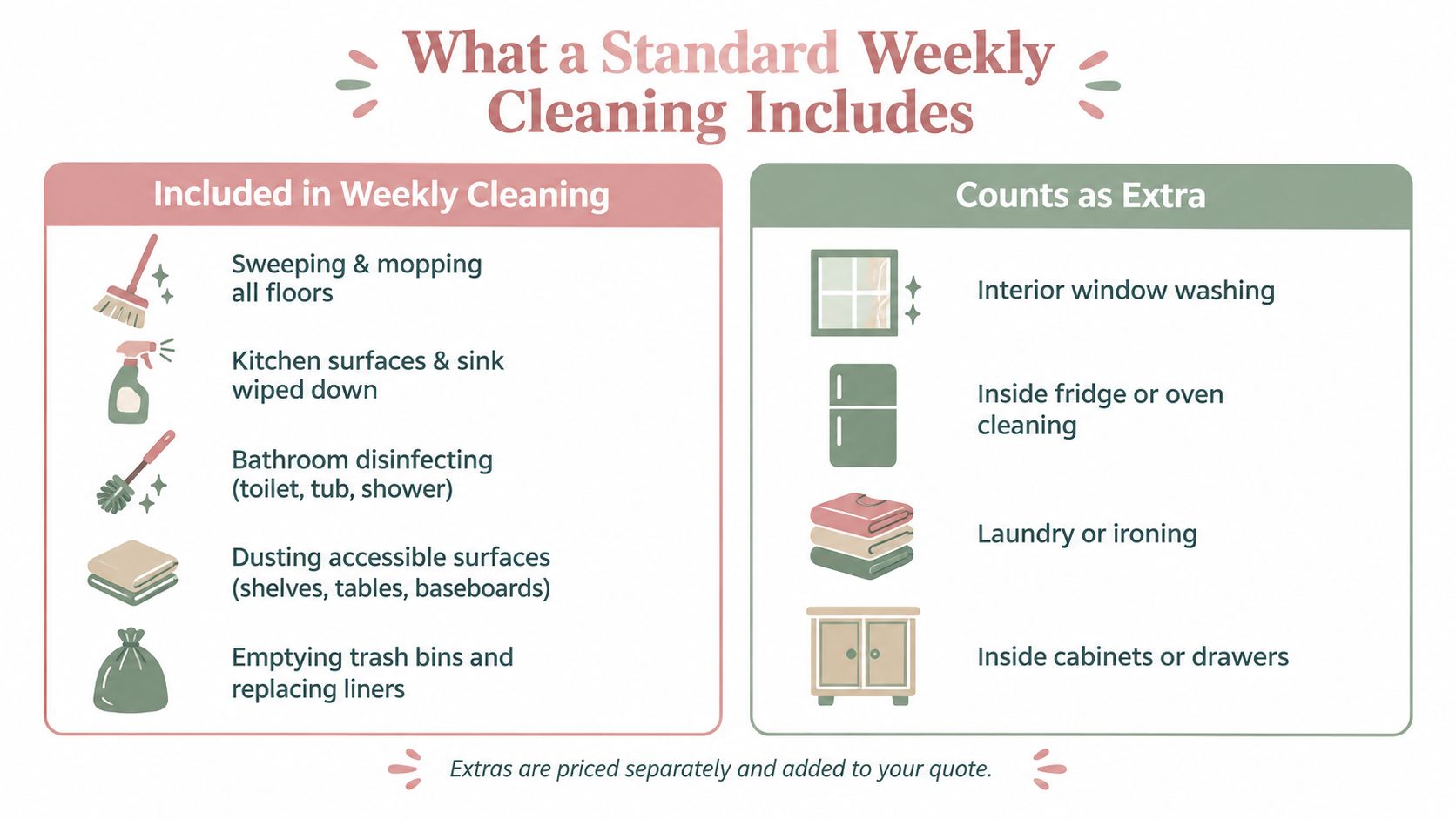
In most homes, a weekly visit focuses on the rooms that affect how clean the house feels day to day.
- Kitchen upkeep: Wiping counters, cleaning the sink, spot-cleaning appliance exteriors, and mopping the floor.
- Bathroom maintenance: Cleaning toilets, tubs or showers, sinks, mirrors, and floors.
- Living areas and bedrooms: Dusting accessible surfaces, straightening obvious disorder, vacuuming, and mopping if needed.
- Floor care: Sweeping, vacuuming, and mopping main traffic areas.
- Trash removal: Emptying bins and replacing liners if they're provided.
If you'd like a room-by-room breakdown of normal tasks, this guide to house cleaner duties and responsibilities gives a practical checklist.
What usually counts as an extra
Homeowners sometimes get surprised. If a job takes detail work, extra time, or special equipment, it often isn't folded into a standard weekly rate.
Common extras include:
- Inside appliances: Refrigerator and oven interiors
- Interior windows: Especially if they need hand-detailing
- Laundry tasks: Washing, folding, or ironing
- Inside cabinets and drawers: More common for move-out or deep cleaning
- Specialty floor work: Carpet treatment usually involves separate tools or a dedicated specialist
A weekly clean should make your home feel reset. It usually won't include every hidden or hard-to-reach surface unless you ask for it.
That distinction matters when you compare quotes. One company may give a lower base price because it covers only visible maintenance tasks. Another may appear higher because it includes more detailed work.
If your home needs carpet work along with housekeeping, it also helps to understand how specialty services are marketed and separated from general cleaning. These carpet cleaning visibility tips explain why carpet service often sits in its own category.
A practical Kennesaw example
Say you have a three-bedroom home near Kennesaw with one dog and mostly hardwood floors. A standard weekly clean would usually cover bathrooms, kitchen surfaces, dusting reachable furniture, vacuuming rugs, mopping, and trash. If you also want the inside of the oven cleaned, dog hair brushed off upholstered chairs by hand, and interior windows wiped every visit, you're no longer in basic weekly maintenance. You're adding labor.
That's why asking for a checklist before booking matters just as much as asking for a price.
Key Factors That Determine Your Weekly Price
A weekly cleaning quote works a lot like a haircut quote. The base idea sounds simple, but the final price depends on how much work the cleaner has to get through each visit, how detailed you want the result, and how consistent the home stays from week to week.
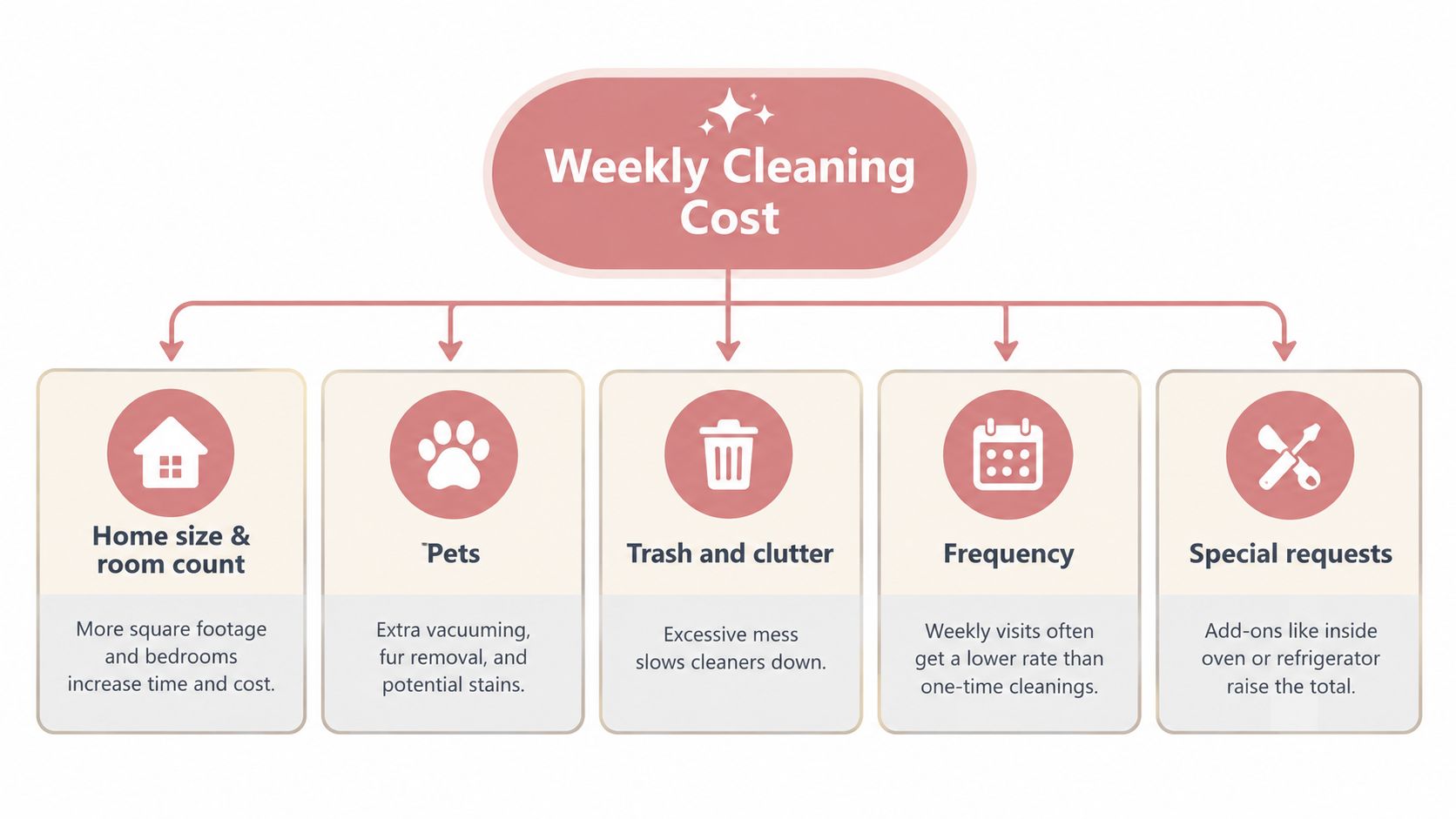
Home size and layout
Square footage gives cleaners a starting point, not a final answer. More square feet usually means more flooring, more bathrooms, more dusting, and more edges to work around.
Layout matters too. A 2,000 square foot ranch in Kennesaw with open living areas may clean faster than a 1,700 square foot home with lots of smaller rooms, tight furniture placement, and two staircases. The larger home has more area, but the smaller one can have more stop-and-start labor.
Room count often explains the difference. Three bathrooms usually take more weekly effort than two, even if the total square footage looks close on paper.
Pets add repeat work
Pets change the pace of a weekly clean because they create the same labor again and again. Fur collects under tables, along baseboards, and in corners. Nose prints show up on glass doors. Paw traffic can make floors need extra passes.
Here is a common local comparison. A tidy 1,800 square foot home in West Cobb with no pets may price lower than a similar-size home in Kennesaw with two shedding dogs and a cat, because the second home needs more vacuuming and more detail work every visit.
One dog does not always change a quote much. Multiple shedding pets usually do.
Clutter slows the visit
Clutter is one of the biggest pricing factors homeowners overlook. Cleaners can wipe, vacuum, and mop much faster in a home where surfaces are accessible.
A simple example helps. Picture two homes near downtown Kennesaw, both around 1,600 square feet. Home A has clear bathroom counters, open floors, and a mostly empty kitchen island. Home B has mail stacks, charging cords, toys, laundry piles, and crowded vanities. Home B often costs more to clean each week because the crew spends part of the visit working around items instead of cleaning open space.
That is why a smaller home can sometimes cost as much as a larger one.
Weekly condition affects labor
Weekly service usually costs less per visit than less frequent service because the home stays in maintenance mode. Dirt, soap buildup, and pet hair have less time to pile up, so the crew can spend more of the visit on routine work instead of catch-up work.
The easiest way to picture it is lawn care. A yard cut every week is quicker to maintain than one left alone for a month. House cleaning follows the same pattern.
If your home stays fairly picked up between visits, your weekly rate is usually easier to keep steady.
Add-ons and preferences change the scope
Special requests raise the weekly price when they add time to every appointment or turn a standard visit into a more detailed one. Product preferences can matter too if a company uses different supplies for fragrance-free or eco-focused service.
Aquastar Cleaning Services, LLC is one local option that bases recurring quotes on practical labor drivers such as home size, pet load, clutter, and product choices. That approach matches how weekly cleaning works in lived-in homes.
The big takeaway is simple. Your weekly price is not just about square footage. It is about how long it takes to bring your specific home back to reset condition each week.
How Weekly Cleaning Is Priced Hourly Versus Flat Rate
A Kennesaw homeowner might call for weekly service and hear two very different quote styles. One company says, "We charge by the hour." Another says, "Your home is $145 every Friday." Both can be fair. They just solve the pricing question in different ways.
The easiest way to sort them out is to ask one practical question first. Are you buying a set result, or are you buying a block of cleaning time?
Hourly pricing
Hourly pricing means you pay for labor time. If two cleaners work for two hours, you are paying for four labor hours total. That sounds simple, and for some homes it is.
Hourly billing usually fits homes where the weekly priorities change. One week you may want the team to focus on bathrooms and floors. The next week you may want extra attention on the kitchen after hosting family. In that setup, hourly pricing works a lot like hiring a handyman for a punch list. The clock sets the budget, and you decide what gets done first.
It can also save money in smaller or partial-home jobs. A tidy 1,000-square-foot townhome in Kennesaw with one dog, clear counters, and only two bathrooms may move quickly if the crew is only handling the lived-in areas.
The tradeoff is uncertainty. If toys are spread across the floor, dishes are stacked in the sink, or golden retriever hair is packed along baseboards, the same home can take longer than usual. A quote that looked lower at first can end up higher by the end of the visit.
Flat-rate pricing
Flat-rate pricing gives you one set price for a defined weekly scope. The company looks at your home, estimates the labor behind the scenes, and then offers one number for the visit.
Busy homeowners often prefer this model because the cost is easier to plan around. If your weekly routine stays fairly stable, flat pricing removes the question of whether this week's visit will run 30 minutes longer.
A flat rate often works best for true maintenance cleaning. For example, a 2,200-square-foot Kennesaw home with three bedrooms, two and a half baths, one shedding dog, and moderate family clutter might be quoted at one weekly price as long as the checklist stays the same. Bathrooms, kitchen surfaces, dusting, vacuuming, and mopping are covered. Extra oven scrubbing or interior windows are not.
The catch is scope drift. If the original quote assumed picked-up rooms and the home regularly needs more pickup, heavier pet-hair removal, or detailed hand-wiping of crowded surfaces, the cleaner may need to adjust the price later.
Where per-square-foot pricing fits
Some companies also use square footage as a starting formula, but weekly cleaning rarely lives on square footage alone. Two 2,000-square-foot homes can price very differently if one has two cats, a child who leaves toys in every room, and four busy bathrooms, while the other stays orderly all week.
That is why square footage works better as a measuring tape than a final answer. It helps organize the quote, but it does not explain the whole job.
Hourly versus flat rate in real-life weekly service
Here is the practical difference.
| Pricing Model | How It Works | Often Best For | Watch Out For |
|---|---|---|---|
| Hourly | You pay for the crew's time | Partial-home cleaning, changing priorities, smaller tidy homes | The final bill can rise if the visit takes longer than expected |
| Flat rate | You pay one set price for a defined checklist | Full-home weekly maintenance, stable routines, households that want a predictable budget | The quote only stays accurate if the scope stays consistent |
| Per square foot | Size helps set the estimate | Early quote comparisons for similarly maintained homes | It can miss pets, clutter, and room-by-room complexity |
A simple side-by-side helps. If your home stays picked up and you want the whole house reset the same way every week, flat pricing often saves more stress, even if the number is slightly higher on paper. If your goal is, "Spend up to two hours and hit the top priorities," hourly pricing can save money because you are controlling time instead of paying for a full checklist.
For homeowners who want to see the logic behind that math, this guide on how cleaners build home cleaning prices explains the estimating process in plain terms.
One last rule helps avoid surprises. Ask whether your quote is based on time, tasks, or both. That single question clears up most pricing confusion before the first weekly visit.
Practical Weekly Cleaning Cost Examples by Home Size
A weekly cleaning quote makes more sense when you attach it to a real home, not a wide national range. A 600-square-foot apartment in Kennesaw does not clean like a 2,000-square-foot house with dogs, kids, and counters that collect the week's leftovers.
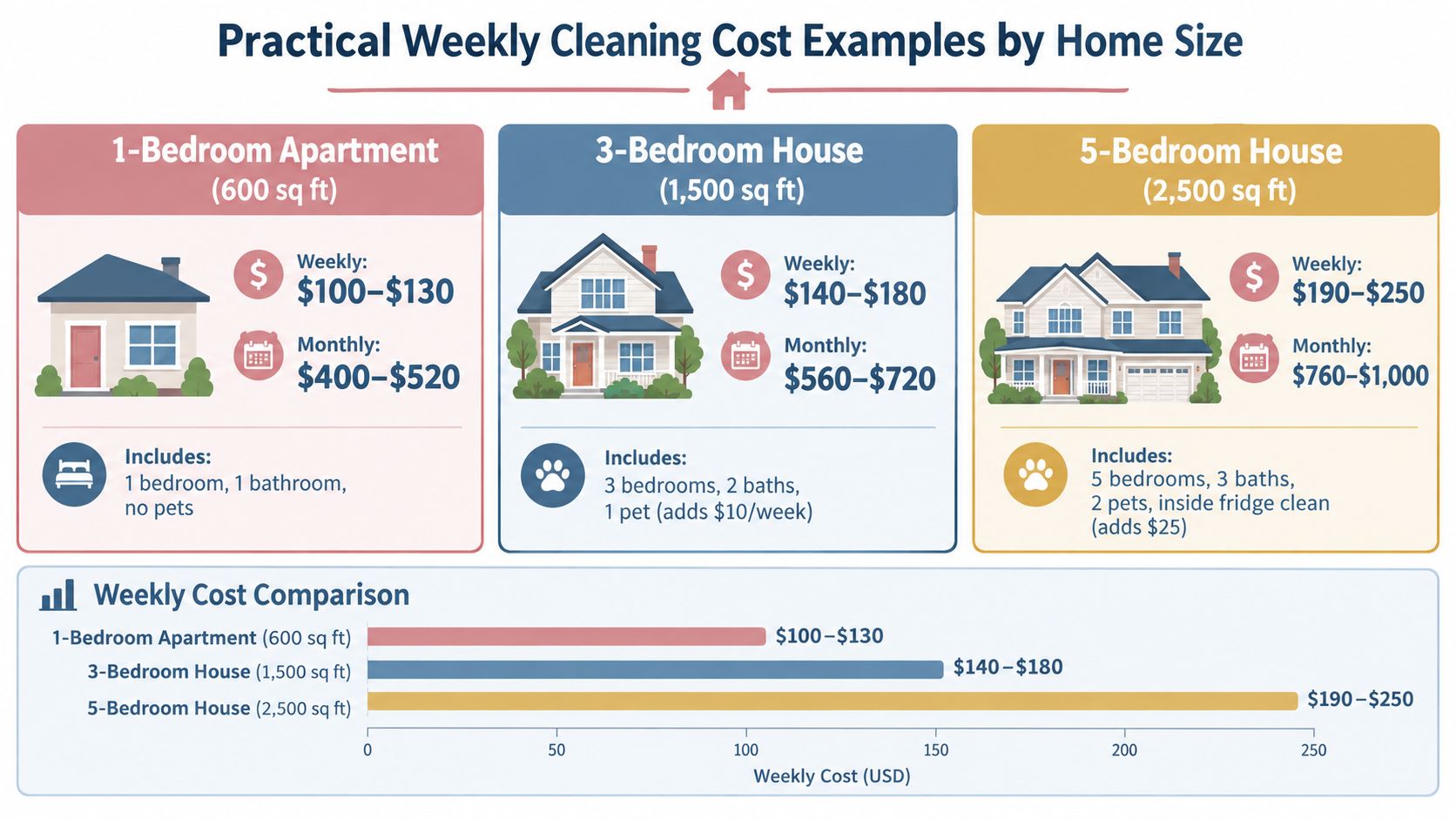
One helpful way to read the examples below is this: square footage sets the stage, but pets, clutter, and room use usually decide whether your price stays near the low end, middle, or high end.
Example one, small apartment with simple upkeep
A one-bedroom apartment around 600 square feet is usually the easiest weekly visit to price. If there are no pets, very little clutter, and just one bathroom, the cleaner can move room to room without losing time picking up items or fighting buildup.
In plain terms, this kind of home often fits near the lower end of common weekly pricing ranges noted earlier. A flat weekly rate often works well here because the checklist stays predictable. Wipe kitchen surfaces, clean the bathroom, dust, vacuum, mop, done.
A practical Kennesaw version would be a tidy apartment near downtown with laminate floors, one bathroom, and clear counters. That home cleans more like a quick reset than a catch-up visit.
Hourly pricing can save money if the owner only wants the kitchen, bathroom, and floors done. Flat pricing usually makes more sense if the whole apartment gets the same routine every week.
Example two, mid-size family house with one pet
Now look at a 1,500-square-foot three-bedroom home with two bathrooms, one dog, and normal weekday traffic. Weekly pricing starts to behave less like a simple size calculation and more like a workload calculation.
Here is why. The dog adds hair on floors and furniture edges. Two bathrooms double the wet-area work. A family kitchen used every day usually needs more wiping and spot cleaning than a single-person apartment.
If the family does a 10-minute pickup before the crew arrives, this home often stays in a moderate weekly price range. If toys, papers, and laundry are spread through the main rooms, the same house can cost more because the cleaner spends part of the visit creating access before cleaning starts.
For a broader comparison point on full-home pricing, this whole house cleaning price guide helps show how room count and condition affect the total.
This short video also gives a useful visual sense of what homeowners think about recurring cleaning value and home maintenance expectations.
A quick side-by-side makes the pricing choice clearer:
- Hourly may save money if the family wants to cap the visit at a set amount of time and focus on the busiest areas first.
- Flat rate may save money if the cleaner is handling the full house each week and the home's condition stays fairly steady.
- The same 1,500-square-foot house can price differently based on pickup level, pet hair, and whether the crew is cleaning around clutter or cleaning actual surfaces.
Example three, 2,000-square-foot home with pets and more detail
A 2,000-square-foot home shows how quickly weekly pricing can spread out. On paper, the size alone looks straightforward. In real life, two homes with the same square footage can clean very differently.
Take two Kennesaw-area examples:
- Home A: 2,000 square feet, no pets, three bedrooms, counters mostly clear, and a regular weekly routine.
- Home B: 2,000 square feet, two dogs, multiple bathrooms, busy family traffic, and a request to rotate extra detail tasks like baseboards or appliance interiors.
Home A is usually easier to place on a stable flat weekly plan because the work repeats in a consistent pattern. Home B often takes longer each visit because pet hair builds up fast, bathrooms need more attention, and the extras add labor even when the home is cleaned every week.
That difference matters. Square footage is like the size of the map. Pets, clutter, and room use tell you how rough the road is.
The fairest quote is the one that matches how your home lives from Monday through Sunday.
Simple Ways to Lower Your Weekly Cleaning Cost
If your quote feels a little higher than expected, you usually don't need to give up on weekly service. Small changes in how you prepare the home can reduce labor without lowering quality.
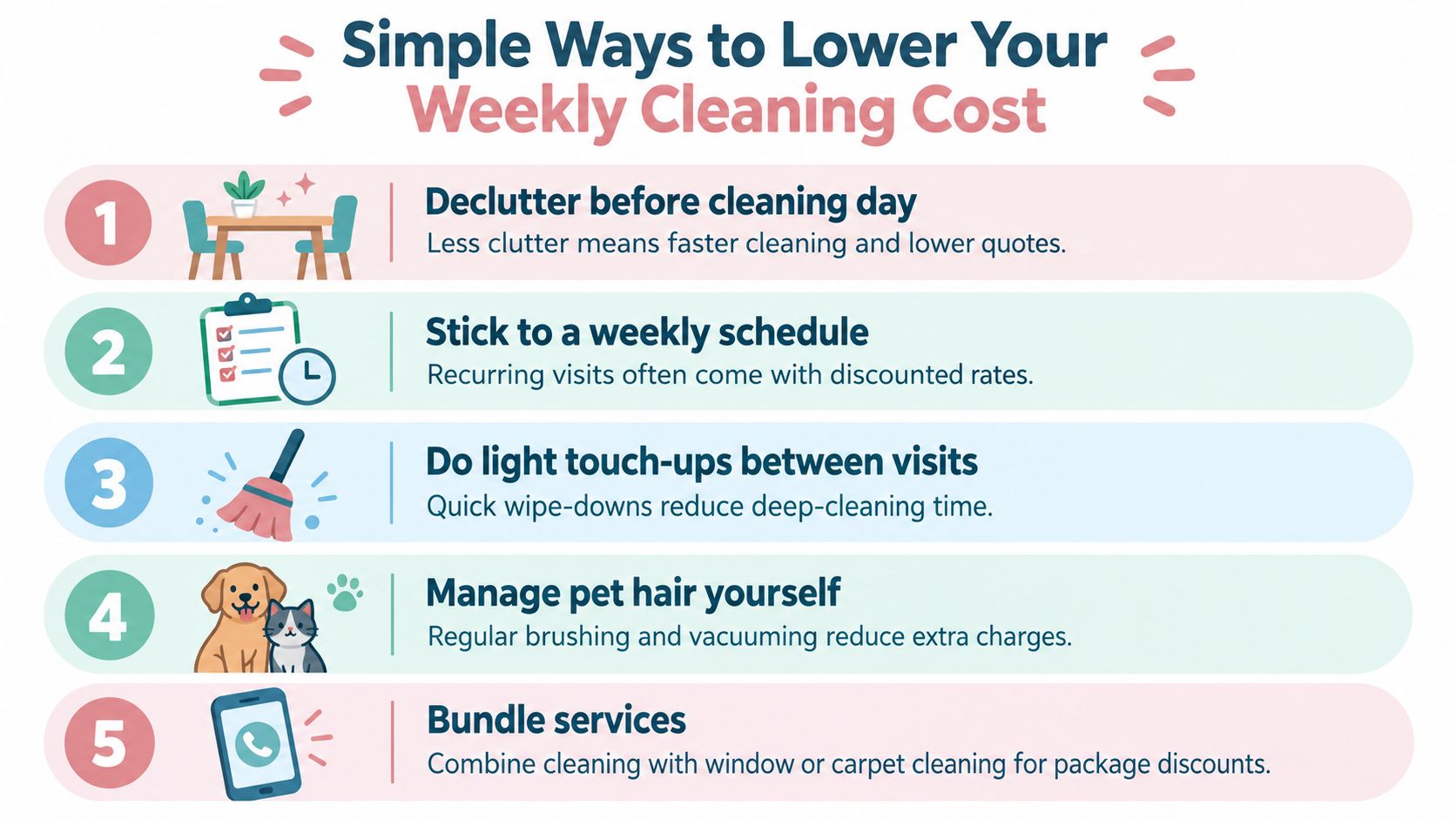
Clear the path before cleaning day
Decluttering is the fastest low-effort money saver. If the crew can reach the floor, counters, and bathroom surfaces right away, they spend their time cleaning instead of moving things around.
Practical example: pick up toys, stack mail, and move small appliances you don't use daily into one corner. That alone can help a standard kitchen stay a standard kitchen.
Use weekly service for true maintenance
Weekly cleaning works best when the home is already staying close to manageable. Because recurring weekly service may be 5% to 20% cheaper than standard pricing, booking at the right frequency can lower your per-visit cost while also reducing buildup (HomeAdvisor recurring discount guide).
If your home gets messy fast, stretching visits farther apart can backfire. The cleaner spends more time catching up, and the visit stops being a simple maintenance appointment.
Bundle extras carefully
Not every add-on should happen every week. Interior oven cleaning, refrigerator cleaning, and detailed window work are better scheduled occasionally unless you need them often.
A simple approach works well:
- Weekly tasks: Bathrooms, kitchen surfaces, dusting, floors, trash
- Occasional add-ons: Appliance interiors, interior windows, garage or basement cleanup
- Specialty services: Carpet care handled separately when needed
Help with pet maintenance between visits
Brushing pets and doing quick spot vacuuming yourself can keep fur from building into corners and under furniture. You don't need to deep clean. Just slow the accumulation.
Cleaners charge for labor time. Anything that keeps the home in maintenance shape usually protects your weekly rate.
Getting Your Personalized Weekly Cleaning Quote
By now, the big picture should feel clearer. Weekly house cleaning often falls in a recurring-service range rather than a luxury-only category, and the final number depends less on guesswork than on the condition of your home.
The most useful next step is getting a quote that reflects your actual situation. That means sharing details like home size, how many bathrooms need weekly attention, whether pets shed heavily, and whether you want only routine maintenance or a few rotating extras. A basic checklist beats a vague phone estimate every time.
What to have ready before you ask for pricing
A cleaner can usually give a more accurate quote if you can answer a few simple questions:
- Home layout: Square footage and number of bedrooms and bathrooms
- Household habits: Kids, pets, and whether clutter tends to build up
- Priorities: Full-house maintenance or focus on kitchens, baths, and floors
- Add-ons: Inside appliances, windows, or specialty floor care
- Product preferences: Standard supplies or eco-friendly options
If you want to see how service providers frame quote requests and what information matters most, this home cleaning services quote guide is a useful reference.
For readers who are curious how cleaning companies try to reach local homeowners online, this cleaning company advertising guide offers helpful context from the marketing side.
A personalized quote matters because two homes with the same square footage can still clean very differently. One is tidy and easy to maintain. The other has pets, busy bathrooms, and constant kitchen traffic. The only accurate price is the one built around your home, not someone else's.
If you want a weekly cleaning plan that matches how your home is used, Aquastar Cleaning Services, LLC offers recurring housekeeping, custom checklists, eco-friendly options, and quote methods that work online or by phone for Kennesaw and North Atlanta homes. If you're comparing costs, it's a practical next step to request a custom estimate based on your square footage, pets, and the rooms you want cleaned every week.