


You want the kitchen counters wiped, the bathroom sink fresh, the floors clean enough for bare feet, and the sofa free of mystery spots. You probably don't want a cabinet full of harsh sprays, heavy fragrance, and half-used specialty bottles that all promise different things. Most homes don't need more products. They need better matching between the mess and the cleaner.
That's where practical eco friendly cleaning tips help. Instead of treating every job the same way, use one cleaner for grease, another for mineral buildup, another for organic stains, and skip ingredients that can damage the surface or irritate the people living there. The safest routine is usually simple: mix small batches, label them clearly, ventilate the room, keep products out of reach of children and pets, and use reusable cloths instead of disposable wipes when possible.
A good example is keeping a labeled castile-soap solution under the sink for weekly floor cleaning, while reserving an enzyme product for a pet accident on the rug. That approach cuts waste, avoids over-cleaning, and keeps stronger treatments for jobs that need them. It also helps if you already prefer lower-fragrance options like a non toxic spray for Aussie homes.
1. Vinegar and Baking Soda for All-Purpose Surface Cleaning
Vinegar and baking soda still earn their place in a real home cleaning kit, but only when you use them for the right jobs. Baking soda gives you mild abrasion and odor control. Vinegar helps with soap scum, light mineral residue, and general wipe-downs. Together, they're useful for bathrooms, sinks, and grime on hard surfaces, especially when you want to avoid bleach-heavy routines.
The American Academy of Pediatrics shares a simple green-cleaning mix of 1 cup vinegar plus 2 cups water in a spray bottle, and notes that vinegar can be used on glass, walls, cupboards, floors, sinks, stovetops, toilets, bathtubs, and coffee makers in many households through its family cleaning guidance on safer product choices for your family. For extra scrubbing, use baking soda separately as a paste on a damp sponge.
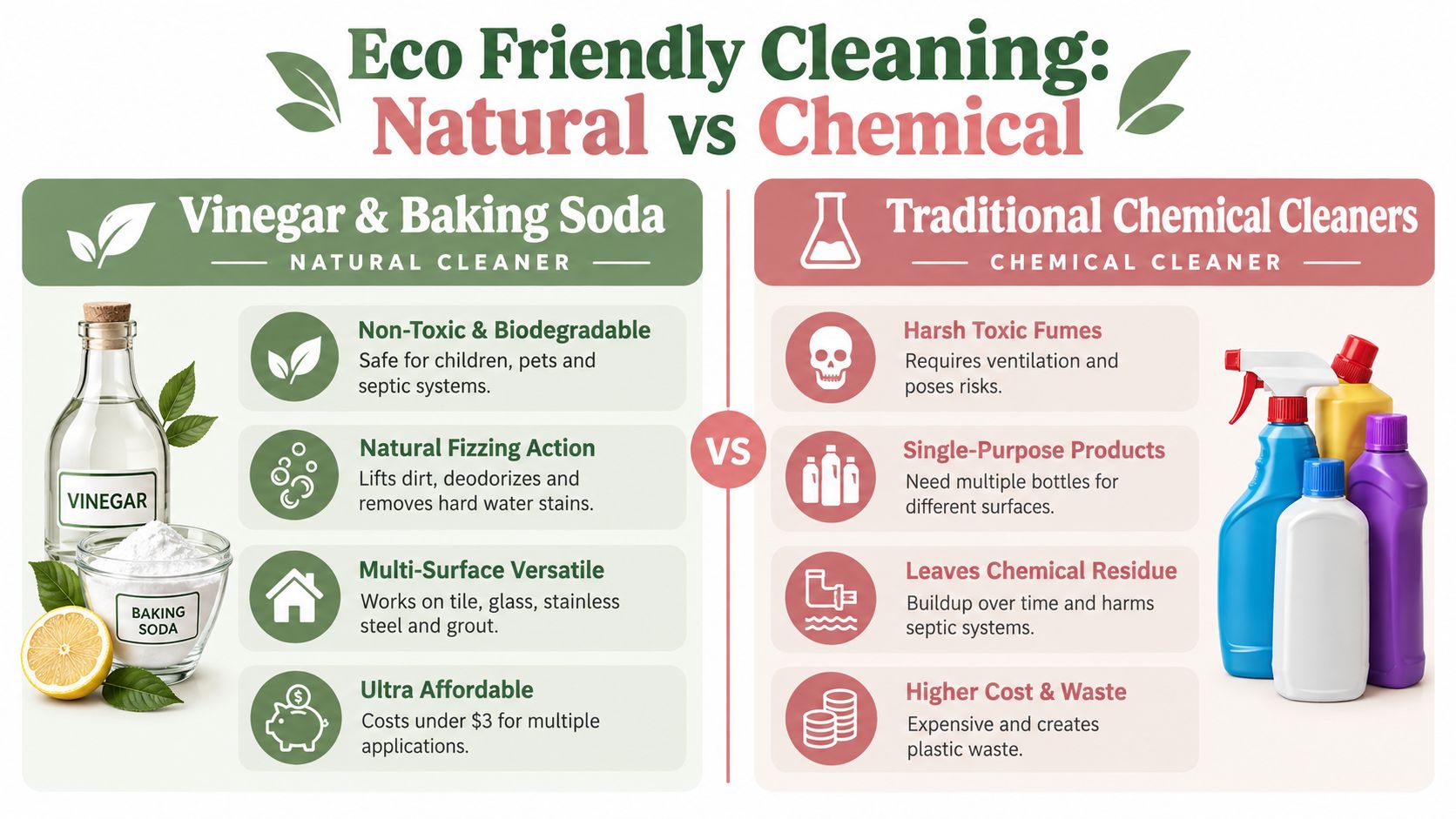
Where it works best
Use this pairing for jobs like bathroom tile, a kitchen sink after food prep, or a move-in wipe-down when you want to remove residue without filling the room with fumes. In a family bathroom, for example, you can spray the vinegar mix on the mirror, faucet, and tile, then scrub the tub edge with baking soda on a damp microfiber cloth.
It also works well for weekly maintenance in rentals or recently renovated spaces where the mess is mostly dust, dried splashes, or surface grime. If grout has buildup, spread a baking soda paste first, then work it with a cloth or soft brush.
Practical rule: Ventilate well and test painted or delicate surfaces first. Vinegar can dull some stone, and baking soda can leave a haze if you don't rinse.
A few habits make this more effective:
- Use microfiber cloths: They pick up loosened grime better than paper towels and reduce streaking on mirrors.
- Let paste sit when needed: On a ring around the tub or sink, leave baking soda paste in place for a while before scrubbing.
- Keep the bottle labeled: A marked spray bottle under the bathroom sink makes weekly cleaning more likely.
If distilled vinegar is already part of your routine, these more ways to clean your home with distilled vinegar can help you use it more precisely. For households that still need to balance lower-toxicity choices with hygiene, it also helps to understand when disinfection still matters.
2. Lemon Juice Natural Disinfectant and Degreaser
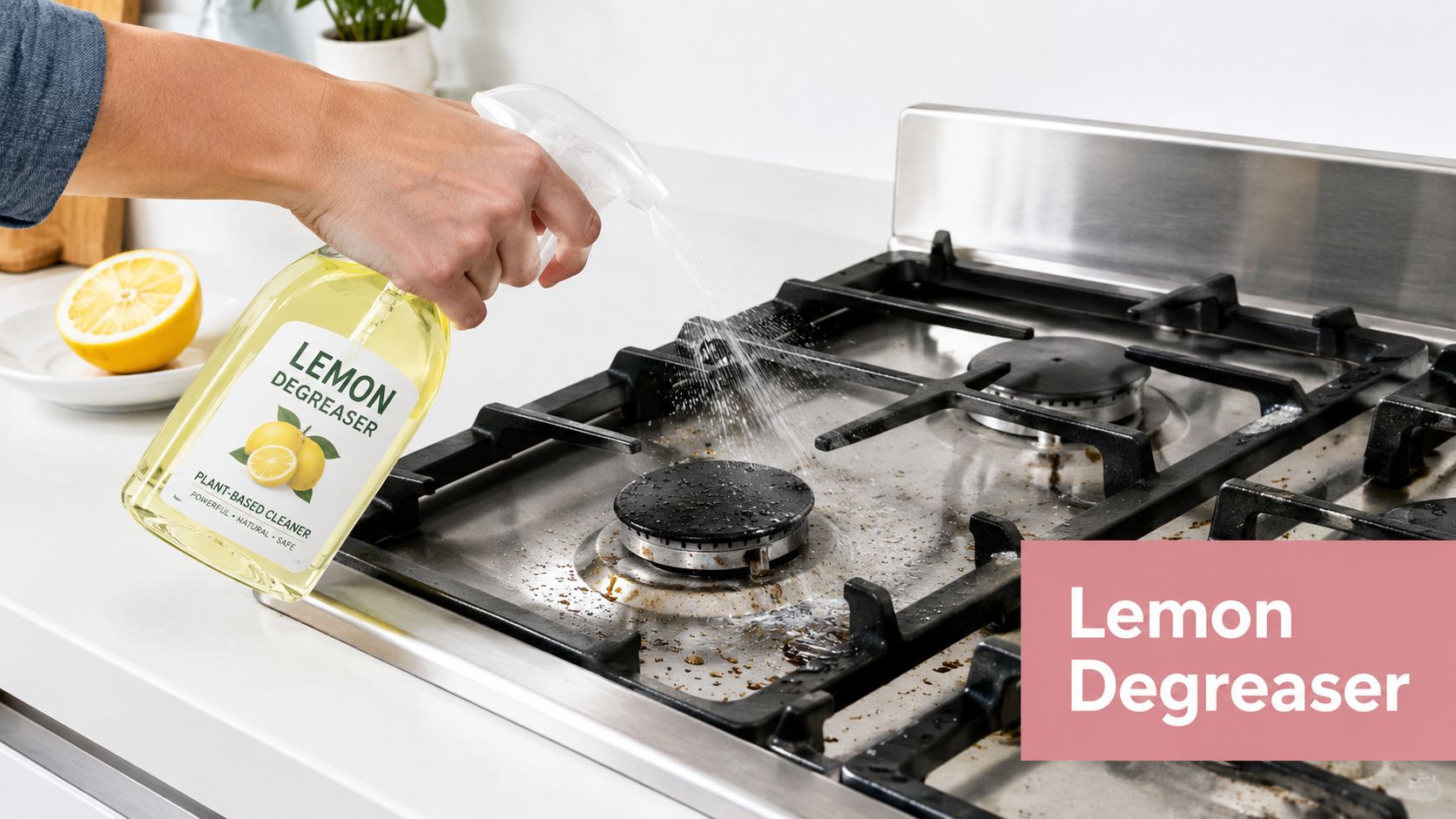
Dinner cleanup usually leaves the same trail. Oil mist near the stove, a sticky spot on the fridge shelf, and a sink that smells faintly of onions or fish. Lemon juice earns its place on those jobs because the acid helps loosen light grease and food residue, and the fresh citrus scent disappears faster than many fragranced sprays.
Use it where kitchen grime is shallow and recent. A cut lemon works well on a stainless sink after prep, and a bowl of hot water with lemon slices helps soften microwave splatter so it wipes off with less scrubbing. For a greasy patch on the backsplash, squeeze a little juice onto a damp cloth, wipe the area, then rinse with clean water so the surface does not stay tacky.
Lemon also has limits, and those limits matter more than the scent. It helps with everyday reset cleaning. It does not replace a proper disinfectant after raw chicken juices on the counter, a sick-day cleanup, or any high-risk food-contact mess.
One simple way to keep it useful is to match the method to the job:
- Microwave splatter: Heat a bowl of water with lemon slices until the cavity turns steamy, wait a minute, then wipe the softened residue from the walls and door.
- Sink deodorizing: Rub half a lemon around the basin, focus on the drain area and rim, then rinse and dry with a cloth to reduce water marks.
- Stovetop grease film: Apply lemon juice to a cloth first, wipe around burner caps or control panels, then follow with a damp cloth so acidic residue does not sit on the surface.
- Cutting board refresh: Rub with fresh lemon, let it sit briefly, then rinse and dry fully. This helps with odors, but it is still not a full sanitizing step after raw meat.
Skip lemon on marble, travertine, limestone, and other natural stone because the acid can etch the finish. Use caution on delicate metal finishes too. On some surfaces, repeated use can dull the shine rather than improve it. Gloves help if your hands are already dry or cracked.
That trade-off makes lemon a practical kitchen tool instead of an all-house cleaner. It is best for light degreasing, odor control, and quick maintenance between deeper cleans.
3. Castile Soap Base for Custom Gentle Cleaners
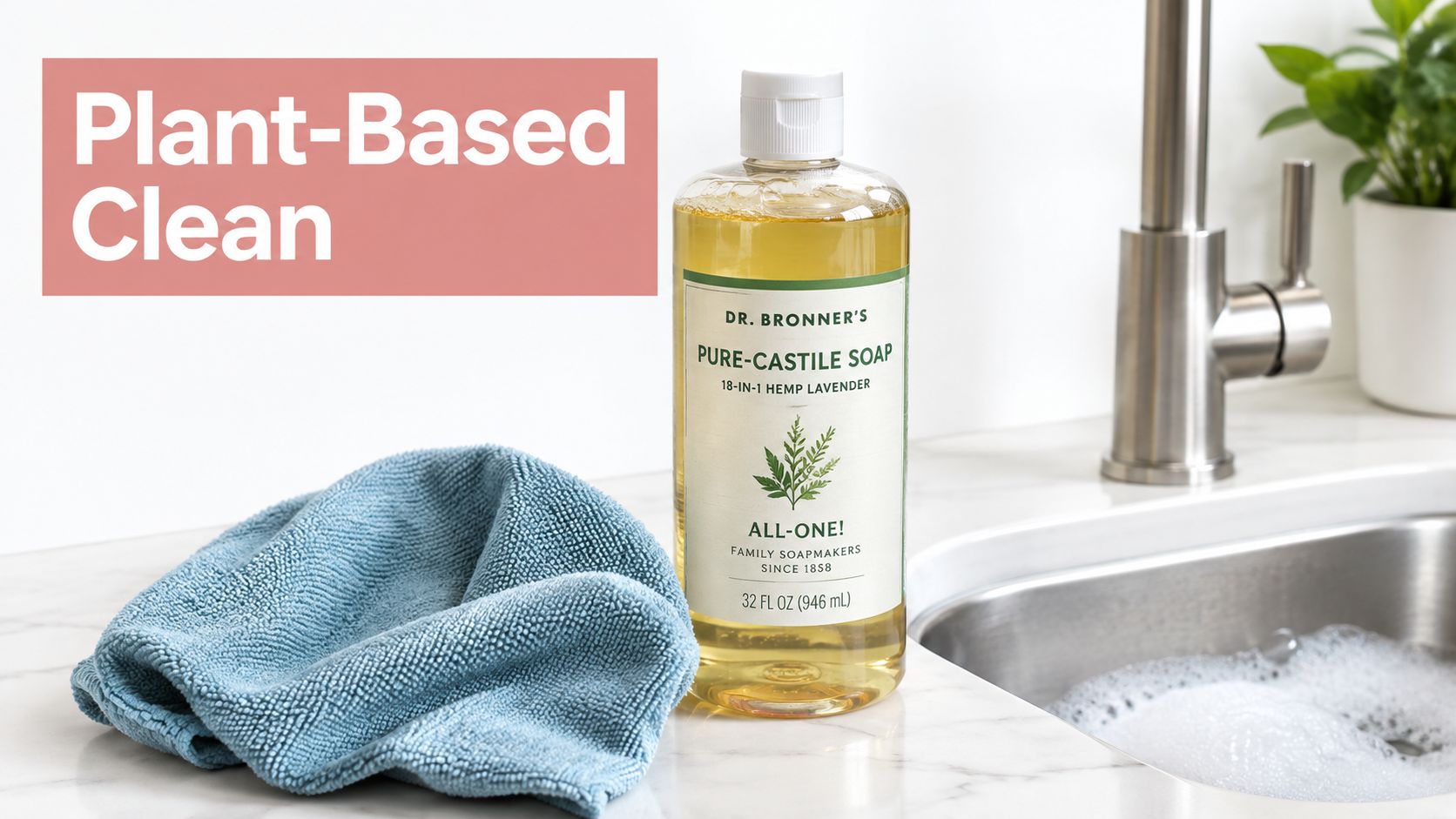
A muddy entry floor, fingerprinted light switches, and a dusty bathroom vanity do not need three different products. Castile soap earns its spot because it handles routine soil across several rooms with one gentle base, as long as you mix it lightly and match it to the surface.
I use it for maintenance cleaning, not problem solving. It works well on sealed floors, painted baseboards, sink exteriors, and washable cabinet fronts. It does not do much for mineral scale, heavy grease baked onto a stovetop, or any job that needs a registered disinfectant.
The main mistake is overmixing. Too much soap leaves a film that grabs more dirt, especially on dark tile or laminate. Start with a small amount in warm water, then adjust only if the cloth is not lifting grime. In a hallway, for example, a lightly diluted bucket is usually enough to clean shoe prints without leaving the floor tacky after it dries.
A second trade-off is finish sensitivity. Castile soap is gentler than many all-purpose sprays, but "gentle" does not mean universal. Test it on painted cabinets, sealed wood, and specialty flooring before doing the whole room. If a bathroom vanity has a soft painted finish, wipe with a damp cloth, then dry it right away so water does not sit along the edges.
Hard water can also get in the way. If the surface dries dull or streaky, the soap may be reacting with minerals in the water rather than with dirt on the surface. In that case, use less soap, rinse your cloth more often, and buff dry. That small adjustment matters on floors and glossy cabinet doors.
For a simpler setup, keep one labeled spray bottle for light wipe-downs and one bucket mix for floors. This house cleaning supplies checklist is useful if you want to trim duplicates and keep only products that cover distinct jobs.
Castile soap is a good base cleaner. It is not a stand-in for every other method in this article. Used in the right places, it cuts bottle clutter and handles weekly upkeep with less waste and less residue.
4. Essential Oil-Infused Natural Disinfectant Spray
“Natural” needs more caution here. Essential oils can make a room smell fresh, and some people like them in homemade sprays for bathrooms and high-touch areas. But strong scent doesn't equal better cleaning, and oils can be a problem for people with asthma, fragrance sensitivity, children, or pets.
That concern isn't theoretical. A summary cited by AAAAI reports that persistent and increased home use of green cleaning products was associated with higher asthma symptom risk over time, including mean score ratios of 1.08 and 1.07, discussed in this article on eco-conscious cleaning tips and green product tradeoffs. So if you use essential oils at all, use them lightly and only where they help.
Use scent carefully
A bathroom spray with a small amount of tea tree or eucalyptus may feel cleaner after wiping the sink, faucet, and toilet handle. In a guest bath that gets musty, that can be useful. But in a child's bedroom, a nursery, or a tightly closed home office, fragrance can create more trouble than benefit.
For kitchen counters after regular meal prep, I'd rather see a low-fragrance or fragrance-free product than a heavily scented homemade spray. If someone in the home gets headaches or wheezing, this is one of the first things I'd cut back.
A better standard is to choose products with clearer ingredient review. The EPA says its Safer Choice label helps buyers find products with ingredients judged safer for human health and the environment, which is more useful than trusting a label that just says “natural.”
You can also review eco-friendly bathroom cleaning products if you want lower-toxicity options for damp, high-use spaces. If you're specifically considering this ingredient route, this guide to using tea tree oil for home cleaning is worth reading with the sensitivity trade-offs in mind.
Fragrance-free usually beats pleasantly fragranced when someone in the home is sensitive.
5. Enzyme-Based Stain Removers for Organic Matter
A wiped-up stain can still keep working against you. The carpet looks clean, but a sour milk smell returns by evening, or the dog goes back to the same corner because residue is still sitting in the fibers and pad.
That is the job for an enzyme cleaner. It works on organic material such as pet urine, vomit, food spills, sweat, and other protein-based messes that standard surface cleaners often leave behind. Vinegar can help with some odor, and soap can remove surface grime, but neither one breaks down these residues the way an enzyme formula is designed to.
Use it where the mess soaked in, not where the stain only looks bad on top. A rug by the back door, a mattress cover with sweat buildup, a sofa cushion after spilled milk, or the seam of a pet bed are all good candidates.
The method matters more than force. Blot first so you are not pushing the stain wider. Then apply enough cleaner to reach the full depth of the spot. On carpet, that often means the backing and sometimes the pad. If the product dries too quickly, the enzymes do less work, so follow the dwell time on the label and give it time before blotting again.
A common example is a dog accident in a bedroom. Blot with towels, apply the enzyme cleaner generously over the full affected area, and let it sit as directed. Come back later and blot again with clean towels. If you only mist the surface and wipe right away, the odor often returns because the residue below the pile is still there.
Two limits are worth respecting. Heat can set some protein stains, so skip hot water unless the product label says otherwise. And do not mix enzyme cleaners with bleach or strong disinfectants in the same step, because those can reduce how well the enzymes work.
Test upholstery or carpet in a hidden spot first, especially on darker fabrics or delicate blends. Fresh stains are easier to remove, but older spots can still improve if you treat them thoroughly instead of rushing the job.
If pet messes are a regular part of the routine, this guide to house cleaning for pet owners can help you build stain treatment into the rest of your cleaning plan.
6. Beeswax and Plant Oil Polish for Wood Surfaces
Wood needs a different mindset from tile, laminate, or painted drywall. The goal isn't just to make it look shiny. It's to clean lightly, protect the finish, and avoid buildup that turns tacky over time. A beeswax and plant-oil polish can help with that if you use a thin coat and buff it well.
That makes sense on dining tables, wood cabinets, and some hardwood surfaces that look dry or dull after regular dusting. It does not mean every wood surface needs a rich polish every week. Overdoing wax is one of the easiest ways to create a sticky feel that grabs dust.
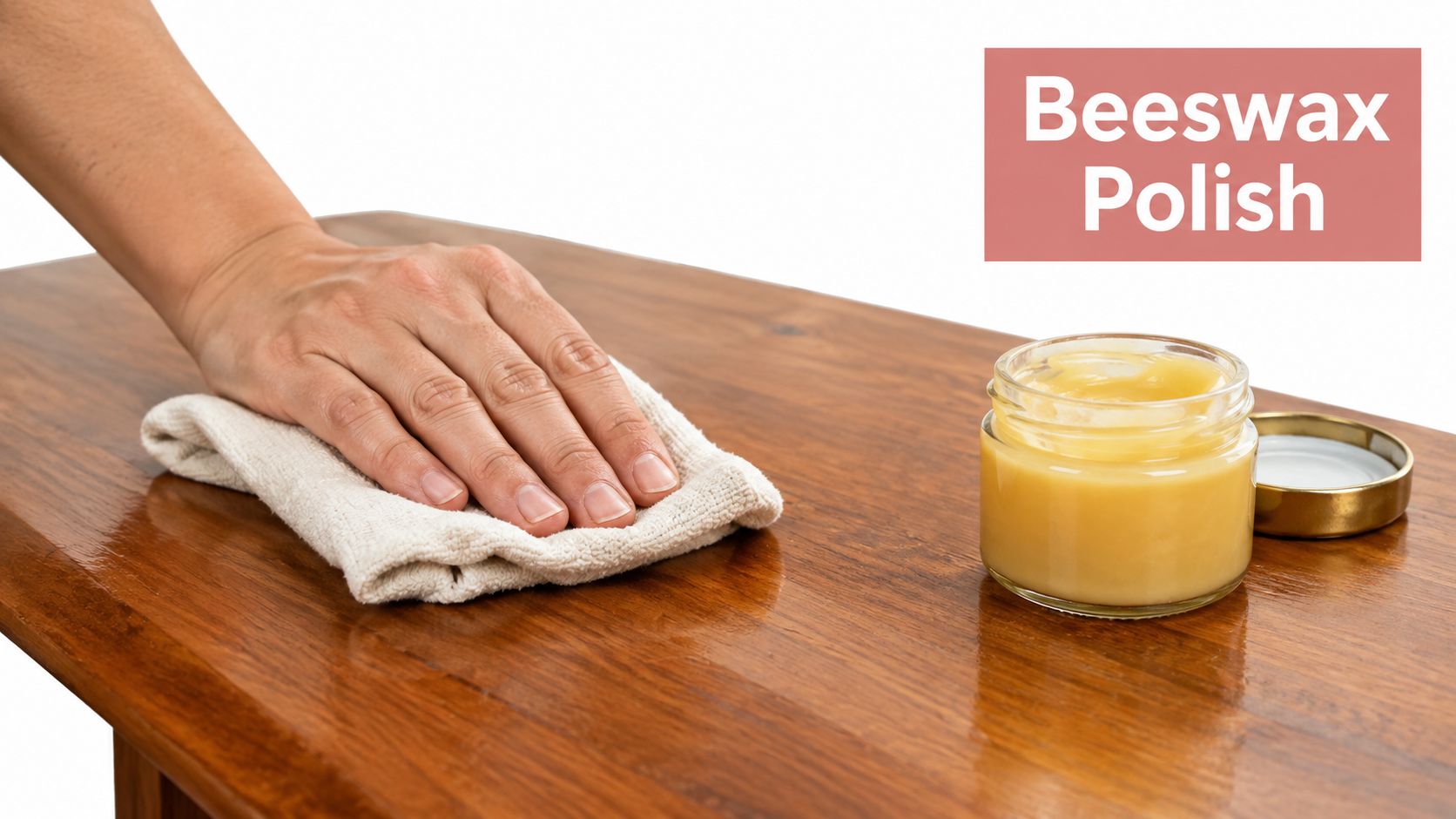
Keep the coat thin
A realistic example is a dining table that gets wiped daily and starts looking flat around the edges. After removing crumbs and surface dirt with a dry or slightly damp cloth, apply a very small amount of polish, spread it thinly, and buff it with a clean microfiber cloth until the surface no longer feels slick.
The same method can help on wood cabinet doors in kitchens where hands leave dull patches near the pulls. Thin application matters more than the exact oil blend.
Wood polish should leave the surface conditioned, not greasy.
For butcher block or food-adjacent wood, be more selective about what you apply and how often. This guide to cleaning a butcher block is a useful reference before treating prep surfaces.
If you want to see the polishing process in action, this video is a helpful visual:
A few limits matter here:
- Test first: Natural finishes, sealed wood, and engineered surfaces can react differently.
- Avoid thick buildup: More polish doesn't mean more protection.
- Buff completely: If you can feel residue, keep buffing.
- Skip damaged finishes: Peeling or broken finish needs repair, not more wax.
7. Salt Scrub for Heavy-Duty Scouring and Deodorizing
A roasting pan with browned residue, a stained sink, a cutting board that smells like onion. These are the jobs where salt earns space in the cabinet.
Salt works by abrasion first. It helps scrape off residue that a soft cloth leaves behind, and it can help with odor control in closed spaces after the surface has already been cleaned. That distinction matters because salt does not cut grease well on its own, and it does not disinfect.
Use it where friction is the need. A stainless steel sink is a good example. After washing away loose grime, sprinkle salt over the stained area, add a little lemon juice or water to make a gritty paste, then scrub with the grain using a sponge. Rinse well and dry the sink so you do not leave mineral marks behind.
Cookware is another strong fit. For a roasting pan with baked-on bits, cover the sticky area with coarse salt, add just enough water to dampen it, and work it with a scrub pad. The salt gives you more bite than soap alone. On cast iron, many cooks use salt to lift stuck food without stripping the seasoning, but the pan needs a quick rinse, thorough drying, and a light coat of oil right after.
Salt can also help with odor after the main cleanup is done. If a refrigerator still smells after a spill has been wiped up, or a trash bin keeps a faint odor after washing, set out a small open bowl of salt for a short period and see if it improves. It is a simple low-waste option, but it is slower and less absorbent than baking soda.
A plain scrub also avoids loading the job with fragrance. Analysts summarized by EWG's report on cleaning-product emissions found that many cleaning products release a wide range of VOCs, with fragrance-heavy formulas contributing more. If all you need is abrasion, salt keeps the product list short.
Use judgment on finishes:
- Coarse salt gives more scrubbing power for pans and sinks.
- Fine salt is better for smaller jobs or surfaces that scratch more easily.
- Skip salt on delicate nonstick coatings, soft stone, fiberglass, and easily scratched finishes.
- Wipe and dry metal well after scrubbing to reduce spotting and corrosion.
This is one of the cheapest substitutions in a greener cleaning routine. It works best on narrow, messy jobs where physical scrubbing solves the problem faster than another specialty product.
8. Hydrogen Peroxide for Disinfection and Stain Lifting
Hydrogen peroxide is one of the most useful “use it when needed” products in a greener routine. It's good for stain lifting and for some disinfection tasks, especially in bathrooms and on washable fabrics that can handle mild bleaching action. This is the bottle to keep for specific problems, not a spray to use casually on everything.
Think grout discoloration, a blood spot on a pillowcase, or a toilet area that needs more than soap and water. In those cases, peroxide is often more practical than a heavily fragranced bathroom cleaner.
Better for problem spots than daily wipe-downs
For grout, apply peroxide to the discolored line, let it sit for a bit, then scrub with a small brush and rinse. For a fresh fabric stain, blot first, test a hidden area, then apply peroxide and blot again after it has had time to work.
The same goes for mold-prone bathroom corners. If you've got a windowsill or caulk line that darkens repeatedly, peroxide can be part of a targeted cleanup. Still, moisture control matters more in the long run. Use the fan, dry the surface, and don't rely on chemicals alone.
EPA guidance on identifying greener cleaning products and ready biodegradability is a good reminder to choose products that meet a real standard rather than trusting vague eco language. That's especially useful when you're buying a bathroom cleaner and trying to decide between a certified product and a bottle with a leaf on the label.
Another reason to be selective with sprays is the larger emissions picture. Research summarized through science.gov on household cleaning product emissions reported that volatile chemical products emitted an estimated 7.6 ± 1.5 teragrams of VOCs in the U.S., compared with 3.5 ± 1.1 teragrams from mobile sources in the same line of research. Choosing lower-emission cleaners and using fewer airborne products, especially sprays and fragrance-heavy formulas, makes sense at both household and broader scale.
Use peroxide where you need stain lifting or targeted disinfection. Don't turn it into your all-purpose cleaner.
8 Eco-Friendly Cleaning Methods Compared
| Item | 🔄 Implementation Complexity | 💡 Resource Requirements | ⚡ Speed / Efficiency | ⭐ Key Advantages | 📊 Ideal Use Cases |
|---|---|---|---|---|---|
| Vinegar & Baking Soda for All-Purpose Surface Cleaning | Low, simple mixing; paste prep for tough spots | Very low, vinegar, baking soda, water, spray bottle; <$3 per batch | Moderate ⚡, 10–15 min dwell plus scrubbing | ⭐ Non-toxic, deodorizes, multi-surface, biodegradable | 📊 General surface cleaning, grout, kitchens & bathrooms, move-ins |
| Lemon Juice Natural Disinfectant and Degreaser | Low, squeeze or mix; optional paste with baking soda | Low, fresh lemons (or bottled), water, dish soap; short shelf life | Fast ⚡ on grease; 15–20 min for heavy buildup | ⭐ Strong natural degreaser, pleasant scent, septic-safe | 📊 Kitchen stovetops, stainless polish, refrigerator/microwave deodorizing |
| Castile Soap Base for Custom Gentle Cleaners | Low–Medium 🔄, dilution calculations for each use | Low, concentrated castile soap, water, optional essential oils; long-lasting | Moderate ⚡, lifts dirt well; requires rinsing to avoid residue | ⭐ Versatile base, gentle on skin, biodegradable, cost-effective long-term | 📊 Recurring housekeeping, floors, laundry, bathrooms, sensitive households |
| Essential Oil-Infused Natural Disinfectant Spray | Medium 🔄, requires 70%+ alcohol and correct oil ratios | Medium, isopropyl alcohol, quality essential oils, spray bottles (initial cost higher) | Fast ⚡, quick-drying; 2–3 min contact recommended for disinfection | ⭐ Effective disinfectant when alcohol-based; customizable scents | 📊 High-touch surfaces, bathrooms, kitchens, odor control, post-construction touch-ups |
| Enzyme-Based Stain Removers for Organic Matter | Medium 🔄, activation, moisture and long dwell times (4–8 hrs) | Medium, specialized enzyme products or powders; warmer water for activation | Slow ⚡, slow initial action but continuous breakdown over hours | ⭐ Superior on organic stains, odor elimination, color-safe, prevents re-staining | 📊 Pet accidents, carpets & upholstery, laundry pre-treatment, move-out stain removal |
| Beeswax and Plant Oil Polish for Wood Surfaces | Medium 🔄, melt beeswax, mix ratios, buffing technique needed | Medium, beeswax, plant oils, jars, cloths; small-batch prep | Slow ⚡, time-consuming application and buffing; longer drying | ⭐ Restores and protects wood, water-resistant, natural finish | 📊 Hardwood floors, furniture polishing, cabinets, food-contact wood care |
| Salt Scrub for Heavy-Duty Scouring and Deodorizing | Low 🔄, simple paste or dry scrub preparation | Very low, table or sea salt, lemon/vinegar/olive oil optional; pennies per use | Moderate ⚡, immediate abrasive action; manual scrubbing required | ⭐ Powerful scouring and deodorizing; extremely low cost | 📊 Cast iron & baked-on cookware, stainless sinks, post-construction scouring, deodorizing |
| Hydrogen Peroxide for Disinfection and Stain Lifting | Low 🔄, ready-to-use 3% solution; paste option with baking soda | Low, 3% hydrogen peroxide bottles; store away from light; limited open-bottle life | Moderate ⚡, needs 5–10 min contact for disinfection; slower than bleach | ⭐ Effective oxidizing disinfectant and stain lifter; breaks down to water & oxygen | 📊 Grout & mold prevention, bloodstain removal, toilet/bathroom disinfection, move-outs |
Make Green Cleaning a Sustainable Routine
The easiest way to keep a greener home clean is to stop chasing a perfect product and build a repeatable system. Use gentle cleaners for daily mess, stronger targeted products for real stains, and keep each formula matched to the job. Vinegar helps with hard-surface maintenance. Lemon helps with light grease and odor. Castile soap covers regular floor and surface cleaning. Enzymes handle organic stains. Peroxide steps in for grout, bathroom trouble spots, and certain fabric stains.
Keep the routine small enough that you will follow it. A labeled castile bottle for weekly floors, a vinegar spray for sinks and glass, baking soda for scrubbing, and one stain treatment for fabrics or carpet can cover a lot of a normal household. Store small batches safely, keep them out of reach, and never mix ingredients casually just because they are all considered natural or low-toxicity.
Reusable tools matter too. Microfiber cloths, washable mop pads, refillable spray bottles, and a small scrub brush cut down on disposable waste and make quick cleaning easier. If you're trying to buy smarter, third-party standards help more than front-label claims. Certification criteria discussed in this overview of eco-friendly cleaning product standards and labels point to why benchmarks such as biodegradability, aquatic-toxicity limits, and tighter product screening are more useful than broad “green” marketing.
A practical cadence keeps the whole system manageable:
- Weekly jobs: Kitchen counters, sink, bathroom fixtures, toilet exterior, high-touch spots, and floors in busy areas.
- Bi-weekly jobs: Shower walls, baseboards, appliance fronts, under furniture edges, and a closer pass on bedrooms and living areas.
- Monthly jobs: Refrigerator shelves, interior appliance detail, cabinet fronts, deeper wood care, and targeted stain review on rugs or upholstery.
Some homes outgrow DIY pretty quickly. Large homes, packed family schedules, move-in or move-out deadlines, post-construction dust, and carpet problems often need more time, equipment, and consistency than a single weeknight allows. That's also true when sensitivity to fragrance or harsh products means the process has to be more deliberate.
For households in Kennesaw and North Atlanta, Aquastar Cleaning Services fits naturally into that gap. The company is family-owned, serves local homes with recurring housekeeping, deep cleaning, move-in and move-out cleaning, post-construction cleanup, and carpet cleaning through specialists, and offers eco-friendly products when requested. If you want service details, plan options, or a quote, visit Aquastar's cleaning services and quote information.
The broader shift supports that approach. The global eco-friendly cleaning products market was estimated at USD 13.2 billion in 2025 and is projected to reach USD 33.6 billion by 2035, implying roughly 10.0% CAGR, according to this eco-friendly cleaning products market outlook. Households clearly want lower-toxicity, lower-waste options. The trick is choosing methods that work in real rooms, on real surfaces, with real limits.
Aquastar Cleaning Services, LLC provides recurring housekeeping, deep cleanings, move-in and move-out cleaning, post-construction cleanup, and eco-friendly product options for homes in Kennesaw and the North Atlanta area. If you want help turning these eco friendly cleaning tips into a routine that fits your home, pets, schedule, and surface types, visit Aquastar Cleaning Services, LLC for service details and quote options.