


You've just finished cooking, the sink is full, chicken packaging is on the counter, grease is dotted across the stovetop, and someone has left a damp dishcloth beside the faucet. A quick wipe may make the kitchen look better, but it can also move residue from one surface to another. The most effective answer to how to clean a kitchen is a fixed order that handles clutter, food-contact surfaces, high-touch items, appliances, and floors without making you redo earlier work.
After cleaning thousands of homes, the pattern is clear: a kitchen stays fresher when you clean the right areas at the right time, not when you scrub every visible surface at random. This routine also works well with biodegradable products and recurring housekeeping, especially for busy households in Kennesaw and North Atlanta.
Why a Set Kitchen Cleaning Order Saves Time and Germs
After dinner, the mess usually appears in the wrong order. Grease sits on the stovetop, crumbs collect under the table, and a damp cloth rests beside the faucet. Wiping whichever area looks worst can spread residue, then force you to repeat work. A fixed sequence keeps food debris, dirty water, and used cloths from crossing clean surfaces.
Work from dry and high surfaces toward wet and low surfaces. Clear loose items first, clean food-contact areas next, then deal with the sink, sponge, and cloths. Finish with the floor. This follows the same practical principle as Aquastar's top-to-bottom house cleaning guide, and it reduces recontamination because debris moves downward instead of back across finished work.
Timing matters in a kitchen because food preparation creates repeated contact. The FDA Food Code says food-contact surfaces and utensils used with TCS food must be cleaned throughout the day at least every 4 hours, with an additional 24-hour cleaning requirement in the relevant exception framework of the 2022 Food Code (FDA Food Code). A household does not need a commercial schedule, but frequently used cutting boards, counters, and utensils need attention during active preparation, not only at night.
Practical rule: Clean a surface according to its use, contact, and position, not only its appearance.
A two-year study of 10 U.S. household kitchens found contamination at almost every location at some point. Fecal coliforms appeared in 63% of sink samples and 67% of sponge samples, while E. coli appeared in 16.7% of sink surfaces and 33.3% of sponges. The study's findings make the priority clear: wash or replace the sponge, clean the sink and faucet, and launder food-contact cloths before spending time polishing cabinet doors.
Short on time? Handle the areas people touch and use first, then stop before low-impact detailing. For a realistic look at what a brief visit can cover, read can 40 minute cleaners do enough. A timed routine protects hygiene and prevents rework, even when a full deep clean must wait.
What to Gather Before You Start Cleaning
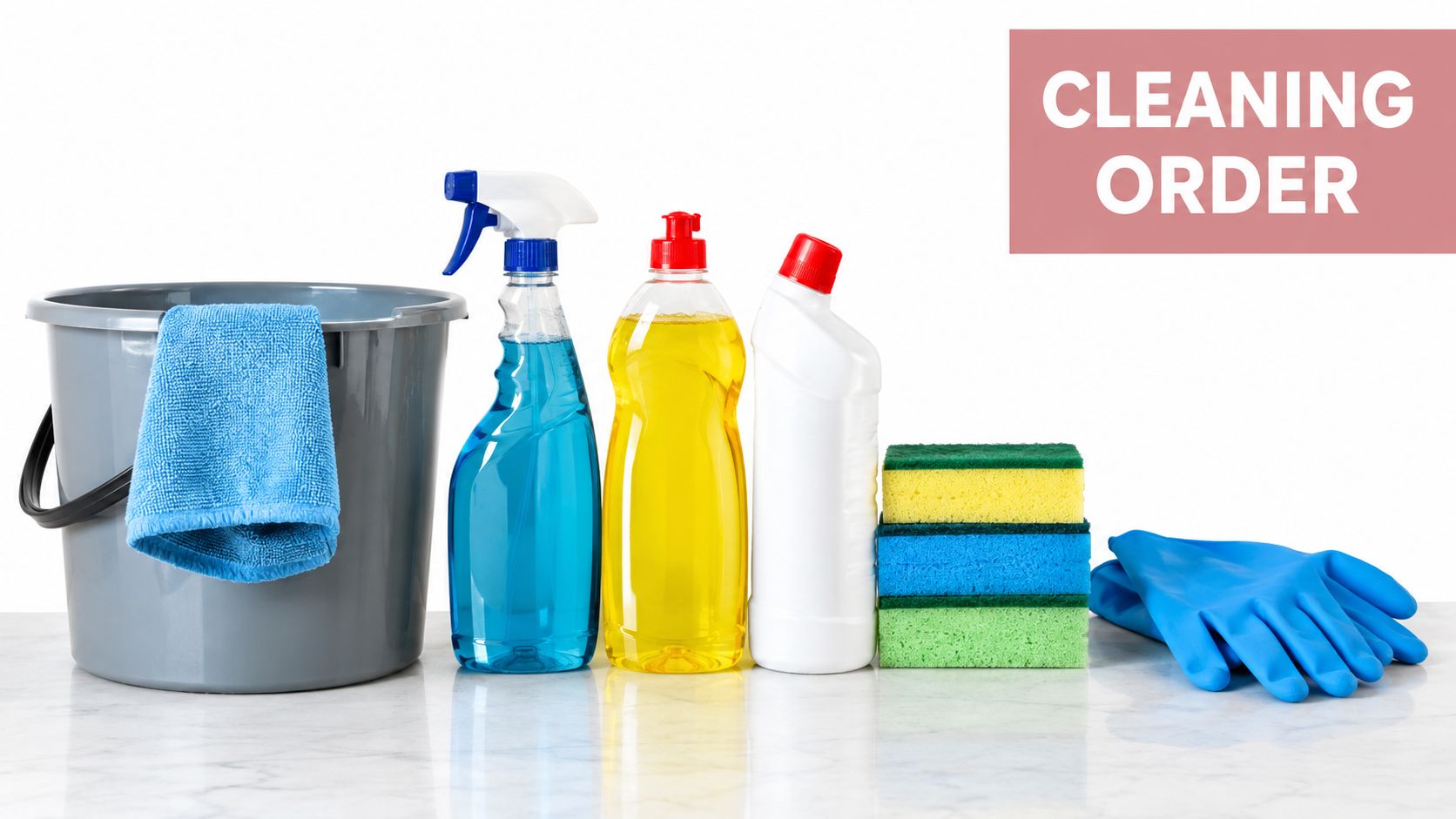
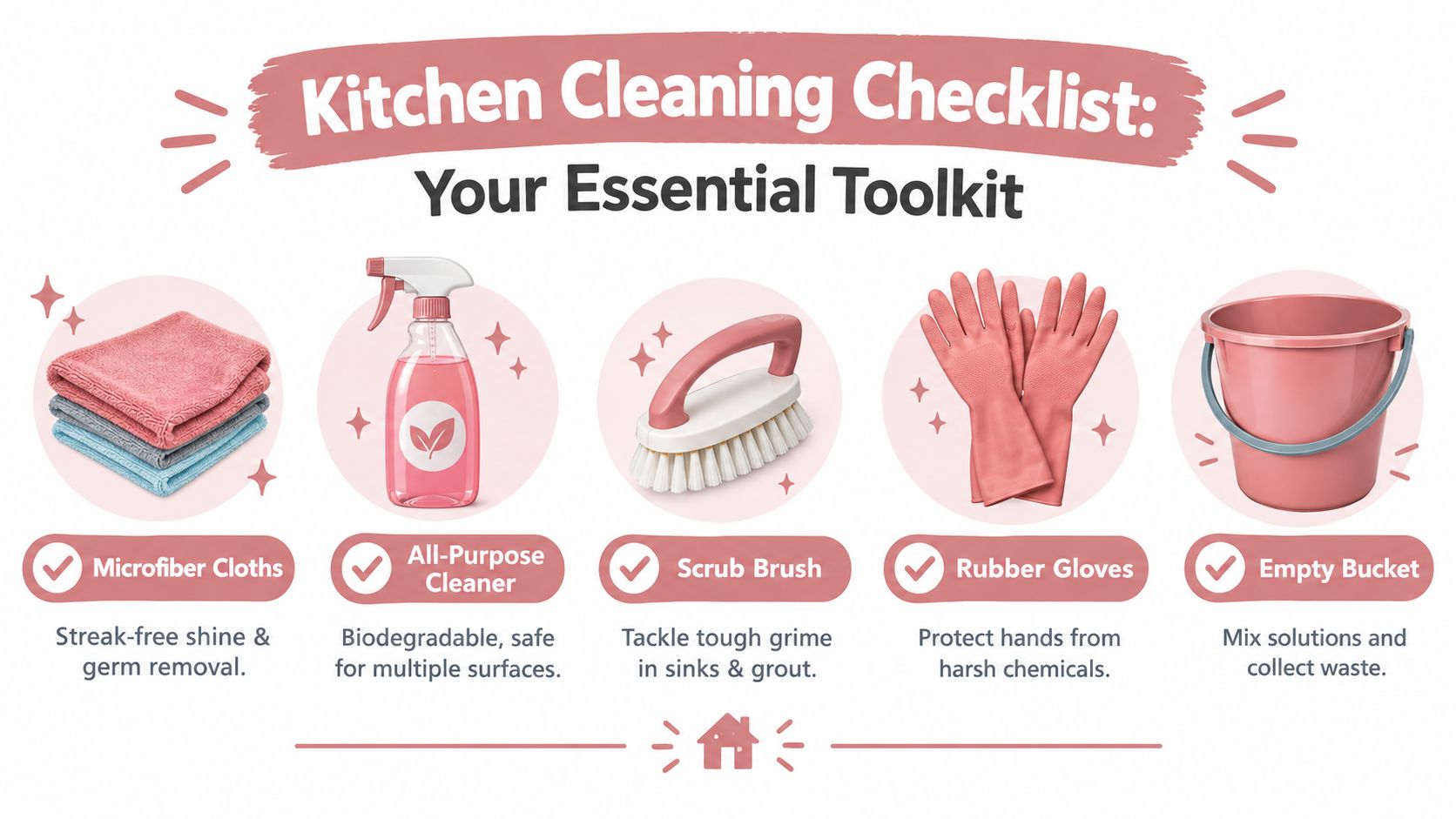
A kitchen clean slows down when supplies are scattered. Set up a bucket or caddy near the work area, then gather microfiber cloths, a scrub brush, a non-scratch sponge, rubber gloves, a broom or vacuum, a mop, dish detergent, and a biodegradable all-purpose cleaner suited to your surfaces. A house cleaning supplies checklist can help you replace missing basics before you begin.
Keep separate cloths for food-contact surfaces, appliance exteriors, and floors. Mark them by color if that prevents mix-ups. A cloth that touched the floor must not return to a counter, sink, or cutting board.
For food-contact surfaces, use this order:
- Remove residues. Scrape away crumbs, grease, meat juices, and stuck-on food.
- Wash. Use warm water and detergent to loosen grease and soil.
- Rinse. Remove detergent and loosened residue with clean water.
- Sanitize. Apply hot water or a suitable sanitizer according to its label.
- Air-dry. Let the surface dry naturally instead of wiping it with a towel.
Sanitizer cannot work properly through grease or food debris. Clean with soap and water first, then rinse, dry, and sanitize where appropriate, as outlined in the CDC cleaning guidance. The Hong Kong Centre for Food Safety cleaning guidance uses the same sequence for counters, sinks, and utensils.
For a chlorine solution, the University of Missouri Extension food-safety guide gives a common mixture of 1 tablespoon of regular, unscented household bleach per 1 gallon of water, or 1 cup per 5 gallons of water. Never combine bleach with ammonia, acids, vinegar, or other cleaners. Follow the product label, ventilate the room, and use bleach only on compatible surfaces.
Contact time determines whether sanitizing works. Some chlorine guidance allows about 50 to 100 ppm for roughly 10 seconds, while other products require 30 seconds to 1 minute, depending on the label. Keep the surface visibly wet for the stated time, then let it air-dry. The domestic disinfectant guidance explains why the label's contact time matters.
How to Clean a Kitchen From Counters to Floors Without Rework
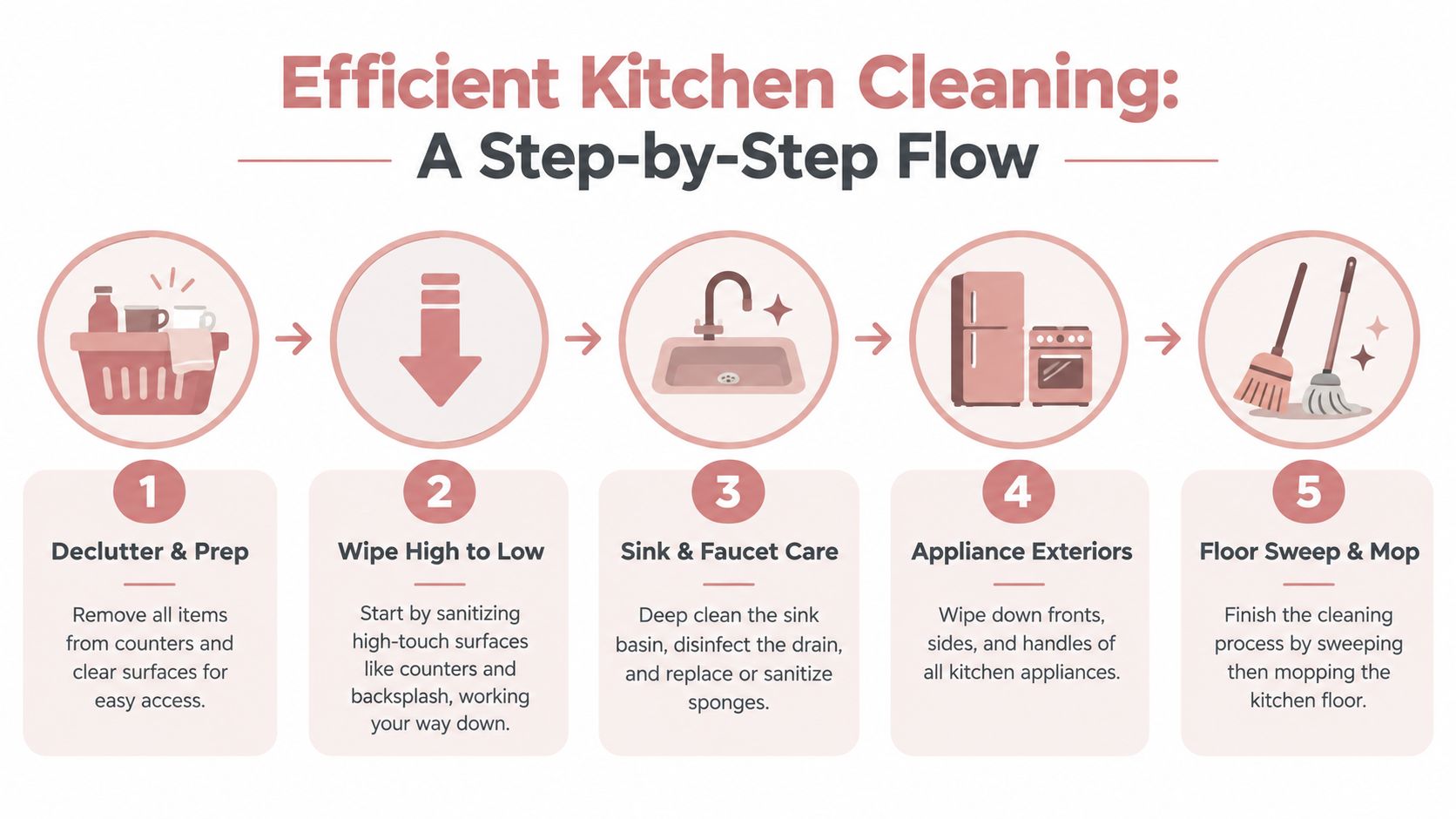
Start by emptying the sink and clearing the counters. Put dishes in the dishwasher, return food to the refrigerator, and place unrelated items in a basket. Don't spray around appliances, utensils, or food containers when you can move them first.
Start high and work toward the messiest areas
Wipe cabinet handles, the backsplash, counters, and the kitchen table from high to low. Use a damp microfiber cloth with a compatible cleaner, then switch to the wash, rinse, sanitize, and air-dry sequence for food-contact areas. If you've prepared raw chicken, treat the cutting board and nearby counter as a separate food-safety task. Remove the board, wash it thoroughly, rinse it, sanitize it if the material allows, and keep it away from ready-to-eat food until dry.
For ordinary grease, warm water and detergent usually outperform repeated sprays. An all-purpose cleaner can be useful for suitable counters, cabinet fronts, and appliance exteriors, and this guide to uses for all purpose cleaner at home offers ideas for using one product more efficiently. Always check whether the surface is sealed, natural stone, finished wood, or manufacturer-protected.
Give the sink and sponge their own pass
The sink is where dirty dishes, raw-food packaging, and cleaning tools meet. Scrub the basin, rim, faucet base, drain area, and handles with detergent and a brush. Rinse away loosened soil before applying sanitizer, and don't use the same cloth on the sink and counter without washing or replacing it.
Treat the sponge and dishcloth as cleaning equipment, not permanent fixtures. A 2020 ASM report found that E. coli, Salmonella, and Staphylococcus aureus survived up to 16 days on a kitchen sponge and up to 13 days on microfiber towels (ASM report). Replace worn or sour-smelling items, wash reusable textiles properly, and leave them open to dry rather than bunched beside the faucet.
Clean appliances before the floor
Wipe the stovetop after it cools. For greasy splatter, let warm detergent solution sit briefly, then lift the residue with a non-scratch pad instead of scrubbing aggressively. Clean microwave walls, the turntable, control buttons, refrigerator handles, and dishwasher edges. If you're cleaning a refrigerator interior, remove food and loose shelves first, then wash removable parts with mild detergent and dry them before replacing them.
For appliance seals, control panels, and finishes, use less moisture than you think you need. Excess liquid can collect around buttons and gaskets. Read the manufacturer's instructions before using abrasive products, bleach, steam, or an oven's self-cleaning cycle. Aquastar's deep cleaning checklist can help you identify appliance interiors and other tasks that don't belong in a quick daily reset.
Finish with floors
Sweep or vacuum under the table, around the baseboards, beside the trash can, and beneath accessible appliances. Pick up food particles before mopping, especially after cooking with flour, rice, or raw ingredients. Use a diluted floor cleaner appropriate for the flooring, change the solution when it becomes visibly dirty, and avoid flooding wood or laminate.
A clean floor should be the final result, not the first task. If you mop before wiping counters and cleaning the sink, falling crumbs and dirty drips force you to repeat the work.
Hidden Spots Often Missed During a Deep Clean
A kitchen can look clean while residue remains in refrigerator drawer tracks, door seals, microwave seams, coffee-maker reservoirs, dishwasher filters, cabinet undersides, faucet bases, and the narrow gap around the sink drain. These areas deserve attention because routine wiping rarely reaches them.
Rinsing removes loose debris and some bacteria, but it does not guarantee a hygienic surface. Cleaning followed by thorough drying or an appropriate disinfectant generally gives better control than rinsing alone. Use the product only on compatible surfaces, follow its label, and allow the required contact time.
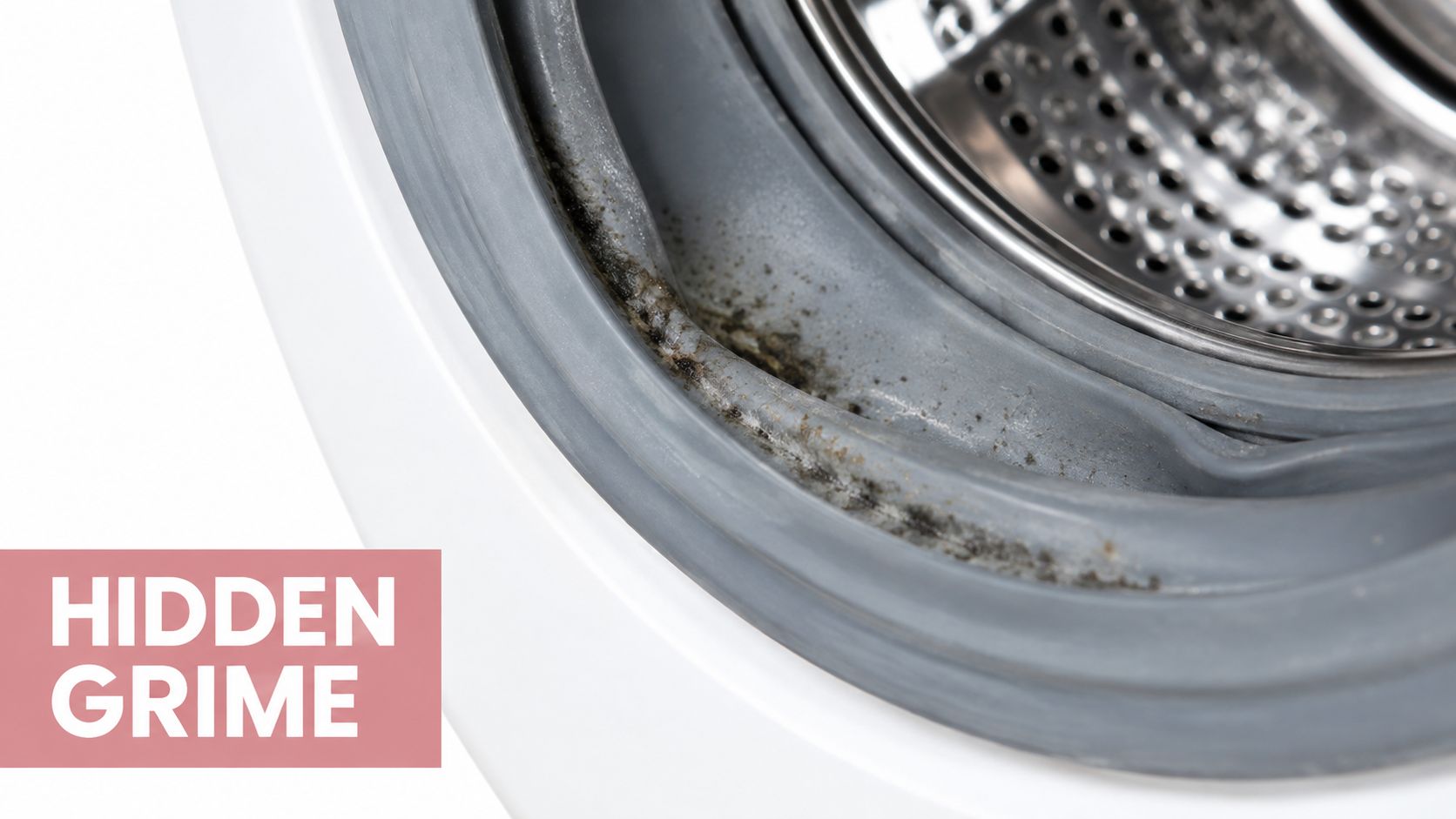
Start with removable parts. Wash refrigerator drawers, coffee-maker components, dishwasher filters, and other detachable pieces with detergent, rinse away residue, and dry them fully before putting them back. Wipe seals and tracks with a cloth that is damp rather than dripping, then dry those folds and edges. Moisture left inside a gasket or drawer channel invites odor and buildup.
The sink drain needs separate handling. Remove accessible food debris first, then follow the fixture manufacturer's instructions. Aquastar's guide to cleaning a kitchen drain covers the parts that surface scrubbing misses. Never combine drain chemicals, and do not pour an incompatible product into the drain to mask an unpleasant smell.
Sponges and dishcloths are hygiene hotspots because they stay damp and collect food residue. Rinse them thoroughly, wring them out, and spread them open to dry. During a deep clean, wash reusable cloths according to their care instructions and replace items that remain sour-smelling or visibly worn. A quick rinse followed by immediate reuse leaves more contamination behind than proper washing and drying.
Finish by checking the spaces behind removable parts, appliance gaskets, fridge drawers, microwave seals, and coffee equipment. Cleaning these points after the surrounding surfaces prevents dirty drips from undoing earlier work.
How Often to Clean Each Part of Your Kitchen
Frequency depends on use, not just appearance. A household that cooks raw meat regularly needs faster attention to boards, counters, utensils, and sink areas than a household that mainly reheats prepared food. Food-safety guidance recommends cleaning and sanitizing high-use food-contact surfaces after each use, when changing from raw to ready-to-eat food, after contamination interruptions, and at least every 4 hours during continuous room-temperature use (Centre for Food Safety guidance).
| Area | Daily | Weekly | Monthly Deep Clean |
|---|---|---|---|
| Counters and food-preparation surfaces | Clean after food preparation | Inspect edges and backsplash | Clean behind small appliances and wall junctions |
| Sink, faucet, and drain area | Wash away food residue | Scrub basin, rim, and faucet base | Detail drain components and difficult-to-reach gaps |
| Sponges and dishcloths | Rinse, wring, and dry openly | Wash reusable textiles and inspect odor | Replace worn or persistently sour items |
| Stovetop and microwave | Wipe visible spills | Clean knobs, seams, and interior splatters | Detail grease buildup and removable parts |
| Refrigerator | Wipe fresh spills and handles | Check drawers, shelves, and seals | Remove shelves and clean the full interior |
| Floors | Sweep food debris and spot-mop | Full sweep and mop | Clean edges, corners, and accessible areas beneath appliances |
| Exhaust and high grease areas | Wipe reachable exterior surfaces | Check for sticky residue | Review a dedicated kitchen exhaust 2026 guide for deeper maintenance decisions |
A short daily reset prevents weekly work from becoming a restoration project. Between recurring visits, use mild biodegradable products where suitable, keep a clean cloth reserve, and assign one household member to check the sink and floor after the evening meal. For families balancing work, school, and activities, a house cleaning schedule for a busy family can turn these tasks into predictable habits.
Pro Tips to Keep Your Kitchen Clean Longer
The cleanest kitchen isn't maintained by one heroic scrub. It stays manageable because small contamination points are handled before they spread.
- Replace cloths on schedule: Safefood reported in 2026 that 90% of adults felt confident in their kitchen hygiene, while 73% skipped key practices, including replacing dishcloths every 2 days and thoroughly washing hands, utensils, surfaces, and chopping boards after raw-food contact (Safefood survey coverage). Build cloth replacement into the routine instead of waiting for odor.
- Clean raw-food areas immediately: Don't leave chicken juices, egg residue, or raw seafood drips until bedtime. Wash the board and surrounding counter before preparing anything ready to eat.
- Keep clean and dirty tools separate: Use different cloths for counters, sinks, and floors. Store dry cloths where air can circulate.
- Choose gentler products thoughtfully: Biodegradable cleaners can suit households with children and pets, but “natural” doesn't automatically mean safe for every finish or effective as a sanitizer. Check the label and surface instructions.
- Delegate the hidden work: DIY is practical for daily resets. A recurring professional visit makes sense when appliance interiors, cabinet edges, floors, and whole-room detail keep slipping from the schedule.
Aquastar Cleaning Services, LLC offers recurring housekeeping, deep cleaning, interior refrigerator and oven add-ons, and customized room-by-room checklists for homes in Kennesaw and North Atlanta. Its insured and bonded teams can use gentle biodegradable solutions when requested, which helps households maintain a consistent kitchen routine without redoing missed areas.
If your kitchen needs more than a quick counter wipe, visit Aquastar Cleaning Services, LLC to request a quote for recurring housekeeping, a deep clean, or interior appliance add-ons. Choose the service scope that fits your home, your schedule, and the kitchen hotspots you want handled first.