


The safest floor cleaners for dogs are non-toxic, pet-friendly, fragrance-free products that leave little residue, followed by thorough rinsing and complete drying before your dog walks on the floor. In a veterinary poison dataset, household chemicals accounted for 15.5% of reported exposures, and dogs represented 84.7% of inquiries, which makes paw contact and licking worth taking seriously. Veterinary poison exposure data
Your dog may be doing exactly what many dogs do after breakfast: padding across the freshly mopped kitchen, settling near the table, then licking damp paws. To you, the sharp lemon or pine scent may signal cleanliness. To your dog, the floor is a surface for walking, resting, sniffing, and grooming, so whatever remains on it can travel from paw to mouth.
The practical question isn't only whether a cleaner is toxic if swallowed directly. It's whether the product leaves a film, whether the room is ventilated, and whether your dog returns before the surface is fully dry.
Introduction to Pet-Safe Floor Cleaning
A freshly cleaned floor can create an exposure route that owners often overlook. A dog walks through a thin layer of cleaning solution, the liquid dries on the paw pads or fur between the toes, and normal grooming transfers some of that residue into the mouth. The amount may be small, but repeated contact is exactly why low-residue products and careful drying matter.
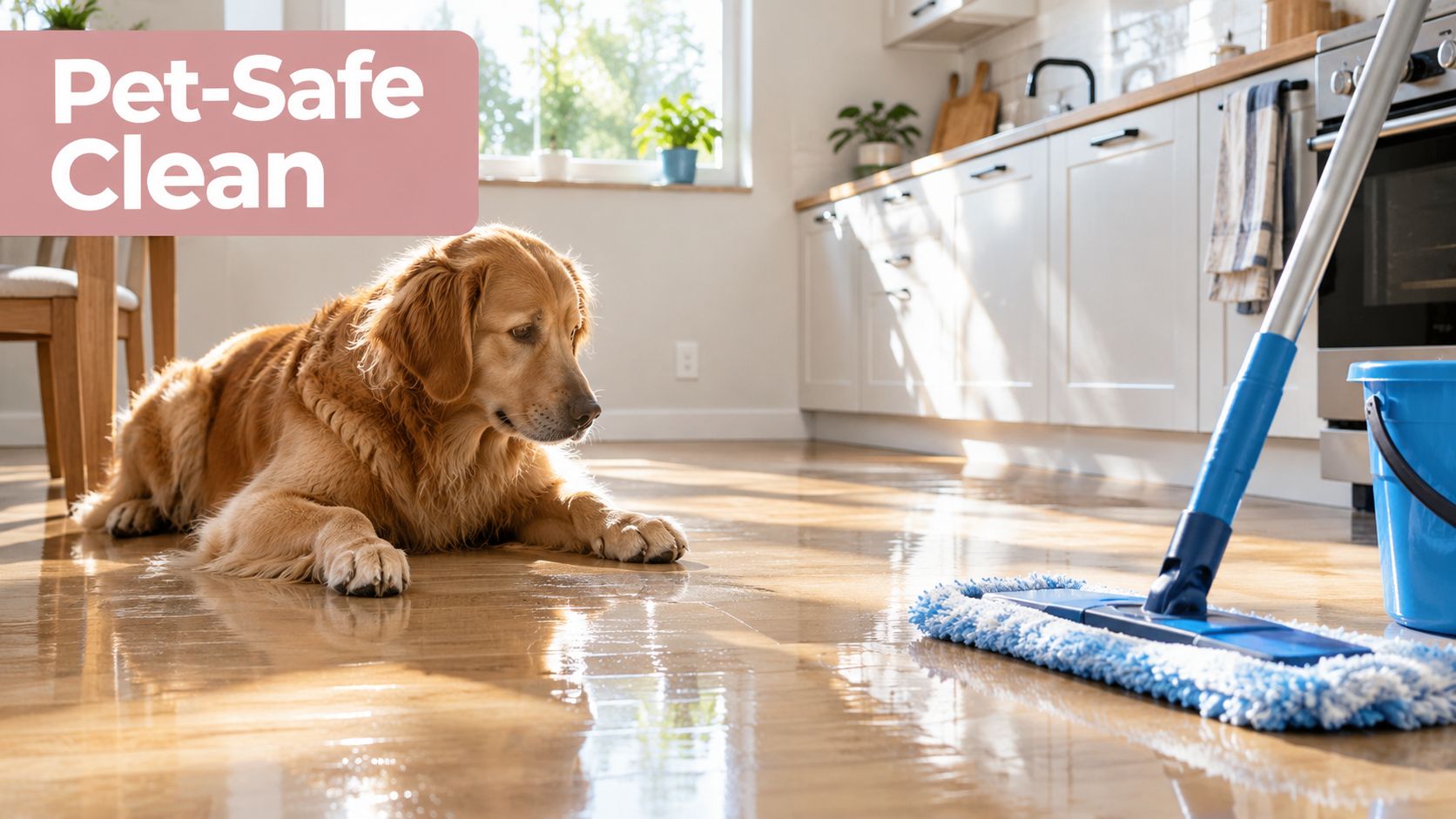
This doesn't mean every household cleaner will poison a dog. It means the safest routine removes the cleaner from the equation as much as possible. Choose a fragrance-free, pet-compatible formula, use only the amount needed, ventilate the room, and block access until the floor no longer feels damp or smells strongly.
Practical rule: If your dog can walk on the floor, lie on it, and lick its paws afterward, treat the floor as a high-contact surface.
The pet odour prevention advice from Top Cleaners is useful for another reason: controlling odours at their source can reduce the temptation to rely on heavily perfumed products. Removing food debris, washing bedding, and cleaning accident areas promptly often works better than covering smells with a strong scent.
For a broader home-care routine, see this guide to house cleaning for pet owners. The same principle applies throughout the home: clean thoroughly, limit residue, and give your dog time away from wet surfaces.
Understanding the Risks of Common Cleaners
A dog can cross a freshly mopped floor, settle down, and start licking its paws before the surface seems fully dry. That small, repeated contact is the main concern with ordinary floor cleaners. Exposure can also occur through vapour in a poorly ventilated room or direct contact with a wet product. Risk varies with the formula, concentration, amount applied, and drying time.
Household cleaning products appeared in 8.3% of Animal Poison Control Center calls in ASPCA-related reporting. Products used on floors can leave exposure points through spills, wet patches, or residue. Ingredients identified as common toxic concerns include ammonia, bleach, chlorine, formaldehyde, and isopropyl alcohol. See PetMD's overview of cleaning products that can harm pets for further ingredient context.
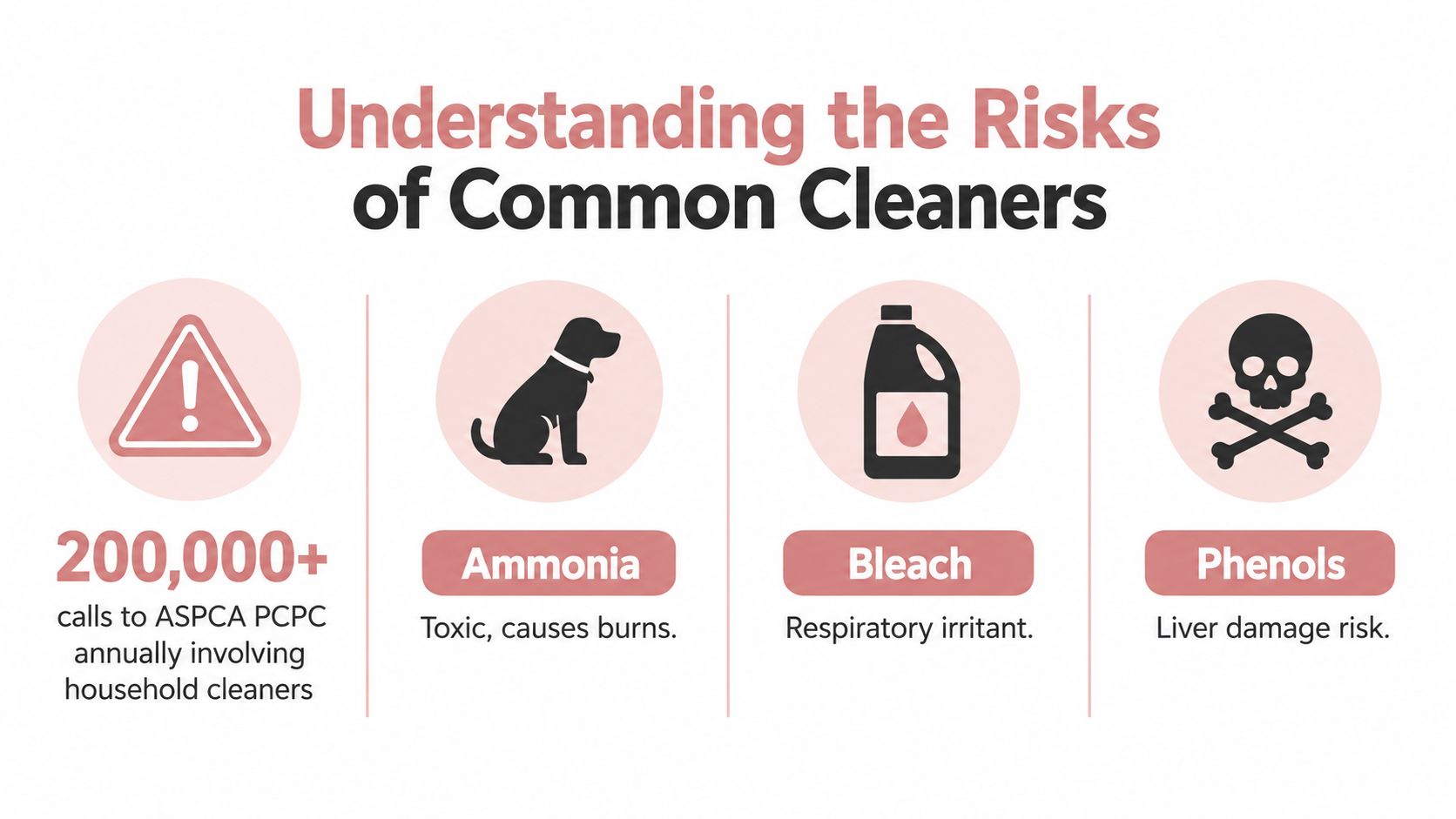
The same veterinary dataset found that 95.5% of exposures occurred by the oral route, which is why paw licking deserves attention. A dog does not need to drink from a cleaning bucket. Walking over a damp surface can place residue between the toes, where grooming may later transfer it to the mouth.
Recognising symptoms and preventing chemical reactions
Ammonia and bleach may irritate the eyes, airways, skin, and mouth. Phenols, formaldehyde, chlorine compounds, and isopropyl alcohol also warrant caution, particularly when a concentrated product is used in a closed room or remains wet. Possible signs include drooling, vomiting, oral irritation or burns, and respiratory irritation. If your dog licks a product or develops concerning symptoms, contact your veterinarian or an animal poison service.
Hydrogen peroxide raises a separate question for rugs and upholstery. A carpet may hold moisture and cleaner longer than a hard, sealed floor, increasing contact with paws and fur. Before using it where a dog lies or grooms, review the risks of hydrogen peroxide for rugs. A mild-sounding ingredient is not automatically suitable for every material or pet-contact area.
Never combine cleaning products casually. Bleach must never be mixed with ammonia, because the reaction can produce dangerous toxic gases. CDC guidance on cleaning and disinfecting pet supplies supports using one product exactly as directed, then rinsing thoroughly before changing products. Keep dogs out during cleaning, ventilate the room, and allow hard floors to dry fully. Rugs may need longer drying and airflow.
For the difference between routine cleaning and germ control, see this explanation of sanitizers and disinfectants. Routine floor cleaning generally does not require the harshest available chemistry.
How to Choose the Safest Floor Cleaners
Start with the label, not the picture of leaves on the bottle. Words such as “natural,” “green,” or “plant-based” don't tell you enough about residue, fragrance, concentration, or surface compatibility. A safer choice has a clear ingredient list and instructions that make it easy to use a small amount correctly.
A simple label check
Use this sequence in the shop or while comparing products online:
Look for pet-safe or non-toxic language, then verify the details. These claims are helpful starting points, but they aren't a substitute for reading the ingredients and directions.
Prefer fragrance-free formulas. A strong scent can linger after the floor appears dry, and fragrance adds no cleaning benefit when the goal is to remove soil and residue.
Screen for high-concern ingredients. Be cautious with ammonia, bleach, chlorine, phenols, formaldehyde, and isopropyl alcohol, particularly in products intended for frequent whole-floor use.
Choose low-residue chemistry. The floor should dry clean rather than sticky, glossy from a coating, or slippery underfoot.
Match the product to the surface. A cleaner intended for sealed hardwood may not suit natural stone, unsealed flooring, rugs, or carpet. Always follow the flooring manufacturer's care instructions.
Why residue matters more than scent
A clean-smelling room isn't necessarily a clean room. Heavy fragrance can mask the fact that a product leaves a film, while a low-residue formula may have little smell at all. For dog households, the second option is usually more practical because paws repeatedly touch the surface and dogs often groom afterward.
Expert guidance favors low-residue, fragrance-free or plant-based formulations and limited solution use for routine hard floors. Pet-oriented products often highlight ammonia-free, phosphate-free, and paraben-free compositions, with some designed for sealed hardwood, hard surfaces, carpet, or area rugs. NBC Select's pet-safe floor cleaner guidance
A useful comparison looks like this:
| Label or product feature | What it tells you |
|---|---|
| Fragrance-free | No added fragrance is intended to remain on the floor |
| Low residue | Less film should remain after drying |
| Full ingredient disclosure | You can investigate the actual formula |
| Surface-specific directions | The manufacturer has identified compatible flooring |
| Pet-safe instructions | The product gives guidance for keeping animals away during use |
For more ideas about lower-impact products, review these UK pet safe cleaning recommendations. You can also compare approaches in this guide to an eco-friendly floor cleaner, while still checking whether the specific product suits your flooring and your dog's sensitivities.
DIY Safe Cleaning Solutions for Dog Owners
A homemade cleaner can be sensible for light soil, but “homemade” doesn't automatically mean harmless. The mixture still needs to suit the floor, stay diluted, and dry fully before your dog returns.
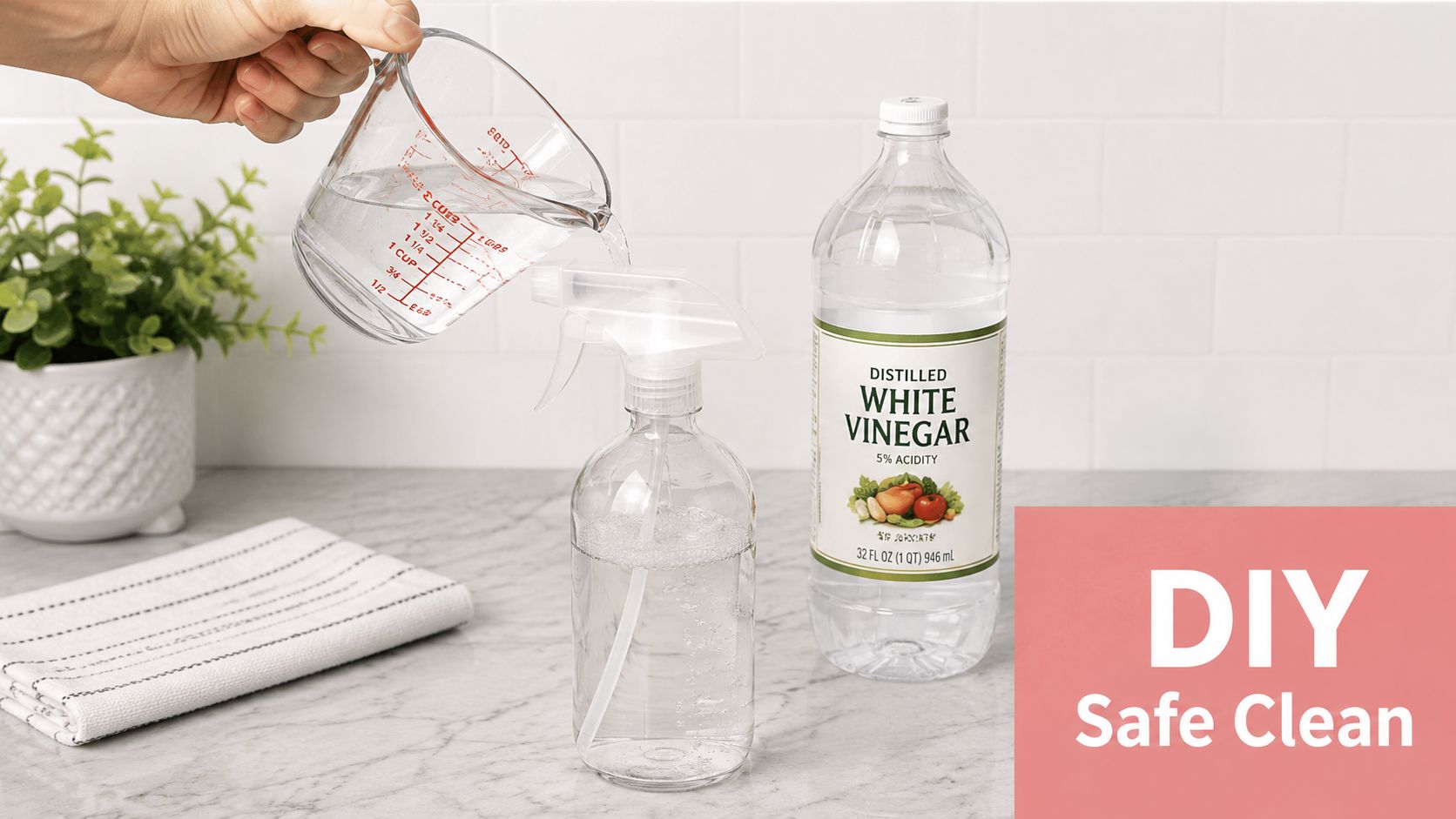
For routine hard-floor cleaning, a commonly used option is one part white vinegar mixed with one part water. The Ontario SPCA gives this example for pet households but warns that undiluted vinegar can irritate the mouth and may cause vomiting or diarrhoea if ingested. Ontario SPCA spring-cleaning safety guidance supports the important follow-up: mop with the diluted solution and keep your dog out until the floor is dry.
Don't use vinegar automatically on every surface. Its acidity may be unsuitable for some natural stone, delicate finishes, or flooring with manufacturer restrictions. Test an inconspicuous area first, apply only enough solution to clean the floor, and avoid spraying into the air if your dog or a family member reacts to strong smells.
A practical example is a tiled kitchen with dried food marks. Sweep first, dampen a microfiber mop with the diluted mixture, clean the affected area, open a window, and place a baby gate across the entrance. If the floor still feels tacky when dry, wipe it again with clean water.
For additional vinegar-based household methods, see these four ways to clean with distilled vinegar.
Avoid adding essential oils just to make the room smell fresh. A dog-safe routine needs predictable, low-residue ingredients, not a stronger scent. If you can't confirm that a DIY mixture is compatible with the floor or your dog's skin and respiratory sensitivity, a clearly labelled commercial product may be the more controlled choice.
The Role of Professional Cleaning Services
Professional cleaning can help when the challenge isn't choosing a bottle, but applying a safe routine consistently across the home. A trained team can identify high-traffic areas, remove soil before it becomes embedded, use the correct tool for the surface, and follow a process that limits excess solution.
That matters in homes with dogs because over-wetting creates two problems at once. It extends the time before the floor is safe to cross, and it gives residue more opportunity to transfer onto paws. A careful cleaner uses controlled moisture, suitable products, ventilation, and clear instructions about when pets can return.
What to ask before booking
Don't rely on a general promise that a service is “green.” Ask practical questions:
- Which products will you use? Request fragrance-free or pet-safe alternatives if your dog has sensitive paws or reacts to odours.
- How will you protect wet floors? The company should explain how it separates pets from the work area and manages drying.
- Will you rinse or remove residue? This is particularly important for hard floors, rugs, and any surface where your dog lies down.
- Can you follow a custom checklist? Ask the team to prioritise feeding zones, entryways, accident areas, and floors beneath furniture.
- Do you handle the flooring type correctly? Hardwood, tile, sealed stone, carpet, and laminate each need appropriate methods.
For a dog household in Kennesaw or North Atlanta, Aquastar Cleaning Services, LLC offers recurring housekeeping, deep cleaning, move-in and move-out cleaning, and post-construction cleanup. Its service information describes customizable plans and biodegradable cleaning solutions when requested, which gives owners a way to discuss product preferences before the appointment.
Carpet needs extra care because fibres can hold moisture and cleaning product longer than a smooth sealed floor. If your dog spends time on rugs or carpet, ask about the company's carpet cleaning experts and explain where your dog sleeps, plays, and grooms.
A practical booking example is a family with a dog that tracks mud through the entryway. The owner can request a recurring plan, identify the entryway and kitchen as priority zones, ask for fragrance-free products, and keep the dog in another room until the technician confirms that treated surfaces are dry. That conversation is more useful than only asking for “pet-friendly cleaning.”
Creating a Safe Cleaning Routine for Your Home
A safe routine can be simple enough to repeat on a busy morning. Put your dog in another room before mopping, sweep or vacuum first, apply a small amount of a fragrance-free low-residue cleaner, and open a window or run ventilation. Keep the barrier in place until the floor is fully dry and no heavy odour remains.
If you mop the kitchen in the evening, leave the dog with a family member or behind a gate while you clean. Check the floor before bedtime. It shouldn't feel wet, slick, or sticky, and your dog shouldn't be able to walk across it just because the surface looks clean.
Keep products secured, never mix bleach with ammonia, and contact a veterinarian or animal poison service if your dog licks a concentrated cleaner or develops drooling, vomiting, mouth irritation, or breathing difficulty. Consistency is more protective than using a stronger product occasionally.
Aquastar Cleaning Services, LLC provides recurring housekeeping, deep cleans, move-in and move-out services, post-construction cleanup, and specialised carpet care for homes in Kennesaw and North Atlanta. Ask about a customised plan and gentle, biodegradable cleaning solutions for a home with dogs, then visit Aquastar Cleaning Services, LLC to request an estimate.