


The apartment looks ready from the doorway. Then you open the oven and find baked-on grease, pull out the refrigerator drawers and find residue underneath, and notice wall marks behind where furniture stood. Floor stains appear only in strong daylight. Outside, the porch has algae, the garage contains abandoned items, and a slow utility-room leak has left discoloration behind the washer.
That's why a move out cleaning checklist for landlords must do more than list surfaces to wipe. It should separate ordinary cleaning from repair responsibility, lease-based tenant duties, safety concerns, and the documentation needed before a deposit decision. In many rental markets, the practical legal benchmark is restoration to the condition recorded at move-in, not an obligation to make an older property look brand new. California security-deposit guidance and UK deposit guidance both reflect that condition-based approach.
Start by confirming the lease requirements and reviewing the move-in report. Clean room by room, inspect for damage as surfaces become visible, photograph before-and-after conditions, arrange add-on services, and leave enough time for drying and reinspection. If a plumbing concern appears during the turnover, use a practical rental property plumbing guide before assigning responsibility.
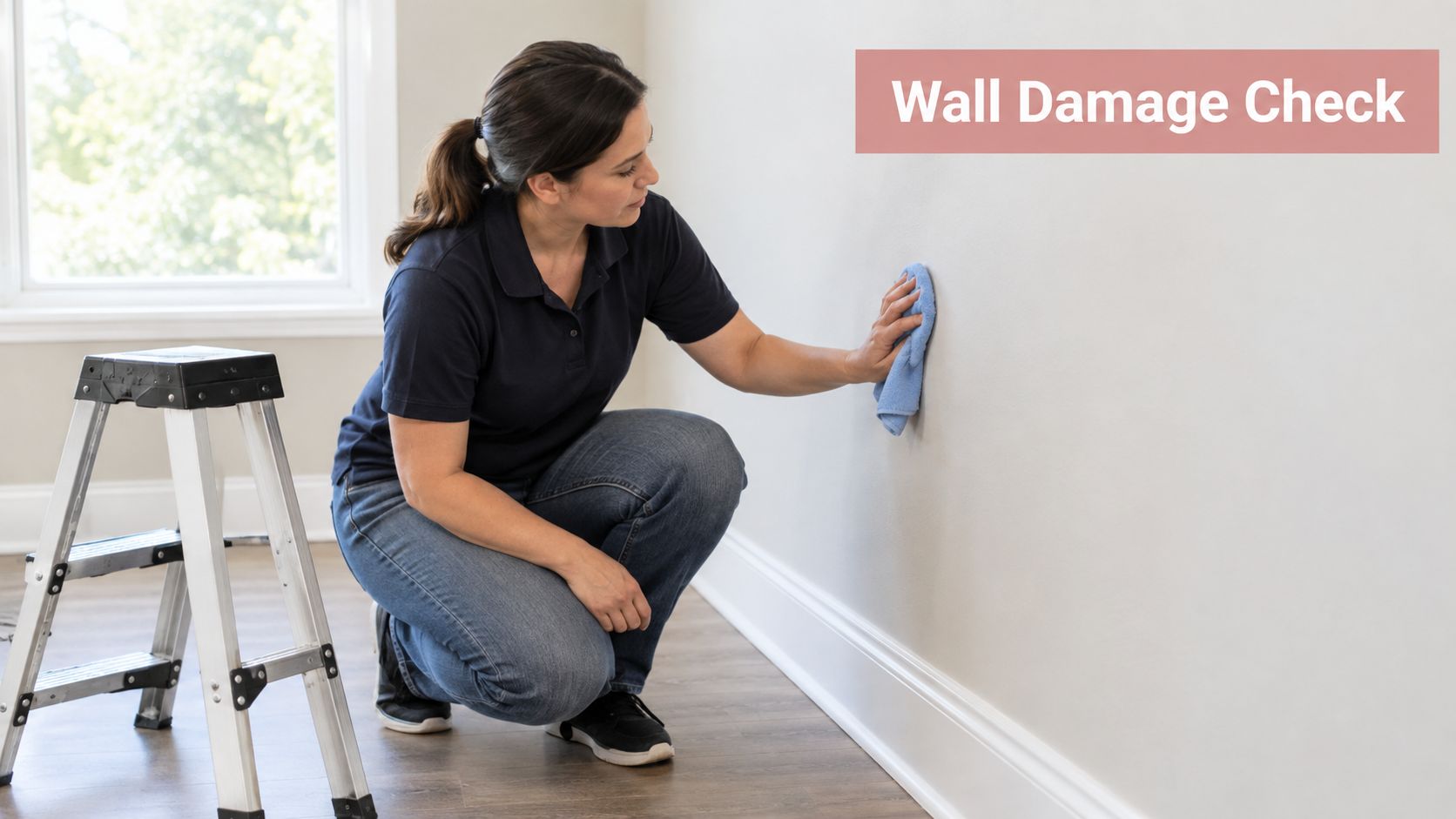
1. Deep Clean All Interior Walls and Baseboards for Damage Assessment
Walls and baseboards should be cleaned early because dirt can hide damage, while aggressive spot cleaning can create a new paint problem. Walk each room with adequate daylight, inspect upper corners with a step ladder, and record blue marker, scuffs, holes, adhesive residue, stains, pet scratches, and furniture indentations before deciding whether the issue is cleaning, repair, or ordinary wear.
A Kennesaw apartment, for example, might have blue marker scribbles in the living room. A wall-safe solution and a microfiber cloth may remove most of the marks. Photograph the remaining discoloration before touching it again. If the paint is damaged, a painter should assess it rather than letting a cleaner scrub through the finish.
Practical rule: Clean what can be safely removed, then document what remains. Don't treat every visible mark as chargeable damage.
Test a pH-balanced cleaner on an inconspicuous section first. Remove poster or vinyl-decal residue methodically, because rushing with a scraper can tear paint or drywall paper. In a Marietta bedroom, removing adhesive from a large decal may restore the wall without any deduction. In a North Atlanta family home, however, pet scratches along lower baseboards may remain after cleaning and support a separate repair assessment.
For technique, use a soft microfiber cloth, controlled moisture, and strong side lighting. A wall-cleaning guide can help cleaners choose a safer sequence for painted surfaces. Take room-wide and close-up photographs before and after the work, then keep a painter available when cleaning can't restore the finish.
2. Thorough Kitchen Appliance Cleaning Including Interior Refrigerator and Oven Inspection
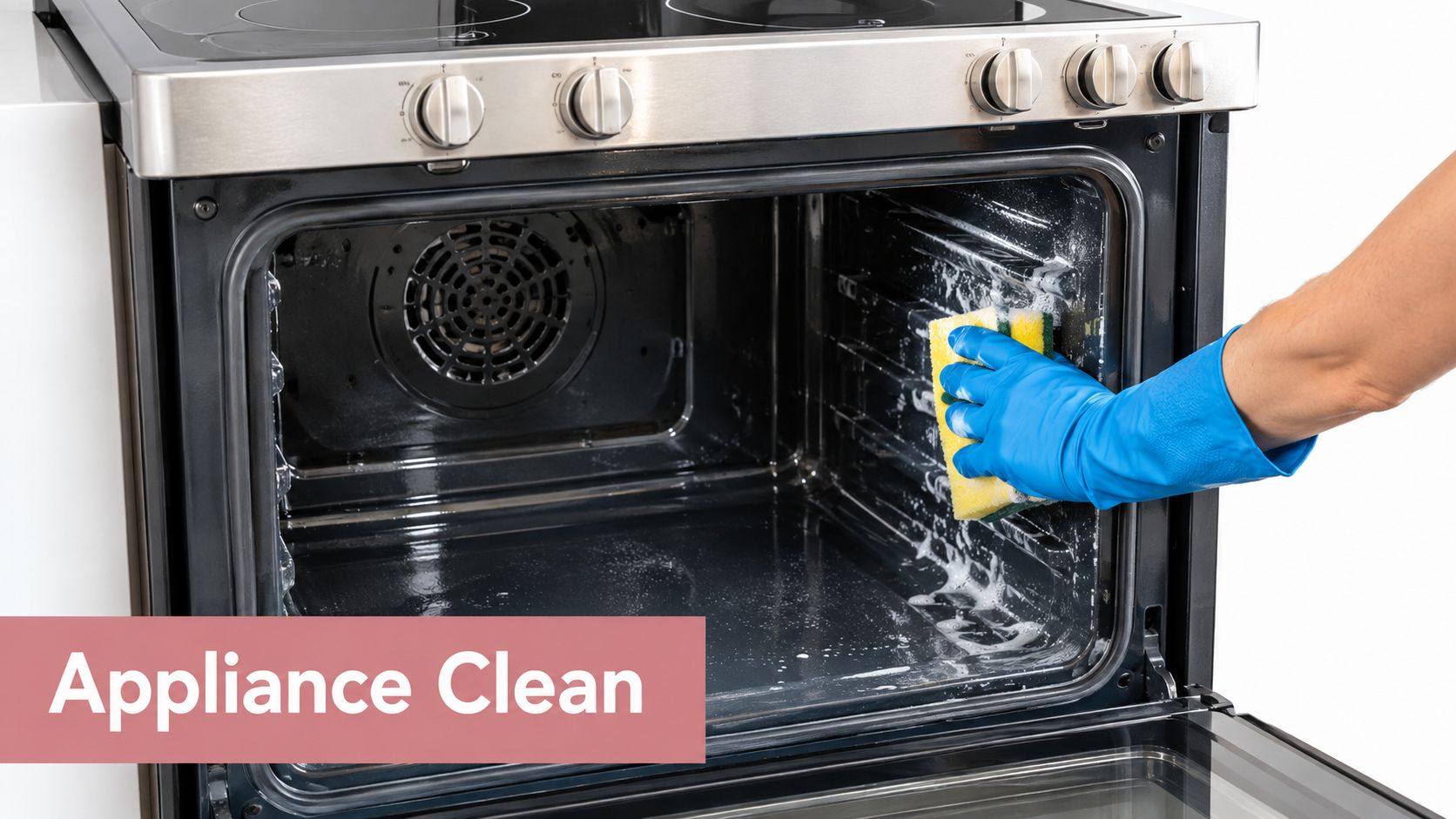
A kitchen can look clean while its most important inspection points remain untouched. Open every appliance, remove racks and drawers where practical, and inspect the surfaces that a quick wipe misses. The oven, refrigerator, dishwasher, microwave, stovetop, range hood, cabinet interiors, and floor beneath accessible appliances all need separate attention.
An Acworth rental with spilled food and mold inside the refrigerator requires more than deodorizing. Photograph the interior before cleaning, remove shelves and drawers, clean door gaskets, and record whether the condition reflects removable residue or damage that needs replacement. A landlord should itemize any cleaning cost rather than applying a vague “kitchen fee.” Cleaning is one of the most common deposit deduction categories, and deposit-deduction guidance emphasizes reasonable, condition-based recovery.
Inspect the appliance, not just its appearance
Remove oven racks and degrease them separately. Check the stovetop, drip areas, range hood filter, dishwasher filter, seals, and microwave turntable. Inspect refrigerator coils for dust or pet hair, but distinguish routine maintenance from tenant-caused neglect or a pre-existing mechanical issue.
A Kennesaw apartment with baked-on stovetop grease may respond well to careful degreasing and stainless-steel conditioning. A Smyrna house with food debris and rust inside the dishwasher may need a written service assessment if cleaning reveals damage. The evidence should show the condition, the work completed, and any remaining defect.
Use an eco-friendly degreaser when it's suitable for the appliance coating, and document known appliance age and maintenance history. For a specialized service, link the scope to kitchen cleaning services, especially when an incoming tenant is scheduled soon.
3. Carpet and Hard Floor Deep Cleaning with Stain Documentation
Floors need a clean-before-judgment process. Dirt can make ordinary wear look worse, while extraction can reveal permanent stains, pet odor, grout damage, scratches, or discoloration that cleaning won't correct. Photograph each floor from several angles before work begins, then repeat the photographs after the surface dries.
A Dunwoody rental with dark carpet may reveal permanent pet urine stains after hot water extraction. That result is different from removable traffic soil. Ask the cleaning company for a written estimate if replacement is being considered, and compare the condition with the move-in record and the flooring's age. Landlords generally can't deduct for normal wear and tear such as worn carpet or minor scuffs, as explained in landlord-tenant deposit guidance.
Clean first, inspect second, and charge only for the documented difference that exceeds ordinary aging.
Hard floors need the same discipline. A Kennesaw apartment with dull hardwood may improve through cleaning and conditioning, while a Marietta bathroom with dark grout growth may need treatment and a moisture investigation. Don't describe every worn floor as tenant damage. Note whether the issue is dirt, a maintenance condition, or a permanent alteration.
Schedule carpet work early enough for complete drying and reinspection. Use a moisture meter where appropriate, keep the property unoccupied until the floor is ready, and record pre-existing marks before a new tenant arrives. For specialist support, use carpet cleaning experts.
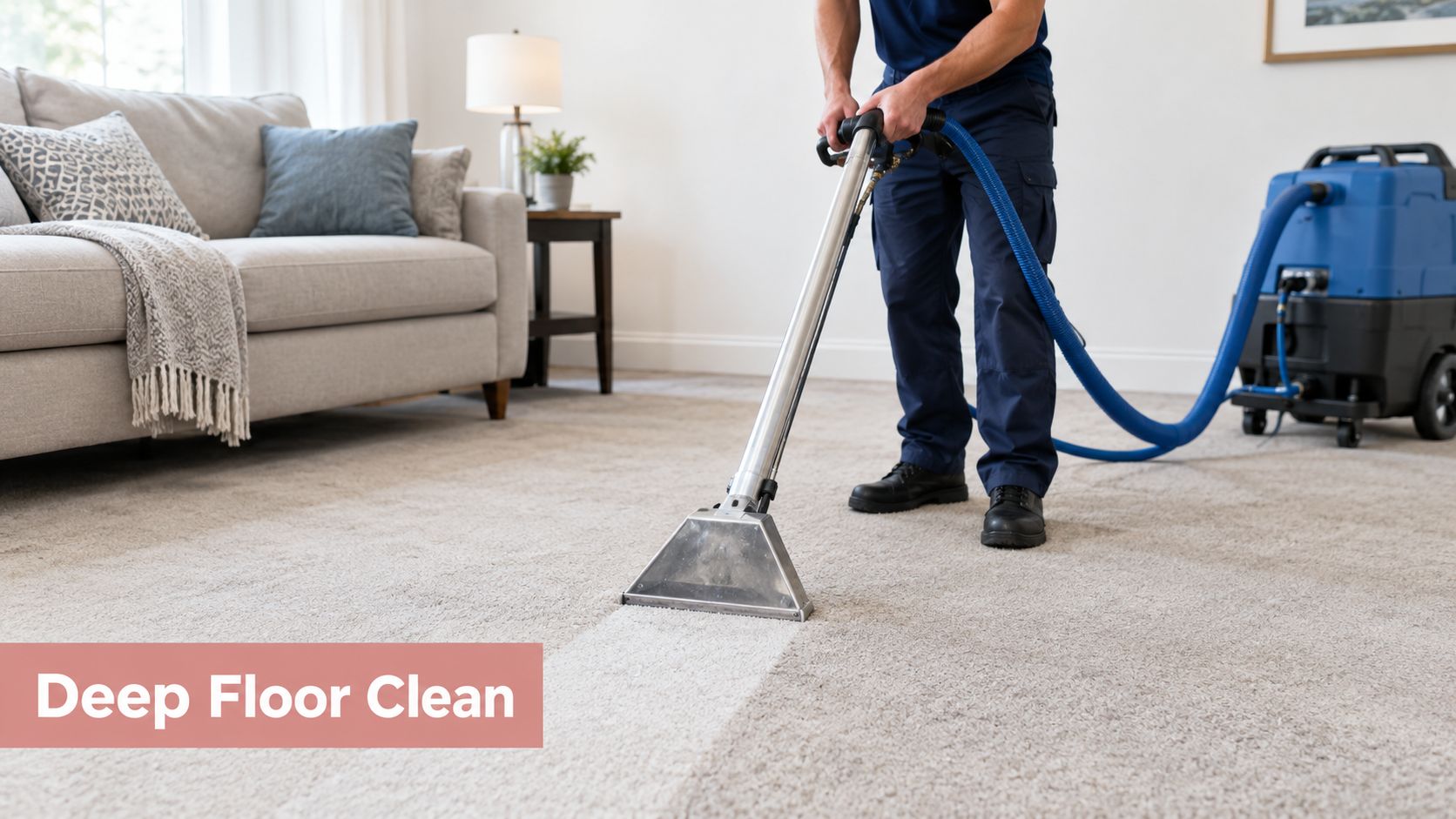
A floor-cleaning demonstration can also help a turnover team align expectations before scheduling extraction.
4. Bathroom Fixture and Surface Sanitization with Mold and Mildew Inspection
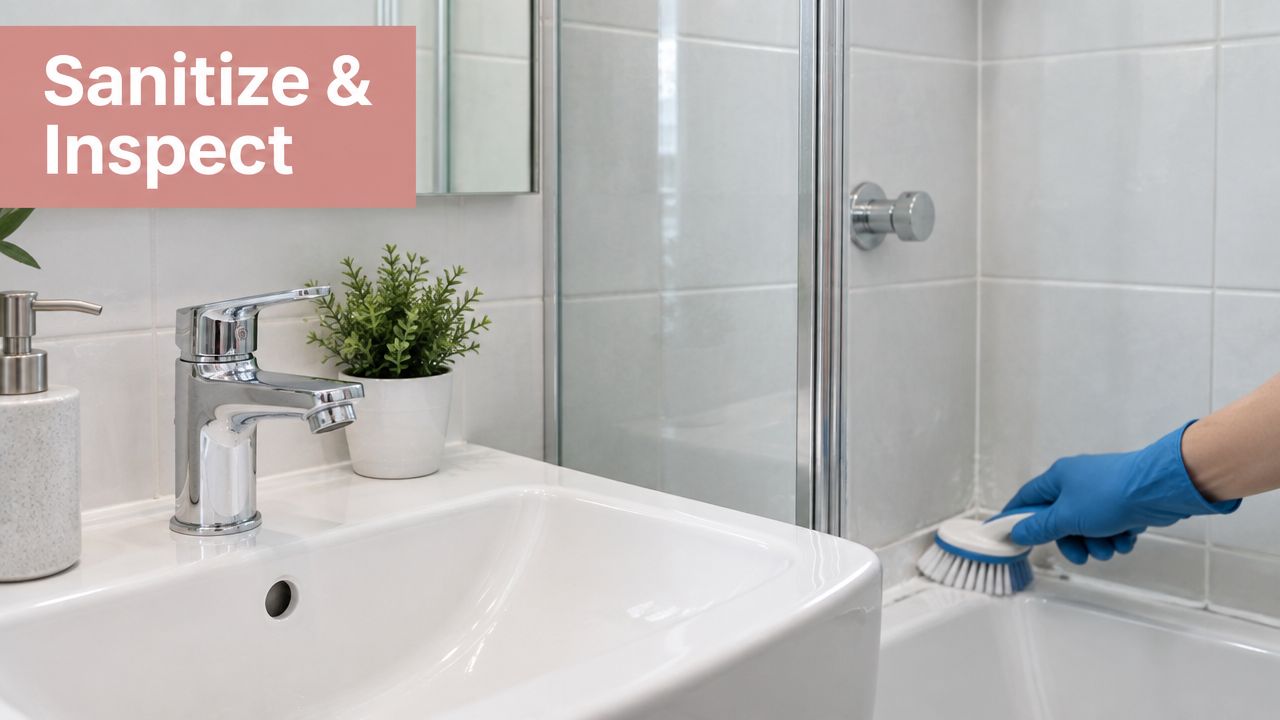
Bathrooms combine cleaning, safety, maintenance, and possible habitability concerns. Sanitize the toilet, sink, tub, shower, tile, grout, mirror, cabinet interiors, exhaust fan cover, and floor. Then inspect caulk, grout, fixture bases, ventilation, and signs of leaking before assigning any cost to the tenant.
An Alpharetta apartment with mold around shower caulk may reflect poor ventilation, a failed seal, or a building moisture problem. A Kennesaw condo with heavy mineral buildup may need descaling rather than fixture replacement. In a Johns Creek house, black growth around the toilet base and inside the exhaust duct may point to a leak that belongs in the landlord's repair log.
Separate sanitation from source control
Photograph conditions under natural and artificial light. Check whether the exhaust fan operates, note the filter condition, and use a moisture meter when visible evidence suggests hidden moisture. Don't use chemicals that weaken caulk or grout before recording the original condition. Ventilate the room during cleaning and follow product safety directions.
This bathroom deep-cleaning checklist can help organize the work, but the final inspection still needs lease and move-in comparisons. Cleaning soap scum is different from repairing a failed shower seal. Removing surface mildew is different from correcting an active leak.
Keep remediation materials available for urgent post-inspection work, but bring in a qualified specialist when the source is uncertain. A deduction should identify the specific unclean area or tenant-caused condition, not merely label the whole bathroom as “mold damage.”
5. HVAC System and Air Filter Inspection with Duct Cleaning Assessment
The HVAC inspection starts with the filter, but it shouldn't end there. Confirm the filter size, compare the used filter with a new one, inspect visible return and supply areas, check airflow, and record unusual odors, sounds, or temperature inconsistencies. Review the lease before treating filter replacement as a tenant charge.
A Marietta home with a filter packed with pet hair may support a maintenance claim if the lease clearly assigns filter changes to the tenant. A Kennesaw apartment with visible growth near return vents requires a deeper assessment before anyone concludes that the tenant caused it. A Powder Springs property with blocked supply vents may need furniture removal, cleaning, and airflow testing rather than immediate system replacement.
Record evidence before changing the filter
Photograph the old filter in place, then photograph the replacement and keep the purchase or service record. Use a flashlight to inspect accessible duct sections, but don't make unsupported conclusions about concealed ductwork. If the system has a known maintenance history, add the inspection notes to the property file.
Filter neglect can accelerate wear, but a landlord still needs to distinguish tenant duties from normal equipment aging, moisture intrusion, and landlord maintenance. A cleaning-related charge should connect to the lease, the observed condition, and a reasonable service cost. For background on duct-related service considerations, consult AC duct cleaning cost guidance.
Schedule HVAC contractors separately when cleaning exposes a mechanical or indoor-air-quality issue. Don't let a turnover cleaner disassemble equipment beyond the agreed scope.
6. Window and Glass Surface Cleaning with Frame and Seal Inspection
Windows reveal both cleanliness and deferred maintenance. Clean the interior glass, accessible exterior glass, sills, tracks, frames, and screens, then inspect seals, weatherstripping, locks, and operation. Grime often hides water staining, mold, peeling paint, or a failed seal.
In Acworth, heavily marked sills with condensation-related mold may require moisture control rather than a simple cleaning charge. In Kennesaw, deep scratches on a living-room pane should be photographed close up and from a wider angle so the damage can be distinguished from ordinary streaking. In Smyrna, peeling frame paint and separated exterior caulk may reveal water infiltration that belongs to the landlord's maintenance plan.
Use daylight to expose the real condition
Photograph windows in natural light, especially when documenting scratches, fogging between panes, or damaged screens. Clean tracks with a vacuum and a damp cloth, but avoid forcing debris into drainage channels. Test each window's movement and lock, then write the result in the inspection notes rather than relying only on images.
A failed insulated-glass seal isn't a cleaning issue, even if the window looks dirty. Likewise, a cracked pane may be chargeable damage, while aged weatherstripping is usually a maintenance matter. Keep installation and repair records so the final decision reflects the property's history.
Exterior frame washing can expose coating failure or mold, but use a safe method for the material. If pressure washing is appropriate, protect surrounding surfaces and photograph the condition before work begins.
7. Bedroom and Living Area Floor-to-Ceiling Deep Cleaning with Lighting Fixture Inspection
Work from the ceiling down in bedrooms and living areas. Dust ceiling fans, light fixtures, vents, shelves, closet interiors, doors, trim, switches, baseboards, and floors. Inspect under remaining furniture, behind fixtures, and inside closets because these areas often remain invisible during a quick showing.
A Woodstock home may have water staining hidden behind a decorative light fixture. Cleaning the ceiling won't resolve a roof leak, so photograph the stain, record its location, and create a repair item separate from turnover cleaning. In a Kennesaw bedroom, mold on a closet's rear wall may indicate water intrusion. That evidence protects the landlord from incorrectly charging the tenant for a structural issue.
A clean surface can reveal a maintenance problem. Don't erase the evidence before you photograph it.
Check bulb type and wattage against the fixture requirements, and replace failed bulbs when the lease or turnover standard calls for it. A Marietta house with heavily dusted fan blades may show reduced illumination and poor presentation, but that doesn't mean the fixture needs replacement. Cleaning, safe bulb replacement, and a function test may be enough.
Use a step ladder safely, inspect ceilings with strong lighting, and photograph stains before and after cleaning. Record closet condition, door operation, and any remaining marks. This room-by-room evidence supports a clearer distinction between tenant cleaning duties, ordinary aging, and landlord repairs.
8. Garage and Storage Area Deep Clean with Structure and Safety Inspection
Garages and storage rooms need their own inspection, not a quick sweep after the main clean. Remove authorized debris, inspect corners and walls, degrease floors where appropriate, check for moisture, and look for cracks, oil stains, pests, abandoned belongings, and unsafe conditions. Photograph stored items before disposal decisions are made.
A Canton garage with vehicle oil stains may improve substantially through careful degreasing, which can eliminate the need for a cleaning deduction. In Kennesaw, mold in a storage area may point to ventilation or moisture control rather than tenant housekeeping. In Acworth, old ceiling stains and possible wood deterioration should be documented as pre-existing or structural concerns before cleaning changes the appearance.
Protect the record while improving the space
Use strong overhead lighting for floor photographs and a moisture meter for damp areas. Inspect the garage door, seals, opener, and safety sensors. Look for rodent droppings and gnaw marks, but don't assume the tenant caused pest activity without supporting evidence.
Items left behind require a documented handling process that follows local law and the lease. Record what remained, where it was located, and when it was removed or stored. A cleaner shouldn't make an informal disposal decision that creates a separate liability problem.
Cleaning can make a garage show-ready, but it can't repair spalling concrete, failed seals, roof leaks, or structural cracks. Create separate work orders so the next tenant doesn't inherit an unresolved safety issue.
9. Exterior Spaces Including Driveway, Porch, and Entry Area Pressure Washing and Inspection
The entry area is the first part of the property a prospective tenant sees, but appearance isn't the only concern. Clean the porch, steps, front door, accessible exterior surfaces, driveway, and entry corners. Then inspect for algae, oil, cracks, spalling, loose material, drainage issues, and slip hazards.
A Kennesaw driveway with accumulated oil may respond to suitable pressure washing and stain treatment. An Alpharetta entry with algae on the steps needs cleaning and mold treatment because the buildup can create a slip risk. In Smyrna, a deep staining pattern that reveals concrete spalling is a repair issue, not a cosmetic cleaning deduction.
Match the method to the surface
Test an inconspicuous area first and remove loose debris before washing. Use a pressure setting suitable for the material rather than treating every surface the same way. Safe house washing techniques can help crews avoid forcing water under siding, damaging coatings, or worsening fragile concrete.
Photograph the surface before and after cleaning, then allow it to dry fully before inspection or occupancy. Look closely at cracks and drainage paths after the dirt is gone. A clean driveway with exposed structural damage gives the landlord a better repair plan than a stained driveway that merely looks acceptable from the street.
Exterior work should also include the entry door, threshold, doormat area, porch lighting, and accessible handrails. Record function and safety separately from appearance.
10. Laundry Room and Utility Area Cleaning with Appliance Inspection and Hidden Damage Assessment
Laundry and utility areas often expose problems that remain hidden during ordinary cleaning. Pull appliances forward when it's safe, clean beneath and behind them, inspect the washer seal and dryer lint path, check walls and flooring for water damage, and photograph utility shelves, vents, and corners.
A Marietta laundry room with heavy lint accumulation in the dryer vent needs prompt safety attention. Document the filter and vent condition before service, then arrange professional cleaning when the blockage extends beyond accessible components. In Kennesaw, wall stains and mold near a laundry closet may reflect a slow appliance leak combined with a failure to report the issue. The inspection should record both the equipment condition and the timeline of reported maintenance.
A Powder Springs utility room with droppings or chew marks needs sanitation and pest-control coordination before occupancy. Don't conceal evidence by cleaning first. Capture close-ups, wider location photographs, and notes about odor or moisture.
Utility rooms deserve the same documentation standard as kitchens and bathrooms. Hidden damage becomes expensive when a new tenant discovers it after move-in.
Use a strong flashlight behind appliances, inspect supply and drain connections, and check for discoloration on baseboards and flooring. Confirm that the dryer vent terminates properly where applicable, and record any exposed safety concern. Separate cleaning, appliance repair, water-damage remediation, and pest control in the turnover plan so each contractor receives a clear scope.
10-Point Move-Out Cleaning & Inspection Comparison
| Item | Implementation Complexity 🔄 | Resource Requirements & Timeline ⚡ | Expected Outcomes 📊 | Ideal Use Cases 💡 | Key Advantages ⭐ |
|---|---|---|---|---|---|
| Deep Clean All Interior Walls and Baseboards for Damage Assessment | 🔄🔄🔄, Moderate; careful technique to avoid paint damage | ⚡ 2–4 hrs; ladders, pH‑balanced cleaners, magic eraser, camera | 📊 Reveals tenant-caused marks; documents damage for deposit disputes, ⭐⭐ | Move-out inspections; pre-repaint prep; dispute evidence | ⭐ Accurate damage ID; improves appearance; dispute documentation |
| Thorough Kitchen Appliance Cleaning Including Interior Refrigerator and Oven Inspection | 🔄🔄, Moderate; requires degreasing and safe chemical use | ⚡ 2–3 hrs; degreasers, oven cleaners, gloves, microfiber, photos | 📊 Removes grease/odors; documents malfunctions and tenant neglect, ⭐⭐⭐ | Move-out with included appliances; suspected appliance neglect | ⭐ Restores appearance/function; supports deposit claims |
| Carpet and Hard Floor Deep Cleaning with Stain Documentation | 🔄🔄🔄🔄, High; heavy equipment and drying management | ⚡ 3–5 hrs + drying; hot-water extractor, floor machines, stain solutions | 📊 Removes embedded soil; may reveal permanent stains needing replacement, ⭐⭐⭐ | Pet-heavy units; high-traffic homes; pre-listing restoration | ⭐ Restores look/allergen removal; documents permanent damage |
| Bathroom Fixture and Surface Sanitization with Mold and Mildew Inspection | 🔄🔄🔄, Moderate; mold detection increases complexity | ⚡ 1.5–2.5 hrs; descalers, mold treatments, moisture/UV tools, photos | 📊 Sanitizes surfaces; detects mold/leaks and health risks, ⭐⭐ | Suspected mold/moisture issues; health-risk inspections | ⭐ Prevents health claims; documents plumbing/moisture damage |
| HVAC System and Air Filter Inspection with Duct Cleaning Assessment | 🔄🔄, Moderate; basic inspection with potential contractor needs | ⚡ 45–90 min; replacement filters, flashlight, access to vents; possible duct cleaning | 📊 Verifies maintenance; improves IAQ; documents filter neglect, ⭐⭐ | Leases requiring tenant filter changes; airflow complaints | ⭐ Preserves efficiency; supports maintenance cost deductions |
| Window and Glass Surface Cleaning with Frame and Seal Inspection | 🔄🔄🔄, Moderate; exterior access raises safety needs | ⚡ 2–3 hrs; squeegees, ladders/scaffold, seal inspection tools, photos | 📊 Improves curb appeal; detects seal failure or frame damage, ⭐⭐ | Move-out showings; suspected fogging or seal leaks | ⭐ Enhances light/appearance; documents seal/frame issues |
| Bedroom and Living Area Floor-to-Ceiling Deep Cleaning with Lighting Fixture Inspection | 🔄🔄🔄, Moderate; overhead work requires safety precautions | ⚡ 2–3 hrs; ladders, bulb replacement, fan/fixture cleaning tools, camera | 📊 Reveals hidden damage (ceiling stains, fan issues); boosts showability, ⭐⭐ | Hidden-damage checks; staging; move-out inspections | ⭐ Uncovers overlooked issues; improves presentation |
| Garage and Storage Area Deep Clean with Structure and Safety Inspection | 🔄🔄🔄, Moderate; may expose structural or pest issues | ⚡ 2–4 hrs; degreasers, moisture meter, concrete treatment, photos | 📊 Removes stains; documents structural/moisture/pest problems, ⭐⭐ | Tenant storage-heavy properties; oil stains; pest signs | ⭐ Highlights structural issues; increases perceived value |
| Exterior Spaces Including Driveway, Porch, and Entry Area Pressure Washing and Inspection | 🔄🔄, Moderate; requires correct PSI and safety practices | ⚡ 1.5–3 hrs; pressure washer, safety gear, surface test areas, photos | 📊 Dramatic curb-appeal improvement; may reveal structural defects, ⭐⭐ | Pre-listing curb-appeal boost; algae/oil removal; safety hazards | ⭐ Restores surfaces; reduces slip hazards; boosts leasing appeal |
| Laundry Room and Utility Area Cleaning with Appliance Inspection and Hidden Damage Assessment | 🔄🔄, Low–Moderate; vent cleaning adds technical step | ⚡ 30–90 min (vent) / 1–2 hrs full; vent tools, flashlight, moisture check | 📊 Removes fire hazards; detects leaks/pest activity; documents issues, ⭐⭐ | Safety-focused inspections; suspected leaks or lint blockage | ⭐ Improves safety; prevents fires; early mold/pest detection |
Turn a Clean Property Into a Documented Handover
A clean property isn't automatically a defensible handover. After the last service finishes, walk the home again with the lease, move-in report, prior photographs, keys, remotes, and maintenance records. Compare every room, appliance, floor, wall, fixture, storage area, and exterior space with the recorded starting condition.
The legal standard in many markets is restoration to the move-in condition, not perfection. California's Attorney General guidance states that cleaning deductions can restore a property to the condition it had when the tenant moved in, but not cover ordinary wear or pre-existing damage. Texas likewise defines normal wear and tear as deterioration from intended use, while excluding negligence, carelessness, accidents, and abuse in its security-deposit guidance.
Use that distinction in the final decision. Faded paint, minor scuffs, small nail holes, and worn carpet may reflect ordinary aging. Grease, trash, removable residue, tenant-caused stains, broken fixtures, or damage beyond ordinary use may require a documented charge, subject to local law and the lease. The strongest file identifies the location, condition, photograph, comparison point, service performed, and reasonable cost.
Finish the turnover in the right order
Complete the final walkthrough after cleaning but before repairs conceal the original condition. Take dated before-and-after photographs, record unfinished repairs, confirm that no belongings or debris remain, and test essential fixtures. If the workflow involves repairs, schedule cleaning after dusty work and then allow time for drying, reinspection, and any missed-detail correction.
A practical turnover sequence is:
- Review the records: Compare the lease, move-in report, photos, and tenant obligations before assigning responsibility.
- Inspect after vacancy: Check concealed areas, appliance interiors, closets, garage spaces, utility rooms, and exterior surfaces.
- Separate work orders: List cleaning, repair, pest control, plumbing, HVAC, and structural work independently.
- Document the result: Keep dated photographs, invoices, estimates, notes, key records, and itemized deposit information.
- Protect the next occupancy date: Build in time for carpet drying, pressure-washing runoff to clear, repairs, and a second inspection.
When the property needs more than a standard clean, book Aquastar Cleaning Services for a customized move-out plan. The company can coordinate whole-home cleaning with appliance and carpet add-ons, windows, garage or basement cleaning, and driveway pressure washing. A written landlord cleaning services agreement can also clarify scope, access, timing, documentation, and responsibility before the crew arrives.
A professional move-out service commonly makes sense when the property is vacant, the kitchen or bathrooms have heavy buildup, specialized floor work is required, or the next tenant's arrival leaves little room for rework. Aquastar Cleaning Services, LLC serves Kennesaw and North Atlanta with move-in and move-out cleaning, room-specific work, appliance add-ons, carpet cleaning, windows, garages, basements, and exterior pressure washing. Its teams are insured and bonded, and the company can tailor a room-by-room scope to the property's priorities.
Finish by asking one question: if the tenant disputed a charge, could another person understand exactly what happened from the file? If the answer is no, improve the photographs, notes, comparison records, and itemization before closing the turnover.
Aquastar Cleaning Services, LLC provides customized move-in and move-out cleaning for rental turnovers, including kitchens, bathrooms, appliances, floors, windows, garages, basements, and other priority areas. Visit Aquastar Cleaning Services, LLC to request a plan that leaves time for drying, documentation, repairs, and final reinspection before the next occupant arrives.