


Most U.S. homeowners pay between $5,000 and $11,500 to install central air in 2026, with a typical project landing near $5,900 to $6,500 when usable ducts already exist. A simple replacement can stay near the lower end, while a first-time installation with new ductwork, electrical work, and premium equipment can move far higher.
The equipment price is only one piece of the bill. A condenser sitting on a supplier's price list tells you very little about what you'll pay after labor, permits, refrigerant connections, ductwork, electrical work, disposal, and testing are included. Current national estimates illustrate the spread clearly: Forbes reports an average installed cost of $5,900, while other estimates place common homeowner totals in a similar range, depending heavily on the home.
If you're comparing quotes, don't ask only, “How much is the unit?” Ask, “What has to happen in my house before this system can cool every room properly?” That question exposes the true cost.
What Most Homeowners Actually Pay in 2026
Usable ductwork is often the dividing line between a manageable installation and a major construction project. A home with suitable ducts may need a matched cooling system and standard connections. A home without them may require new distribution, electrical changes, access work, and repairs before the equipment can cool rooms properly. Unusually complex or premium projects can reach approximately $28,000, according to Bryant's central air cost guide.
Five factors drive the difference:
- System size: Larger homes usually need greater cooling capacity and more expensive equipment.
- Efficiency class: Higher-efficiency systems cost more at installation, even when the equipment footprint looks similar.
- Duct condition: Sound, correctly sized ducts may require little work. Leaking, undersized, damaged, or missing ducts can add thousands.
- Local labor: Regional demand, access, contractor availability, and technician rates change the labor portion.
- Project type: Replacing a matched system is far simpler than adding central air to a home that has never had it.
The equipment price is only the starting point. A contractor still has to remove old components, connect refrigerant lines, verify electrical capacity, manage condensate drainage, test airflow, obtain permits, and make the system operate safely. That work explains why two homeowners can choose similar equipment and receive very different installed totals.
Estimator's rule: Find the line item that changed. Do not accept “the house is complicated” without a task-by-task explanation.
A quote above $9,000 needs detail, not an automatic rejection. It can make sense when the scope includes a full duct retrofit, premium inverter equipment, multiple zones, electrical upgrades, or difficult attic and crawl-space access. For a standard swap-out with usable ducts and no unusual modifications, that price deserves a closer review.
Use Sapper HVAC heating and cooling systems for a clearer overview of how heating and cooling equipment fits together. Then judge the quote by the work required at your property, not by the condenser's standalone price.
The Five Building Blocks of an Installation Quote
A combined unit-and-labor central air project averages about $7,500, while many homeowners pay $5,000 to $12,500, according to HomeAdvisor's HVAC installation cost guide. Treat that total as a starting point, not a complete explanation. The equipment price is only one part of the installed cost, so require an itemized quote before signing.
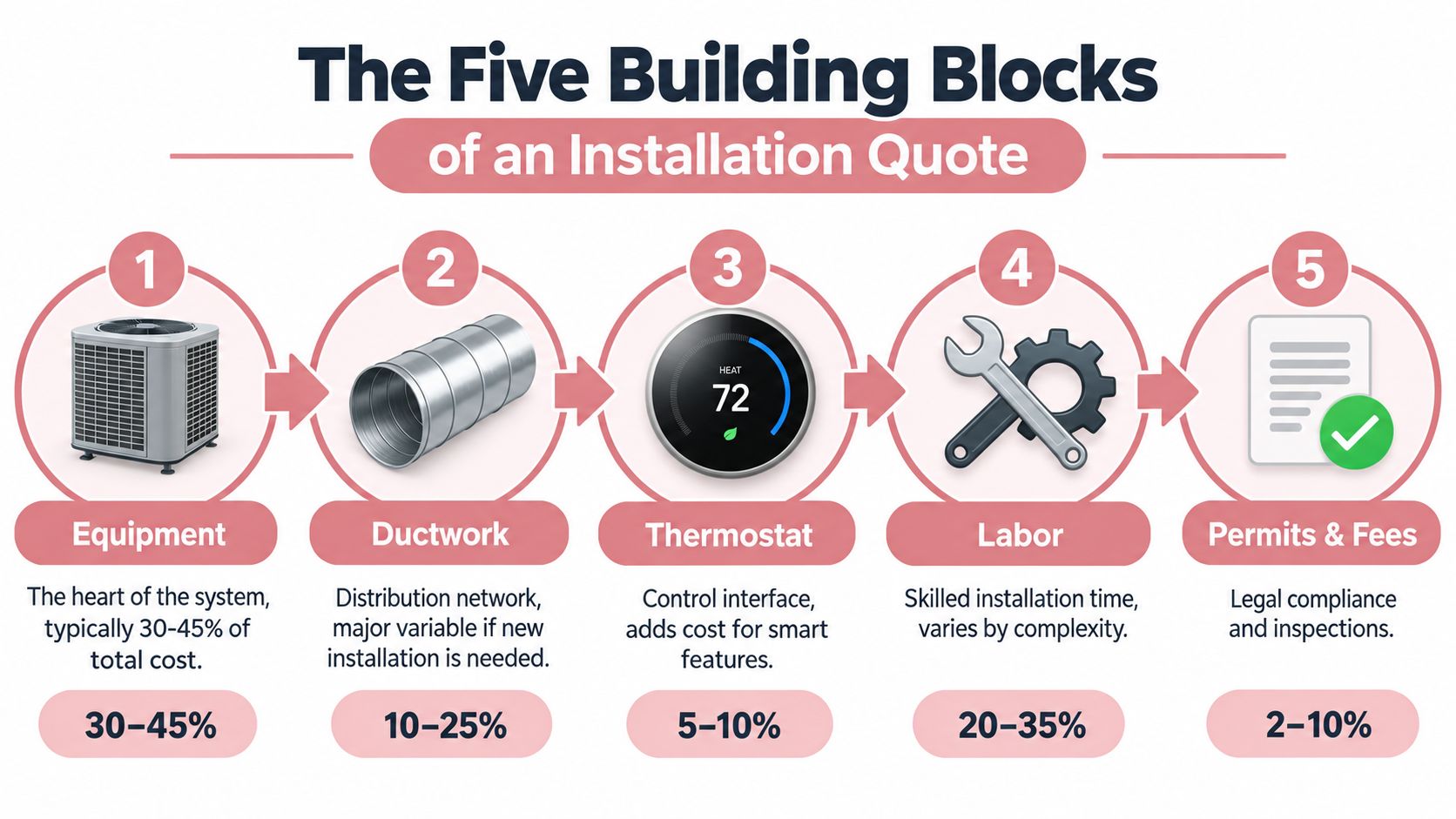
Equipment
The equipment package normally includes the outdoor condenser and the indoor evaporator coil or air handler. Capacity, efficiency, compressor type, brand, refrigerant compatibility, and warranty all affect the equipment price. A cheaper unit may cool adequately, but it can provide fewer operating stages and less precise humidity control.
Labor
Labor includes removing old components, installing the equipment, brazing or connecting refrigerant lines, making electrical connections, managing condensate drainage, charging refrigerant, starting the system, and testing performance. With ready-to-use ductwork, Forbes estimates labor at $640 to $1,200 for about eight hours. Attic restrictions, crawl-space work, or extra modifications can raise that line quickly.
Ductwork
Ductwork creates the largest swing between an equipment-only price and a finished project total. Usable existing ducts may require little work. Missing, leaking, undersized, or damaged ducts can add several thousand dollars, especially when the contractor must rebuild supply and return runs. Require the quote to identify each duct repair, replacement, or new section instead of grouping the work under installation materials.
Permits and inspections
Permits and inspections confirm that the installation meets local code and that required safety work was completed. Bender's central air conditioning installation guide lists central air equipment at $3,900 to $7,900, contractor labor at about $1,500, and permits at $250 to $400. Those figures are reference points, not a substitute for your city or county's requirements. The contractor should name the permit, inspection, and associated fee in the proposal.
Electrical work
A panel that already supports the condenser may need no electrical upgrade. If capacity is insufficient, the contractor may add a dedicated circuit, disconnect, breaker, or other components. Keep that work as its own line item. A separate cost structure, such as the one described in this guide to pricing home cleaning services, makes the same estimating principle clear: separate labor, materials, and special conditions so bids can be compared fairly.
Ask for separate lines for equipment, labor, ductwork, permits, electrical work, disposal, and testing. If the quote exceeds $9,000, review the added tasks rather than rejecting it automatically. A full duct retrofit or difficult access can justify the difference. A standard replacement with usable ducts should come with a clear explanation for any unusually high total.
System Size and SEER Rating Choices
SEER measures seasonal cooling efficiency. A higher rating uses less electricity for comparable cooling, but it usually raises the equipment price before labor, ductwork, permits, or electrical work enter the quote.
The equipment gap can be substantial. Forbes places a 14-SEER unit near $2,700 and a 16-SEER unit closer to $4,100 before labor and duct costs. That comparison is not a complete installation price, but it shows why two contractors can quote different totals for systems serving the same home. The higher-efficiency option adds cost at the equipment stage, before installation conditions widen or narrow the gap.
Choose the efficiency tier based on the home and your ownership plan. A baseline unit can fit a tight replacement budget or a property likely to be sold soon. A mid-tier system is usually the stronger value for a homeowner who expects to stay. Premium variable-speed equipment costs more, but it can reduce noise, hold steadier temperatures, and control humidity more effectively. Ask the contractor to show the added equipment cost separately from the complete installed total.
System size deserves the same scrutiny. Contractors rate capacity in tons, but square footage alone is not a valid sizing method. A proper load calculation accounts for insulation, windows, orientation, air leakage, ductwork, and local weather. An oversized unit may shut off before removing enough humidity. An undersized unit can run continuously during hot weather and still leave rooms uncomfortable.
How SEER Rating Changes a Real 3.5-Ton Installation Quote
These comparisons show the pricing direction for a 3.5-ton replacement. The final installed total depends on the selected equipment, matched indoor coil, labor, access, and the home's existing system. Require the contractor to identify each item rather than presenting one unexplained equipment allowance.
| SEER rating | Equipment class | Expected quote position |
|---|---|---|
| 14 SEER | Baseline, single-stage style equipment | Lowest equipment and upfront cost tier |
| 16 SEER | Mid-tier equipment | Higher equipment cost with a moderate installed-price increase |
| 18 SEER | Higher-efficiency variable-speed or two-stage equipment | Highest equipment tier and potentially the largest upfront increase |
Do not buy the highest rating automatically. Request the model numbers, matched indoor coil, efficiency rating for that combination, and the contractor's payback explanation. Compare the full installed total, not just the condenser price. The right upgrade fits your climate, budget, comfort priorities, and expected length of ownership.
Ductwork Status and Its Outsized Impact on Price
Ductwork often creates the biggest difference between two otherwise similar central air quotes. Homeowners see the condenser and coil on the proposal, but the hidden distribution network determines how much cutting, routing, sealing, insulating, and balancing the crew must perform.
Consider the same 1,800-square-foot ranch in two versions. In Version A, the existing ducts are intact, sealed, and correctly sized. The contractor can connect the new system with limited modifications, so the project stays close to the normal installed range. In Version B, the home has no ducts. The crew must run new supply lines to four rooms, create a return-air path, route the system through the structure, seal connections, and balance airflow. The quote can rise by several thousand dollars even when the condenser and coil are identical.
Same Home, Different Ductwork Scenarios
| Line item | Existing ducts, Version A | New ducts, Version B |
|---|---|---|
| Outdoor equipment | Standard equipment package | Standard equipment package |
| Indoor coil or air handler | Connected to existing system | Installed with new distribution planning |
| Supply runs | Existing runs inspected and modified as needed | New runs to each served room |
| Return air | Existing return evaluated | New return path required |
| Sealing and insulation | Targeted repairs | Broad installation, sealing, and insulation |
| Labor | Shorter, simpler installation | More cutting, routing, access, and balancing |
| Final price effect | Keeps the quote near the common installed range | Adds several thousand dollars in many layouts |
Material choice affects the result, but access usually matters more than homeowners expect. Attic routes can require careful insulation and uncomfortable working conditions. Basement routes may be easier in one home and obstructed in another. Older houses may hide framing, plumbing, or electrical obstacles that force the contractor to redesign the path.
A useful technical reference is HighFlow Energy's ducted AC guide, which can help you understand why duct design affects comfort and efficiency, not just construction cost. If an existing system performs poorly, don't assume the condenser is the only problem. AC duct cleaning cost information may help distinguish ordinary cleaning from the more serious issues of leakage, poor sizing, or missing returns.
Practical rule: Never approve a ductwork allowance described as “as needed.” Require the contractor to show where the ducts go and what condition the existing runs are in.
Regional Pricing and Permit Differences
The same equipment can produce different quotes in different markets because HVAC labor follows local wages, demand, access, and code requirements. A contractor in a dense, high-cost metro may spend more time coordinating permits and working around older construction. A smaller market may offer lower labor pricing but fewer companies with immediate availability.
Permit charges also vary. One current pricing guide lists HVAC permits at $250 to $400, while the amount can differ by jurisdiction and project scope. The contractor should identify who pulls the permit, whose name appears on it, and whether inspection is included in the quoted price. Angi's HVAC pricing guide provides a useful example of how equipment, labor, and permit charges can be separated.
Climate changes the equipment decision as well. A hot region may place more value on cooling capacity, dehumidification, and efficiency. A milder region may not justify the same premium equipment, particularly if the system runs less often.
Two Markets, Two Realistic Quotes
| Cost driver | Phoenix, Arizona | Indianapolis, Indiana |
|---|---|---|
| Cooling demand | Strong emphasis on reliable cooling during hot weather | Cooling matters, but seasonal demand may be less intense |
| Equipment choice | Higher efficiency and strong capacity may receive more attention | Mid-tier equipment may fit more homes and budgets |
| Labor | Can rise with demand and difficult summer scheduling | Often shaped by local contractor availability and home layout |
| Permit process | Confirm local requirements and energy-code details | Confirm local requirements and inspection scope |
| Main quote risk | Under-sizing or choosing equipment without enough capacity | Paying for features the home's load doesn't require |
| Best comparison method | Compare matched equipment and installation scope | Compare matched equipment and installation scope |
Don't apply a national average blindly to a local quote. Compare three contractors using the same equipment class and the same ductwork assumptions. A local service-area reference such as Aquastar's service-area information illustrates why location matters for home services generally, but your HVAC contractor should explain the specific labor and permit conditions in your jurisdiction.
Two Real Quote Examples Side by Side
A national average becomes useful only when you can match it to the work at your house. The first scenario is a replacement. The second is a retrofit, where the contractor is building the distribution system as well as installing the cooling equipment.
Scenario one is a straightforward replacement
The home is a 2,000-square-foot suburban property with usable ductwork. The contractor removes the old equipment, installs a new condenser and coil, connects the air handler, checks the refrigerant circuit, tests airflow, and handles a $95 permit. The proposed total is about $6,200, which fits the kind of combined equipment-and-labor project described in national cost guides.
Scenario two is a full retrofit
The home is an older 1,600-square-foot property with no existing ducts. The proposal includes new supply and return pathways, a new electrical circuit, a slab-mounted condenser, and a higher permit charge. The total is about $11,800. That figure is higher not because the house is larger, but because the contractor is doing substantially more construction work.
Two Full Quote Scenarios Compared
| Line item | Scenario 1, replacement | Scenario 2, full retrofit |
|---|---|---|
| Home condition | Existing central-air infrastructure | No existing duct system |
| Condenser | Included | Included |
| Indoor coil or air handler | Included | Included |
| Ductwork | Existing ducts reused after inspection | New supply and return paths |
| Electrical | Existing service evaluated | New dedicated circuit included |
| Permit | $95 | Higher fee based on project scope |
| Access and labor | Standard replacement work | Routing, cutting, sealing, and balancing |
| Total example | About $6,200 | About $11,800 |
The first quote is not automatically good, and the second isn't automatically excessive. The contractor should explain the model numbers, duct layout, electrical scope, permit responsibility, warranty, and startup testing in both cases.
A quote that looks high because it includes every required task may be safer than a low bid that omits duct sealing, electrical work, disposal, or inspection. Compare scope first and price second.
Installation Cost vs Long-Term Operating Cost
The installation bill is the first chapter of the ownership cost, not the whole story. A more efficient system may reduce electricity use, but the premium only makes sense when the expected savings fit your usage and the equipment will remain in service long enough to benefit.
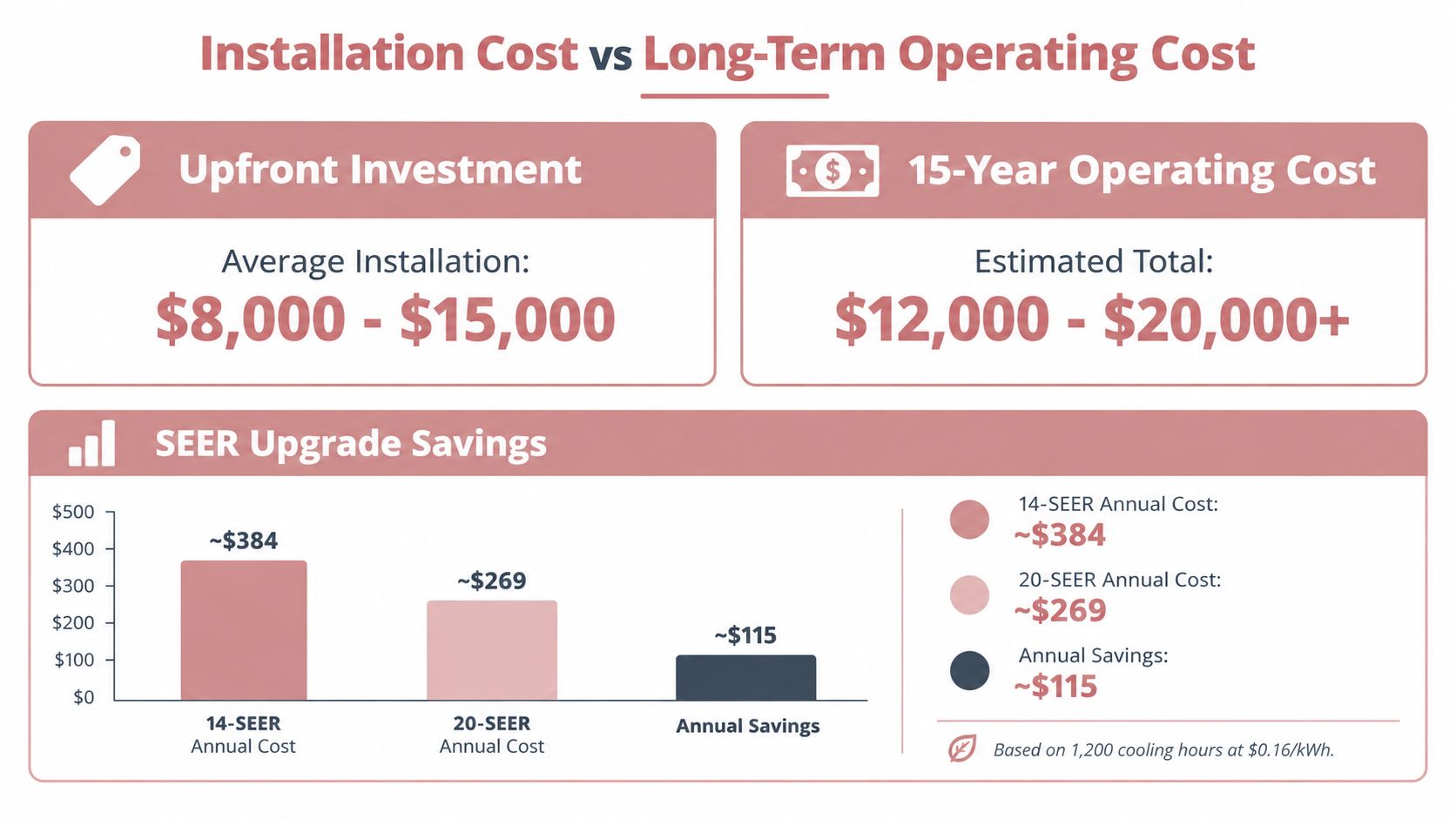
Use a simple payback test. Ask the contractor to compare the proposed system with a lower-efficiency alternative using your electricity rate, expected cooling demand, and equipment price difference. Don't accept a generic promise that the upgrade “will pay for itself.” The answer depends on how often the system runs, how well the ducts distribute air, and how long you'll own the home.
Variable-speed equipment can improve comfort by running at lower output for longer periods. That can support steadier temperatures and better humidity control, but it also brings more complex equipment and a higher purchase price. A premium system makes the most sense when comfort and humidity are major concerns, the home has suitable ductwork, and you plan to stay long enough to use the benefits.
Maintenance costs deserve attention too. Ask about filter access, recommended service intervals, parts coverage, labor coverage, and what happens if the condensate drain or control board fails. A cheap installation that produces poor airflow can cost more to live with than a properly commissioned system at a higher initial price. For households prioritizing lower-impact products and routines, eco-friendly home cleaning options address a different part of household upkeep, but the same principle applies: evaluate the full operating experience, not just the purchase price.
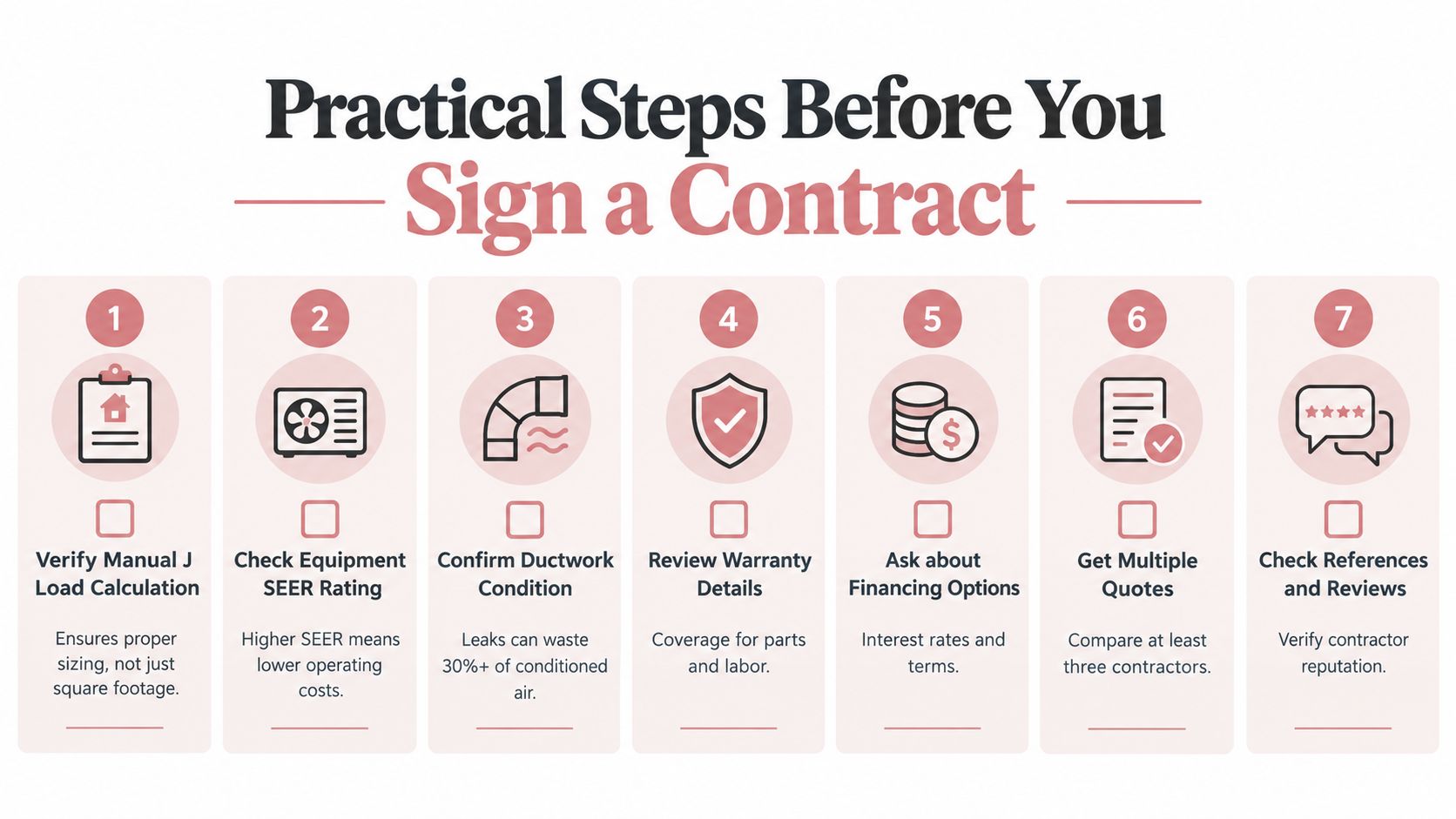
Practical Steps Before You Sign a Contract
Spend fifteen minutes checking the proposal before you pay a deposit. A professional quote should answer these questions without making you chase the contractor for basic information.
Verify the sizing
Ask for a Manual J load calculation, not a tonnage guess based only on square footage. If the contractor refuses to show how the size was selected, keep looking. An oversized unit can cycle too quickly and leave the home humid, while an undersized unit may struggle during peak weather.
Verify the equipment
Require the exact model numbers for the condenser, coil, air handler, thermostat, and controls. Check that the indoor and outdoor components are a matched system and confirm the efficiency rating through AHRI certification. “High efficiency” is not an adequate specification.
Read the scope line by line
The proposal should separate:
- Equipment: Model numbers, capacity, efficiency, and included controls.
- Labor: Removal, installation, startup, testing, and cleanup.
- Ductwork: Repairs, replacement, sealing, insulation, and balancing.
- Electrical: Circuit, disconnect, breaker, and panel work.
- Permits: Who pulls them and who schedules inspection.
- Disposal: Removal of the old condenser, coil, and related materials.
Ask about refrigerant as well. R-454B is the new standard referenced in current equipment discussions, so the contractor should state which refrigerant the proposed system uses and whether the equipment is compatible with your existing components.
Protect the payment and warranty
Confirm registration steps, parts coverage, labor coverage, exclusions, and the process for service calls. Check the contractor's license and insurance against your state database, then read three recent reviews from your ZIP code rather than relying only on testimonials selected by the contractor.
Put the permit in your name or make sure the paperwork clearly identifies you as the property owner. Don't pay more than 30% upfront, and don't make the final payment until the city inspector has signed off and the system has cooled the home properly. For cleanup after access panels, attic work, or wall cutting, post-construction dust cleaning information can help you understand what a proper final cleanup should address.
The best quote is not the cheapest quote. It's the one that tells you exactly what will be installed, who is responsible for each step, and what happens if the system fails inspection.
If a central air installation has left your Kennesaw or North Atlanta home covered in construction dust, Aquastar Cleaning Services, LLC provides post-construction cleanups, deep cleaning, and recurring housekeeping for the rooms affected by HVAC work. Request a customized cleaning plan after your contractor finishes, so the new system goes into a clean, livable home.