


A professional deep clean typically costs $200 to $400 for an average home, but the price can range from $100 for small spaces to over $1,500 for large estates, depending on size and condition. Most homeowners land near the middle of that range, but a neglected, cluttered, or unusually large property can move well beyond the basic quote.
You may be trying to budget for a move, prepare for guests, or recover from months of skipped chores. The number on a cleaning company's website gives you a starting point, not a final answer. The honest quote depends on what the cleaners must do, how much floor and surface area they'll cover, and whether you're asking for a true reset or a more thorough routine visit.
Real Deep Cleaning Price Ranges for 2026
A homeowner with a typical suburban house should start planning around $200 to $400 per visit for professional deep cleaning. Current consumer pricing guidance places the midpoint near $300, which is a useful working budget for an average family home. Care.com's deep cleaning cost guide also shows why that midpoint can be misleading, because smaller properties may begin around $100, while homes above 3,000 square feet can reach $1,500 or more.
Consider three practical examples. A small apartment with limited rooms, little clutter, and one bathroom may sit near the lower end. A maintained three-bedroom home with two bathrooms often falls close to the middle. A large estate with several bathrooms, multiple living areas, heavy dust, and neglected surfaces belongs in a completely different pricing bracket.
A useful budget by property type
The market doesn't use one universal “deep clean price.” It uses tiers based on labor. A compact home may need a small crew and a focused scope. A large property may require more cleaners, more equipment, and extra time for stairs, bathrooms, appliances, and hard-to-reach surfaces.
- Small space: Budget from about $100 when the home has limited square footage and moderate condition.
- Average home: Plan on $200 to $400, with many ordinary properties near $300.
- Large home: Expect the quote to rise as the home approaches or exceeds 3,000 square feet.
- Estate-level property: Large homes can reach $1,500 or more, particularly when the condition and scope demand extensive labor.
A useful average cleaning service cost guide can help you compare deep cleaning with routine service, but don't use a standard-cleaning price as a promise for a deep-clean quote. Deep cleaning commonly runs about 1.5 to 2 times the cost of a routine clean because the team handles more detailed areas and heavier soil loads, as documented by Care.com's housekeeping cost guide.
Practical rule: If a quote looks unusually low, ask what the cleaner has left out. Low prices often reflect a shorter visit, fewer rooms, no appliance interiors, or a standard-cleaning checklist rather than a complete deep clean.
For comparison, review deep cleaning price list examples before requesting estimates. Use them to identify the right pricing bracket, then ask a local provider to calculate your actual home instead of selecting a price from a generic chart.
What a Deep Clean Actually Includes
A standard cleaning keeps an already-maintained home under control. A deep clean works through buildup that routine visits usually leave behind. That difference is why a team may wipe kitchen counters during a regular visit but degrease detailed surfaces, scrub grout, clean baseboards, and detail appliances during a deep-clean appointment.
Standard maintenance versus detailed reset
A routine visit generally focuses on visible, frequently used areas. Cleaners dust accessible surfaces, vacuum and mop floors, empty trash, wipe counters, and refresh bathrooms. The purpose is maintenance, so the team needs to work efficiently across the home.
Deep cleaning adds labor-intensive detail. Common tasks include:
- Baseboards and trim: Removing settled dust and marks along edges that routine dusting may skip.
- Ceiling fans and vents: Reaching high surfaces where dust accumulates.
- Grout and tile: Scrubbing lines and textured areas instead of just wiping the surface.
- Appliances: Cleaning exterior surfaces and, when selected, detailing the inside of an oven or refrigerator.
- Hard-to-reach zones: Working behind or beneath accessible furniture and appliances where dust and debris gather.
- Kitchen buildup: Cutting through grease around backsplashes, range hoods, cabinet fronts, and nearby surfaces.
The exact checklist matters more than the label. One company may call a long standard visit a deep clean, while another includes baseboards, grout, fans, appliance detailing, and neglected corners. Ask for a room-by-room scope before you compare prices. A deep cleaning checklist gives you a practical way to check whether a proposed service covers the areas you need.
What you're paying for
The premium pays for more than cleaning solution. It covers slower hand work, extra passes over soil, detailed edges, specialty tools, and the time required to move methodically through areas that a maintenance visit skips. The deeper the buildup, the less useful a quick spray-and-wipe approach becomes.
For example, wiping a refrigerator door is a routine task. Removing shelves, cleaning the interior, addressing stuck residue, and replacing the parts safely is an add-on service with a different labor requirement. Care.com's housekeeping guidance notes that extra tasks can add $40 to $75 per job, so refrigerator or oven detailing may push the final invoice above the base deep-clean price.
Hourly Rates Versus Flat Rate Pricing
Cleaning companies usually price deep work in one of two ways. Hourly billing charges for cleaner-hours used on the job. Flat-rate pricing assigns a total price after the company evaluates home size, condition, layout, and scope.
Industry benchmarks place professional cleaning at $40 to $100 per cleaner-hour, while flat-rate deep cleaning commonly uses a square-footage range of about $0.13 to $0.17 per square foot. Housecall Pro's house cleaning pricing benchmarks also explains that deep cleaning often costs 50% to 100% more than a standard clean because it involves additional zones and heavier soil.
How the math works
Suppose a company sends two cleaners for a three-hour appointment. That creates six cleaner-hours, not three. At an hourly rate, the labor calculation uses the combined time of everyone working in the home. Ask whether the company quotes by person-hour or by the number of hours the team remains on-site.
Square-footage pricing works differently. A provider may calculate the home's finished living area, then adjust for bathrooms, stairs, clutter, pets, and special rooms. Don't assume the company will count every outdoor area or unfinished space in the same way. Ask what square footage the estimator uses and whether garages, basements, or enclosed porches are included.
Deep cleaning cost by home size
The ranges below use the verified benchmarks for ordinary deep-clean work. They're planning figures, not guaranteed quotes, and the layout column shows why two homes with similar square footage can require different labor.
| Home Size (Sq Ft) | Estimated Cost Range | Typical Layout |
|---|---|---|
| Small space, under 1,000 | About $100 to $200 | Studio, apartment, or compact one-bedroom |
| Average home, around 1,500 to 2,000 | About $200 to $400 | Two or three bedrooms with one or two bathrooms |
| Larger home, around 2,500 to 3,500 | About $450 to $700 | Three or four bedrooms with multiple bathrooms |
| Very large home, above 3,000 | $1,500 or more is possible | Large residence or estate with extensive scope |
The larger-home example comes from HomeAdvisor's deep-cleaning cost guidance, which places a 2,500 to 3,500 square-foot property around $450 to $700 and a typical three-bedroom, two-bath home near the overall average.
Choose hourly pricing when the scope is uncertain and you're comfortable with the final time varying. Choose a written flat rate when you want budget certainty, especially for a heavily soiled home. You can also learn more about how to price home cleaning services so you know which questions to ask before accepting either model.
Key Factors That Increase Your Final Bill
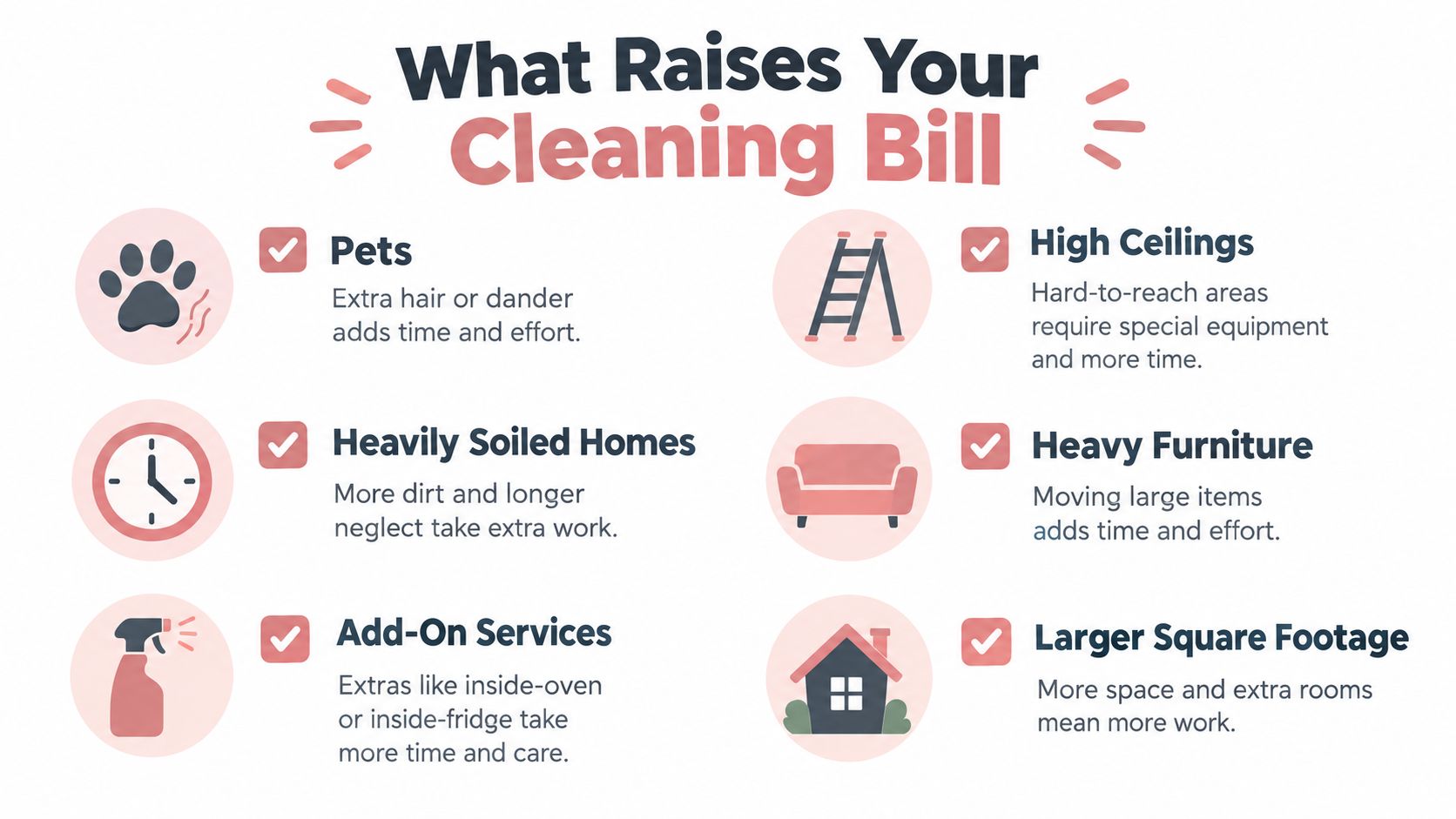
A cleaner can't price a home accurately from bedrooms alone. The quote changes when the team must remove significant buildup, work around clutter, move furniture, reach high surfaces, or complete specialized work. Use the following checklist before you request an estimate.
Complete a quick home assessment
- Square footage and layout: More rooms, stairs, hallways, and bathrooms create more surface area and more movement between tasks. A two-story home may take longer than a single-level home with similar floor area.
- Current condition: Dust, grease, soap film, pet hair, and neglected buildup require repeated passes. Tell the estimator how long it has been since the last professional deep clean.
- Bathrooms: Bathrooms take detailed hand work, especially around grout, fixtures, shower doors, and flooring. Count every full and half bathroom rather than reporting only the bedroom count.
- Clutter and furniture: Cleaners can't work efficiently around boxes, piles, crowded counters, or furniture that blocks baseboards. Ask whether the company expects you to clear surfaces first.
- Pets: Pet hair and dander collect under furniture, along edges, and on upholstery. Mention the number and type of pets, along with any areas where hair or odor is concentrated.
- Add-ons: Inside-oven, inside-refrigerator, window, garage, basement, and laundry-area work may sit outside the base scope. Request each addition as a separate line item.
Special cleaning situations
Move-in and move-out cleaning costs more when the team must clean inside cabinets, closets, appliances, and empty rooms in detail. Post-construction work adds fine dust, debris, residue, and sometimes paint or adhesive cleanup. It isn't a standard deep clean with a different name.
If renovation dust is your main problem, review guidance on construction dust cleaning and tell the provider exactly what work happened in the property. A cleaner may need different equipment and a more controlled process for fine residue than for ordinary household dust.
The most accurate quote comes from an honest condition report. Show the messy rooms, mention the pets, and list the areas you care about most. Surprises usually begin when a homeowner hides the scope to obtain a lower starting price.
How to Get an Accurate Local Estimate
Start with information, not a price request. A cleaner who knows the home's approximate square footage, room count, bathroom count, condition, pets, and target areas can build a useful estimate. A vague request such as “How much for a deep clean?” usually produces either a broad range or a low starting price that changes after arrival.

Prepare the details before contacting providers
Have these details ready:
- Property basics: Share approximate square footage, bedrooms, bathrooms, floors, and whether the home includes a basement, garage, or other large areas.
- Condition: Describe dust, grease, pet hair, clutter, hard-water marks, post-renovation residue, or any long-neglected rooms.
- Priority areas: Identify must-have rooms and tasks, such as grout scrubbing, baseboards, inside the oven, or refrigerator detailing.
- Access and timing: Explain parking, stairs, entry instructions, preferred dates, and whether the home will be occupied during service.
- Product needs: Mention children, pets, allergies, or a preference for biodegradable cleaning products.
A digital estimate form is useful when it collects these details in a structured way. A phone consultation can clarify unusual conditions. A virtual or in-person walkthrough is more reliable when the home has significant clutter, large rooms, multiple levels, or specialized cleaning needs.
The home cleaning services quote guide can help you organize the information before contacting local companies. You should also find the right cleaning provider by checking whether the team is insured, documents its scope, and explains what happens if the actual condition differs from the original description.
A written quote should state the total price or pricing method, included rooms, included tasks, excluded areas, add-ons, supplies, and any possible extra charges. Don't accept “deep clean” as the entire scope. Ask for the checklist.
Here's a useful explanation of how providers can structure estimates:
Established local teams often use room-by-room documentation because it keeps the crew focused and gives the homeowner something concrete to approve. That matters more than a polished sales pitch. You're paying for completed tasks, not an attractive label.
Smart Strategies to Lower Your Cleaning Costs
The cheapest quote isn't always the lowest total cost. A short visit that leaves the difficult work unfinished forces you to book again. Lower the bill by reducing wasted labor, narrowing the scope intelligently, and maintaining the result after the reset.
Prepare the home for productive cleaning
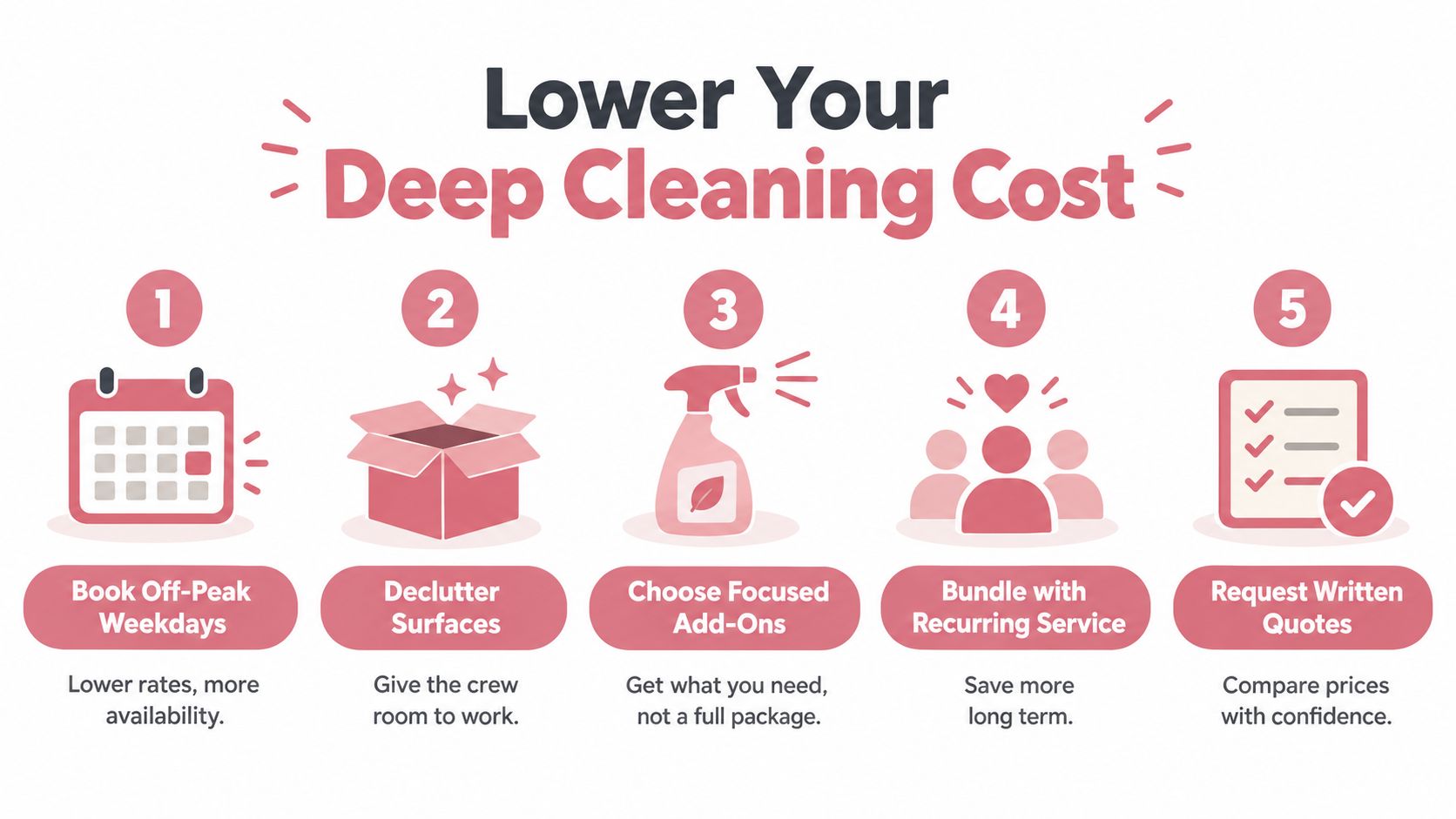
Clear clothes, toys, papers, and loose items from floors and surfaces before the crew arrives. Cleaners should spend their time removing dust, grease, hair, and residue, not sorting household belongings. If you can safely handle basic tidying, you'll get more cleaning value from the booked visit.
Choose add-ons based on the home's actual needs. If the refrigerator is already clean, don't pay for interior appliance work because it appears on a package. If the oven has baked-on grease, request that specific task and ask for it as a separate line item.
Booking during a provider's less-demanded weekday periods may create more scheduling flexibility. Ask whether the company offers different pricing for those appointments, but don't assume a discount exists.
Use recurring service as maintenance
A deep clean is a reset. Recurring housekeeping protects that reset by preventing dust, grime, and clutter from reaching the same level again. The right schedule depends on household traffic, pets, children, and your tolerance for buildup, but the financial logic is straightforward: maintenance work is lighter than repeated recovery work.
Ask whether a company can combine an initial deep clean with an ongoing plan. Get the recurring scope in writing so you know which tasks continue and which deep-clean details are occasional add-ons. Compare the full value, not just the first invoice.
Spend on the work that changes the condition of the home. Declutter personally, outsource the labor-intensive cleaning, and maintain the baseline instead of repeatedly paying to recreate it.
Booking Your Deep Clean with Aquastar Cleaning
For homeowners in Kennesaw and the North Atlanta area, Aquastar Cleaning Services, LLC provides recurring housekeeping, one-time deep cleaning, move-in and move-out cleaning, and post-construction cleanup. The company uses insured and bonded teams, documented room-by-room scopes, customizable checklists, and eco-friendly product options when requested.
Start by using the online quote or instant estimate form. Provide the home's approximate size, room count, bathrooms, pets, clutter level, preferred products, and the areas that need the most attention. Clear information gives the estimator a better basis for the price and reduces the chance of an unexpected scope change.
Follow a simple booking process
- Choose the service type: Select a whole-home deep clean, a move-related service, a construction cleanup, or a focused room-by-room visit.
- List priority tasks: Specify baseboards, grout, ceiling fans, appliance interiors, windows, garages, basements, or other areas that matter to you.
- Request the written scope: Confirm what the base price includes and which tasks cost extra.
- Review access details: Provide entry instructions, parking information, preferred timing, and any areas that should remain untouched.
- Prepare before arrival: Remove personal items from floors and counters, secure pets if needed, and make the home accessible to the team.
Aquastar also offers phone quotes, online payment options, and custom cleaning plans. Those options are useful when you want to compare a one-time reset with recurring housekeeping instead of treating the deep clean as an isolated purchase.
The best booking decision is the one that matches your home's condition and your expectations. If you need appliance interiors, construction dust removal, carpet work, windows, or exterior pressure washing, ask whether those services can be added to the same plan or should be scheduled separately. A clear scope protects both sides and makes the final result easier to evaluate.
Aquastar Cleaning Services, LLC offers deep cleaning, recurring housekeeping, move-in and move-out service, and post-construction cleanup for homes in Kennesaw and North Atlanta. Visit Aquastar Cleaning Services, LLC to request an estimate, identify your priority tasks, and book a whole-home refresh with a written scope.