


A personalized cleaning service is a recurring plan adjusted to your home's specific needs, schedule, and product preferences, rather than a one-size-fits-all visit. In major markets, 41% of U.S. households use recurring cleaning services, while 49% of urban consumers hire cleaners monthly, compared with 22% in rural areas.
You may recognize the problem. The kitchen needs attention after a busy week, the bathroom has become the household bottleneck, and the guest room looks untouched because nobody uses it. A generic cleaner may spend equal time in every room, even though your home's traffic, surfaces, pets, children, and sensitivities are anything but equal.
Personalized cleaning works differently. It matches cleaning cadence, room priority, task depth, and product choice to the way your household really lives. That could mean weekly kitchen and bathroom care, less frequent bedroom maintenance, fragrance-free products, or a separate deep clean before a move. The right plan isn't about making every detail complicated. It's about paying attention to the details that matter.
Why Standard Cleaning Often Falls Short
A busy Saturday can expose the limits of a standard cleaning visit. The children have tracked mud through the entryway, the dog has left hair along the sofa, and someone has cooked breakfast before the cleaner arrives. Meanwhile, the formal dining room hasn't been used since the previous weekend.
A checklist-based service may dust every room and vacuum every floor, but it might give the little-used dining room the same attention as the entryway and kitchen. The result feels disappointing even when the cleaner completed the listed tasks. The home was cleaned according to a general template, not according to the household's actual pressure points.
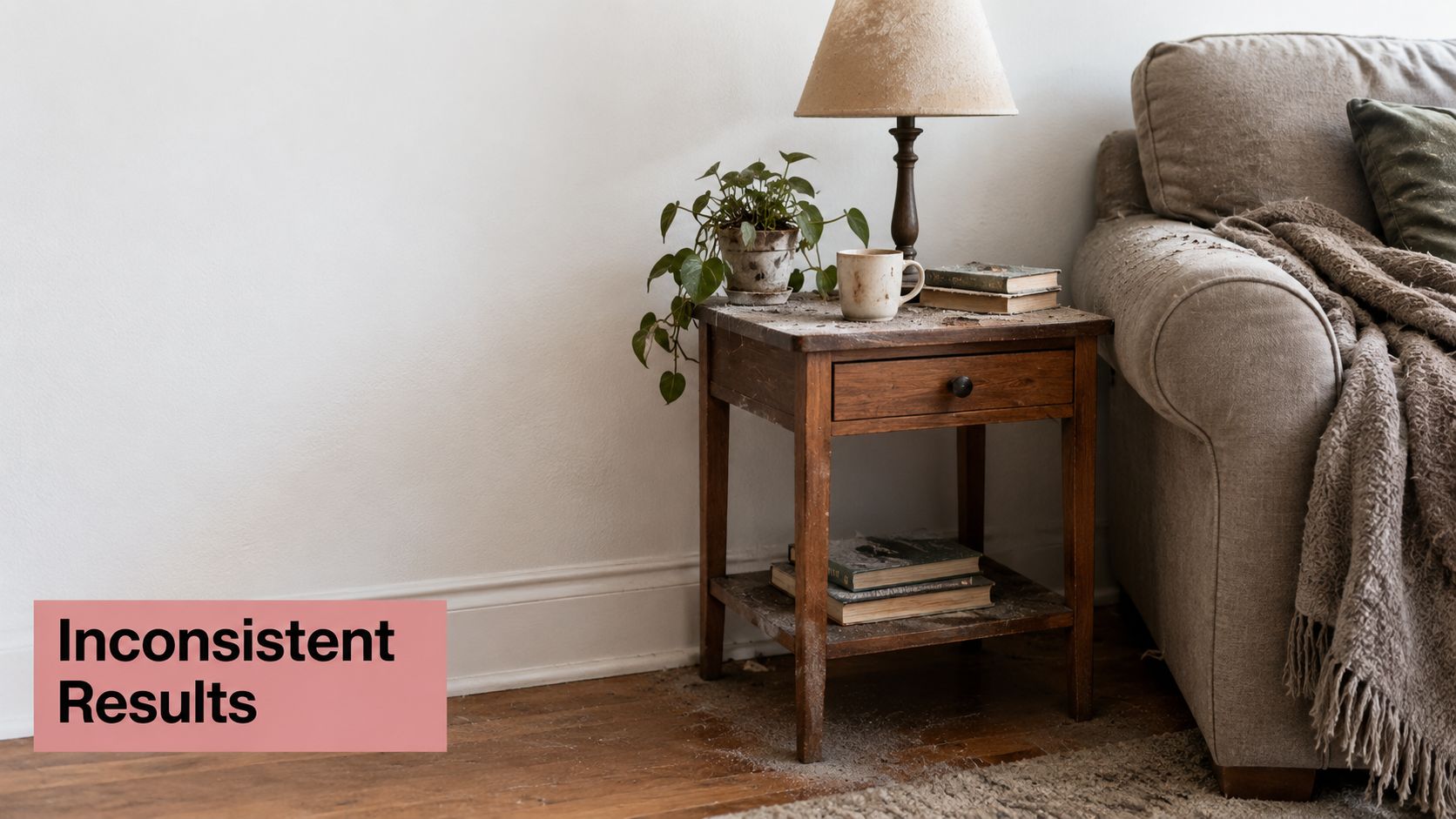
Where generic plans miss the mark
Consider two homes with the same number of bedrooms. In one, a retired resident wants gentle dust control around fragile collectibles, careful treatment of older wood, and dependable help with floors and bathrooms. In the other, young children spill food near the table, touch cabinet doors with sticky hands, and bring outdoor dirt into the hallway.
Those homes shouldn't receive identical service. A blanket schedule can lead to over-cleaning in low-use rooms and under-cleaning on high-touch surfaces. It can also create friction when residents expect inside-appliance cleaning, pet-hair removal, or special products but the provider assumes a standard scope.
Practical rule: If a cleaner doesn't ask which rooms get the most use, which surfaces need special care, and what your household wants to avoid, the plan probably isn't personalized yet.
The issue isn't always poor effort. It's often a mismatch between the service design and the home. A family may pay for broad coverage but still spend its weekend scrubbing the shower, wiping fingerprints from doors, and clearing debris from the kitchen floor. A customized plan redirects effort toward the places that affect daily comfort most.
What Customization Options Actually Include
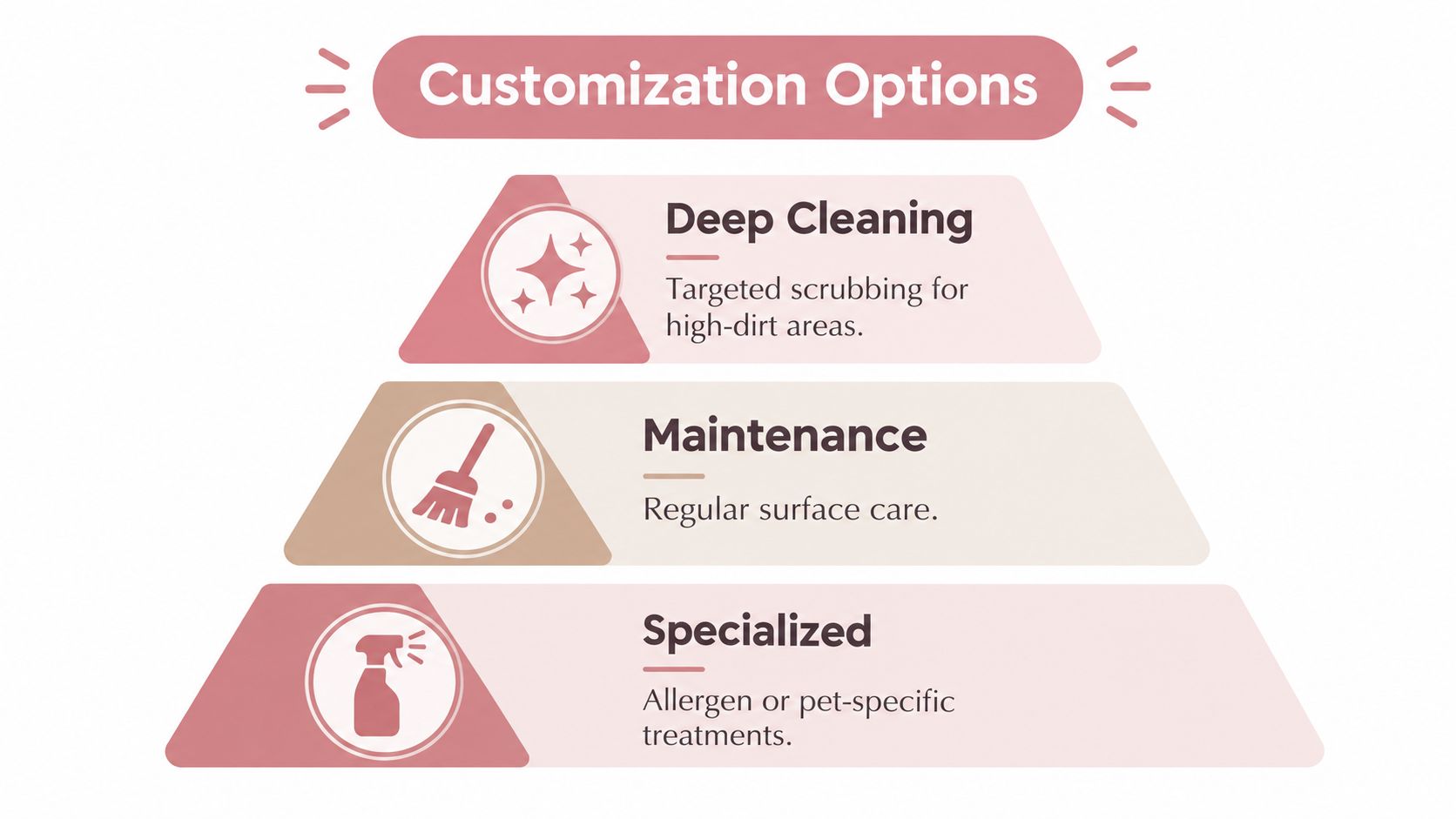
A personalized cleaning service usually combines several kinds of decisions. The provider needs to know how often the home needs attention, which areas deserve priority, and which products and techniques are appropriate for the people, pets, and materials inside it.
Start with service scope
Think of customization as a layered service rather than a single add-on.
- Maintenance cleaning: Regular dusting, vacuuming, mopping, kitchen care, bathroom cleaning, and trash removal keep the home in a maintained state.
- Deep cleaning: Targeted work on areas such as baseboards, grout, appliance interiors, buildup, and hard-to-reach surfaces establishes or restores a cleaner baseline.
- Specialized treatment: Pet-hair removal, odor control, allergen-aware products, fragrance-free supplies, and delicate-surface care address household conditions that ordinary maintenance may not cover.
- Transition cleaning: Move-in and move-out work focuses on handoff standards, including kitchens, bathrooms, closets, appliances, baseboards, vents, and final debris removal.
- Post-construction cleaning: Renovation cleanup deals with drywall dust, sawdust, adhesive residue, and other fine debris that can remain after work ends.
A practical example makes the difference clear. A household with two dogs might request routine floor and upholstery attention in the rooms where pets spend the most time, while keeping seldom-used bedrooms on a lighter schedule. A family with toddlers might prioritize kitchen fronts, dining areas, bathroom touchpoints, and lower baseboards instead of asking for identical treatment throughout the house.
Match products to the household
Product choice is part of personalization, not a decorative preference. Households with children, pets, allergies, or fragrance concerns may ask for biodegradable, gentler, fragrance-free, pet-safe, or allergen-aware products. Eco-friendly cleaning commonly combines lower-toxicity solutions with mechanical methods such as microfiber cloths and HEPA-filter vacuuming, especially when removing dust from carpets, upholstery, hard floors, and surfaces after renovation work, as described in this post-construction cleaning checklist.
Product selection still has to support effective cleaning. For disinfection, the correct process is to clean a surface first with soap and water, then use an EPA-registered disinfectant where needed, following the label's dilution and dwell-time instructions. Green Seal's residential cleaning standard also emphasizes dry cleaning before wet cleaning, moving from high surfaces toward low ones and toward the doorway, and limiting disinfectants to pathogen-prone and frequently touched areas.
Key Benefits of a Tailored Cleaning Plan
The biggest benefit of personalization is that the house looks cleaner, not just that. The plan reduces the gap between what a service delivers during visits and what your household needs in the intervals between them.
A weekly kitchen and bathroom focus can protect the parts of the home that create the most daily work, while a lower-use office or guest room receives maintenance when it needs it. A household with pets can direct more attention toward hair and tracked-in dirt. A resident with delicate furnishings can request gentler dusting methods instead of aggressive wiping.
Less decision fatigue
Recurring service removes much of the mental load from household upkeep. Instead of noticing the same buildup repeatedly and deciding whether to handle it tonight, you have an agreed schedule and a defined scope. Weekly, bi-weekly, and monthly plans are common recurring structures, with the appropriate choice depending on traffic, occupants, pets, and how quickly visible mess returns, as explained in this guide to cleaning frequency.
That doesn't mean every home needs the most frequent service. A family with children and pets may need weekly attention in high-use areas, while a lower-traffic home may remain comfortable with service every two weeks or monthly. The useful question is not, “What schedule does everyone else use?” It's, “How long does this home stay acceptably clean after a visit?”
Better consistency from visit to visit
A documented room-by-room checklist gives cleaners a shared reference point. It can identify the rooms that must be completed every visit, the tasks that rotate, and the surfaces requiring special handling. A cleaner who knows that the kitchen island, entry floor, stair rail, and downstairs bathroom are the household's priorities can spend time where residents will notice the result.
A good plan makes priorities visible before the vacuum starts.
Personalization can also help catch small problems earlier. Regular attention may reveal moisture around a sink, residue on a countertop, a developing odor, or dust collecting in a vent. The cleaner isn't replacing a maintenance professional, but visible changes are easier to notice when the same areas receive consistent care.
More practical sustainability
A household doesn't need to choose between responsible products and a useful result. The provider can discuss lower-toxicity options, microfiber tools, HEPA filtration, and where stronger chemistry is necessary. That creates a more precise approach than applying the same heavily scented product to every room.
For example, a fragrance-sensitive resident may prefer fragrance-free products in bedrooms and living areas, while a high-touch bathroom may require a carefully selected disinfectant used according to its label. Personalization helps align health preferences, surface care, and cleaning effectiveness rather than treating them as separate concerns.
How to Create Your Personalized Cleaning Plan
Start with observation, not a provider's menu of add-ons. Walk through the home during an ordinary week and note where dirt, clutter, hair, fingerprints, moisture, and odors appear first. The most useful plan reflects real use rather than an idealized floor plan.
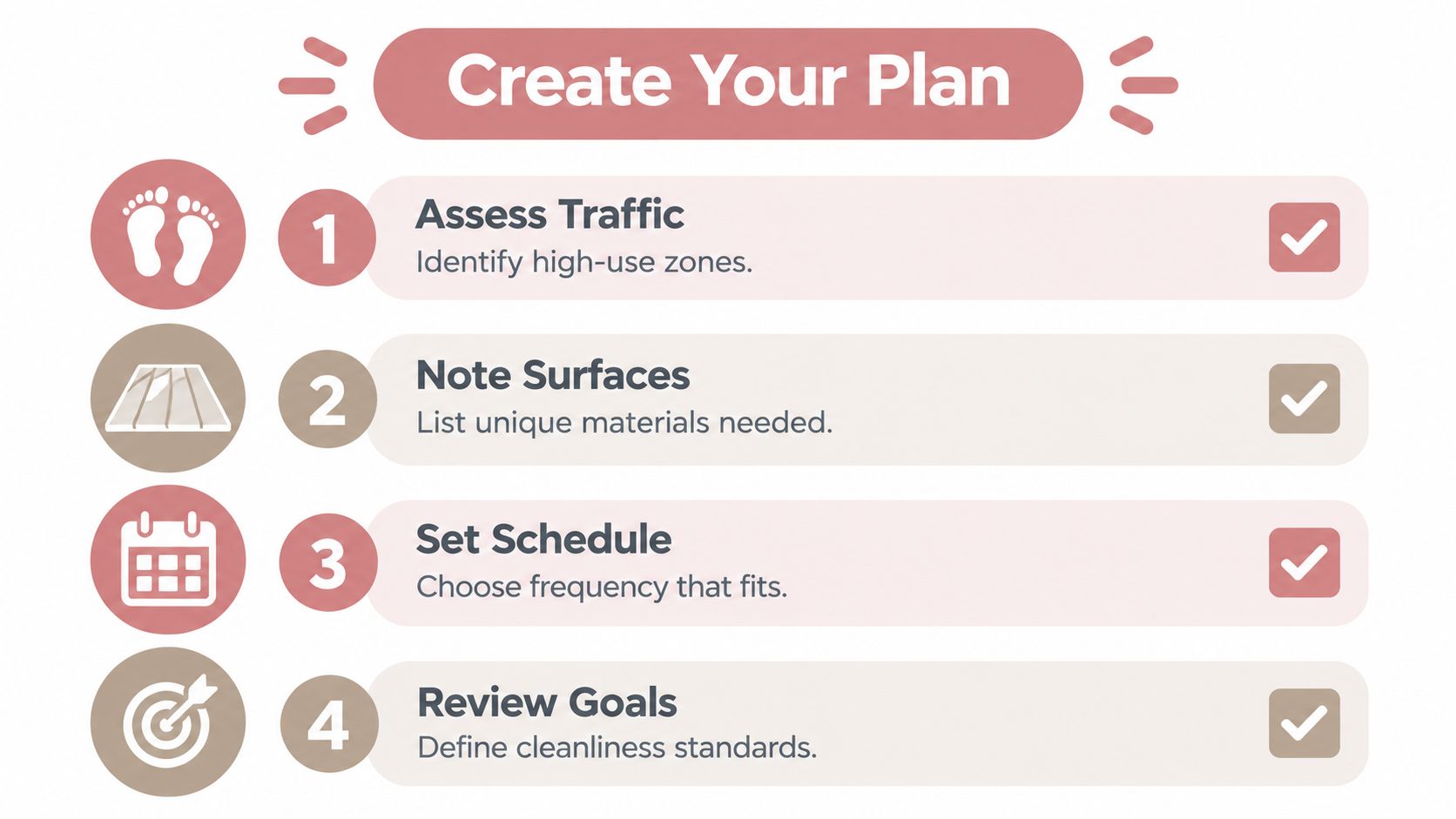
Step one, assess traffic
Mark the rooms and surfaces that receive repeated daily contact. That might include the kitchen floor, dining table, entryway, stair rail, sofa, children's bathroom, or pet-feeding area. Also note rooms that are rarely used, because they may not need the same cadence.
A useful example is a two-story home where everyone enters through the garage. The most important areas may be the garage-to-kitchen path, the kitchen, the powder room, and the stairs. A plan that starts with those zones may provide more comfort than one that begins with a formal living room.
Step two, list surfaces and sensitivities
Write down materials that need careful treatment, such as natural stone, hardwood, stainless steel, glass, painted cabinetry, or delicate wood. Record household concerns too. Mention children, pets, allergies, asthma, fragrance sensitivity, and any products you don't want used.
Ask the provider:
- Which products are available: Can the team use fragrance-free, biodegradable, pet-safe, or allergen-aware products when requested?
- What requires special handling: Are wood, stone, stainless steel, upholstery, and delicate objects included with appropriate methods?
- How is disinfection handled: Do cleaners pre-clean surfaces and follow the disinfectant label's dilution and dwell time?
Step three, set the schedule
Choose weekly, bi-weekly, or monthly service based on how quickly the home returns to an uncomfortable state. Weekly service may suit a busy family with pets, while monthly maintenance may suit a smaller, lightly used home. A first visit may need deeper work before recurring maintenance becomes efficient.
Ask for a written scope that separates recurring tasks from rotating or optional work. Check whether the quote identifies room priorities, interior appliances, windows, laundry areas, garages, basements, and carpet care rather than hiding everything inside “whole-home cleaning.”
Step four, review goals and provider standards
Define what “clean enough” means in observable terms. You might expect crumb-free kitchen floors, a refreshed shower, dust-free bedroom surfaces, or careful cleaning around collectibles. Then ask about insurance, bonding, background checks, staff training, arrival windows, cancellation terms, online quotes, payment options, and how the company handles feedback.
A provider should be able to explain who updates the checklist when your needs change. If the baby starts crawling, a renovation ends, or a family member develops a fragrance concern, the plan should be adjustable without starting the conversation from scratch.
Cleaning Plans for Different Household Types
Personalization becomes easier when you compare homes by use rather than by square footage alone. Three households can have similar layouts but need different frequencies, priorities, and products.
Busy professionals
A professional couple may spend little time at home during the week but return to a concentrated mess in the kitchen, bathroom, and entryway. Their plan could prioritize weekly floors, countertops, sinks, showers, toilets, and high-touch points, with bedroom and office surfaces handled as part of routine maintenance.
They may also want a predictable arrival window and online scheduling because the value lies in removing household decisions from an already crowded calendar. If one partner works from home, the cleaner can coordinate around the office rather than treating every room as equally available.
Families with children and pets
This home usually needs a stronger focus on visible spills, food residue, hair, tracked-in dirt, and frequently touched surfaces. The American Cleaning Institute's guidance on cleaning levels identifies bathrooms and living areas as regular cleaning priorities and calls for more frequent attention to high-touch surfaces such as light switches, doorknobs, sink handles, countertops, refrigerator handles, and trash can lids.
A practical plan may assign weekly attention to those areas, with extra focus on the kitchen floor, dining chairs, lower cabinet fronts, play spaces, and pet zones. Product preferences matter here. Parents may request gentler or fragrance-free options, while the provider still uses suitable chemistry and proper process where disinfection is necessary.
Seniors and lower-traffic households
A senior resident may value reliability, clear communication, and help with tasks that affect comfort and safe movement. The plan could focus on floors, bathrooms, kitchen surfaces, dust control, and commonly used rooms, while reducing attention to storage spaces or rarely occupied bedrooms.
A lower-traffic household might choose a monthly service for maintenance and add a deeper visit when buildup appears. The decision should follow use patterns, not a rigid rule. The same principle applies to a guest room, formal dining room, or basement that sees occasional activity.
Renters, landlords, and property managers need a different scope again. Move-in and move-out cleaning typically covers kitchens, bathrooms, other rooms, appliances, closets, baseboards, vents, windowsills, and trash removal, as shown in this move-out cleaning checklist. Post-construction work also requires stages because dust and residue continue settling after construction stops. One post-construction cleaning guide recommends allowing time after work ends and addressing remaining drywall dust, sawdust, adhesive, and debris before occupancy.
Choosing Aquastar Cleaning Services in Kennesaw
Residents in Kennesaw and North Atlanta should evaluate a cleaning provider by the same standards used to design a personalized plan. Look for a local team that can document room priorities, explain product choices, accommodate recurring schedules, and provide proof of insurance and bonding.
A family-owned provider operating since 1996 can offer recurring housekeeping, deep cleaning, move-in and move-out service, and post-construction cleanup. The service list should also make room for home-specific requests, such as kitchen and bathroom focus, interior refrigerator or oven cleaning, windows, garages, basements, carpets, and other areas that don't belong in every routine visit.
What to confirm before booking
Ask whether the team is fully insured and bonded, how cleaners are trained, and whether the company uses documented checklists. Confirm that the quote reflects home size, frequency, pets, product preferences, clutter levels, and requested rooms. A transparent provider should be able to explain what happens during the first visit and how recurring maintenance differs from deep cleaning.
For a Kennesaw household, local presence also matters. A nearby team can better support recurring appointments, move deadlines, renovation cleanup, and changes to the plan. Eco-friendly products can be requested when they fit the home's needs, and a room-specific scope helps prevent the common problem of paying for broad coverage while missing the surfaces that matter most.
A clear online estimate or phone quote is useful, but the conversation should go beyond price. Describe your traffic patterns, the rooms that frustrate you, product sensitivities, and the standard you expect after each visit. Then review whether the proposed checklist answers those points in plain language.
A short demonstration of how a customized plan works can help you judge whether the service matches your expectations:
The right arrangement isn't necessarily the largest package. It's the one that assigns the right cadence to the right rooms, uses suitable products, and gives the cleaning team enough information to work consistently. That approach makes recurring housekeeping more useful because it reflects the home you live in.
Aquastar Cleaning Services offers recurring housekeeping, deep cleaning, move-in and move-out service, post-construction cleanup, and room-specific plans for homes in Kennesaw and North Atlanta. Visit Aquastar Cleaning Services, LLC to request a personalized quote based on your home's priorities, schedule, pets, surfaces, and product preferences.