


The typical post construction cleaning cost ranges from $0.15 to $0.60 per square foot, with labor making up roughly 90% of the total bill. A small renovation may stay near the lower end, while a dusty, detail-heavy North Atlanta project can move toward the upper end or beyond it when add-ons are included.
Your contractor has finally left the house. The cabinets are installed, the floors look finished, and the punch list is nearly closed. Then afternoon light hits the kitchen, and you see drywall dust on the baseboards, inside the drawers, across the window tracks, and on surfaces you already wiped down twice.
That mess isn't ordinary housekeeping. Post-construction crews remove debris, fine particulate, adhesive residue, paint specks, and construction film, then finish each surface without damaging new materials. For a homeowner in Kennesaw or North Atlanta, the right budget depends less on the label “cleaning” and more on whether you need a rough pass, a final detail clean, or both.
The Reality of Renovation Dust and Cleanup Budgets
A North Atlanta homeowner may look at a newly remodeled bathroom and assume the cleanup should cost about the same as a deep house cleaning. That assumption causes most budget surprises. Construction dust spreads into adjoining rooms, settles on horizontal surfaces, enters cabinet interiors, and collects in floor edges long after the visible debris has disappeared.
Residential interior post-construction cleaning commonly falls between $0.15 and $0.60 per square foot, according to HomeGuide's post-construction cleaning rate guide. The same guide illustrates the scale with example totals of $200 to $600 for a 1,000-square-foot project and $500 to $1,500 for a 2,500-square-foot project. Those examples aren't promises for every North Atlanta home. They show why square footage provides a starting point, not a complete quote.
A rough clean might involve collecting packaging, sweeping visible debris, removing stickers, and vacuuming bulk dust. A final clean takes far longer because the crew must wipe trim, clean glass and tracks, detail cabinets, remove residue, and protect finished floors. A post-renovation detail clean may require even more care when several trades have worked in the same rooms.
Practical rule: Ask whether the quote covers debris removal, surface detailing, or both. Those are different jobs with different labor demands.
Flooring deserves special attention. Fine grit can remain after the obvious construction waste is gone, so homeowners with newly refinished or installed hardwood should review guidance on dust-free floor care after remodeling before approving aggressive scrubbing or unsuitable products. For a broader explanation of why construction dust behaves differently from routine household soil, see this guide to cleaning construction dust from a home.
The best budget baseline is simple. Start with the cleanable square footage, identify the phase of cleaning, then list the residue and specialty work that the base quote excludes. Don't compare a debris-only bid with a move-in-ready detail bid as though they're equivalent.
How Cleaning Companies Calculate Your Final Bill
Two companies can inspect the same North Atlanta home and give very different estimates because they may be pricing different scopes. One quote may apply a square-foot allowance for a single pass. Another may calculate crew hours for debris removal, residue removal, final detailing, and touch-up work.
Square footage sets the baseline
Square footage gives homeowners a quick way to compare the general scale of bids. A larger home usually has more rooms, flooring, trim, and exposed surfaces to inspect. The rate alone, however, does not show how contaminated the property is or how much time the crew expects to spend removing residue.
A 2,500-square-foot home with light dust and open walkways may take less effort per room than a smaller North Atlanta renovation covered in drywall residue around cabinets, registers, and trim. Layout also affects the bill. Multiple levels, narrow stairs, crowded rooms, and difficult access slow production even when the total floor area looks manageable.
Ask the estimator to identify the assumed cleaning phase and the surfaces included. This prevents a low debris-removal allowance from being compared with a move-in-ready detail quote.
Labor hours drive the invoice
Current market references commonly place post-construction labor around $25 to $75 per worker-hour, with some urban markets reaching about $70 per hour per cleaner, as summarized in Pebb's post-construction cleaning calculator guide. The same source puts labor at roughly 90% of the total residential bill. That makes residue removal the main cost risk, not soap, bags, or other disposable supplies.
A job that takes 20% longer because crews must remove paint specks, adhesive, or fine drywall dust can raise the invoice far more than a modest increase in supply costs. Ask what the proposed crew will complete during its scheduled hours. If the bid looks unusually low, check for exclusions such as window tracks, cabinet interiors, adhesive removal, floor protection, or hauling.
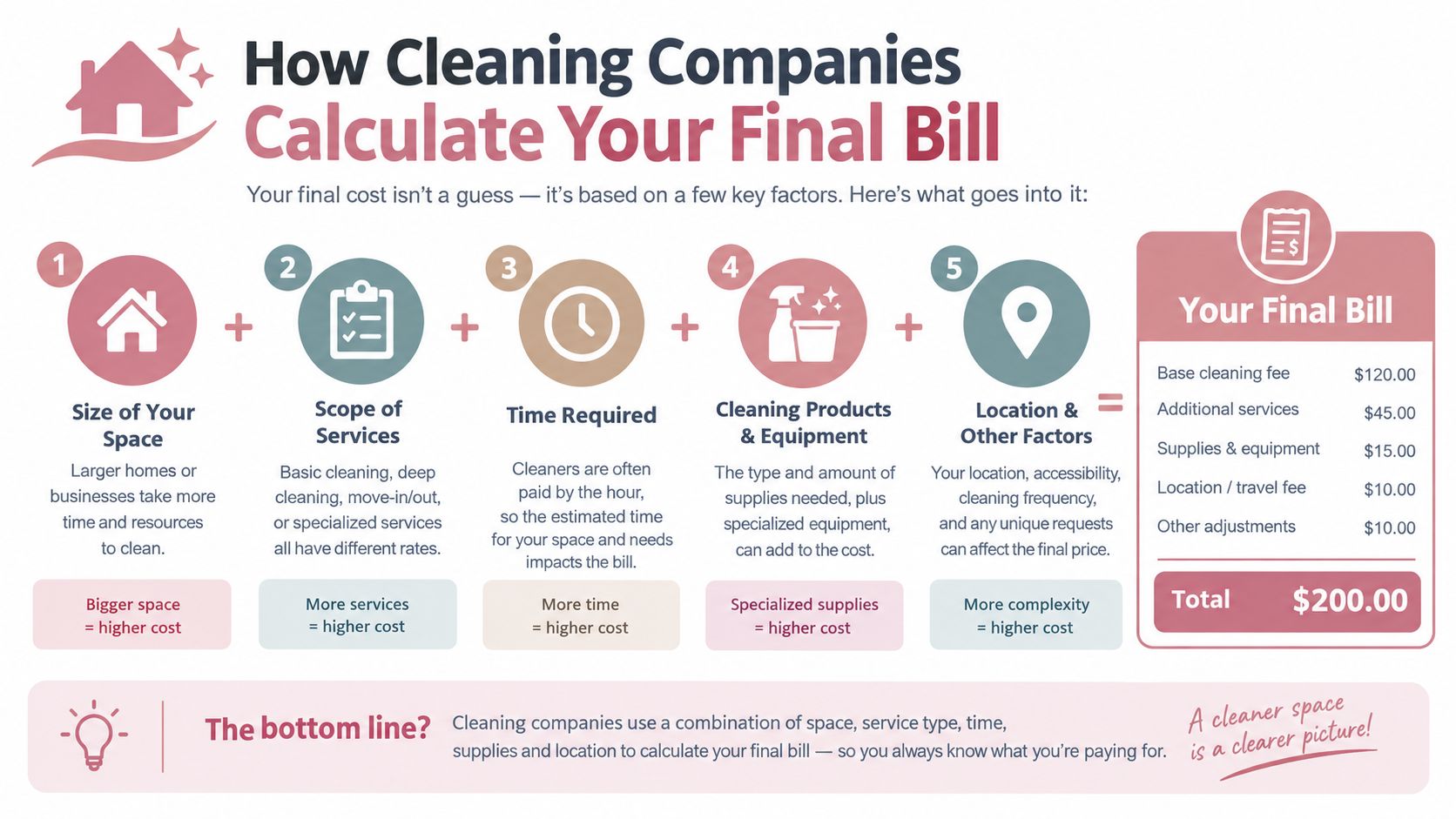
What changes the estimate
A professional estimate should account for:
- Crew size: More cleaners can shorten the calendar time, but total worker-hours may still increase.
- Dust and residue: Drywall dust, paint overspray, grout haze, and adhesive each require different tools and repeated passes.
- Access: Stairs, blocked entrances, and rooms holding materials make every task slower.
- Finish sensitivity: Hardwood, stone, glass, and new paint need products and tools that will not scratch or dull them.
- Schedule pressure: A rushed handover may require extra labor capacity rather than a faster visit.
For context, compare the quote with this guide to average cleaning service cost, then adjust for construction residue and detailing. Routine housekeeping rates do not measure a cleanup that starts with removal and surface restoration.
Rough Clean vs Final Detail Clean
The most common quote dispute starts with one phrase: “post-construction cleaning.” Homeowners often mean a home that is ready for furniture and occupants. Contractors may mean that bulk debris has been removed so the next trade can work.
A rough clean handles the obvious mess. Crews gather packaging, remove larger debris, vacuum or sweep heavy dust, take stickers from glass, and prepare rooms for later finishing. It can make a construction site safer and easier to work in, but it usually won't deliver the polished result expected before a move-in inspection.
A final detail clean is a different level of service. Workers wipe baseboards, doors, trim, cabinets, fixtures, counters, and other exposed surfaces. They clean floor edges, glass, tracks, and residue left by paint or adhesive. Drywall sanding and paint overspray turn a seemingly simple job into a time-consuming one.
Rough vs Final Clean Pricing Breakdown
| Cleaning Phase | Rate per Sq Ft | Estimated Total (1,500 sq ft) | Primary Focus |
|---|---|---|---|
| Rough clean | $0.10 to $0.30 | $150 to $225 | Bulk debris, packaging, heavy dust, and basic preparation |
| Final clean | $0.15 to $0.30 | $225 to $450 | Surface wiping, residue removal, floors, trim, fixtures, and move-in preparation |
| Touch-up or light clean | $0.06 to $0.12 | $90 to $180 | Remaining dust, inspection marks, and limited finishing work |
These phase rates and the 1,500-square-foot examples come from Cleaner Match's post-construction pricing breakdown. The figures are useful for separating the phases, but the actual scope still matters. A rough clean at the top of its range may involve heavier debris than a light final pass, while a final clean with paint residue can require substantially more labor.
How to identify the phase you need
Ask yourself what the next person should be able to do after the crew leaves. If another contractor still needs access and the home contains packaging or material scraps, you may need a rough clean. If the goal is to place furniture, pass a homeowner walkthrough, or prepare for occupancy, request a final detail scope.
A top-to-bottom house cleaning checklist can help you inspect the bid room by room. Use it to identify surfaces that a generic “final clean” label might leave undefined.
Hidden Add-Ons That Increase Your Bill
The base square-foot price rarely tells the whole story. Many homeowners assume a final clean includes every surface and system affected by construction, but companies often price specialty work separately because it requires different equipment, training, or disposal arrangements.
Current cost references list several common add-ons independently. Angi's construction-site cleaning cost guide lists HVAC duct cleaning at $180 to $400, window cleaning at $150 to $300, floor waxing at $1 to $1.50 per square foot, and debris removal at $300 to $1,000.
That means a bid can look attractive until you add the items you assumed were included. A floor-waxing request isn't the same as sweeping and mopping. Duct cleaning isn't the same as wiping accessible vent covers. Hauling construction waste isn't the same as placing small bags at an agreed collection point.

Questions to put in the quote
Request written answers to these questions before approving the work:
- Windows: Are interior glass, frames, tracks, screens, and exterior panes included?
- HVAC: Does the crew clean only registers, or does a qualified specialist clean the duct system?
- Floors: Is the scope limited to vacuuming and mopping, or does it include waxing, polishing, sealing, or specialty floor care?
- Waste: Who removes large debris, and are disposal charges included?
- Cabinets: Are interiors included, or does the crew clean only exposed fronts?
- Return visit: Is a touch-up visit included if another trade creates dust after the initial service?
A transparent quote should identify exclusions as clearly as inclusions. In North Atlanta, that written detail is more valuable than a low headline rate because it lets you compare equivalent scopes instead of comparing incomplete promises.
Practical Examples of Local Estimates in North Atlanta
A small Kennesaw bathroom can cost more per usable square foot than a larger open room when the final clean requires detailed handwork. Use these examples as planning models, not fixed North Atlanta promises. The final bill depends on the cleaning phase, residue, room access, and specialty work outside the base scope.

Example one, a small bathroom remodel
A compact bathroom may have little floor area, yet still demand careful detailing. Tile dust settles on fixtures, grout haze clings to hard surfaces, and adhesive can remain around mirrors, hardware, and protective film. If the contractor has removed the large materials, request a final detail clean rather than a basic debris pass.
The labor comes from the edges and fixtures. Ask the cleaner to identify whether the quote includes the vanity, cabinet interiors, shower glass, baseboards, floor edges, and ventilation covers. A short room can require more hands-on work than its size suggests.
Example two, a 1,500-square-foot kitchen and flooring renovation
A 1,500-square-foot North Atlanta home undergoing kitchen and flooring work may need cleaning across the renovated rooms and adjoining living areas. Using the final-clean benchmark in the pricing table above, the planning range is $225 to $450.
That range applies only when the residue and scope stay controlled. Drywall dust inside cabinets, flooring adhesive, heavy film, or debris spread through the home increases labor. Carpet cleaning, ductwork, and large-waste removal should appear as separate line items so an attractive base quote does not conceal added work.
Removal and site preparation can create similar surprises in other projects. The hidden factors in land clearing costs offer a useful reminder that the visible starting price may exclude work needed to leave a site ready for use.
Example three, a whole-home new build
A new-build home has a wider cost range because several cleaning phases may be needed. Packaging, raw-material waste, fine dust, window film, floor residue, and repeated trade access create more labor than a contained remodel. Set the budget around rough cleaning, final detailing, and any touch-up visit instead of requesting one vague whole-home service.
For a North Atlanta homeowner, the written scope should state who handles exterior entry areas, windows, HVAC work, carpet care, and debris hauling. Review Aquastar's North Atlanta service areas when checking whether a local company covers the property.
A walkthrough beats an online estimate. The estimator can inspect the dust load, layout, unfinished rooms, floor condition, and access points before assigning labor. That inspection is the best way to separate rough debris removal from the surface detailing that usually drives the final bill.
How to Reduce Your Post Construction Cleaning Cost
The easiest way to reduce the bill is to reduce paid labor without shifting delicate work onto an unprepared homeowner. Timing, access, and scope control matter more than buying a cheaper bottle of cleaner.
Schedule after the last dusty trade
Don't book the final detail clean while sanding, painting, flooring, or cabinet installation continues. Every later trade can create another layer of residue, forcing you to pay for work that gets undone. Wait until the construction sequence is finished, then schedule the cleaning while the dust is still concentrated and before the home becomes crowded with furniture.
A rough pass can happen earlier if the contractor needs the site cleared. Treat it as a separate production step, not as proof that the final clean is complete.
Remove safe, obvious clutter
Homeowners can sometimes reduce rough-clean labor by clearing loose packaging, empty boxes, and small nonhazardous materials before the cleaners arrive. Don't handle sharp, heavy, chemical, or questionable construction waste yourself. Ask the contractor or cleaning company who has responsibility for disposal.
Clear pathways, open rooms, and make water and power available when appropriate. A crew that can move equipment directly to each room spends less time waiting and more time cleaning.
Bundle compatible services
If you need carpet cleaning, interior windows, or another specialty service, ask whether one provider can coordinate the visit. Bundling can reduce repeated scheduling and setup, but only accept it when the written scope names each service and its price.
Choose products based on the newly installed surfaces, not just the lowest supply cost. Biodegradable solutions may be a sensible option for households with children or pets, especially when the home contains new flooring, stone, or painted finishes that harsh chemicals could damage. A product upgrade isn't automatically cheaper, but preventing surface damage is cheaper than repairing a finish.
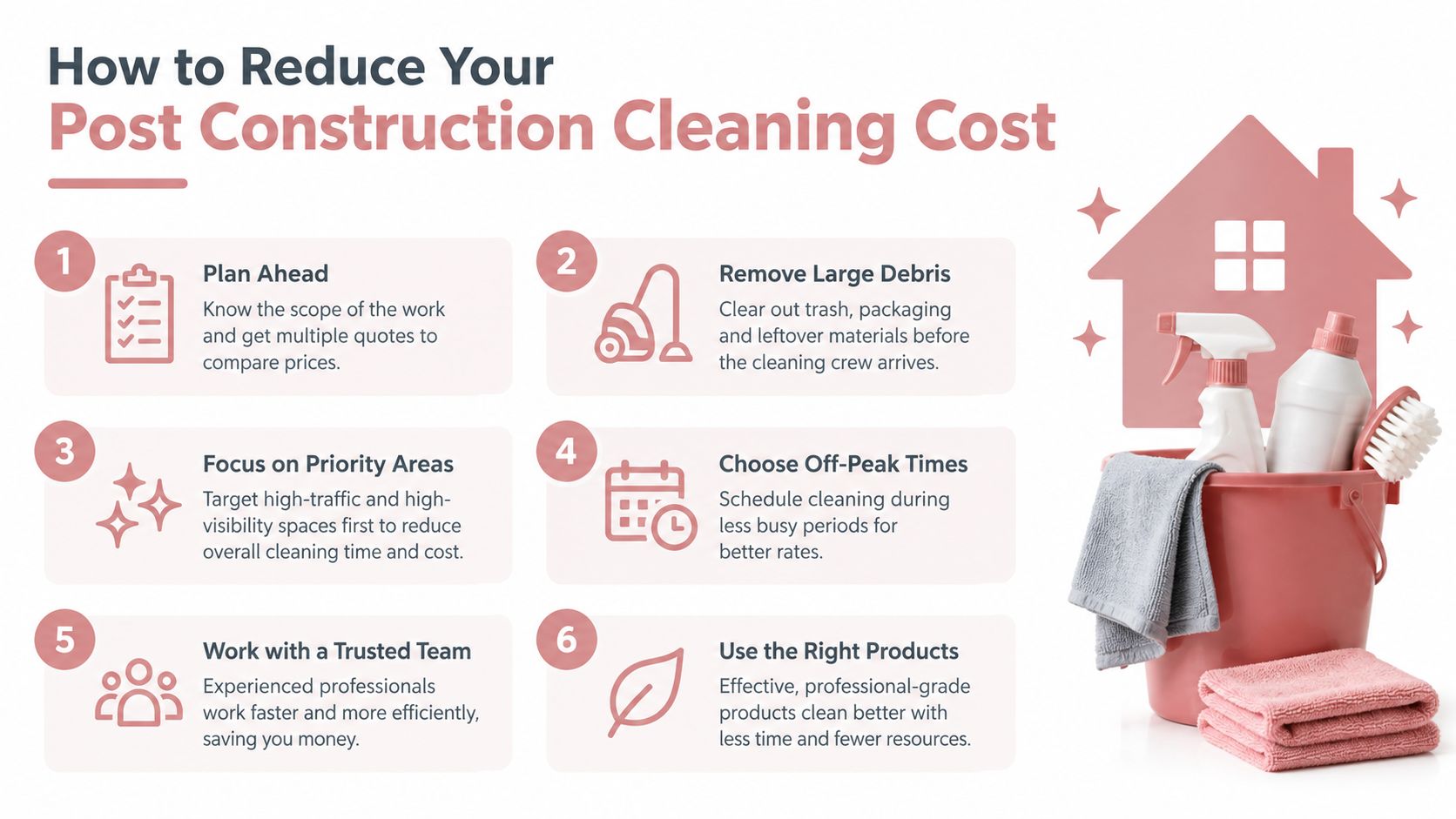
Get comparable bids, but don't choose on the total alone. Ask each company to identify the phase, rooms, surfaces, exclusions, disposal responsibility, and any return visit. The cheapest estimate often becomes the expensive one after missing work is added back.
Why Aquastar Cleaning Services Stands Out
A low quote has little value if the crew skips cabinet interiors, leaves dust on trim, or uses the wrong product on a new floor. Post-construction cleaning rewards documented processes because the work involves many small surfaces that are easy to miss during an informal visit.
Aquastar Cleaning Services operates as a family-owned company serving Kennesaw and North Atlanta, with 25+ years in operation, according to its company information page. Its post-construction service addresses dust, debris, and fine surface residue, with customizable plans for the condition and priorities of the home.
What to verify before hiring any team
Look for practical safeguards rather than polished sales language:
- Insurance and bonding: Confirm that the company carries coverage appropriate for residential work.
- Staff screening and training: Ask whether workers are background-checked and trained in defined cleaning procedures.
- Room-by-room scope: Require a checklist for kitchens, bathrooms, bedrooms, living areas, floors, fixtures, and other included spaces.
- Surface compatibility: Confirm which products and tools the crew will use on hardwood, stone, glass, cabinetry, and new paint.
- Flexible planning: Make sure the company can separate rough work, final detailing, and specialty add-ons when the project requires it.
A trained team doesn't eliminate every variable in the post construction cleaning cost, but it makes the estimate easier to understand and the finished result easier to inspect. For families moving back into a renovated home, biodegradable product options and consistent room coverage can matter as much as the headline price.
Aquastar Cleaning Services, LLC offers post-construction cleanup, deep cleaning, move-in and move-out service, and customized residential plans for homes in Kennesaw and North Atlanta. Visit Aquastar Cleaning Services, LLC to request a quote and define the dust, debris, residue, floors, windows, and specialty work your project needs.