


Visible surfaces can look clean while grease remains on cabinet edges, grout darkens in the joints, dust collects in window tracks, and appliance residue hides behind doors and seals. Routine housekeeping keeps everyday mess under control, but deep cleaning reaches the areas that normal wiping and vacuuming often miss. The American Cleaning Institute distinguishes deep cleaning from light cleaning, describing it as a thorough clean of the entire household, including floors, furniture, and surfaces. In its 2018 survey, 26% of respondents described their usual spring-cleaning activity as deep cleaning, while 74% described it as light cleaning. American Cleaning Institute survey results
The most efficient route is room by room, from high surfaces to low ones, and from dry dust removal to wet cleaning. Match each job with the right tool, product, dwell time, and safety step. The deep house cleaning tips below cover overlooked living-area details, oven residue, grout, carpets, kitchen grease, window tracks, refrigerator maintenance, and ceiling fixtures. They also show when a careful DIY method is enough and when specialized help saves time.
1. Baseboards and Crown Molding Deep Clean Using the Microfiber Method
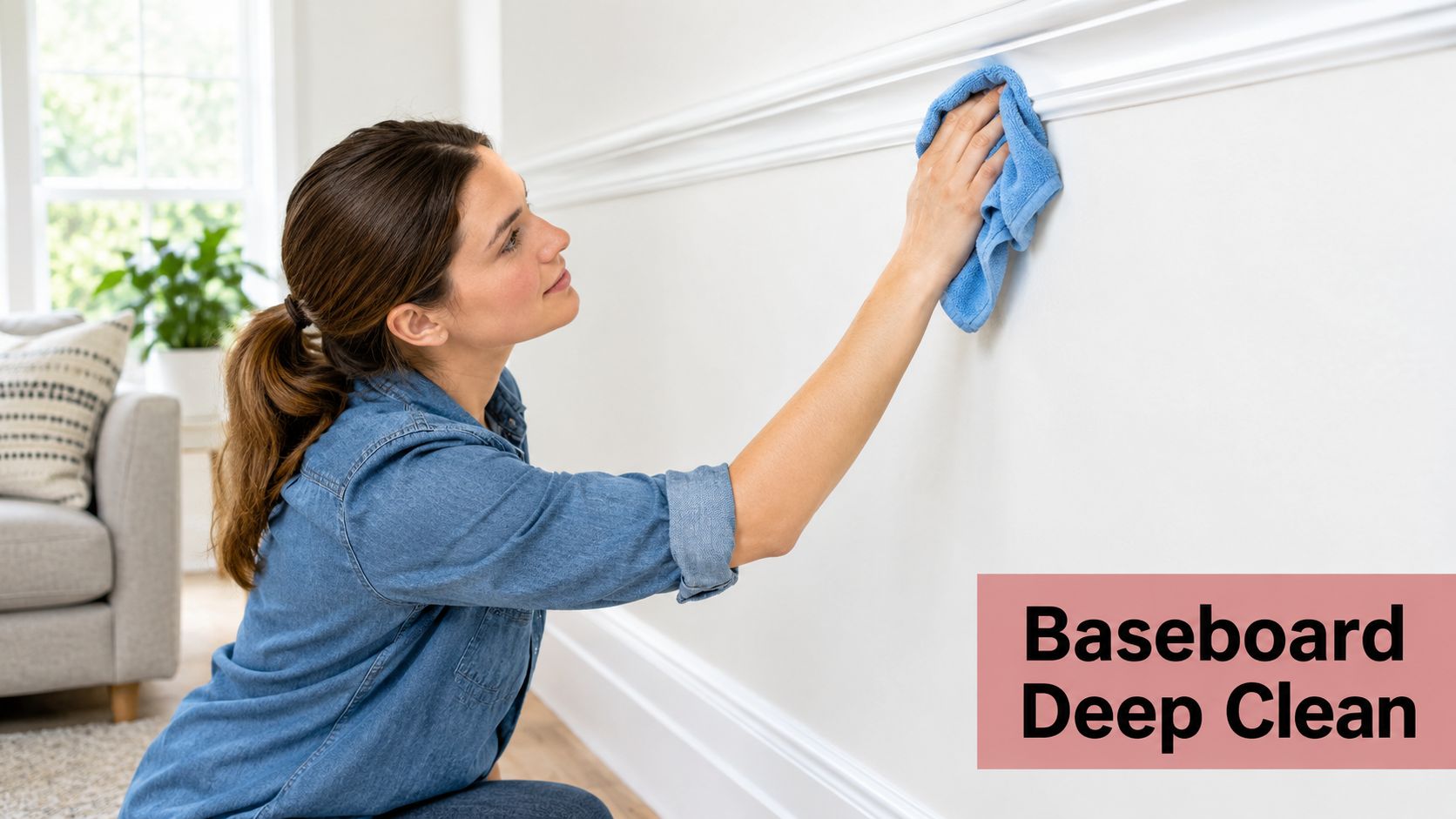
Baseboards and crown molding collect settled dust, pet hair, and hand oils in places a vacuum head rarely reaches. Start at the highest molding in the room and work downward so loosened particles land on surfaces you haven't cleaned yet. A clean, slightly damp microfiber cloth usually captures dust more effectively than a dry feather duster, which can merely redistribute it.
Use a stable step stool for reachable crown molding, and fold the cloth into a manageable pad. Wipe along the molding in overlapping passes, then use a narrow folded edge for corners and decorative grooves. Keep the cloth damp rather than wet, especially on painted or wooden baseboards, because excess water can mark finishes or seep into joints.
For a family with golden retrievers, the practical difference appears along the lower walls where hair becomes embedded in dust. A damp microfiber pass can collect that residue without adding fragrance or strong chemicals. The same approach works after construction, when fine dust settles on baseboards for days even after floors have been vacuumed.
Clean without creating another air problem
The EPA's guidance on indoor particulate matter recommends damp dusting and explains why a HEPA-filter vacuum can reduce the dust released back into indoor air. Use the vacuum first only when loose debris is heavy, then finish with the damp cloth. People with asthma or allergies should leave the room while vacuuming, since cleaning can stir up settled particles.
- For ordinary dust: Use water on microfiber and skip chemicals.
- For scuffs: Test a diluted white-vinegar solution on a hidden spot before applying it to painted wood.
- For pet homes: Clean one room at a time, then wash or replace the cloth before moving on.
- For maintenance: Add baseboards to the recurring deep-cleaning list instead of waiting until grime becomes visible.
Practical rule: If the cloth is leaving a wet line, wring it out before touching wood, MDF, or painted trim.
2. Oven Deep Clean Using Baking Soda and Vinegar Paste Method
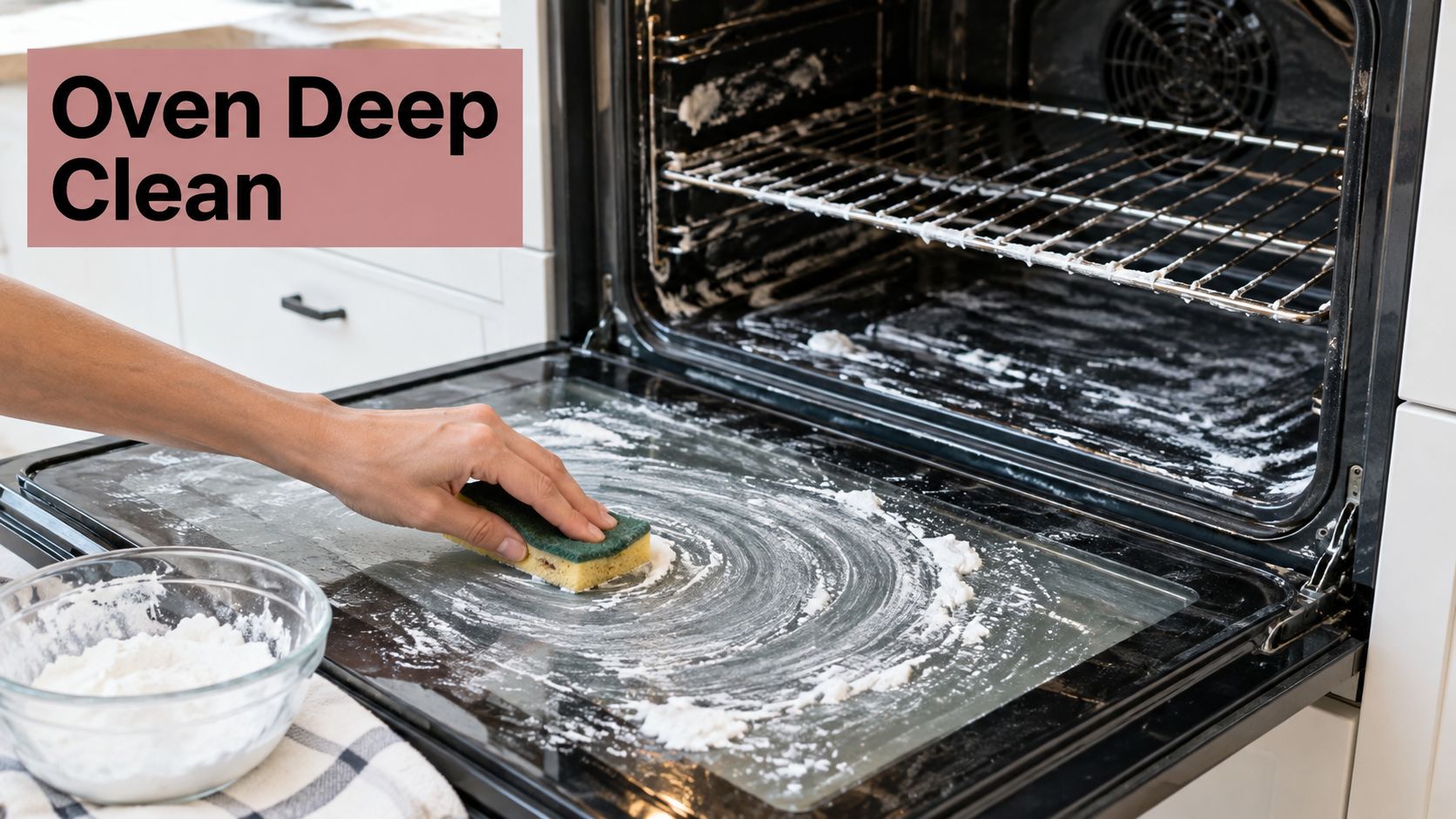
An oven with baked-on splatters needs dwell time, not just harder scrubbing. Remove racks and loose crumbs first. Mix baking soda with enough water to form a spreadable paste, then apply it to the interior surfaces while keeping it away from heating elements, vents, seals, and other areas identified in the appliance manual.
Leave the paste in place overnight so it can soften accumulated residue. The following day, apply vinegar sparingly to the remaining paste, allow the fizzing reaction to loosen residue, and wipe with a damp cloth. The reaction helps lift softened grime, but it isn't a substitute for removing the loosened material. Several passes with clean water may be necessary.
For a rental move-out clean, this method is useful when the oven has months of splatters but the next occupant will use the kitchen soon. It also suits households that prefer to limit strong fumes around children and pets. Still, “natural” doesn't mean every surface is compatible, so check the manufacturer's instructions and test a small area first. A plastic scraper is safer than a metal blade on oven glass because it reduces the chance of scratching.
Know when a commercial product changes the workflow
Some heavy deposits may respond faster to a purpose-made commercial oven cleaner for NZ kitchens, but product instructions, ventilation, gloves, and surface compatibility matter. Never combine an oven cleaner with vinegar, bleach, ammonia, or another chemical. If you use a paste, remove all residue before cooking again.
For a practical recurring routine, inspect the oven after spills rather than waiting for a thick layer to form. You can also review this guide to baking soda stain removal for related uses of the same basic ingredient. The right stopping point is a clean, residue-free interior, not an aggressively scrubbed surface with damaged enamel.
3. Grout and Tile Revitalization Using Oxygen Bleach and Stiff Brush Technique
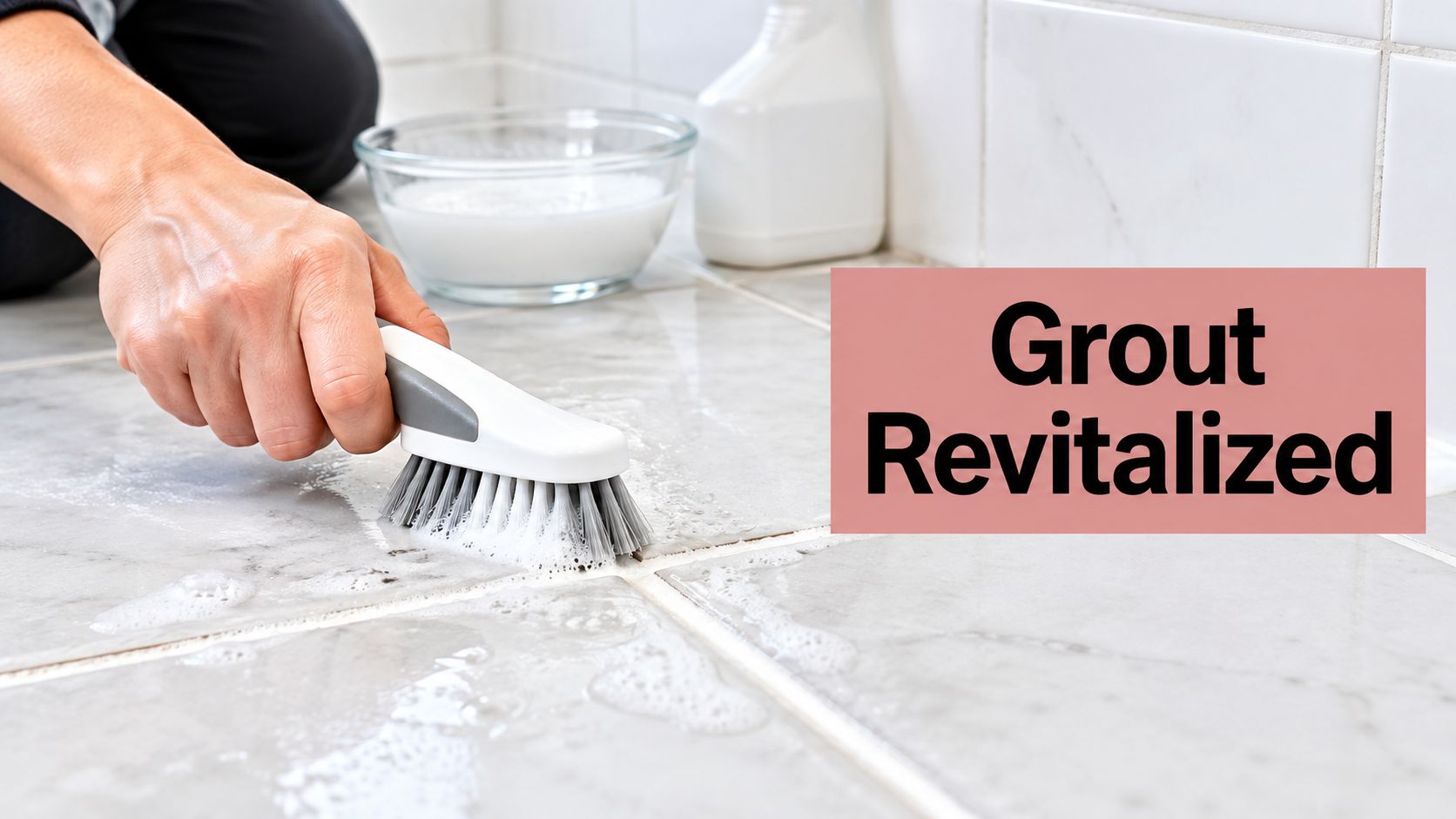
Grout often holds the soil that a quick mop leaves behind. In a bathroom, soap film, mineral deposits, and tracked-in dirt can turn pale joints gray. Start this route by removing loose dust with a vacuum or dry microfiber cloth, then apply a labeled oxygen-based cleaner. Let it dwell for the time stated on the product label before scrubbing.
Use a narrow, stiff grout brush and short back-and-forth strokes. Its smaller head directs pressure into the joint more effectively than a broad floor brush. Work in manageable sections so the solution does not dry before agitation. Rinse each section with clean water, then remove the dirty water with a cloth or wet vacuum. Cleaner left in porous grout can attract soil and interfere with a later sealer.
Test first in an inconspicuous area if the grout is colored, the tile is natural stone, or the manufacturer's instructions are unclear. Oxygen-based products are not automatically suitable for every tile, sealant, or nearby surface. This guide to cleaning ceramic tile explains why the method should match the material.
A shower with darkened wall joints needs controlled work rather than repeated surface spraying. Clean from the top down, keep ventilation running, and cover or rinse metal fixtures as the product label requires. For a kitchen backsplash, apply less solution and rinse carefully near food-preparation areas. Allow the grout to dry fully before deciding whether it needs another pass or resealing.
Treat mold as a moisture issue
Chlorine bleach is not a universal mold solution. The California Department of Public Health's mold guidance does not recommend it for routine mold disinfection because it can create hazards, irritate the eyes, skin, nose, and throat, and fail to prevent regrowth. Find and correct leaks, condensation, or poor ventilation first. Porous drywall, carpet, upholstery, or materials damaged by water may need specialized handling instead of repeated scrubbing.
- Light grout soil: Use a labeled oxygen-based product and a firm brush.
- Persistent dark growth: Check moisture, caulk, ventilation, and condensation before cleaning again.
- Delicate tile: Confirm product compatibility and test a hidden area.
- Chemical safety: Never mix bleach with ammonia or acidic cleaners.
4. Carpet Deep Clean Using Hot Water Extraction with Enzymatic Pre-Treatment
Weekly vacuuming removes surface debris, but it doesn't reach every particle trapped in carpet pile. Start by moving small furniture and vacuuming slowly in both directions. Treat organic stains, such as urine, vomit, food, or milk, with an enzyme product that is labeled for the carpet fiber and the specific stain. Allow the treatment to dwell according to its label before extraction.
Hot water extraction then flushes loosened soil from the fibers and recovers the moisture. The operator must avoid over-wetting, protect wood furniture legs, and keep people and pets off the carpet until it has dried. Open windows or use suitable airflow after cleaning, but don't direct intense heat at a delicate fiber.
Consider a household with two cats and a persistent odor that returns after ordinary vacuuming. An enzyme pre-treatment addresses the organic source, while extraction removes the loosened residue. If construction dust has settled into new carpet, thorough pre-vacuuming followed by extraction is more useful than repeatedly deodorizing the surface.
Choose DIY or specialist extraction deliberately
A rental machine may help with maintenance, but it won't automatically provide the same soil recovery or stain assessment as a trained technician. Ask for carpet cleaning experts when the carpet has recurring pet accidents, a large water event, delicate fibers, or an odor that reaches the pad. Professional cleaning is also practical for move-in and move-out work when several rooms need consistent treatment.
A 2024 review of 77 studies found associations between frequent household cleaning-product use and respiratory problems, with spray products appearing more concerning than liquids or wipes. The BBC's analysis of household cleaning products also discusses why fragrance and aerosolized products deserve caution. Use a targeted, labeled treatment rather than saturating carpet with fragrance.
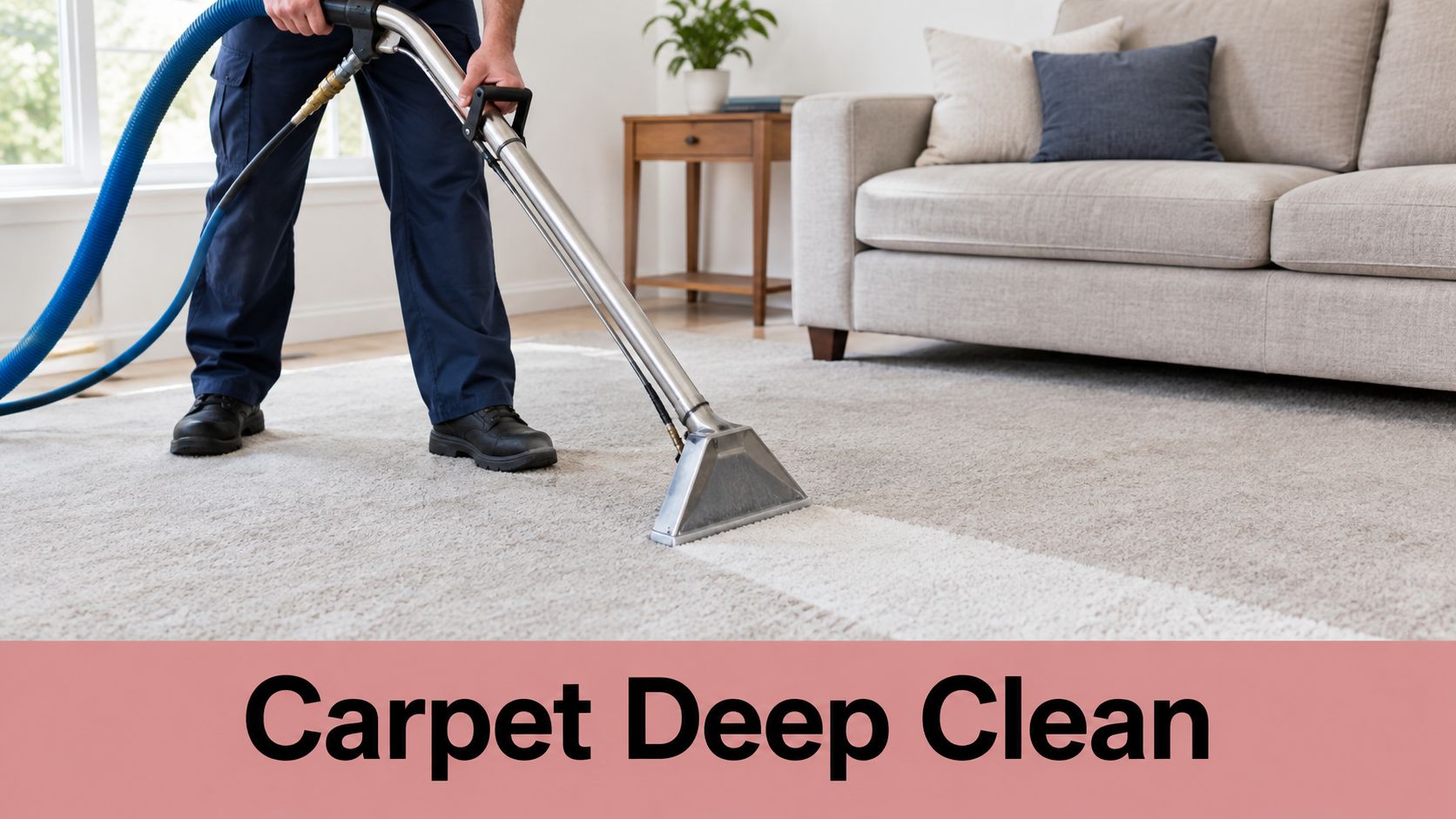
After the carpet has been pre-vacuumed and treated, extraction can remove the loosened material more effectively than surface brushing alone.
5. Kitchen Exhaust Hood and Filter Degreasing Using Steam and Degreaser Method
The exhaust hood is easy to ignore because it sits above eye level, yet grease can collect on the hood, filters, fan cover, and surrounding cabinet faces. Turn off the appliance and let all surfaces cool. Remove washable filters if the manufacturer allows it, photograph their position if necessary, and place them in a sink or container with a biodegradable degreaser diluted according to its label.
Use steam carefully on compatible surfaces to soften grease, then wipe with microfiber. Don't hold steam against electrical controls, seams, wood cabinetry, painted finishes, or areas where moisture could enter the motor. Stainless steel should be wiped in the direction of its grain, not scrubbed with an abrasive pad.
A practical scenario is a rental kitchen where previous occupants cooked frequently and the filter is coated with sticky residue. Soaking the removable filter while the hood exterior is cleaned makes the workflow more efficient. Extremely heavy buildup may need a longer label-directed dwell period, followed by repeated wiping rather than forceful scraping.
Protect ventilation and food-preparation surfaces
Cleaning a hood is not the same as proving that its internal ductwork is clear. If grease is inside inaccessible components, or if the fan remains weak after the visible surfaces are clean, use an appliance or ventilation specialist. Keep food, utensils, and open containers away from the work area, and rinse removable parts thoroughly before reinstalling them.
Use low-odor, biodegradable products when appropriate, but don't assume an eco label removes the need for ventilation or protective equipment. Fragrances can react with indoor ozone and create fine particles, so a heavily scented degreaser or air freshener isn't a substitute for removing grease. For pest-related kitchen concerns, a separate step-by-step flea treatment plan may be more suitable than adding stronger chemicals to the cleaning routine.
6. Window Track and Sill Deep Clean Using Vacuum and Detail Brush Method
Window tracks trap dust, dead insects, spider webs, and moisture. Start dry. Use a crevice tool on a HEPA-equipped vacuum to remove loose material before applying any cleaner. This prevents wet debris from turning into paste and helps the detail brush reach the corners.
An old toothbrush or soft detailing brush can loosen residue from channels, weep holes, and the underside of the sliding panel. Work in small sections, collect the debris, and use a biodegradable cleaner on a cloth rather than flooding the track. Check that drainage openings remain clear. If the window becomes difficult to operate after cleaning, inspect for damaged rollers or frame distortion instead of forcing it.
For a post-construction cleanup, fine dust may sit inside tracks even when the glass looks spotless. Vacuuming first protects indoor air and reduces redistribution. In an older home with sticking vinyl windows, removing compacted debris can improve movement, but it won't repair worn hardware.
Finish with the right amount of lubrication
Once the track is clean and dry, apply only a lubricant approved for that window system. The window-track lubrication guide can help you choose a compatible approach. Too much oily product attracts dust and creates a new buildup, so a light application is better than coating the entire channel.
- For indoor tracks: Vacuum thoroughly before wet cleaning.
- For exterior work: Choose calm conditions so loosened dust doesn't blow indoors.
- For mold concerns: Find the moisture source instead of repeatedly wiping the visible growth.
- For safety: Don't lean out of an upper-story window. Use appropriate equipment or hire help.
A clean sill should feel dry and smooth, with drainage paths open. If water remains after rain, the issue may be the window installation or exterior drainage rather than housekeeping.
7. Refrigerator Coil and Interior Deep Clean Using Coil Brush and Vacuum Method
A refrigerator clean works best as two separate jobs: restoring airflow around the condenser coils and washing food-contact surfaces. Check the appliance manual to locate the coils, disconnect power, and remove panels only when the manufacturer permits it. Use a coil brush and vacuum to loosen dust, pet hair, and debris without bending the components.
Work from the outer edges toward the vacuum nozzle where possible. A HEPA-filter vacuum limits dust released into the kitchen. Keep water and spray cleaner away from electrical parts and machinery. After cleaning, replace the panel, restore power, and confirm that the refrigerator has the ventilation clearance required for its installation. For related airflow maintenance, see this guide to AC duct cleaning cost.
For the interior, remove all food and discard spoiled items. Wash shelves and drawers with warm, soapy water, rinse them well, and let them dry fully before replacing them. Wipe door seals with a soft cloth, working into folds where crumbs and moisture collect. A torn seal or one that no longer closes evenly needs replacement or appliance service, because cleaning will not stop the air leak.
Keep food-contact cleaning separate from general degreasing
The USDA's food-safe refrigerator cleaning guidance recommends prompt cleaning with warm, soapy water and warns against solvent cleaners or abrasives that may leave unsafe fumes or tastes. Use an appliance thermometer instead of relying only on the dial. USDA guidance places refrigerators between 34°F and 40°F, while the FDA sets 40°F as the maximum safe refrigerator temperature. FDA refrigerator safety guidance.
- For a pet home: Vacuum coil hair carefully and clean the lower door seal.
- For a move-in clean: Wash shelves, drawers, handles, and gasket folds before stocking food.
- For odors: Remove the source first, then clean and dry the interior.
- For performance problems: Arrange appliance service if the refrigerator remains warm after cleaning.
Keep general-purpose chemicals away from exposed food, ice, and porous shelving unless the label specifically permits that use.
8. Ceiling Fan and Light Fixture Blade Cleaning Using Microfiber Cloth and Pillow Case Method
Ceiling fans spread dust when they run, especially when the blades haven't been cleaned for a long time. Turn the fan off at the wall control and wait until the blades have stopped completely. Use an old pillowcase or a microfiber cloth to enclose each blade, then pull slowly along its length so dust falls into the fabric instead of onto furniture.
Place a washable sheet over nearby upholstery if the fan is heavily soiled. Don't lean sideways from a ladder or overreach while holding a blade. A stable step stool is suitable only when it gives you secure footing and a comfortable working height. For high or stairwell-mounted fixtures, professional access equipment is safer.
A family with dust-sensitive occupants may notice that cleaning fans before the heating season reduces the layer of settled dust around the room. In a two-story home with several fans, the pillowcase method also prevents a second furniture-cleaning job. The important sequence is to clean the fan before shelves, tables, upholstery, and floors.
Finish light fixtures without damaging them
After the blades are clean, wipe the fixture housing and bulbs with a dry or barely damp microfiber cloth, following the fixture manufacturer's instructions. Turn off power before handling removable globes, and let bulbs cool. Never spray cleaner directly onto a light fitting.
The EPA's indoor-air guide reports that concentrations of approximately a dozen common organic pollutants can be 2 to 5 times higher indoors than outdoors. It also cites survey evidence that 75% of U.S. households used at least one pesticide product indoors during the previous year. Those figures don't make ordinary cleaning products automatically unsafe, but they support a lower-emission approach: damp dusting, ventilation, careful label compliance, and less reliance on fragrance sprays.
Clean the fan first, then clean the furniture and floor beneath it.
8-Point Deep House Cleaning Comparison
| Service | Complexity (🔄) | Resources & Efficiency (⚡) | Effectiveness (⭐) | Expected Outcomes (📊) | Ideal Use Cases & Tips (💡) |
|---|---|---|---|---|---|
| Baseboards & Crown Molding, Microfiber Method | Low, manual room-by-room 🔄🔄 | Low, microfiber cloths, bucket; reusable, quick setup ⚡ | ⭐⭐⭐⭐ | Removes dust/hair, restores trim appearance, reduces surface allergens 📊 | Homes with kids/pets; use damp (not wet) cloth; work room-by-room 💡 |
| Oven, Baking Soda & Vinegar Paste | Low–Medium, long dwell time 🔄🔄 | Very low cost, baking soda, vinegar, spray bottle; minimal tools ⚡ | ⭐⭐⭐⭐ | Lifts baked-on grease safely; chemical-free, inspection-ready oven 📊 | Move-ins and eco-conscious homes; apply overnight, spray vinegar, use plastic scraper 💡 |
| Grout & Tile, Oxygen Bleach + Stiff Brush | Medium, labor-intensive for large areas 🔄🔄🔄 | Moderate, oxygen bleach, stiff grout brush, ventilation; moderate effort ⚡ | ⭐⭐⭐⭐ | Restores grout whiteness, removes mildew/soap scum, delays regrowth weeks 📊 | Bathrooms/kitchen backsplash; test colored grout, ventilate, scrub 5–10 min 💡 |
| Carpet, Hot Water Extraction + Enzymatic Pre-Treat | High, professional equipment and time 🔄🔄🔄🔄 | High, enzymatic solution, extraction machine, trained technician; time-intensive ⚡ | ⭐⭐⭐⭐⭐ | Removes deep soil, odors, allergens; restores pile; dries ~24 h 📊 | Homes with pets/allergies or post-construction; pre-vacuum and schedule 6–12 months 💡 |
| Kitchen Exhaust Hood & Filter, Steam + Degreaser | Medium–High, equipment + access needed 🔄🔄🔄 | Moderate–High, steam cleaner, biodegradable degreaser, soak for filters ⚡ | ⭐⭐⭐⭐ | Dissolves grease, restores airflow, reduces fire risk and odors 📊 | Frequent cooking or move-in clean; remove filters to soak, use high steam setting 💡 |
| Window Track & Sill, Vacuum + Detail Brush | Medium, many windows or exterior access increases effort 🔄🔄 | Moderate, HEPA vacuum, detail brushes, biodegradable cleaner; ladder may be required ⚡ | ⭐⭐⭐⭐ | Clears decades of debris, improves sliding action, reduces mold growth 📊 | Homes with old/build-up tracks or post-construction; vacuum before cleaners, use HEPA 💡 |
| Refrigerator Coil & Interior, Coil Brush + Vacuum | Medium, careful, safety-aware procedure 🔄🔄🔄 | Moderate, coil brush, HEPA vacuum, time (1.5–2 h); unplugging required ⚡ | ⭐⭐⭐⭐ | Improves cooling efficiency, lowers energy use, eliminates odors and pests risk 📊 | Annual appliance maintenance or move-in; unplug, photo disassembly, clean gaskets 💡 |
| Ceiling Fan & Light Fixture, Microfiber + Pillowcase Method | Low, simple, safe technique 🔄 | Very low, pillowcase or microfiber, step stool; minimal time per fan ⚡ | ⭐⭐⭐⭐ | Captures dust without redistribution, improves air quality and appearance 📊 | Homes with allergies; turn fan off, wait to stop, wrap blade, include quarterly cleaning 💡 |
Turn One Deep Clean Into an Easier Routine
A deep clean becomes much easier when you stop treating every task as an all-day emergency. Start with the highest dusty features, including crown molding, ceiling fans, light fixtures, and upper shelves. Move downward through baseboards, furniture, upholstery, and finally floors. Damp dusting before vacuuming helps capture settled particles instead of sending them back into the room.
Use a separate route for wet work. In the bathroom, apply the grout product and allow the label-specified dwell time while you clean mirrors, fixtures, and other surfaces. Address moisture before mold. The California Department of Public Health explains that bleach doesn't prevent mold regrowth and isn't recommended for routine mold disinfection, so repeated chemical treatment won't solve a leaking seal, poor ventilation, or damp porous material. Its mold guidance is a useful reference when visible growth goes beyond ordinary surface cleaning.
In the kitchen, clean the refrigerator interior, oven, hood, and surrounding cabinet faces as separate jobs. Remove food before applying any product, use warm soapy water on food-contact surfaces, and follow the label for degreasers. For disinfection, cleaning and disinfecting are not interchangeable. The CDC's home cleaning guidance says to clean visibly dirty surfaces with soap and water first, then use an EPA-registered disinfectant when disinfection is needed. Keep the surface visibly wet for the full contact time on the label. Wiping it dry too early can reduce effectiveness.
Build a practical service rhythm
Some tasks belong in recurring housekeeping, while others make sense as seasonal or annual refreshes.
- Regular room care: Maintain floors, bathrooms, kitchen surfaces, dust-prone furniture, and high-contact areas.
- Seasonal deep cleaning: Refresh grout, window tracks, ceiling fans, baseboards, upholstery, and difficult appliance surfaces.
- Annual appliance care: Inspect refrigerator coils, seals, oven interiors, and exhaust filters, following manufacturer instructions.
- Specialist work: Use trained help for extensive mold, post-leak materials, delicate carpet, high-access fixtures, heavy grease, or construction residue.
Keep chemicals in their original labeled containers. Never mix bleach with ammonia or acidic cleaners. Ventilate when product directions call for it, avoid spraying directly into the air where a damp cloth will work, and keep children and pets away until surfaces are dry and the label permits re-entry.
Before starting, test products on hidden areas and protect natural stone, unfinished wood, painted finishes, and delicate fabrics. A whole-home reset, move, renovation, or inspection deadline may justify a custom plan rather than a rushed weekend clean. A moving-out inspection guide can help identify the areas that need special attention before handover.
Aquastar Cleaning Services, LLC serves Kennesaw and North Atlanta with recurring housekeeping, one-time deep cleaning, room-specific coverage, move-in and move-out cleaning, post-construction cleanup, appliance add-ons, and carpet cleaning. Its customizable plans can include eco-friendly products when requested, which is useful for households with children, pets, or sensitivity to aggressive cleaning agents. A clear room-by-room scope also makes it easier to separate routine maintenance from the appliance, carpet, window-track, and high-detail work that defines a true deep clean.
Aquastar Cleaning Services, LLC offers customizable deep cleaning, recurring housekeeping, appliance add-ons, carpet cleaning, move-in and move-out service, and post-construction cleanup in Kennesaw and North Atlanta. If these deep house cleaning tips have identified more work than you can comfortably handle, visit Aquastar Cleaning Services, LLC to request a plan suited to your rooms and priorities.