


You're standing in front of the washer with a basket that contains bath towels, kids' sheets, a dog blanket, and a shirt marked with an alarming stain. The dial is in your hand. Hot feels safer, especially after a stomach bug or a week of sweaty soccer practice, but cold feels kinder to your clothes and utility bill.
The useful answer isn't “hot is always better” or “cold is always enough.” Washing in hot water works best as a per-load decision. Choose the temperature according to what's in the basket, how dirty it is, what the care label permits, and whether someone at home is sick or especially vulnerable. That approach keeps everyday clothes in better shape while reserving heat for loads that can genuinely benefit from it.
The Laundry Pile Moment Everyone Knows
The towel is damp. The sheets have been on a child's bed through a fever. The dog blanket is covered in hair and dander. Meanwhile, the shirt with the stain needs a completely different treatment, even though it's sitting in the same basket.
Many households inherit a laundry rule. One person learned that clean clothes require the hottest cycle. Another switched everything to cold after seeing an energy bill and never looked back. Neither habit accounts for the fabric, the soil, or the purpose of the load.
A North Atlanta home can produce several very different laundry problems in one afternoon. Humid weather can leave towels slow to dry. Children's bedding may collect sweat, skin flakes, and allergens. A pet blanket may need allergen reduction, while dark jeans need protection from fading. Treating all of those items the same way wastes heat in some loads and under-treats others.
The basket is the starting point
Before choosing a temperature, ask what you're trying to remove. Body oils, heavy soil, allergens, and illness-related contamination don't behave exactly alike. A normal load of school shirts may only need detergent, movement, rinsing, and thorough drying. Towels used to wipe kitchen counters deserve more attention.
The washer itself also deserves basic care. Residue, lint, and hard-water minerals can affect how well a cycle performs, so homeowners may want to find the right washing machine filter when maintaining their appliance and water supply.
Practical rule: Treat hot water as a tool you spend on a specific problem, not as proof that every load is cleaner.
This guide replaces the inherited dial setting with a simple judgment call. You'll see where heat helps, where it damages fabric, and how to choose a sensible cycle without turning laundry day into a chemistry lesson.
How Hot Water Actually Cleans Your Laundry
Think about a greasy plate. A cold rinse may remove loose crumbs, but warm water helps soften the oily film so soap can lift it away. Laundry works in a similar way, although the washer adds detergent, soaking time, tumbling, rinsing, and drying.
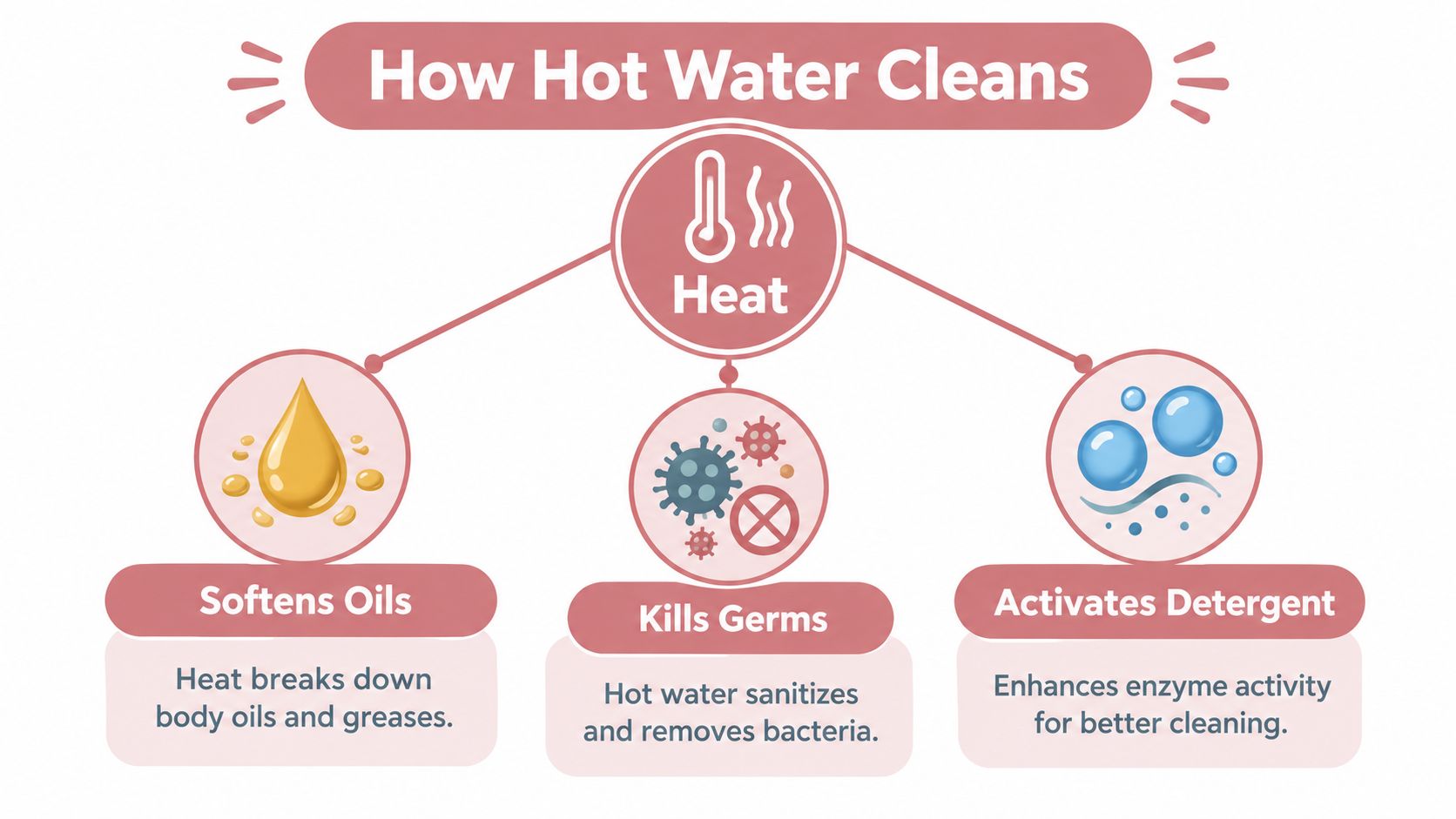
Heat supports cleaning in several ways:
- It softens oils and grease. Body oils, cooking residue, and some heavy soils loosen more readily when the water is warmer.
- It helps detergent work with the soil. Detergent surrounds loosened particles so the washer can carry them away.
- It contributes to microbial reduction. Heat can inactivate some microorganisms, but the result depends on temperature, exposure time, detergent, additives, and drying.
The important point is that temperature is only one part of the cleaning recipe. A packed washer can prevent water and detergent from reaching every surface. A short cycle may not provide enough contact time. Damp laundry left sitting after the cycle can also develop odors, even if the wash itself was effective.
Hot at home isn't the same as healthcare disinfection
Healthcare laundry guidance may use 71°C, or 160°F, for at least 25 minutes under controlled conditions to achieve a specified microbial reduction, as described by the CDC's healthcare laundry guidance. A household washer's hot setting shouldn't be described as equivalent to that institutional process.
For home use, the warmest label-permitted cycle can still be a sensible choice for towels, bedding after illness, cleaning cloths, and heavily soiled washable items. Use compatible detergent or sanitizing additives, avoid overloading, and dry everything completely. If you're unsure about the difference between products that reduce germs and products intended to destroy them, this explanation of the difference between sanitizers and disinfectants can help.
Heat also carries a clear energy cost. Water heating accounts for roughly 90% of a washing machine's energy consumption, and switching from hot to cold can reduce that energy demand by about 90%, according to Chemical & Engineering News. For questions about the wider quality and treatment of household water, a practical household water purification guide offers useful background.
Where Hot Water Earns Its Place in Your Routine
A North Atlanta laundry room can face very different loads in one afternoon: a child's sheets after a cold, gym towels that stayed damp, or a dog blanket covered in hair. The right question is not whether hot water is always better. It is what the load contains, and what its care label allows.
Cotton bedding is one of the clearest cases for extra heat. In a study of cotton bedding, washing at 140°F, or 60°C, killed 100% of house-dust mites, while a 104°F cycle killed only 6.5%. The hotter cycle also removed approximately 90% of dog dander and 97% of pollen, compared with about 60% and 95% at lower temperatures, respectively, according to coverage of the bedding study. If a child wakes congested after sleeping beside a shedding dog, a label-permitted 60°C cycle can address more than ordinary surface dirt.
Loads that deserve more heat
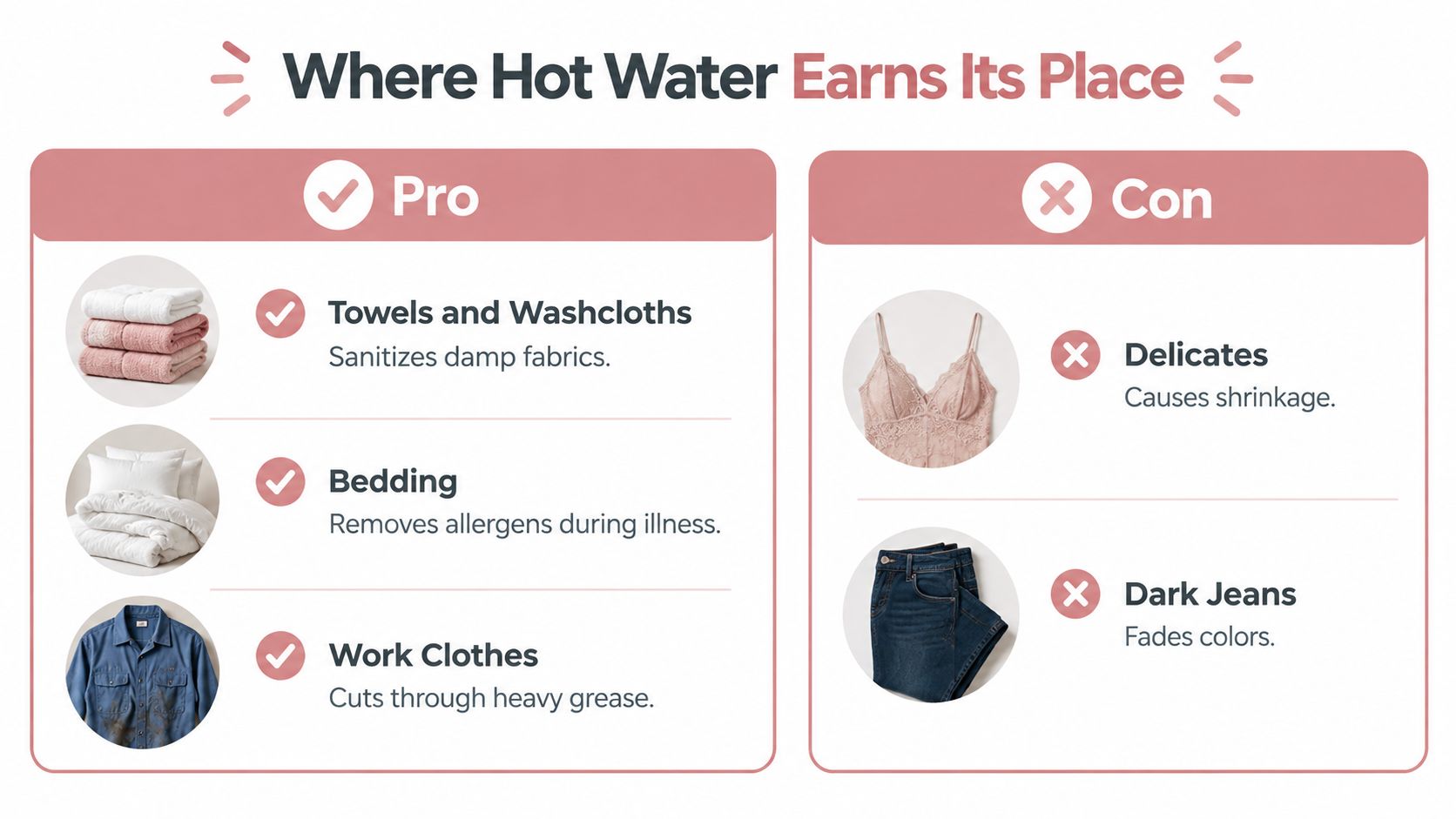
- Towels and washcloths: Damp bathroom towels and sink cloths collect body oils and soil. Choose the warmest label-permitted setting, then dry them completely.
- Bedding after illness: Sheets and pillowcases used during a cold, flu, or stomach illness need deliberate handling. Follow the care label, use detergent, avoid overloading, and add a compatible sanitizing product when appropriate.
- Kitchen and bathroom cloths: Cloths used on counters, sinks, and bathroom surfaces may benefit from a hotter wash when they are durable and washable. Keep them separate from delicate clothing.
- Sweaty athletic wear and underwear: Heat may help detergent loosen body oils, but elastic and synthetic fabrics often call for warm or cool water. The label determines the safe choice.
- Pet blankets: Dog blankets hold dander, hair, and skin oils. A hot cotton cycle can support allergen reduction if the blanket permits it. For bulky bedding, follow the care instructions in this guide to clean a king-size comforter.
A household hot cycle is not a hospital process. Still, for these loads, heat works alongside detergent, washer movement, and complete drying. If the label permits only a cooler temperature, use a suitable detergent and compatible additive, and make sure the items dry fully.
Cool water remains the better choice for delicate or temperature-sensitive fabrics. Use heat for the load's actual needs, not just because it feels dirty.
The Hidden Costs of Cranking the Dial Up
The price of hot water isn't limited to the utility bill. Repeated heat can change how clothes fit, how colors look, and how long prints and elastic survive.
A dark pair of jeans may lose its deep color faster after repeated hot cycles. A child's cotton shirt may shrink enough to become uncomfortable. Elastic in athletic shorts can lose its shape, while a printed novelty tee may develop cracked graphics. These aren't signs that the washer is defective. They're often signs that the fabric needed a gentler setting.
Synthetic fibers can soften under heat, and wrinkles may become set during washing or drying, especially when a polyester uniform sits compressed in a full dryer. Michigan State University Extension explains the relationship between heat, synthetic fabrics, heavy soil, and wrinkling in its laundry fabric-care guidance.
A quick comparison
| Load Type | Hot Cycle Result | Cold Cycle Result | Best Practice |
|---|---|---|---|
| Cotton towels | Helps loosen body oils and supports microbial reduction | Uses less energy and may clean routine soil adequately | Use the warmest label-permitted setting when towels are heavily soiled or stay damp |
| Cotton bedding | Stronger dust-mite and allergen reduction when the label permits | Gentler on fabric and energy use, but may leave more pollen behind | Choose hot for allergen-focused bedding when suitable |
| Dark jeans | Greater risk of fading and shrinkage | Protects color and fit | Use cold, turn garments inside out, and avoid unnecessary washing |
| Synthetic athletic wear | Heat may soften fibers and affect elastic | Better suited to many performance fabrics | Follow the care label and choose cool or warm when directed |
| Illness-related towels | Adds heat to a process that also needs detergent, additives, time, and drying | Can reduce contamination when chemistry and drying are controlled | Use the hottest permitted cycle and dry completely |
A recent U.S. survey found that 41% of respondents still wash clothes in hot water most of the time, while the average household could save approximately $200 annually by switching default cycles from hot to cold, according to the American Cleaning Institute. That figure doesn't mean every load should be cold. It shows why defaulting to hot can be an expensive habit.
For a broader look at household hot-water efficiency, homeowners can compare options in this Ring Hot Water tap efficiency comparison. Those trying to reduce resource use across the home can also review eco-friendly cleaning approaches.
A Simple Decision Framework for Every Load
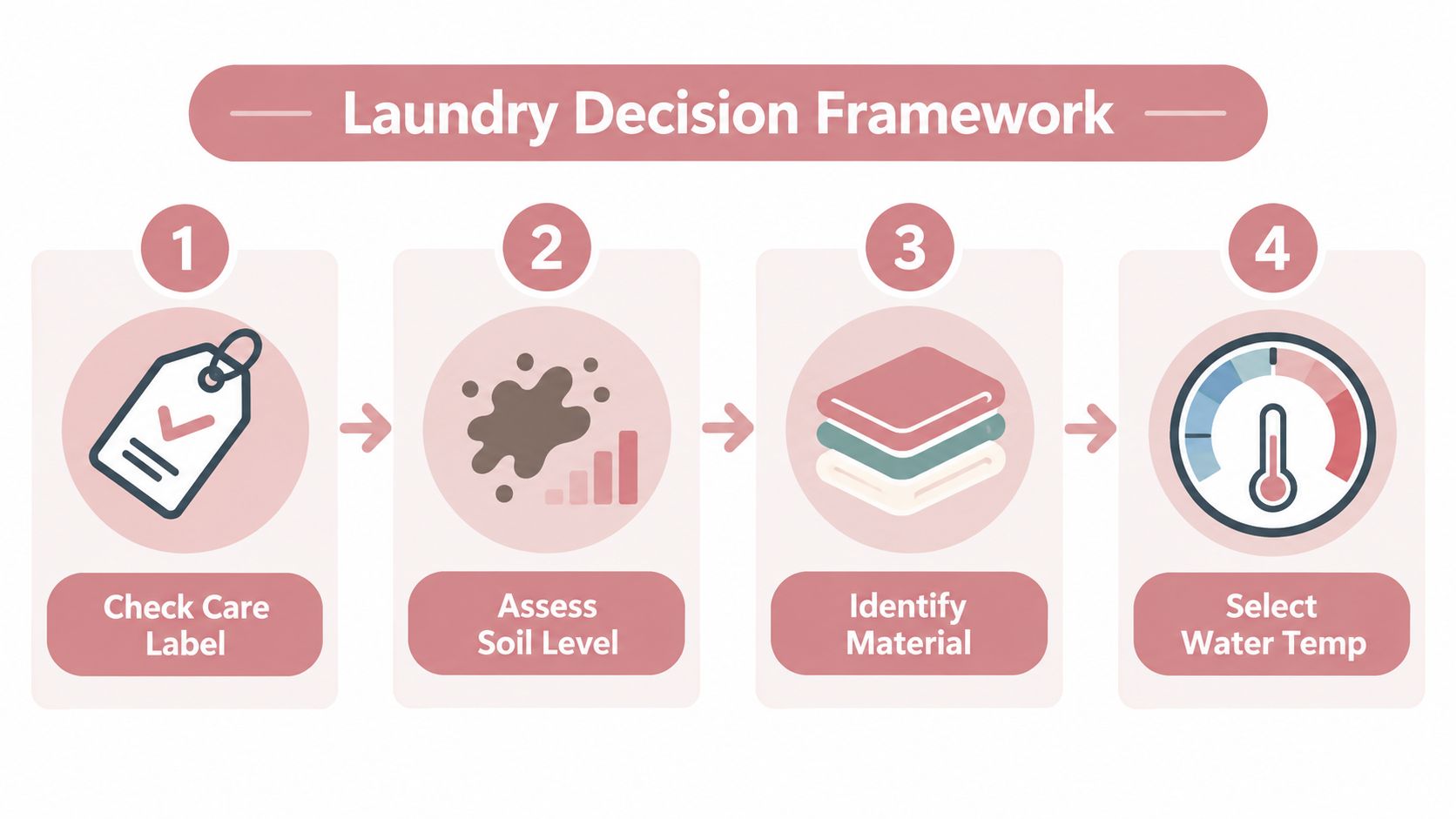
Standing at the washer, use four questions. They take less time than redoing a load or trying to rescue a shrunken shirt.
Start with the label
The care label sets the upper limit. Cotton towels and white cotton sheets may tolerate hot water, while elastic garments, synthetic athletic wear, dark printed clothing, and delicate fabrics may need warm or cold water. CDC guidance recommends washing and drying at the warmest temperatures recommended on the label, not automatically choosing the maximum setting.
Identify the problem
Is the load ordinary clothing, heavy soil, allergens, or illness-related laundry? A basket of lightly worn school shirts doesn't need the same treatment as bathroom towels used during a stomach bug.
Check the material
Durable cotton gives you more flexibility. Polyester, elastic blends, dark denim, and printed fabrics usually need more protection. If one item has a stricter limit, separate it rather than sacrificing the whole load.
Account for household risk
If someone is sick or immunocompromised, give towels, bedding, underwear, and cleaning cloths more careful handling. Use the warmest permitted cycle, suitable detergent or additive, a manageable load size, and complete drying.
Consider a few common North Atlanta baskets. A child's soccer uniform with sweat and grass stains should be separated from ordinary school clothes. Treat the grass or protein-based mark first, then follow the uniform's label. A dog bed shouldn't be washed with kitchen towels if loose hair and bulky filling will interfere with cleaning. Roommates sharing a washer might reserve a hotter, label-permitted cycle for bathroom linens and cleaning cloths, while keeping dark clothing and delicates separate.
Healthcare laundry guidance commonly identifies 60°C or higher as important for antimicrobial action, while household settings should reserve the hottest label-permitted cycle for towels, bedding, cleaning cloths, and illness-related laundry, according to a review in the Journal of Applied Microbiology. Use this four-step laundry decision process as a quick visual reminder when the baskets pile up.
Saving Energy Without Giving Up Clean
Hot water still has a job. The savings come from reserving it for loads that benefit from extra heat, while letting detergent, agitation, rinsing, and complete drying handle routine laundry.
A North Atlanta household might wash kids' sheets early in the week, gym towels after a busy weekend, school clothes midweek, and a dog blanket when pet hair builds up. The schedule matters less than the contents of each load. School clothes may need only a cool or warm cycle, while sheets, towels, or a bulky pet blanket may justify more heat if the care label permits it. Washing those items separately also keeps hair, lint, and heavy fabric from crowding lighter clothing.
Cooler cycles become more practical when the washer is not packed tightly and the detergent is designed to work at lower temperatures. Oxygen-activated additives can support cleaning when the product and fabric label allow them, but they do not turn every cool wash into a controlled disinfection process.
Energy savings show up over repeated loads. Heating less water for ordinary laundry reduces the work your household water heater must do, especially across a week of shirts, trousers, and other lightly soiled items. Reserve hotter settings for loads with a clear reason, rather than making them the default.
Drying still finishes the job. Laundry left wet in the washer can develop a musty smell, even after a sensible wash temperature. Complete drying helps, and cleaning the lint trap with this guide to cleaning the lint trap helps maintain airflow.
Regular housekeeping can handle surrounding dust, pet hair, and bathroom buildup. That leaves you free to give special attention to laundry loads that genuinely need it, instead of treating every basket as a sanitation emergency.
Stains, Whites, and Other Habits Worth Retiring
Hot water can make some stains harder to remove. Protein-based stains such as blood, sweat, and grass may set when exposed to high heat, so the first step should be cool treatment, not a hot cycle.
Iowa State University guidance recommends an enzyme product and a cold-to-lukewarm presoak below 100°F, or 38°C, for these stains because hot water can set them, as summarized in this protein-stain treatment guidance. Rinse a child's blood-stained cotton shirt in cool water, apply a suitable enzyme product, presoak it, and check the mark before using the dryer.
Heat isn't the same as whitening
A dingy white tablecloth may need the right detergent, stain treatment, or oxygen-activated product. Hot water alone doesn't restore whiteness, and adding heat before treating a mark can lock in the problem. White cotton sheets may tolerate a hotter cycle, but the label and stain type still matter.
A fresh red-wine splash calls for a different sequence from a load of towels. Blot and pretreat the tablecloth according to the fabric instructions, wash at a suitable cool or warm temperature, and inspect it before drying. A helpful resource for gentle household approaches is this guide to baking soda stain removal.
The same caution applies to care labels that prohibit hot cycles. A garment isn't cleaner just because the water is hotter if the heat damages its fibers, print, dye, or shape. Cleaning depends on the combination of temperature, detergent, time, movement, rinsing, and drying.
Making Temperature a Natural Part of Home Care
A simple weekly rhythm can make the decision automatic without turning it into a rigid household law. Wash everyday clothes in cold or warm water according to their labels. Give durable towels and sheets a warmer or hot cycle when their condition, allergens, or household circumstances justify it. Use a suitable sanitizing additive after illness when compatible, and keep delicates, darks, and elastic-heavy garments cooler.
That rhythm also helps with seasonal home care. During a spring refresh, wash washable pet blankets and bedding separately from delicate clothing. After a renovation, clean the home's fine dust and residue before assuming that every fabric load needs maximum heat. Move-in and move-out cleaning may involve large amounts of linens, towels, and surface soil, so sorting by material and purpose prevents unnecessary fabric damage.
The same principle applies when professional help is part of the routine. Aquastar Cleaning Services, LLC provides recurring housekeeping, deep cleaning, move-in and move-out cleaning, and post-construction cleanup for homes in Kennesaw and North Atlanta, with eco-friendly product options available on request. Those services address the rooms and surfaces around the laundry, while homeowners can apply the same per-load judgment to textiles.
The habit to keep: Choose the warmest temperature the load safely needs, not the hottest temperature the machine offers.
Washing in hot water is neither a universal solution nor a mistake. It's useful for selected towels, bedding, cleaning cloths, pet textiles, and illness-related loads. Cold and warm cycles protect ordinary clothing, reduce energy demand, and often provide all the cleaning those fabrics need. Once you match the setting to the load, laundry stops being an inherited rule and becomes a practical part of caring for your home.
If laundry piles up alongside dust, pet hair, bathroom buildup, or post-renovation residue, Aquastar Cleaning Services, LLC offers recurring housekeeping, deep cleaning, move-in and move-out cleaning, and post-construction cleanup in Kennesaw and North Atlanta. Request a cleaning plan that fits your home, your family, and the way you use your laundry.