


Five to ten minutes of labeled contact time, followed by thorough scrubbing, is the practical starting point for stubborn toilet stains. The right result depends on identifying whether the mark is mineral scale, rust, or organic residue, then using one compatible product rather than combining cleaners.
You know the scene: the toilet looks clean from the doorway, but a gray ring, orange streak, or dark line remains just below the waterline. You scrub harder, reach for bleach, and still see the stain. The problem usually isn't a lack of effort. It's a diagnosis problem.
Different deposits need different chemistry. Mineral scale responds to an acidic descaler, rust needs a toilet-safe rust remover, and organic residue requires cleaning before any disinfection. A rushed product change can also create dangerous fumes, so the safest process starts with observation, not the cleaning cabinet.
Diagnose Your Toilet Stain Before You Clean
You lift the seat, look into the bowl, and the stain still sits there. Maybe it is a rough gray ring at the waterline. Maybe it is an orange trail down the side. Maybe it is a dark mark that keeps coming back after scrubbing. Those stains do not all respond to the same product, and treating them as if they do is how people waste time, damage surfaces, or create unsafe fumes.
Start with a close inspection under good light. Check the color, texture, and location before you open a bottle. A chalky, raised deposit usually points in a different direction than a rusty streak or a dull, smeary ring. I treat that first look as part of the cleaning job, because the wrong chemistry often makes a stubborn stain harder to remove.
Hard-water buildup is one common example. The USGS explanation of water hardness says water above 120 mg/L is hard and above 180 mg/L is very hard, and notes that hard water can leave mineral buildup in plumbing and fixtures. If the bowl has a white or gray crust, the job is often descaling, not stronger disinfection.
Use the mark as your first test
Touch the area lightly with a gloved finger. Do not scrape. If it feels gritty, rough, or ridged, mineral scale is more likely. If the stain is orange or reddish-brown, iron is a better suspect. If it looks dark, flat, or slightly slimy, you may be dealing with organic residue, surface soil, or grime trapped on top of another deposit.
The stain location matters too. Marks under the rim and around the waterline usually form where water runs, splashes, or evaporates over and over. Staining near the base, seat hinges, or bolts often points to urine scale and residue outside the bowl itself.
Pause before choosing a cleaner. That pause prevents a common and dangerous mistake, using a chlorine product on a mineral ring, then following it with an acid cleaner before the first product is fully rinsed away. If you need a plain-language overview, this practical guide to descaling solution explains where descalers fit.
Practical rule: If you cannot identify the stain, do not escalate the chemical. Match one surface to one labeled product.
A stain that returns quickly can also signal a bigger issue, such as very hard water, clogged rim openings, a slow leak, or an aging toilet part. More product will not fix that root cause.
Identify the Three Common Stain Types
Three visual patterns account for many stubborn bowl stains. They can overlap, but the dominant color and texture usually tell you where to begin.
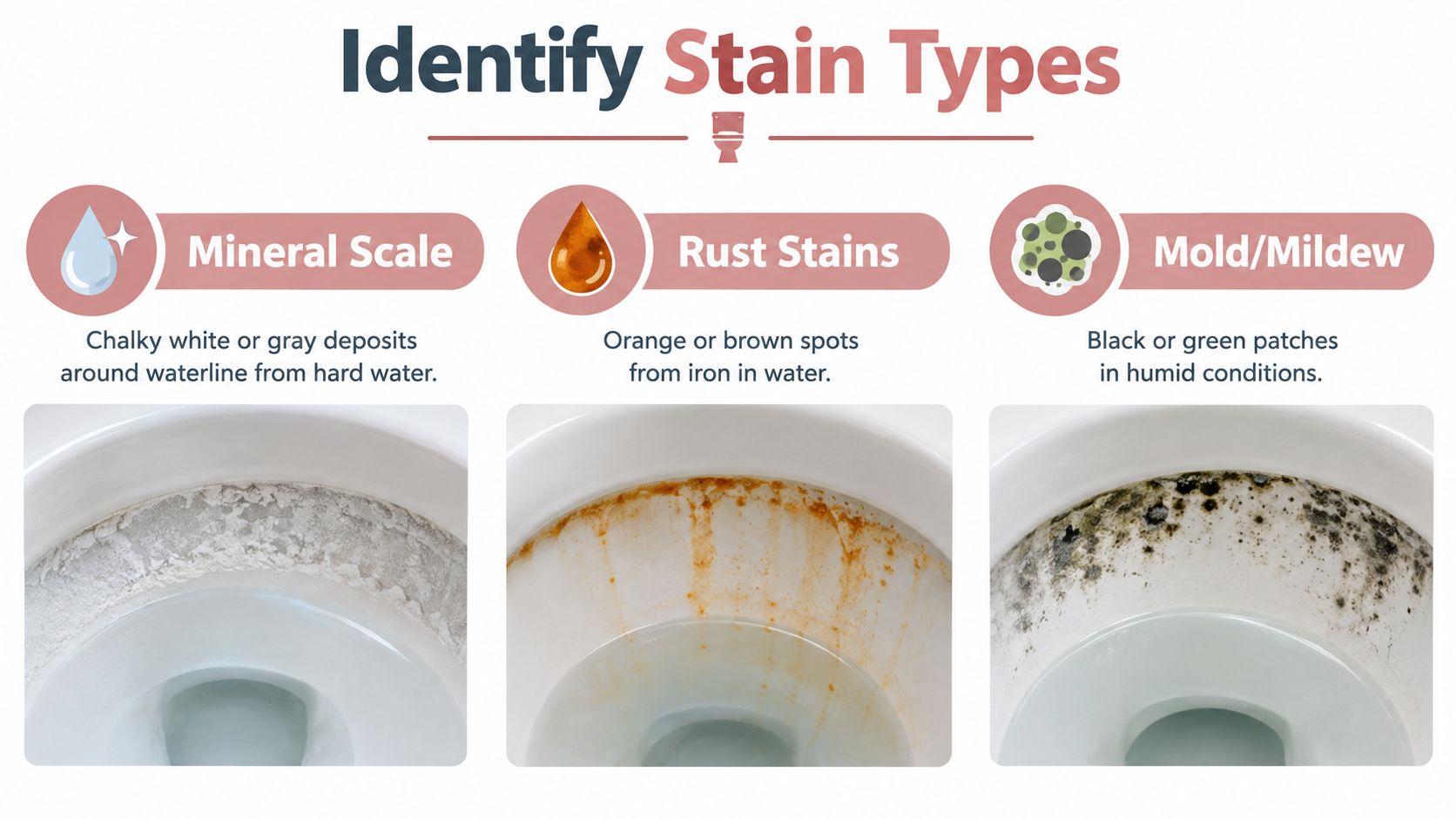
Mineral scale
White, gray, or pale tan deposits usually indicate hard-water scale. The surface feels chalky, rough, or bumpy, especially around the waterline and under the rim. In a North Atlanta home, a practical example would be a bowl with a raised gray band that remains after an ordinary toilet cleaner and brush have removed surface soil.
Scale can trap dirt and organic residue, so a mineral ring may look brown or dark even when the underlying deposit is pale. Treating that ring as a simple germ problem often produces a cleaner-looking surface without removing the rough layer that keeps collecting soil. A targeted approach to hard-water solutions is more appropriate than repeated bleach applications.
Rust and iron staining
Orange, red, or reddish-brown streaks commonly point to iron-related staining. You may see vertical trails where water runs down the bowl, or a rusty band at the waterline. Well water and aging plumbing are common possibilities, so recurring marks across several fixtures justify investigating the water source. A useful starting resource is this guide to well water iron removal.
Rust isn't the same as scale. A general mineral cleaner may loosen surrounding buildup while leaving the orange color behind. A toilet-safe rust remover uses chemistry intended for metal staining, and it must still be applied according to its own label.
Dark rings and organic residue
A black, green, or dark ring may involve organic residue, bacteria, trapped soil, or scale holding material against the porcelain. Texture helps separate it from pure mineral buildup. If the mark is dull, smeary, or slightly slick, clean the soil first instead of reaching immediately for a disinfectant.
For example, a dark line beneath the rim that returns quickly may be fed by deposits in the rim openings. Cleaning only the visible waterline leaves that source in place. A rim brush and careful under-rim work matter as much as the product.
| What you see | Likely cause | Better starting point |
|---|---|---|
| Chalky white or gray crust | Mineral scale | Labeled acidic descaler |
| Orange or reddish streaks | Iron or rust | Toilet-safe rust remover |
| Dark, dull, or slimy ring | Organic residue or trapped soil | Cleaner first, disinfection only if needed |
These are starting diagnoses, not guarantees. A mixed stain may need more than one stage, but each stage should be completed and flushed according to the label before another product is considered.
Step-by-Step Treatment Methods for Each Stain
Once the stain has a name, the process becomes more controlled. Wear chemical-resistant gloves and eye protection, keep the bathroom ventilated, and lower the bowl water when a product needs direct contact with a ring.
For mineral scale
Shut off the water supply and flush to lower the bowl level. Apply an EPA-registered acidic toilet-bowl cleaner or labeled descaler to the affected porcelain, including under the rim where deposits may begin. Keep it on the surface for the full label contact time. EPA-registered labels demonstrate that treatment may require 5 to 10 minutes of dwell time, depending on the formulation and claim, followed by brushing.
Use a nylon toilet brush for the bowl and a smaller rim brush for narrow openings. A practical example is a rough gray band that still feels raised after the first pass. Scrub after the product has had time to work, flush thoroughly, and repeat only as the label allows. For a localized deposit, a wet pumice stone can be used very gently on glazed porcelain, with both surfaces saturated and an inconspicuous test first. Stop if the finish dulls or scratches.
For rust
Choose a commercial rust remover specifically labeled for toilet-bowl use. Don't assume a general bathroom acid is a rust treatment. Apply it only to the stained porcelain, observe the label dwell time, agitate with a nylon brush, and flush thoroughly.
If an acid descaler changes the surrounding crust but barely affects the orange mark, stop scrubbing harder. That result suggests the stain needs rust-targeted chemistry or that iron is entering through the water supply. Never place a rust remover into a bowl that still contains bleach or another cleaner.
For organic rings
Start with a compatible cleaner that removes soil and residue. Scrub the waterline and under-rim area, flush completely, and only then use a disinfectant if the situation calls for it. Disinfection can't replace soil removal because residue can shield the surface from the intended contact.
Baking soda and vinegar are often suggested as a household paste, but they shouldn't be treated as a universal solution. They may help with light residue, yet they won't reliably dissolve established mineral scale, and vinegar must never be combined with bleach. More background is available in this guide to baking soda stain removal.
For additional restroom-cleaning context, these BacteriaFAQ.com restroom sanitation tips reinforce the value of cleaning soil before relying on a disinfecting step.
A practical sequence looks like this:
- Remove heavy soil: Brush the bowl and underside of the rim with the selected cleaner.
- Respect dwell time: Keep the product wet for the label-specified period instead of scrubbing immediately.
- Flush completely: Remove residue before considering a different treatment.
- Change chemistry only after rinsing: Use one product at a time and never improvise a mixture.
The following video provides a visual reference for controlled toilet-bowl cleaning. It isn't a substitute for the product label, especially when the label specifies different surfaces, doses, or contact times.
Essential Safety Rules When Cleaning Toilet Stains
Chemical safety matters most when a stain resists ordinary cleaning. A 2024 EPA label for a bleach-containing toilet cleaner classifies the product as corrosive, warns of irreversible eye damage and skin burns, and directs users to apply 6 fluid ounces, brush the bowl and underside of the rim, wait 10 minutes, and flush. The same label prohibits mixing it with other toilet-bowl cleaners, rust removers, acids, or ammonia products. See the EPA toilet-cleaner label for product-specific handling requirements.
The danger isn't limited to deliberate mixing in a bucket. Acid left in the bowl can react with bleach poured in later. EPA educational material explains that toilet cleaners may contain hydrochloric acid or bleach, and that mixing cleaning products can release poisonous gases that cause serious breathing problems. If you already used an acid cleaner, vinegar, descaler, or ammonia product, flush or rinse according to its label before changing products.
Control the room and the sequence
Open the door, run the exhaust fan, and keep children and pets away during treatment. Wear the gloves and eye protection required by the label. Don't use a product on the seat, countertop, tub, natural stone, or another material unless its label permits that surface. Toilet-bowl labels are specific to toilet-bowl surfaces.
CDC guidance says regular unscented household bleach commonly contains 5% to 9% sodium hypochlorite. If label directions aren't available, the CDC fallback dilution is 5 tablespoons per gallon or 4 teaspoons per quart of room-temperature water, with the surface kept visibly wet for at least 1 minute when that fallback contact time applies. Prepared diluted bleach should be made fresh because it loses effectiveness after 24 hours. Review the CDC cleaning and disinfecting guidance before using a diluted solution.
Stop immediately if strong fumes, coughing, breathing difficulty, or eye irritation develops. Leave the room, avoid the vapor, and contact emergency or poison-control guidance.
Bleach is primarily a disinfectant, not a hard-water descaler. Using more product or leaving it longer won't turn it into a mineral remover, and it creates more exposure risk. For lower-odor or biodegradable options, the same compatibility rule applies. “Eco-friendly” doesn't mean safe to combine. Aquastar's eco-friendly bathroom cleaning products are one example of why product selection still has to follow the intended surface and label.
Prevent Future Stains With Smart Habits
A bowl that looks clean on Saturday but shows the same ring again by Wednesday is usually telling you something. The fix is not a stronger product. It is a better read on what keeps landing in that bowl, and a routine that matches the stain type.
Prevention starts after diagnosis. Chalky mineral buildup, orange iron marks, and dark organic rings do not come back for the same reason, so they should not be managed the same way. I treat repeat staining as a pattern to track, not just a spot to scrub. If you only remove the visible mark, the cycle starts again with the next few flushes.
Routine care should stay simple. Use a mild cleaner labeled for toilet bowls, brush under the rim, and wipe the waterline before residue sets. If a ring keeps rebuilding in the same place, check the rim jets and watch the flush path. A stain that returns on one side of the bowl often points to uneven water flow, a slow leak, or splash-back that keeps feeding that exact area.
Match maintenance to the water
Fast return usually means the source has not changed. If several fixtures are collecting scale, as noted earlier, hard water may be part of the problem. A softener can reduce new mineral deposits, but it will not fix worn glaze, poor rim flow, or an existing plumbing issue.
Iron stains need the same source-first approach. If orange or rust-colored marks show up in more than one bathroom, inspect the water supply, well equipment, or older plumbing before treating each toilet as a separate cleaning problem. That saves time, cuts product use, and lowers the odds of mixing cleaners out of frustration.
Build a repeatable routine
- After routine use: Wipe the waterline and any visible splash area with a disposable pad or compatible cloth.
- During regular cleaning: Use one mild labeled product, and clean under the rim, not just the open bowl.
- For recurring scale: Note where buildup forms and whether other fixtures show the same residue.
- For deeper work: Use the stain-specific method, then flush and rinse the bowl fully.
- For tank products: Use drop-in cleaners only if they are compatible with the toilet's internal parts.
A bathroom deep-cleaning checklist helps catch the spots that get missed during fast weekly cleaning, including the base, hinges, rim openings, and floor around the toilet. The same surface-care rule applies outside the bowl. Guidance on caring for Melbourne home tiles is a good reminder to keep acidic products on approved surfaces and rinse nearby finishes promptly.
When to Stop DIY and Call a Professional
DIY cleaning should stop when the process becomes a contest between stronger chemicals and a surface that isn't improving. Treat a persistent ring that remains after two properly performed treatment cycles as a possible damaged glaze, water-quality issue, or plumbing problem rather than escalating acid strength. CDC and EPA safety principles still apply even when the stain is frustrating.
Inspect the porcelain after each cycle. A dull patch, etched area, or scratch can hold future soil and make the bowl appear permanently dirty. Avoid metal tools, abrasive scouring pads, prolonged acid contact, and dry pumice use. A wet pumice stone belongs only on glazed porcelain, and only with gentle pressure.
Professional help makes sense when:
- The stain returns quickly: Multiple fixtures may point to water hardness, iron, restricted rim flow, or a leak.
- The surface looks damaged: Etching or glaze wear won't be corrected by more cleaner.
- The treatment history is unclear: If several products have already been used, a professional can prioritize ventilation, rinsing, and surface safety before cleaning.
- The area extends beyond the bowl: Base buildup, hinges, grout, and floor residue may need coordinated cleaning.
- Safety is uncertain: Strong fumes, splashes, or chemical exposure are reasons to stop and seek appropriate guidance.
Aquastar Cleaning Services, LLC has operated as a family-owned residential cleaning company since 1996, serving Kennesaw and North Atlanta with trained, insured, and bonded teams. Its bathroom service includes toilet cleaning around and behind the base, and its service options include biodegradable solutions for households with children and pets.

Aquastar Cleaning Services, LLC can handle recurring housekeeping, deep bathroom cleaning, move-in and move-out work, and specialized whole-home cleaning in Kennesaw and North Atlanta. If your toilet stain keeps returning or you want the bowl, base, hinges, and surrounding bathroom handled safely, visit Aquastar Cleaning Services, LLC to request a quote.