


You open the refrigerator for milk and find a sticky crisper drawer, a dried berry stain, and a container you no longer trust. Most cleaning guides tell you to wipe the shelves and add baking soda. That helps with appearance, but it misses the harder question: is the inside of the fridge holding food at a safe temperature?
A clean refrigerator needs both surface hygiene and temperature control. The process below handles spills, odors, raw-food contamination, storage order, and the final thermometer check, with practical options for households with children, pets, and sensitivities to strong products.
Why Cleaning the Inside of a Fridge Starts with Safe Food Removal
An empty refrigerator can look harmless until you notice the warm leftovers, leaking meat package, or glass shelf you're about to rinse under hot water. Start by removing food before touching the interior. Keep items that are still safe in a cooler or insulated bag with cold packs, and separate anything leaking, spoiled, recalled, or visibly contaminated.
The U.S. Department of Agriculture recommends keeping refrigerator air at 40°F (4.4°C) or below because bacteria can multiply quickly in the danger zone above that temperature. Perishable food should go into refrigeration within 2 hours, or within 1 hour when surrounding temperatures exceed 90°F, according to USDA safe handling guidance.
Sort before you scrub
Use three groups:
- Keep cold: Milk, cooked food, seafood, cut fruit, meat, and other perishables go straight into a cooler.
- Clean separately: Containers with drips, sticky bases, or raw-meat residue need washing before they return.
- Discard: Throw away recalled food, food that touched it, and items that have been held too warm beyond the safe time window. Don't taste food to decide whether it's safe.
Remove shelves, drawers, and door bins carefully. Cold glass can crack from thermal shock, so let it reach room temperature before washing it with hot, soapy water. Never mix vinegar or another acid with bleach, and don't combine bleach with ammonia or multipurpose cleaners.
Practical rule: Cleaning starts with contamination control, not a spray bottle. Raw chicken juice on a lower shelf deserves a different response from a small water ring under a bottle.
Wash your hands after handling spoiled food or raw-meat packaging. Before cleaning, have a cooler ready, disposable towels for leaks, hot soapy water, clean rinse water, dry towels, and a suitable sanitizer if serious contamination requires it.
Eco-Friendly and Standard Cleaning Solutions for Every Inside-of-Fridge Mess
The right cleaner depends on what happened. A fragrance-free, biodegradable product can work well for routine soil, while a serious raw-food spill calls for a more controlled sanitation process. Families with young children, pets, allergies, or product sensitivities should favor low-residue solutions and keep every cleaner away from food and food-contact surfaces until rinsing and drying are complete.
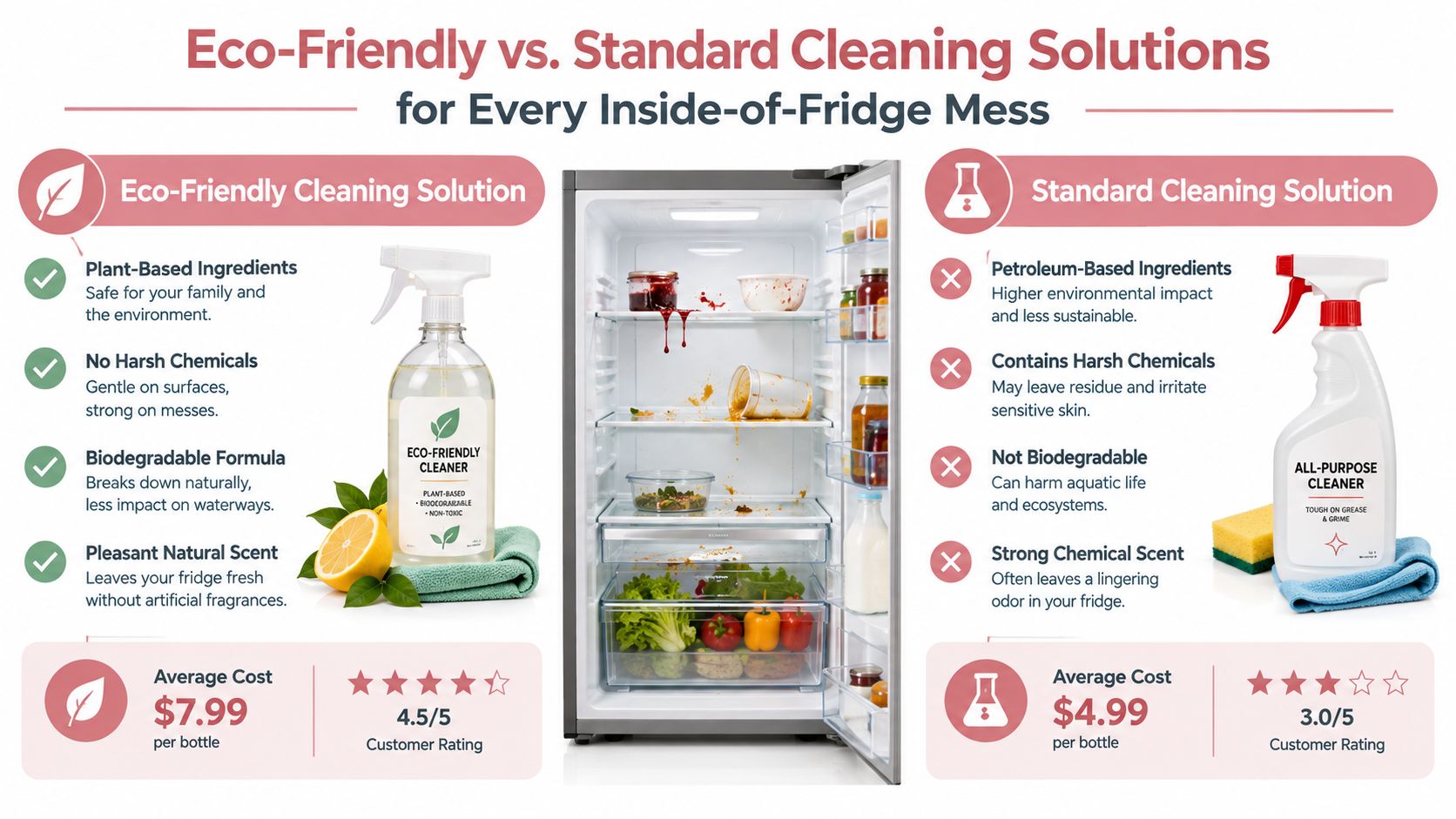
For a light spill, use warm water with a small amount of unscented dish soap. A soft microfiber cloth handles plastic walls, glass, and door bins without scratching them. For a dried stain, make a gentle baking soda paste with water, apply it to the mark, leave it briefly, and wipe with a damp cloth. Baking soda helps loosen residue and odors, but it isn't a substitute for sanitizing after high-risk contamination.
Vinegar can be useful for light mineral residue or a final odor-reducing wipe, but it isn't automatically safer or stronger. It must never be mixed with bleach. Fragranced sprays may cover an odor without removing the spoiled food, grease, or liquid causing it.
Match the method to the mess
| Fridge problem | Sensible first choice | What to avoid |
|---|---|---|
| Crumbs or light residue | Warm water and mild dish soap | Abrasive powders |
| Dried berry juice | Baking soda paste and a soft cloth | Scraping plastic with a blade |
| Greasy door gasket | Warm soapy water and an old soft toothbrush | Solvent-based cleaners |
| Raw-meat leakage or recalled food contact | Clean, rinse, dry, then sanitize when appropriate | Sanitizer applied over grease |
| Persistent mold concern | Stop using contaminated items and consider professional advice | Fragrance used to mask the smell |
CDC guidance places the steps in a specific order: clean with hot soapy water first, rinse and dry, then sanitize with a properly diluted bleach solution when appropriate. The CDC refrigerator-cleaning guidance also warns against mixing bleach with acids or ammonia. Follow the product label, ventilate the area, and rinse food-contact surfaces as directed.
A routine family clean doesn't need bleach. A raw-food leak, recalled product, or substantial contamination may justify a carefully prepared sanitizer after cleaning, while “natural” ingredients alone may not provide the same sanitation step.
Here's a visual walkthrough of the cleaning sequence:
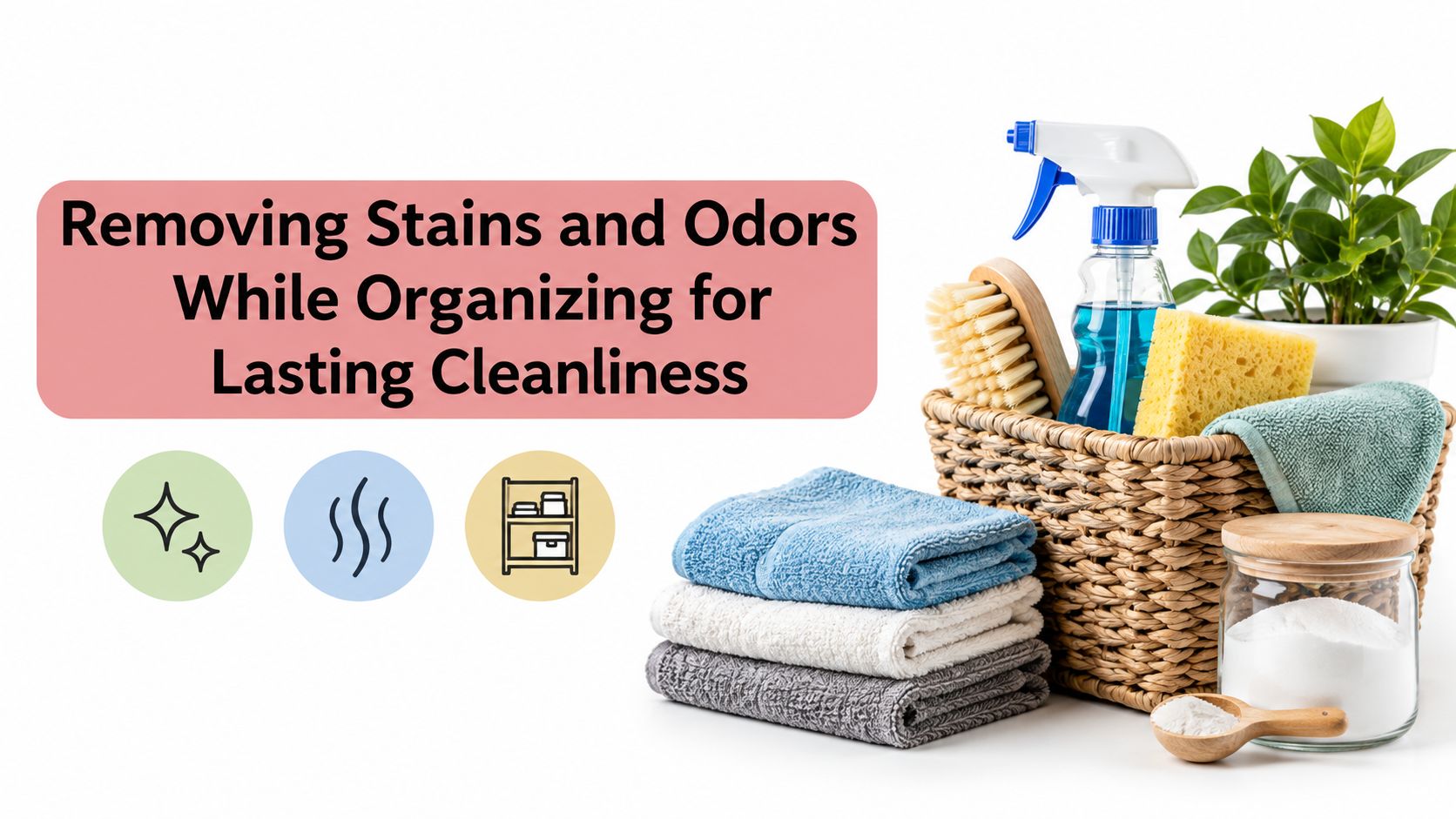
Removing Stains and Odors While Organizing for Lasting Cleanliness
A sour smell often starts with a small failure: a forgotten onion, a leaking deli container, or berry juice dried beneath a drawer. Perfume only covers the problem. Remove the spoiled food or leaking package, then clean the surface that held it.
Wash the affected shelf, drawer, or door bin with warm soapy water, rinse it, and dry it completely. An open container of baking soda can absorb ordinary odors, and activated charcoal may help with smells that remain. Neither replaces removing a spill, washing the container, or discarding spoiled food.
Organize for fewer leaks
Restocking determines whether the next spill stays contained. Keep raw chicken, beef, seafood, and eggs in sealed containers or secure packaging on the lowest shelf. The CDC food-safety guidance recommends separating raw foods from ready-to-eat items, preventing juices from reaching cooked food, dairy, or produce.
A practical arrangement is:
- Lowest shelf: Raw meat or seafood inside a leakproof tray.
- Middle shelves: Covered leftovers, prepared meals, and sealed dairy.
- Crisper drawers: Clean produce, away from items that could leak.
- Door bins: Condiments and foods suited to a warmer, fluctuating area.
- Around vents: Open space for airflow instead of tightly packed containers.
Place cooked pasta in a sealed container on a middle shelf, then store raw chicken for tomorrow's dinner below it in a tray. If the package leaks overnight, the spill is less likely to reach ready-to-eat food. This arrangement also makes the source easier to find during the next clean.
Wipe container bottoms before returning them. Washable drawer liners can help with future spills if they lie flat, leave vents clear, and do not trap moisture. Labels showing preparation dates make older leftovers easier to identify before they become an odor problem. Properly handled leftovers generally remain suitable for about 3 to 4 days when continuously refrigerated at 40°F or below, according to USDA storage guidance.
Verifying Temperature Safety After You Clean the Inside of a Fridge
A spotless refrigerator can still be unsafe if it runs warm. The dial or digital display shows a setting, not necessarily the temperature where food sits, and the door, upper shelf, drawers, and back wall may not perform identically.
Put an appliance thermometer inside the refrigerator and check that it reads 40°F (4.4°C) or below. The freezer should remain at 0°F (-18°C) or below. FDA food-storage guidance recommends using an appliance thermometer because the displayed setting may not match actual cold-holding performance.
A simple post-clean check
- Inspect the gasket. Wipe residue from the rubber seal and check that it closes evenly.
- Clear the vents. Containers pressed against vents can restrict airflow and create warm zones.
- Dry every surface. Moisture left under drawers or on shelves encourages grime and can freeze in the wrong places.
- Measure before restocking. Confirm the refrigerator is at or below 40°F.
- Recheck after loading. A packed interior can change airflow, so take another reading after the food is back inside.
If the thermometer reads 43°F, don't compensate with extra chemicals. Adjust the appliance, check whether the gasket seals, make sure vents aren't blocked, and seek service if the temperature stays above the safe limit. Refrigeration slows the growth of Listeria but doesn't stop it completely, as explained by the FDA's refrigerator-safety guidance.
A clean shelf protects food only when the refrigerator keeps that food cold enough.
The same principle applies to a spill that seems minor. Clean it promptly, but treat temperature failure as a separate equipment problem that cleaning alone can't solve.
When DIY Fridge Cleaning Is Enough and When to Call Aquastar Cleaning Services
DIY cleaning works well for a normal maintenance visit, a small juice spill, light crumbs, and a mild odor with an obvious source. Most homeowners can empty the shelves, wash removable parts, clean the cabinet, rinse, dry, and reorganize raw foods safely.
Professional help makes more sense when the refrigerator has heavy grease buildup, recurring odors, extensive leakage, difficult mold concerns, or has been neglected during a move. It's also useful when a rental needs a thorough move-in or move-out clean and the refrigerator interior is one item among many competing deadlines.
A local cleaning team can treat the appliance as part of a wider checklist rather than as an isolated weekend task. Aquastar Cleaning Services, LLC serves Kennesaw and North Atlanta with refrigerator interior add-ons covering accessible shelves, drawers, walls, door bins, and drip areas, along with recurring housekeeping, deep cleaning, move-in and move-out cleaning, and eco-friendly product options when requested.
For a family with pets and young children, ask which products will be used and how food-contact surfaces will be rinsed. For a renter, document existing damage, odors, cracked shelves, or gasket problems before cleaning. A cleaning service can remove soil and residue, but it shouldn't be expected to repair a failing thermostat, seal, fan, or cooling system.
DIY is the right choice when the mess is contained and the appliance performs safely. Booking help is sensible when the contamination is extensive, the task keeps being postponed, or the refrigerator needs to be cleaned as part of a larger home reset.
Aquastar Cleaning Services, LLC offers refrigerator interior cleaning as an appliance add-on, including shelves, drawers, interior walls, door bins, and accessible drip areas, with eco-friendly options available for households with children and pets. Visit Aquastar Cleaning Services, LLC to request a quote for refrigerator cleaning, recurring housekeeping, or a deeper home clean in Kennesaw and North Atlanta.