


You're standing in socks on a damp bath mat, spray bottle in one hand and a sponge in the other, looking at the same dull streak above the tub you scrubbed last weekend. It faded for a day, then came back. That moment is usually not a lack of effort. It's a mismatch between the bathroom wall cleaner, the surface, and the stain.
Why Your Bathroom Wall Cleaner Is Not Working
You buy a stronger spray, scrub harder, and the film still catches the light. The tile looks clean while it's wet, then dries chalky. In the corner, dark specks reappear in the grout. It's frustrating because you're doing the work, but you're fighting four different things with one product.
Four Forces on Every Wall
Humidity feeds growth and keeps residue soft and sticky. Soap residue bonds with body oils and leaves a hazy film. Hard-water minerals dry as a pale, rough crust. Body oils on their own dull paint and fiberglass, especially around shoulder height in a shower.
Each one asks for a different response. Detergent lifts oily film well. It doesn't dissolve mineral crust the same way. A mildew product can lighten a stain, but it can't fix a room that stays damp after every shower.
Bathroom wall cleaning is mostly moisture control and surface matching. The bottle is only part of the job.
The U.S. Environmental Protection Agency identifies tile and grout as common places for indoor mold, notes that even a small amount of condensation can provide enough water for mold, and recommends indoor relative humidity of 30% to 60% with damp materials cleaned and dried within 24 to 48 hours, as explained in EPA guidance on ten things to know about mold.
That changes the practical test. If black spots return in the same corner, don't just switch brands. Check the exhaust fan, dry the wall fully, and read a focused resource on how to remove wall mold before you scrub again.
Practical example. A tiled wall above a tub gets a weekly wipe with detergent and water, a rinse, and a dry towel pass. The painted wall beside it gets only a lightly damp cloth, because soaking it can soften the finish. Same bathroom, two routines, better results for both.
How Bathroom Wall Cleaners Actually Work
Think of dish soap and bleach at a kitchen sink. Dish soap lifts grease so water can carry it away. Bleach, used correctly on a compatible surface, does a different job. A bathroom wall cleaner usually belongs to one of two families, and confusing them wastes time.
Cleaners Lift, Disinfectants Inactivate
Detergent-based cleaners loosen soap film, oils, and everyday soil so you can wipe or rinse them off. They're the right starting point for most walls. If you skip this step, you're often just pushing grime around.
EPA-registered disinfectants are made to inactivate listed microbes on listed surfaces. That's a narrower claim. A product can make tile shine and still not be a disinfectant, which is why the difference between sanitizers and disinfectants matters before you rely on a label promise.
Acidity also helps you choose, in plain terms. Vinegar sits on the sour, acidic side, baking soda is mildly alkaline, and oven cleaner is far more alkaline and harsh. Acidic products often suit mineral deposits on compatible tile. Alkaline detergents often suit oily film. Neither direction is safe for every stone, coating, or finish.
The Contact Time Rule
Contact time is the period a surface must stay visibly wet for a disinfectant to work, and EPA labels vary from 60 seconds to 10 minutes on hard, nonporous surfaces such as glazed tile, according to EPA information on selected registered disinfectants. Vertical walls make this tricky because liquid runs down.
Practical example. You spray a tiled shower wall and wipe it dry in seconds. It may look cleaner, but you haven't met the label interval. Instead, pre-clean a small section, apply the product evenly, keep it wet for the full stated time, and reapply lightly if it starts to dry. Then wipe or rinse only as directed.
That's the core distinction. Cleaning removes soil. Disinfection needs the right product, the right surface, and completed wet time.
Matching Cleaner to Wall Material
Start with what the wall is made of, not what the stain looks like from across the room. Glazed tile tolerates approaches that would dull stone or soften paint. A hidden-area test is your safety net on any new product, since discoloration, gloss loss, swelling, or coating damage can show there first.
Glazed Ceramic Tile and Grout
For routine film on glazed tile, use warm water with a mild detergent, a soft cloth or sponge, then rinse and dry. That's enough for most weekly cleaning. This step-by-step advice on how to clean ceramic tile without damaging the finish follows the same surface-first logic.
Grout is different. It's rougher and more absorbent than the tile face, so soil settles into it. Practical example. For darkened grout lines, pre-clean with detergent, then use only a bleach-based or hydrogen-peroxide product labeled for that use, agitate with a stiff nylon brush, rinse, and dry. Don't assume a tile spray is automatically right for grout.
Fiberglass, Paint, and Stone
Fiberglass surrounds have a gelcoat finish that abrasive powders can scratch. Once scratched, the surface holds film more easily. Practical example. Choose a non-abrasive liquid cleaner, apply with a soft cloth, let it sit briefly as directed, rinse, and buff dry. The finish stays smooth, so the next cleaning is easier.
Painted drywall needs restraint. A scrubbable paint may tolerate a damp wipe with diluted detergent. Flat or eggshell paint can show burnish marks or soften with repeated wet scrubbing. Practical example. Wring the cloth until it's barely damp, wipe a hand-sized area behind the door first, and stop if color lifts onto the cloth.
Natural or sealed stone is the least forgiving. Use a pH-neutral, stone-labeled cleaner and avoid vinegar or harsh acidic sprays that can etch or dull the surface. Practical example. For soap haze on sealed stone, spray the neutral cleaner, wipe gently, rinse with a damp cloth, and dry fully instead of reaching for a descaler.
Cleaner Choices by Bathroom Wall Material
| Wall Material | Routine Cleaner | Targeted Stain | Watch-Out |
|---|---|---|---|
| Glazed tile | Mild detergent and water | Soap film | Rinse residue so it doesn't dull |
| Grout | Detergent pre-clean, labeled mildew product | Dark mildew staining | Brush gently, test for color change |
| Fiberglass | Non-abrasive liquid | Body oil film | Powders can scratch gelcoat |
| Painted drywall | Barely damp cloth, diluted detergent | Light splashes | Excess water can damage finish |
| Sealed stone | pH-neutral stone cleaner | Soap haze | Acids can etch, bleach can harm sealer |
Chemical vs Eco-Friendly Bathroom Wall Cleaners
This choice isn't a contest between strong and gentle. It's a matching exercise. A conventional product can be the right tool for a defined problem, and an eco-friendly product can handle routine film very well. The question is what the wall needs today, and who uses the room afterward.
When Each Family Fits
Conventional options include bleach products, ammonia-based glass cleaners, and quaternary ammonium sprays. They can be useful where a label claim and a specific stain justify them. They also demand stricter attention to ventilation, dilution, and never mixing products.
Eco-friendly options include plant-based surfactants, citric acid products for compatible surfaces, hydrogen peroxide products, and enzyme cleaners. For a plain-language overview of swaps that still clean well, see these eco-friendly bathroom cleaning products and where they work best.
Practical example. A peroxide spray labeled for grout can lighten mildew staining after you've removed surface soil. For the weekly haze on the tile beside it, a simple detergent solution does the job with no strong fumes. You're not being inconsistent. You're using the least aggressive product that fits each task.
Households With Sensitivities
- Children and pets in the home. Favor detergent cleaning for ordinary soil, rinse where directed, and keep products stored out of reach.
- Asthma or fragrance sensitivity. Look for fragrance-free options, ventilate during and after use, and avoid judging strength by smell.
- Chemical sensitivity. Choose products with clear labels and third-party certifications you can verify on the package, and test in a small area first.
- Heavy mineral buildup. An eco-friendly acidic product may work slowly or need repeat applications on tile, and it still doesn't belong on stone.
Eco-friendly doesn't automatically mean weak, and conventional doesn't automatically mean better. Both still need dwell time, rinsing where directed, and air moving through the room.
Minnesota health guidance notes that general restroom walls can normally be cleaned with a general-purpose cleaner or hot water, with targeted disinfection more appropriate after blood or body-fluid contamination, as described in Minnesota guidance on cleaning products and indoor air. That risk-based approach keeps harsh chemistry as the exception, not the weekly default.
Practical Examples for Common Bathroom Wall Stains
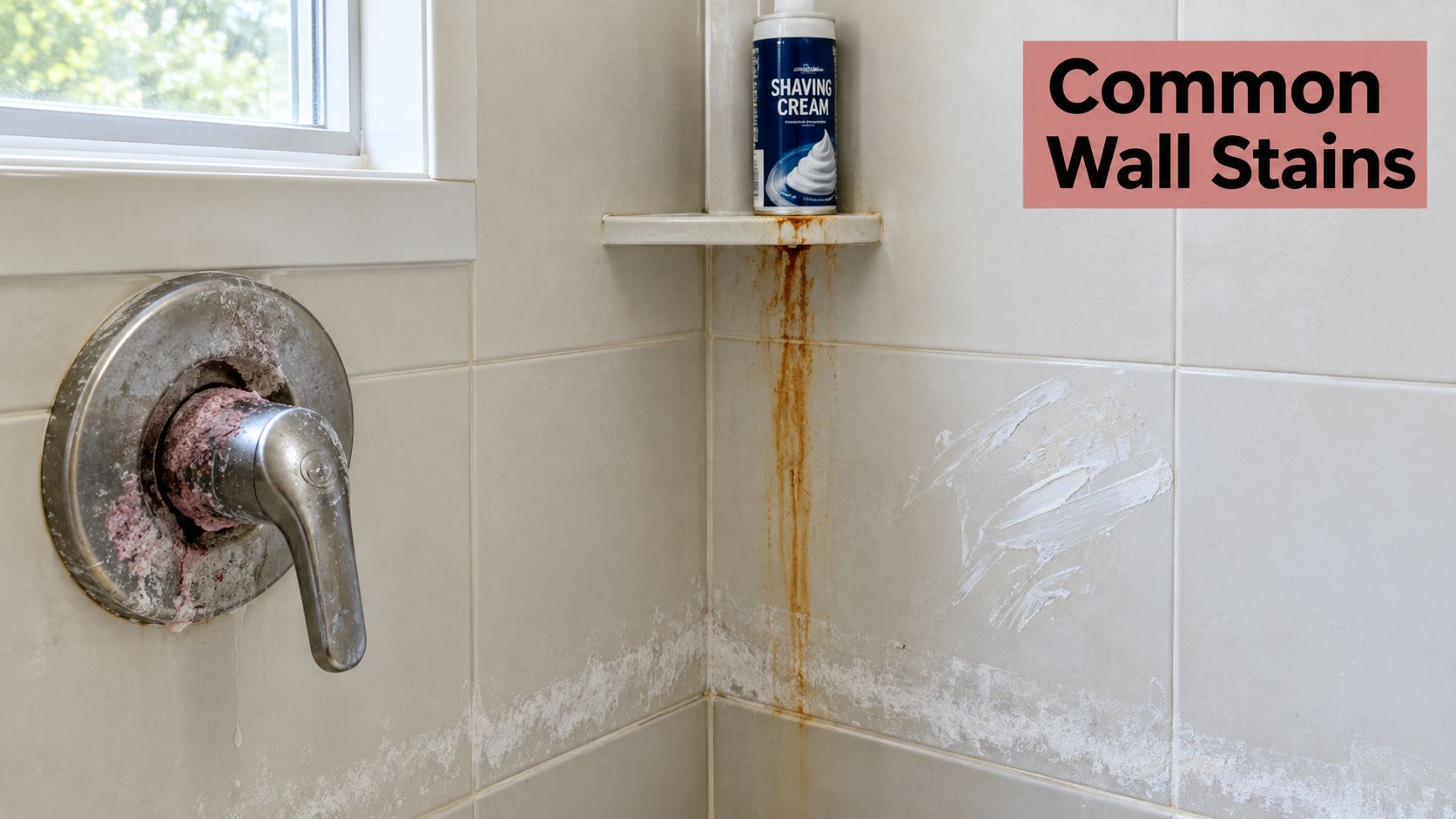
Stains tell you what happened on the wall. Read the color, texture, and location before you spray. The photo below shows several problems that look similar from a distance but need different handling up close.
Pink Film and Dark Mildew Spots
Practical example. Pink slime gathers near a shower faucet handle where water sits. Wash first with detergent and warm water, scrub the edge with an old soft toothbrush, rinse, and dry. If you use a mildew product afterward, pick one labeled for the surface, as shown in this guide to choosing a mold and mildew remover for shower surfaces, and keep it wet for its stated time. The finished area should feel smooth, not slippery.
Dark spots deep in grout need patience. Pre-clean, apply the labeled product, agitate with a stiff brush, rinse, and dry. For brush technique and pacing in narrow joints, Trademaster Construction grout cleaning advice is a useful companion. If the spots return quickly in the same place, treat that as a moisture signal, not just a stain.
For routine mold on hard surfaces, EPA guidance recommends scrubbing with detergent and water and drying completely, and it warns that porous materials such as ceiling tiles may need replacement because mold can penetrate them, as set out in the EPA brief guide to mold and moisture in homes.
Chalky Bands, Rust Ghosts, and Hairspray
A chalky band on tile at shower height is usually mineral deposit plus soap. Practical example. Clean off the soap film first, then use a compatible descaling product on tile only, dwell as directed, agitate lightly, rinse well, and dry. You should see the rough drag under your fingertips fade. Don't use that same acidic approach on marble or other sensitive stone.
An orange-brown ring where a shaving-cream can sat is a rust ghost. Use a rust-targeted product labeled for the wall material, keep it contained to the mark, and avoid aggressive pads that spread scratches. Some color may remain in grout because pigment can sit below the surface.
Hairspray near a mirror leaves a waxy, tacky streak on paint. Practical example. Use a cloth dampened with warm detergent solution, hold it on the streak briefly to soften it, wipe gently, then dry. Scrubbing harder usually damages paint before it removes more residue.
The short video below is helpful for seeing the spray, dwell, agitate, rinse, and dry rhythm in motion.
Do not try this. Don't layer bleach over an acidic bathroom spray to boost it, and don't mix cleaners in the same bottle. Hazardous gases can form, and the wall won't get cleaner for the risk.
Safe Use, Dilution, and Ventilation Made Simple
Safe use is a short sequence you repeat the same way every time. Read the label first, clean before you disinfect, and let air move. If you remember those three habits, most bathroom wall cleaner mistakes disappear.
A Kitchen-Counter Checklist
- Read the label first. Confirm the wall material, dilution, contact time, and whether rinsing is required.
- Pre-clean visible soil. Soap film and debris can interfere with a disinfectant, so remove them first.
- Never mix products. Bleach should never be combined with acids, ammonia, or other cleaners.
- Ventilate during and after. Run the exhaust fan or open a window and door where you can.
- Respect wet time. Reapply if the wall dries before the interval ends.
Practical example with bleach. For mold on a compatible hard surface, CDC guidance gives 1 cup, or 240 mL, of bleach per 1 gallon of water, with nonporous gloves and eye protection, scrubbing rough areas, rinsing with clean water, and air-drying, as described in CDC advice on safely cleaning and sanitizing with bleach. Measure it. Guessing stronger doesn't make the routine safer.
Practical example without bleach. Use a peroxide-based product labeled for your tile or grout, pre-clean the film, apply in a small section, keep it wet for the label time, rinse if directed, and dry. You still wear gloves, because spraying above shoulder height brings mist toward your hands and face.
For everyday tile care between deeper cleanings, Jennifer Gilmer shower care tips reinforce the same rinse and dry discipline that keeps residue from building back up.
Tape this inside a cabinet door. Clean, apply, wait wet, wipe or rinse as directed, dry, ventilate.
Gloves and eye protection matter most when you're working overhead or scrubbing grout and flicking solution back toward yourself. Treat them as standard equipment, not extras for big jobs only.
Common Misconceptions That Waste Time and Money
Most wasted money in a bathroom cabinet comes from four believable myths. They sound practical, and each one sends you back to the store for a product that can't fix the actual problem.
Smell, Speed, and Strength
Stronger smell means cleaner. Fragrance tells you a product is perfumed. It doesn't prove soil is gone or microbes were inactivated. Practical example. A scented spray leaves a painted wall smelling fresh while a tacky hairspray film remains under your palm. A plain detergent wipe removes the film with far less scent.
Spray and immediately wipe. That habit can be fine for light cleaning, but it defeats disinfection on a vertical wall because the liquid runs off and dries early. If disinfection is your goal, the label interval controls the job, not your sponge.
More bleach is safer. Extra bleach beyond a labeled dilution adds fumes and residue and can damage grout or finishes. It doesn't give you a bonus level of hygiene. Practical example. A properly measured solution, kept wet and then rinsed as directed, leaves tile cleaner than a harsh splash you have to wipe off quickly because the smell drives you out.
One Cleaner for Everything
One bottle handles every stain. Soap film is oily, mineral scale is crusty, mildew staining sits in texture, and rust is pigment from metal. They respond to different active ingredients and motions. Even a familiar option needs limits, which is why this look at using vinegar for cleaning grout and where to be careful is worth reading before you treat vinegar as universal.
CDC household guidance says surfaces should first be washed with soap and warm, clean water to remove dirt and debris, and for diluted household bleach it specifies at least 1,000 ppm sodium hypochlorite with a contact time of at least 1 minute when the product and surface are appropriate, as shown in CDC household cleaning and sanitizing guidance.
Reframe the goal in three parts. Clean for appearance as your routine. Disinfect for a reason when there's a defined need. Ventilate and dry always, because moisture is what invites the problem back.
Your Quick Bathroom Wall Cleaner Checklist
Before your next cleaning session, answer four questions while you're standing in the doorway. It takes less than a minute and prevents most product mistakes.
Four Questions Before You Spray
- What is the wall material. Glazed tile, grout, fiberglass, painted drywall, or sealed stone each set your limits.
- What is the dominant stain. Oily film points to detergent, chalky crust to a compatible descaler, dark grout staining to a labeled mildew step.
- Do you need cleaning or disinfecting. Ordinary soil needs cleaning. Disinfection needs a reason, a registered product, and full wet contact time.
- Who is sensitive in this home. Children, pets, asthma, or fragrance sensitivity push you toward fragrance-free, lower-fume options and better ventilation.
Practical example. Your answers are glazed tile, soap film, cleaning only, and a toddler at home. Your routine is warm detergent solution, soft cloth, rinse, dry, fan on. No disinfectant, no heavy fragrance, and no abrasive pad.
Practical example. Your answers are grout, recurring dark spots, cleaning plus a targeted mildew step, and no sensitivities. You pre-clean, use a labeled product with a stiff brush, rinse, dry fully, and then check why that corner stays damp.
For eco-conscious families in Kennesaw and North Atlanta who would rather hand off the routine, Aquastar Cleaning Services, LLC offers recurring housekeeping with trained, background-checked teams and biodegradable product options. That's one done-for-you route if consistency and lower chemical exposure are your main concerns.
Keep the checklist where you store supplies. On your next cleaning day, you'll pick the bathroom wall cleaner by surface and stain first, and the wall will stay clean longer for it.
If you'd like that surface-by-surface routine handled for you, Aquastar Cleaning Services, LLC provides recurring housekeeping, deep cleaning, and bathroom-focused care for homes in Kennesaw and North Atlanta with insured, bonded, background-checked teams. Visit the site to request a quote and choose a plan that fits your home, your schedule, and your preference for gentler products.