


It's Tuesday night, pasta water has boiled over, sauce is on the stovetop, and the bathroom mirror is still spotted from this morning. You don't need a full Saturday scrub to fix it. You need a routine that stops soil and moisture from setting, then one short reset that keeps kitchen and bathroom cleaning under control week after week.
A Weekly Kitchen and Bathroom Cleaning Schedule
Use this schedule tonight, not next month. The daily row takes minutes because the spill is still fresh. The weekly block takes longer only when you let Tuesday's sauce harden until Saturday.
| Task | Daily or after use | Weekly reset | Monthly deep clean |
|---|---|---|---|
| Kitchen counters and backsplash | Wipe food spills before they dry | Degrease the full backsplash | Check corners and under small appliances |
| Stovetop and knobs | Wipe warm splatters | Degrease burners, knobs, and drip edges | Lift grates and clean the wells |
| Kitchen sink and faucet | Wash the basin and dry the faucet | Polish the base and strainer | Descale the aerator if flow drops |
| Fridge handle and gasket | Wipe the handle after cooking | Wipe the door and gasket | Empty shelves and toss expired food |
| Kitchen floor | Sweep crumbs | Damp-mop | Clean along baseboards |
| Toilet | Spot-wipe the seat if needed | Bowl, seat hinges, and base | Descale under the rim and bolts |
| Shower and tub | Squeegee glass and hang towels | Scrub walls, fixtures, and drain rim | Treat grout and glass film |
| Bathroom sink and mirror | Wipe toothpaste splash | Polish faucet and overflow | Clean pulls and the under-sink rim |
| High-touch points and vents | Extra wipe of handles if someone is ill | Switches, knobs, and door edges | Dust the exhaust cover and registers |
Why the daily row works
Wipe the counter and stovetop after cooking, wash the kitchen sink, squeegee the shower, and hang wet towels to dry. Practical example: pasta sauce wiped while warm lifts with a damp cloth. The same sauce left for four days needs a scraper, more degreaser, and twice the time on Saturday.
That split also matches how sinks are used. In 2024, YouGov found that 51% of respondents across its surveyed markets cleaned their kitchen sink daily, compared with 27% who cleaned a bathroom or toilet sink daily. So keep the kitchen sink daily, and give the bathroom sink a quick splash wipe plus a weekly polish.
The weekly and monthly blocks
Once clutter is off the counters, the weekly reset is about 45 minutes. Degrease the backsplash and knobs, wipe the fridge handle and gasket, sweep and damp-mop, scrub the toilet bowl and base, and wash shower walls, the faucet, and the drain rim.
Monthly work reaches what weekly shine hides. Clean under the toaster, empty fridge shelves, dust the bath fan cover, treat shower grout, and check the toilet bolts. If kids share the reset, a simple system to help kids tidy their rooms works the same way here, with clear jobs like collecting towels or clearing counters.
Start with one 10-minute evening row and one weekend block. A fuller house cleaning schedule for a busy family can help you spread the rest of the house around these two rooms.
Choose Soap Sanitizer or Disinfectant
Don't disinfect the whole room every day. Shine and disinfection are different jobs, and using the strongest product everywhere wastes time, leaves residue, and creates fumes you don't need.
| Situation | Treatment | What to use | Practical example |
|---|---|---|---|
| Ordinary cooking and daily bathroom use | Clean | Dish soap or biodegradable detergent and water | Wipe the counter after dinner and rinse the cloth |
| Raw meat, eggs, or a shared cutting board | Clean, then sanitize | Food-contact sanitizer after soap; rinse if the label requires it | Wash the chicken board, sanitize, then rinse with drinking water |
| Someone in the home is ill | Clean, then disinfect high-touch hard surfaces | EPA-registered product kept wet for the label time | Faucet and switch stay wet for the stated minutes, then air-dry |
| Kids, pets, or chemical sensitivity and nobody is sick | Clean only | pH-neutral or castile soap; citric descaler on glass and ceramic, not stone | Skip daily bleach; ventilate if any spray is used |
| Eco-preferring recurring clean | Clean, disinfect only for a stated risk | Biodegradable daily products plus a labeled disinfectant held in reserve | Use biodegradable soap daily and keep one labeled disinfectant for illness weeks |
The three levels in plain terms
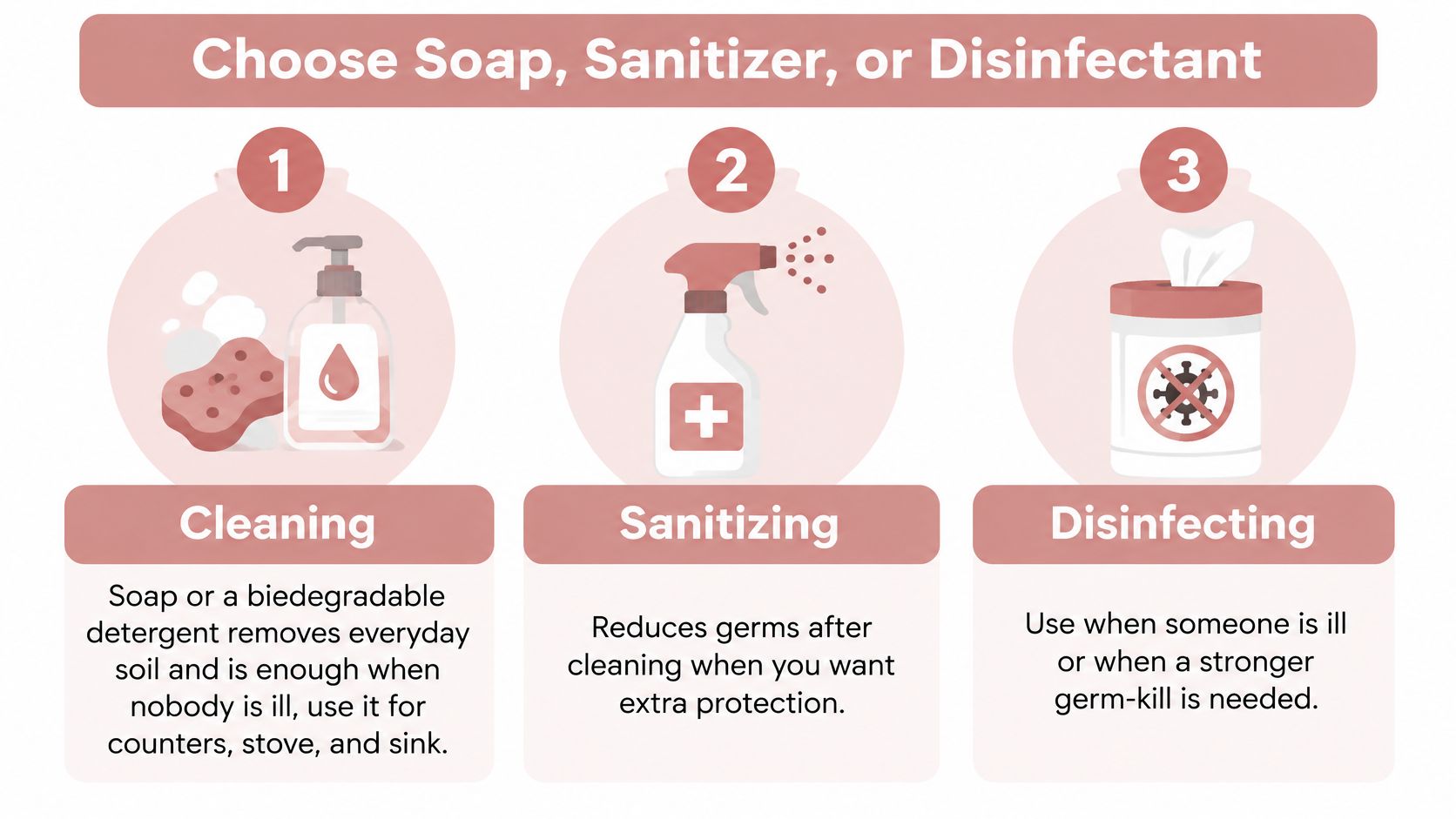
Level 1 is cleaning. Soap or a biodegradable detergent removes everyday soil and is enough when nobody is ill. Use it for counters, the stove, the sink, and the tub. Practical example: after toast and coffee, soapy water on crumbs and rings is the whole job.
Level 2 is sanitizing. Food-contact surfaces get this after raw meat, eggs, or a shared cutting board. Wash first, then use a food-safe sanitizer, and rinse with drinking water if the label says so. Practical example: you slice raw chicken, wash the board with soap, sanitize it, then rinse it before vegetables touch it.
Level 3 is disinfecting. Reserve it for hard, nonporous high-touch points like the toilet handle, faucet, light switch, and doorknob when someone is sick or medically vulnerable. Dirt blocks the chemical, so wash film off first.
Wet contact time is the part people skip
Practical rule: If the surface isn't visibly wet for the full label time, you didn't disinfect it. You only wiped it with disinfectant.
The EPA list of selected registered disinfectants explains that a product with a 10-minute contact time must keep the surface wet for at least 10 minutes, and if it dries after five minutes, more product must be applied. Practical example: spraying a bathroom faucet and wiping it dry at once fails a three-minute label. Keep that faucet visibly wet for three full minutes, and reapply if it dries.
Never mix bleach with vinegar, other acids, or ammonia. Ventilate during and after you use a spray. Use pH-neutral soap on stone, and diluted castile soap or a citric descaler on glass and sealed ceramic.
If you have children, pets, or asthma in the house, clean daily with soap and keep one EPA-registered disinfectant for illness weeks only. This guide to the difference between sanitizers and disinfectants breaks the labels down further if you're comparing products at the store.
How to Clean the Kitchen in One Pass
Work top to bottom and finish once. Going back to a counter you already wiped is how a 25-minute job becomes an hour.
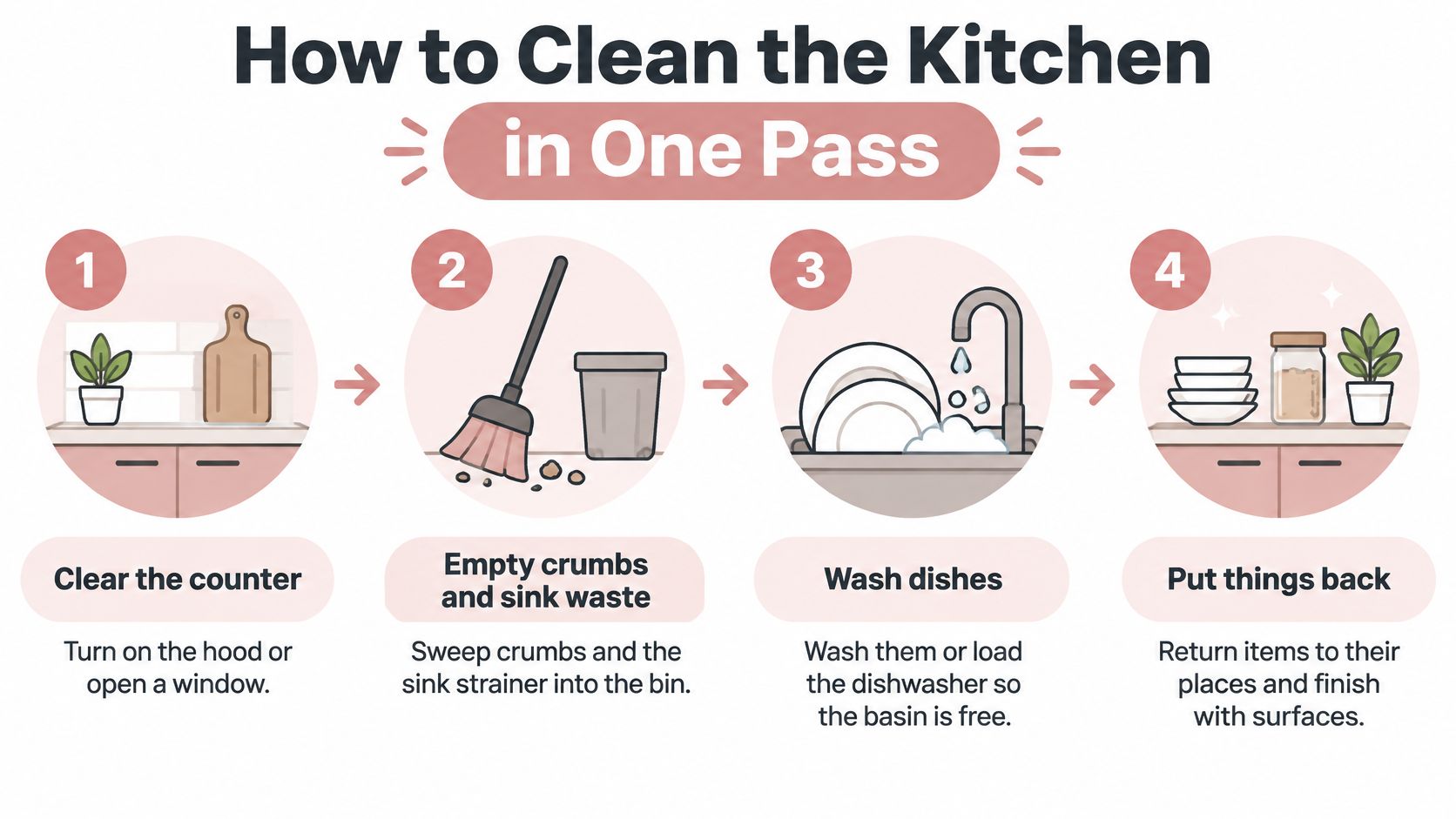
The one-pass sequence
- Clear the counter and ventilate. Turn on the hood or open a window so steam and spray don't hang in the room.
- Empty crumbs and the sink strainer into the bin. Loose food left in the sink will smear across every surface you wash next.
- Wash dishes or load them. You need a free basin for rinsing cloths and washing the sink itself.
- Apply dish soap or a plant-based degreaser. Coat the stovetop, backsplash, and counters, and leave cooked-on spots for two to three minutes.
- Wipe from the backsplash down. Move to the counter edge, then the sink and faucet, with a cloth kept for food areas only.
- Wash the fridge handle and stove knobs. These are the spots hands touch right after handling raw meat.
- Sweep, then mop. Crumbs swept first won't get walked across a wet floor.
- Handle raw chicken cleanup last. Wash the board and counter with soap and water before any sanitizer, and rinse with drinking water if the label requires it.
Practical example: after a week of fried eggs, burner rings look baked on. Don't scrape harder. Give the degreaser its dwell time, then wipe. The softened film lifts in one pass, and you won't scratch the finish. For older buildup, this method for removing baked-on grease covers the next step up.
Surface limits and the finish check
Never mix cleaners in the sink to make a stronger batch. Skip vinegar on marble, quartzite, and other stone, and use a pH-neutral soap there instead. Acid can dull stone even when the counter looks fine right after you wipe it.
Tile floors need the same patience. If grout stays dark after mopping and a grout brush, it's worth checking when grout needs professional cleaning before you pour on stronger chemicals.
End with a five-point check you can see and feel.
- Counters: No sticky film when you drag a dry fingertip across them.
- Sink: Basin washed and the rim left dry.
- Faucet: No grease ring at the base.
- Handles: Fridge handle and knobs wiped after the counters.
- Floor: Swept corners, then damp-mopped.
That's what done looks like. A shiny stovetop with a greasy faucet base isn't done, because the faucet is where hands go next.
How to Clean the Bathroom from the Top Down
Water spots on the glass, dust on the shelf, and a damp mat on the floor each need a different fix. Work from high surfaces down, and leave the toilet until last so dust and drips do not land on cleaned areas.
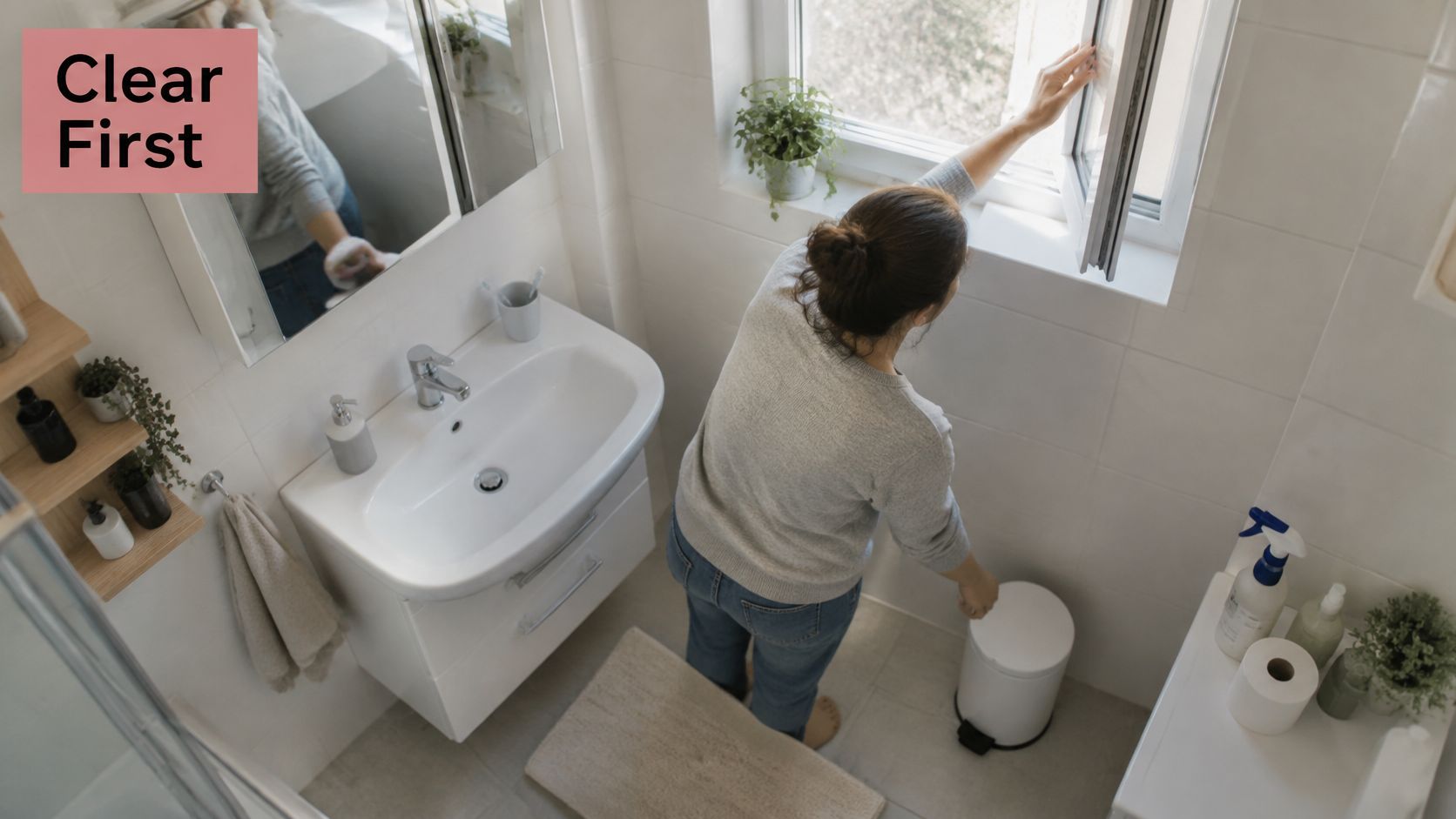
The top-down sequence
- Ventilate first. Open a window or switch on the fan before using a spray.
- Clear the room. Move bottles, the rug, and the trash so you can reach the edges.
- Dust high surfaces. Wipe shelf tops, the mirror frame, and the exhaust cover while they are dry.
- Apply bathroom cleaner or a mild citric descaler. Coat the shower walls, tub, and faucet, then leave the product for its label contact time while you clean the sink.
- Wash the sink, counter, and faucet. Use a separate cloth to dry the mirror, so lint and residue do not transfer.
- Clean the toilet last. Work from the tank top and exterior to the seat and hinges, then the bowl and floor around the base. Keep this cloth out of the sink area.
- Scrub grout and the drain rim, rinse, and dry metal. This removes residue and helps prevent fresh spots as the surfaces dry.
- Put towels and the mat back only when the floor is dry. A mat over damp flooring can hold the musty smell you are trying to clear.
Practical example: White film around the showerhead base may lift after about five minutes with citric descaler and an old toothbrush. Follow the product label, then brush the seam where a cloth cannot reach. Bleach is not a substitute for descaling, and cleaners should not be mixed.
Watch the sequence once to see how the steps fit together.
What keeps the weekly scrub short
In 2024, 72% of respondents said they regularly clean the shower, according to Kärcher's international consumer study, which surveyed 10,025 people across 10 countries. Squeegee the glass after each shower. It takes only a few seconds and keeps water from drying into a film that needs scrubbing later.
Leave the fan running about 15 minutes after cleaning. If mineral spots keep returning on glass and chrome, these hard water solutions can help distinguish hard-water deposits from soap scum.
Match the product and pad to the surface. Glazed tile can tolerate products that may damage worn enamel or open grout, so check the finish before scrubbing. For shared properties, use a restroom sanitation checklist by frequency to plan fixture cleaning. A clean-looking surface is not the same as a disinfected one: follow the product label's contact time when disinfection is needed, rather than spraying every surface by default.
Short Habits That Keep Both Rooms Done
The weekly block stays short when small jobs don't pile up. I'd start with a timer, not a new product shelf.
Practical example: a family of four sets a 10-minute timer after dinner for counters, sink, and stove only. Nobody touches the shower that night. The kitchen resets daily, and the bathroom waits for its Sunday block without getting worse.
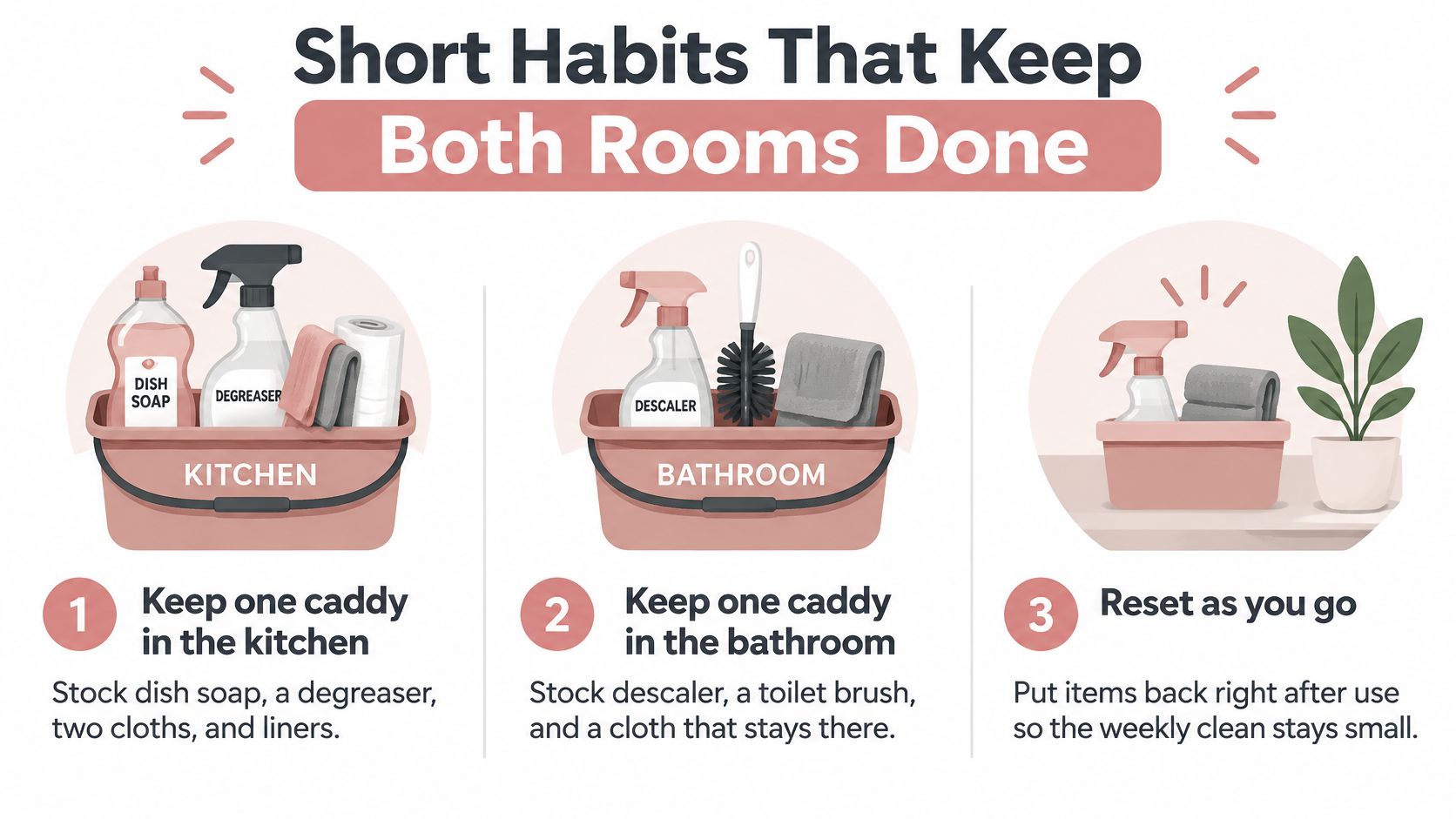
Two caddies, no cross-over
Keep one caddy in the kitchen with dish soap, a degreaser, two cloths, and bin liners. Keep one in the bathroom with descaler, a toilet brush, and a cloth that never leaves that room. The color split stops a toilet cloth from ending up on a counter when you're rushing.
Put items back right after use. A bottle left in the shower corner traps water under it, and a pan left on the stove turns one wipe into moving, washing, and drying. Small resets protect the schedule more than any deep-clean marathon.
Short habits don't replace the weekly reset. They keep it from turning into a rescue job.
The spots that still get missed
These are the only skipped spots I would put on a list, because they explain most smells and sticky hands.
- Light switches: Wipe them during the weekly reset, and more often when someone has a cold.
- Inside of door handles: The underside collects what a quick front wipe misses.
- Bath vents: Dust blocks airflow, so moisture stays after showers.
- Fridge gasket: Crumbs and spills sit in the fold where the seal meets the door.
- Strip behind the toaster: Crumbs toast, smell, and draw pests.
In 2024, 49% of Americans surveyed by the American Cleaning Institute said cleaning hard-to-reach areas, including behind or underneath furniture or appliances, was among the cleaning tasks they most dreaded. So pull one appliance a month, not all of them on one Saturday.
Do the same deep pass in winter as in spring, and add switch and knob wipes during a cold. If the bath still smells damp after it looks clean, check the shower track and fan time before you buy a scented spray. This guide for when towels smell like mildew covers the laundry side of that same moisture problem.
Finish with a three-line card on the fridge labeled tonight, this weekend, and this month. When a busy week hits, you do tonight's line and the routine survives.
Keep the Routine or Book a Local Clean
A two-bath household may clean both toilets each week and still miss the shower grout or drain rim. A longer DIY checklist will not address that gap if there is no time to finish it. Recurring cleaning can assign those missed tasks to a regular visit, while you keep up with the parts of the routine that fit your week.
Try the schedule for two weeks and mark what gets done. If the daily tasks and one weekly block fit, keep handling them yourself. If the same jobs keep slipping, consider booking help. Vanishing weekends, a fixed move-out inspection, or renovation dust that keeps settling on kitchen and bathroom surfaces can make cleaning a time or workload problem.
What a local plan can cover
Aquastar Cleaning Services, LLC serves Kennesaw and the surrounding North Atlanta area, with recurring visits on weekly, bi-weekly, or monthly schedules, while one-time deep cleans, move-in and move-out cleans, and post-construction dust cleanups are booked separately.
A plan can cover kitchen and bathroom cleaning, with refrigerator or oven interiors added as needed. Eco-friendly products are available for households with children and pets. If your routine uses soap for everyday soil removal and a labeled disinfectant during illness weeks, confirm which products you want used and where.
Pricing depends on home size, visit frequency, pets, product preferences, and clutter. Clearing counters before a visit reduces the time spent moving items to reach surfaces. Your nightly reset can help keep the work manageable, whether you clean yourself or book help.
Note which tasks slip during the weekly block. If it is consistently grout, appliance interiors, or the second bathroom, request a quote for those specific needs. You can keep the parts of the routine that work and hand off the jobs you cannot fit in.
If kitchen and bathroom cleaning keeps falling behind, Aquastar Cleaning Services, LLC offers recurring, deep, move-in and move-out, and post-construction cleaning in North Atlanta, with eco-friendly options for homes with children and pets. Request a quote based on your home size and preferred visit frequency.