


The most common advice after a remodel is simple and wrong. People say if the contractor swept the floors and hauled the scraps, you can move right in and dust as you unpack. That advice fails because construction dust isn't normal house dust. It's a fine film that keeps rising, settling, and spreading every time you walk, open a cabinet, or turn on the heat. Good post construction cleaning services don't start with a broom. They start by controlling where that dust goes.
Why Broom Clean Still Leaves a House Unlivable
Say your new kitchen is finished. The cabinets look clean, the floor's been swept, and you set a drinking glass on the counter. An hour later, the glass has a white film on it. You wipe the counter, and the film comes back by dinner.
That film is what broom clean leaves behind. A contractor's broom clean clears trip hazards, boxes, and bulk scraps so the next trade can walk through. It doesn't remove the fine dust inside cabinets, on top of door trim, in window tracks, or around supply grilles. Every step and every breath of air lifts a little of it back up.
The scale helps explain why this residue is so persistent. The U.S. Environmental Protection Agency estimate for construction and demolition debris put generation at approximately 600 million tons in 2018, more than twice the amount of municipal solid waste generated that year. Concrete represented 67.5% of that debris stream, asphalt concrete 17.8%, and wood products 6.8%.
In that same year, slightly more than 455 million tons were directed to a next use and just under 145 million tons went to landfills. Those numbers show why hauling and recycling still don't make a house livable. Reusable material can leave the site on a truck and still leave its dust on your floors, trim, cabinets, and vents.
Hauling is taking out the trash. Post-construction cleaning washes the room the trash sat in.
That difference shapes everything that follows. You'll see how rough and final passes differ, the order crews use to stop dust from spreading, typical time and price bands, and how to tell if a quote covers move-in readiness.
Rough Clean Versus Final Clean Side by Side
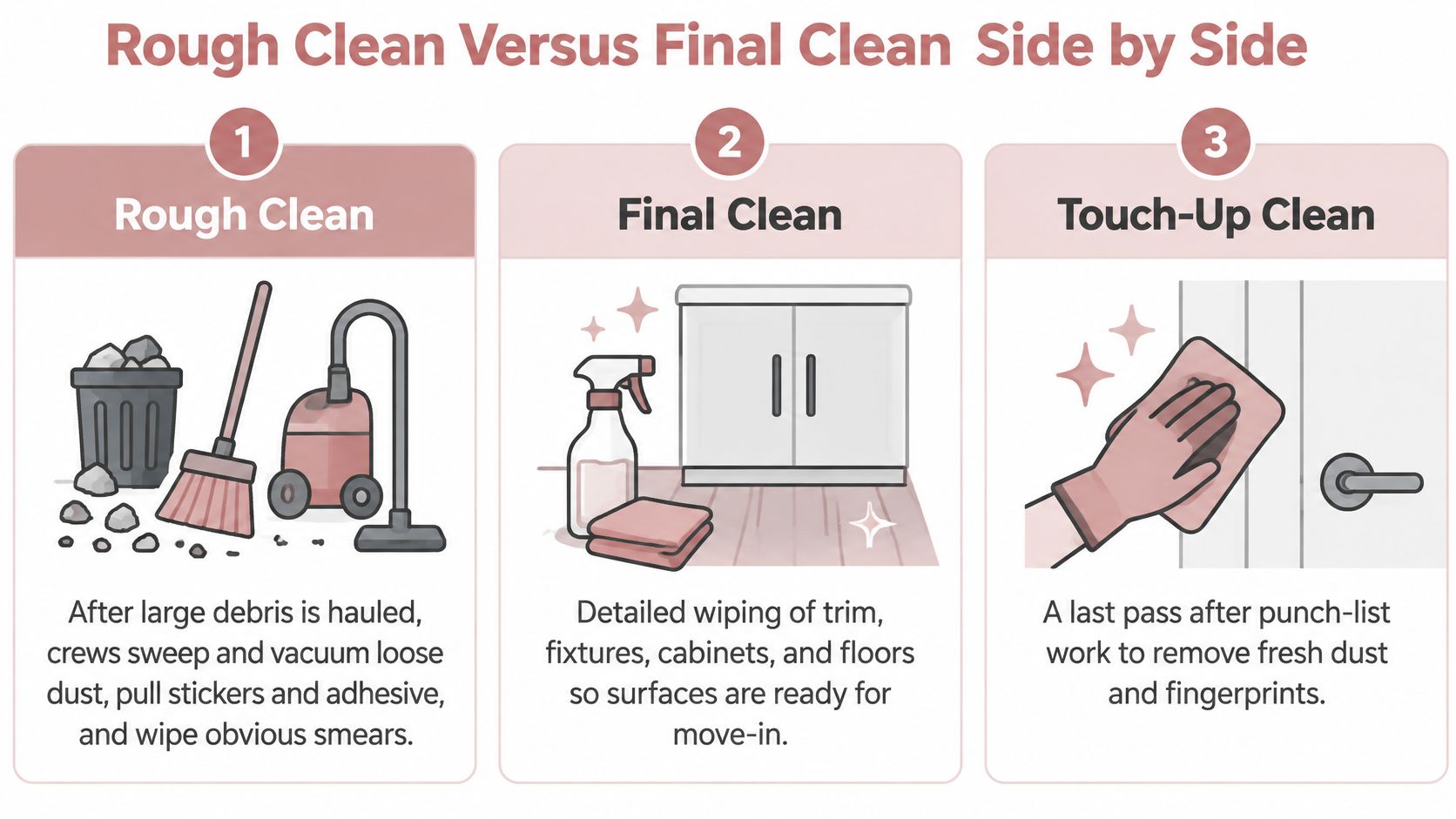
Homeowners often compare two quotes that use the same words but describe different jobs. One crew means a quick debris pass. The other means a full occupancy clean. The table below separates the three passes you should see named on any written quote.
| Stage | Main job | Typical tasks | Ready for |
|---|---|---|---|
| Rough clean | Remove bulk debris and labels | Sweep, vacuum loose dust, haul scraps, scrape stickers, wipe obvious smears | Trades finishing punch work |
| Final clean | Remove the fine film for occupancy | HEPA vacuum high to low, damp microfiber, wet mop, detail tracks, fixtures, glass, and cabinet interiors | Move-in or listing photos |
| Touch-up clean | Fix dust tracked back by late trades | Spot HEPA and damp wipe of floors, sills, and newly installed items | Same-day occupancy |
What Each Pass Actually Leaves Behind
A rough clean happens after large debris is hauled out. The crew sweeps and vacuums loose dust, pulls stickers and adhesive, wipes obvious smears, and clears floors. That gives painters, flooring crews, and inspectors a workable space. It doesn't make the room safe for dishes, bedding, or bare feet.
A final clean is slower because the target is smaller. The crew HEPA-vacuums from ceilings downward, damp-wipes horizontal surfaces and crevices, wet-mops hard floors, and details window tracks, fixtures, glass, baseboards, door tops, and cabinet interiors. When it's done right, a dry finger across a shelf shouldn't come away white.
A touch-up clean covers only what late work disturbed. Say an electrician swaps a fixture the day after the final clean. The touch-up crew re-vacuums that room, wipes the sill and fixture, and mops the footprints back to the door. They don't redo untouched bedrooms.
One Kitchen Through All Three Rows
Take a 12-by-14 kitchen after cabinet installation as a practical example. The rough pass removes cardboard, protective film, stickers, and drywall crumbs from the floor. The final pass vacuums and wipes inside every cabinet and drawer, along the toe-kick, and inside the window track before dishes go in. If the plumber returns to adjust the faucet, a short touch-up handles the sink cabinet, counter, and floor path he used.
Some items don't belong to the cleaning crew at any stage. Leftover lumber with protruding nails, unbagged demolition waste, and dumpster material stay with the contractor. A cleaner also doesn't repair paint, reset appliances, or finish punch-list carpentry.
Practical rule: Match each quote line to rough, final, or touch-up before you compare prices. A low price for a rough clean isn't a bargain if you need a final clean.
The Dust Control Sequence Pros Actually Use
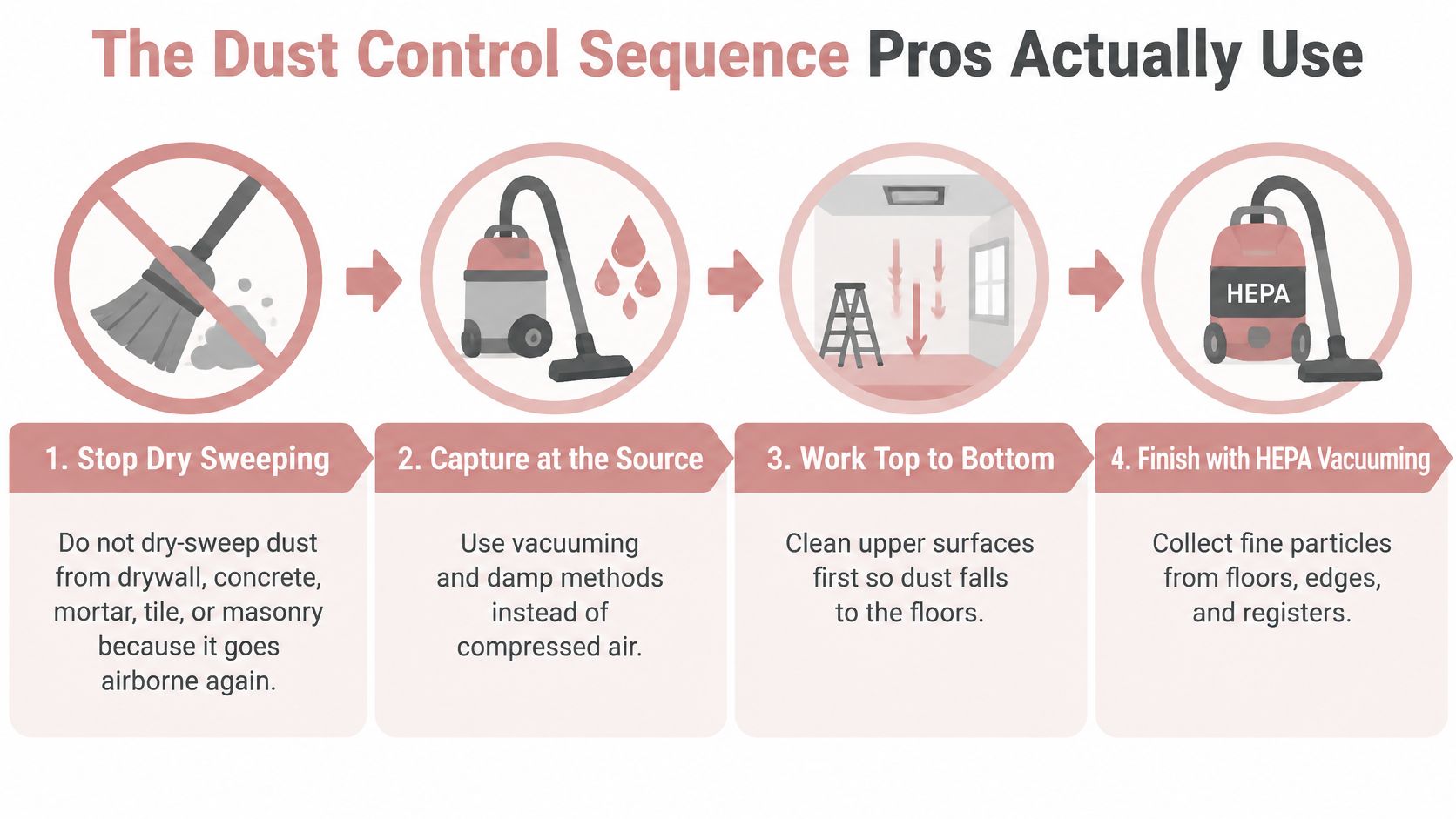
Drywall, concrete, mortar, tile, and masonry create dust that behaves like flour in air. Sweep it dry and it floats. Blast it with compressed air and it coats the next room. The OSHA guidance on crystalline silica in construction prohibits dry sweeping or dry brushing when those methods could contribute to silica exposure unless wet sweeping, HEPA-filtered vacuuming, or another lower-dust method is infeasible. That's why the order below matters more than scrubbing harder.
The Six Steps in Order
- Bag the big material first. Remove scraps, packaging, tape, and stickers before fine cleaning starts. If you skip this, vacuums and mops grind grit into new floors.
- Keep barriers and grille covers in place. Leave plastic over doorways and covers on supply and return grilles until the dusty pass ends. Open pathways let fine particles ride normal air movement into finished rooms.
- HEPA-vacuum high surfaces first. Start with ceilings, light fixtures, door tops, and high trim, then work downward. Dust you loosen falls onto surfaces you haven't finished yet, which is exactly what you want.
- Damp-wipe ledges and crevices. Use damp microfiber on cabinet faces, fixtures, shelves, and trim, turning and rinsing cloths often. A loaded dry cloth pushes dust around. A damp cloth holds it.
- Vacuum floors, then wet-mop. HEPA-vacuum edges and corners before mopping hard floors with clean rinse water. Mopping first turns loose dust into a thin mud that dries as streaks.
- Detail the traps last. Clean window tracks, cover-plate edges, flooring transitions, and the space behind appliances. Remove barriers only after this pass, so residue doesn't travel during teardown.
Why the Wrong First Move Undoes Good Work
Say a crew sands a hallway, then dry-brooms it before wiping the adjoining bedroom. The broom lifts settled particles into the breathing zone, and the bedroom gets a fresh haze on surfaces that were already clean. HEPA capture and damp wiping work differently because they retain particles instead of redistributing them.
The basic kit is specific, not fancy:
- HEPA vacuum: Intact filters, sealed hoses and connections, and the right bag for the machine
- Microfiber cloths: Several per room, so dirty cloths get swapped instead of rinsed endlessly
- Mop and rinse bucket: Clean water changed when it turns cloudy
- Bags and scrapers: Heavy bags for debris and plastic scrapers for adhesive and labels
For a room-by-room method focused on drywall residue, this guide to cleaning up drywall dust without spreading it follows the same capture-first logic. The finished test is plain. You shouldn't see residue on ledges or tracks, and the crew shouldn't create a visible dust cloud while getting there.
Price Drivers and How Long the Job Takes
Use the figures below as typical U.S. 2026 planning bands, not as a local quote. They're practical examples for budgeting a project like yours. A written scope that names rooms, passes, and add-ons beats a per-square-foot guess every time.
| Project | Crew time | Typical price band | What moves the price |
|---|---|---|---|
| Single bathroom remodel | 2 to 4 hours | $150 to $400 | Tile dust, glass shower, fixture film |
| Kitchen renovation | 4 to 8 hours | $300 to $800 | Cabinet interiors, appliance film, floor type |
| Final clean, roughly 2,000 square foot home | 6 to 12 hours | $450 to $1,200 | Dust level, windows, stairs, cabinet count |
| New build or gut renovation, rough plus final | 1 to 3 days | $800 to $2,500 | Debris volume, number of passes, HVAC protection |
| Window, appliance interior, or garage add-on | 1 to 4 extra hours | $75 to $300 each | Height, oven or fridge interior, exterior access |
What Pushes a Job Toward the High End
Square footage sets the starting point, but dust type does much of the pricing. Heavy drywall or tile work leaves more fine residue than a simple fixture swap. Carpet holds particles differently from hard floors, and hard floors show every missed mop pass. Cabinet interiors, window count, and stairs add slow, close work that a floor-only estimate misses.
Timing matters too. If the HVAC ran during sanding, grilles and nearby surfaces need extra attention. If painters return after the final clean, you'll likely need a touch-up visit. Multi-day renovations usually cost less overall when debris is bagged daily instead of saved for one heavy final day.
Take the same roughly 2,000 square foot house as an example. It can land near the low end if the builder already hauled debris, removed stickers, and wiped the glass. It lands near the high end if the crew must detail every new cabinet, clean two stair runs, and work around dust that spread into untouched rooms.
How to Read the Paperwork
Ask for each pass and add-on on its own line, then compare that scope with this explanation of how home cleaning services are priced. If paperwork formats confuse you, GetBill's cleaning invoice comparison is a useful reference for seeing how line items, taxes, and service descriptions should appear. Price the row that matches your project first. Then add only the extras you can point to in the house.
Kitchen Remodel and Whole Home Examples
A kitchen remodel in an occupied home shows why barriers come down last. Before cutting starts, plastic is taped across the doorway, floor protection extends beyond the work edge, and grilles serving the dining room are covered. Drywall scraps are bagged as they're cut and carried out a side door, not down a finished hall.
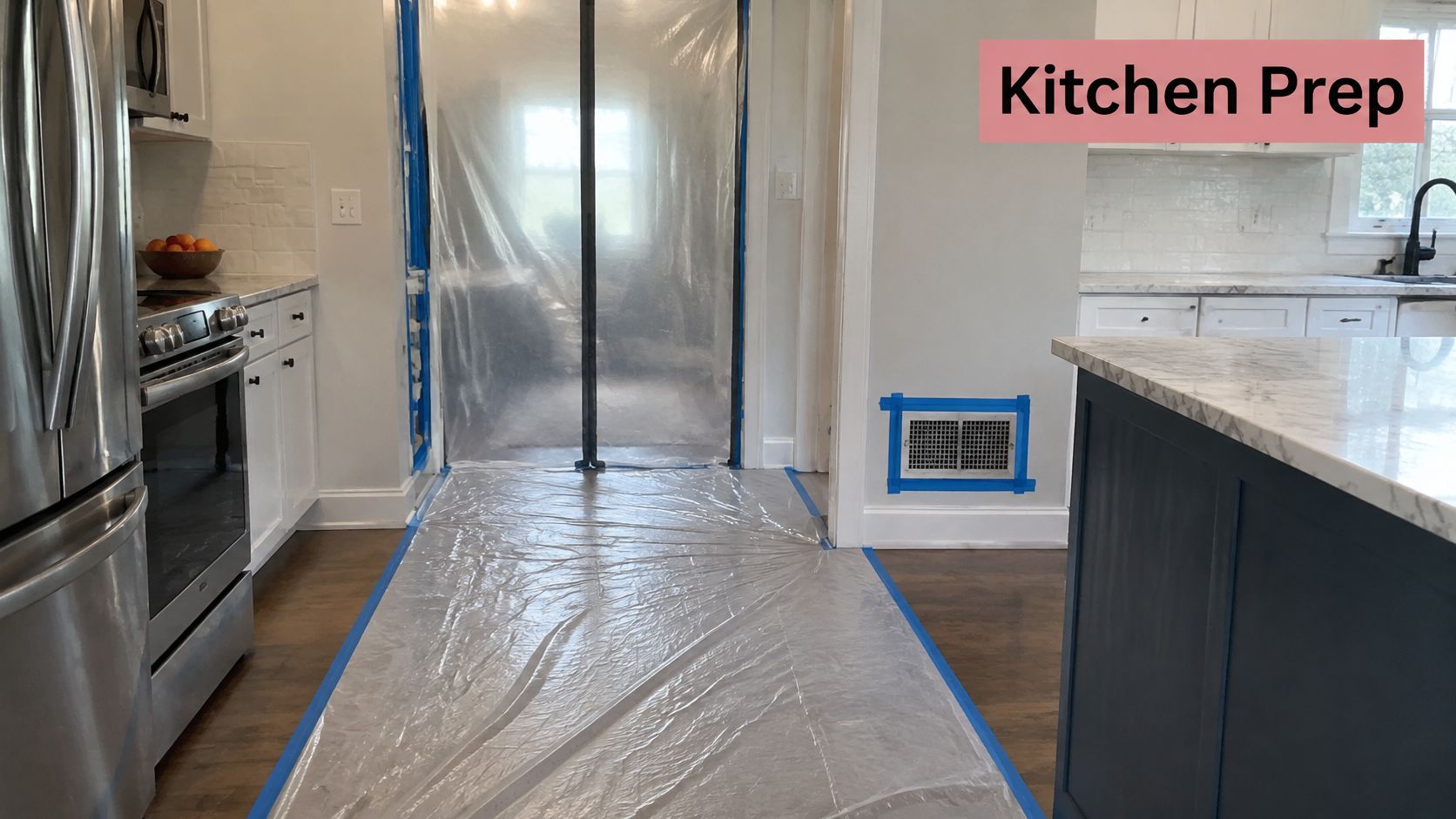
At final clean, the crew follows steps 3 to 6 from the sequence above, in order. They pull the doorway plastic only after the floor is mopped. The EPA homeowner guidance on protecting a family from lead dust during renovation uses that same order for work that may involve lead dust: keep the area contained, HEPA-vacuum surfaces, wet-wipe dust and debris, and wet-mop uncarpeted floors with plenty of rinse water before removing plastic barriers.
In practical terms, that means vacuuming cabinet faces, trim, fixtures, and floors with HEPA equipment, wiping them with damp disposable cloths, and mopping before the doorway opens. The crew also checks the toe-kick, the new window track, and the tops of upper cabinets. A quick counter wipe misses all three. For homeowners planning the larger project behind the mess, modernizing an outdated home layout often creates this exact sequence of demolition, containment, and staged cleaning.
The second practical example is a whole-home refresh after flooring and paint. Day one is the rough pass, with stickers, boxes, and loose dust cleared while returns stay covered. Day two is the final clean from the top floor down, with hard floors mopped last. A short touch-up on moving morning handles dust from an electrician who returned overnight.
Neither example includes leftover lumber or dumpster waste, which stay with the builder. A cleaning crew also doesn't repair paint or reset appliances. For the room itself after construction residue is gone, a kitchen deep cleaning service checklist helps separate construction film from normal cooking grime.
Copy this inspection list for your walk-through:
- Air grilles: Supply and return openings, plus the wall around them
- High edges: Door tops, cabinet tops, and light fixtures
- Low traps: Baseboards, toe-kicks, and flooring transitions
- Detail spots: Window tracks, cover-plate edges, and behind the fridge
Air Quality Filters and Lead Dust Decisions
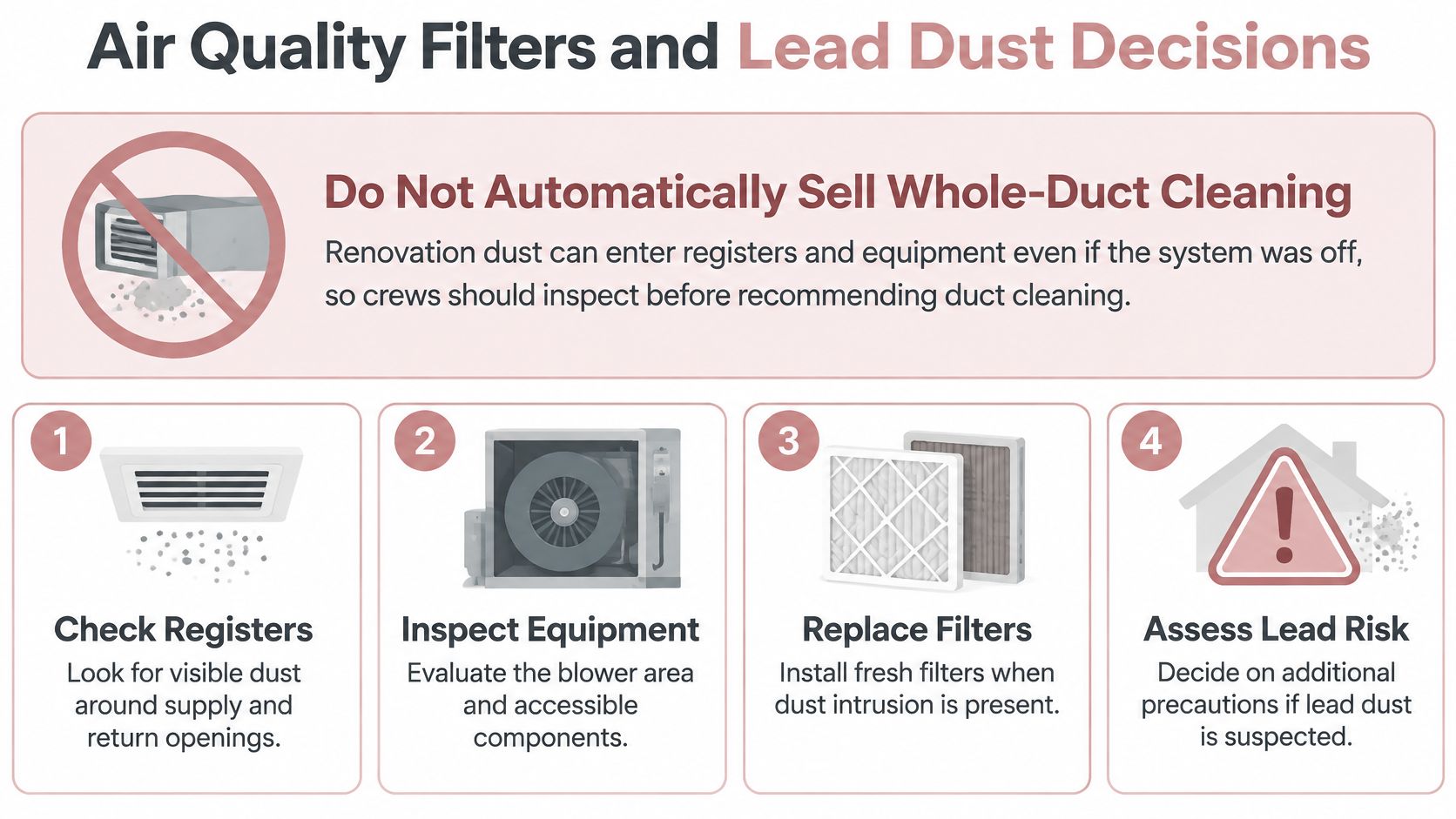
Don't let a crew sell whole-duct cleaning as an automatic final step. That's the contrarian point, and it matters because ducts are easy to blame for dust that's sitting on surfaces. The EPA best practices for indoor air quality when remodeling notes that renovation dust can enter supply and return registers and contaminate ducts and mechanical equipment even when the HVAC system is not operating. It also advises sealing registers and leaving the system off until dust cleanup is complete.
At the same time, that guidance says duct cleaning has not been shown to prevent health problems, and research has not conclusively shown that dirty ducts increase household particle levels. So the right response is inspection first, not a blanket duct package.
A Four Line Decision
- Settled dust on grilles, ledges, and floors: That's the cleaning crew's job, handled with HEPA vacuuming and damp wiping.
- Dust reached a register: Inspect the opening and replace or upgrade the filter as the first HVAC step.
- Debris visible inside equipment or weak airflow: Call an HVAC professional to assess the blower and accessible components.
- Paint, flooring, or finish odors: Ventilate with windows or exhaust instead of masking the smell with fragranced wipes.
The Purified Air Duct Cleaning renovation guide is worth reading if you want the duct specialist's view of when post-renovation inspection makes sense. Compare that with this breakdown of AC duct cleaning cost before you approve it as an add-on. A practical example draws the line clearly. White dust on a return grille gets vacuumed and the filter changed. A handful of drywall chunks inside the air handler is an HVAC call, not a maid task.
Older homes add one more decision. If lead paint may have been disturbed, a visual check isn't enough. The EPA steps booklet on lead-safe renovation treats dust-lead samples at or above 5 micrograms per square foot on floors or 40 micrograms per square foot on interior window sills as not ready for occupants. A floor sample at 6 micrograms per square foot must be cleaned and retested. A sill at 35 micrograms per square foot sits below that stated threshold. Families with children, older adults, or asthma should keep barriers up until that pass is done.
Frequently Asked Questions
Can the Family Stay in the House During the Clean
You can often stay in a sealed, finished part of the house, but stay out of the active zone during the dusty passes. Keep barriers up and don't walk through a room between the HEPA pass and the mop. Children, older adults, and anyone with asthma should be out of the house during HEPA vacuuming and wet mopping, then return after the touch-up pass is done.
A practical example helps. If crews are finishing a kitchen while your family uses bedrooms at the other end of the house, a taped doorway and covered grilles can make that workable. If the only bathroom sits inside the work zone, plan to be out instead.
Is Post-Construction Cleaning the Same as a Deep Clean
No. A deep clean scrubs lived-in grime, soap film, and kitchen grease. It doesn't start with debris removal, sticker scraping, or fine drywall dust control. Post construction cleaning services assume adhesive, labels, and powdery residue on brand-new surfaces.
That difference shows up in missed spots. A deep clean of a new kitchen may polish the sink and counters but skip dust on cabinet tops and inside the window track. Those are core post-construction tasks, not extras.
Can One Crew Do the Rough and Final Clean on the Same Day
Usually not for a whole house. If electricians and painters return after the rough pass, the final clean has to wait for them. Cleaning to occupancy standard and then letting trades sand or drill wastes the final pass.
A same-day finish works in a narrow case. Say one bathroom needs a rough pass in the morning, no trades remain, and the crew can move straight into detail work. That's realistic. A full house with punch-list work still open isn't.
Book a Crew That Matches the Job
Use a short checklist when you compare quotes, and get the answers in writing. Ask for rough, final, and touch-up as separate lines. Confirm HEPA vacuuming and damp wiping, and confirm dry sweeping isn't part of the plan. Ask who bags debris and who only details surfaces, because those are different jobs with different prices.
This guide to choosing a cleaning company covers the broader vetting questions. For this specific job, add one practical test. If a quote says whole house but lists no cabinet interiors, window tracks, or second visit after painters, it's priced as a rough clean. Compare it against the rough row, not the final row.
Our service types available for a quote include Deep Cleaning, One-Time, Move-In/Out, and Post-Construction cleaning, and our cleaning team is professional, trained, and insured. You can request a free cleaning estimate before you commit to a date. Ask in writing what happens if a room is missed and how that spot gets fixed.
Before the crew arrives, pick up toys, clothes, and papers so paid time goes to film and fixtures instead of sorting. Leave entry instructions if you'll be out. Then request a written estimate from Aquastar Cleaning Services in Kennesaw and North Atlanta that lists home size, remodel type, and whether you need one pass or rough plus final.
Book the final clean only after the last dusty trade is done. A perfect clean before the painter returns is just an expensive rough clean.
If your remodel is finished but the film keeps coming back, Aquastar Cleaning Services, LLC offers post-construction cleaning for homes in Kennesaw and North Atlanta, with rough, final, and touch-up work scoped in writing before the crew arrives. Tell us your home size, remodel type, and the date your last trade finishes, and we'll match the estimate to the pass you need. Visit Aquastar Cleaning Services, LLC to request your free written estimate and book the final clean for the day your home is ready.