


You walk back into your remodeled North Atlanta kitchen, set groceries on the island, and notice how good everything looks. The floor's been mopped, the cabinets are installed, and the builders have packed up. By evening, though, a white film covers the dark counters.
That's the frustrating part of residential post-construction cleaning: a room can look finished before it's ready for everyday life. The right cleanup starts with a hazard screen, follows a controlled dust-removal sequence, and ends with more than a shiny floor.
Why the Dust Comes Back After the Builders Leave
In that kitchen, the white film doesn't necessarily mean someone skipped the counters. Fine particles may still be sitting on cabinet tops, light fixtures, door frames, or nearby shelves. People moving through the house can disturb them, and unprotected air returns can carry them beyond the remodeled room.
Residential post-construction cleaning means removing construction debris, settled dust, and surface residue after work in a house, condo, or apartment. It also includes identifying unfinished conditions that prevent an ordinary cleaning handover. It isn't an air-quality certification.
Weekly housekeeping handles everyday dirt. A routine deep clean tackles accumulated grime. Renovation cleanup has a different starting point: drywall sanding, flooring cuts, cabinet installation, masonry work, and paint preparation can leave fine particles across surfaces that weren't visibly involved in the project.
Capture dust rather than chase it
Think of flour spilled in a bakery. Sweep briskly and you'll see a cloud; collect it carefully and finish with damp wiping, and less returns to the room. Construction dust calls for that same distinction between moving particles and removing them.
For a broader look at the work involved, the post-construction insights from Pine Country Window Cleaning provide useful context for discussing a specialized cleanup rather than an ordinary housekeeping visit.
A visually clean room isn't proof that the home is ready to occupy.
Homeowners moving back in, landlords preparing a rental, and households with children, pets, asthma, or chemical sensitivities all need a clear handover. Ongoing ways to reduce allergens at home can support maintenance afterward, but they don't replace renovation cleanup.
The boundary is straightforward: cleaners remove ordinary dust and debris after hazardous work is contained or cleared. They don't test air, abate asbestos, or remediate lead paint.
Screen the Home Before Any Cleaning Starts
Sometimes the safest first step is not cleaning yet. Booking a larger crew won't solve an unresolved hazardous-material problem, and vacuuming unidentified demolition dust can put workers and occupants in the wrong situation.
The EPA's remodeling indoor-air-quality guidance says homes built before 1978 should be presumed to contain lead-based paint unless tested, and suspected asbestos needs an appropriately qualified professional rather than disturbance by a house cleaner.
A pre-cleaning inspection should focus on what the contractor disturbed, not just how the room looks.
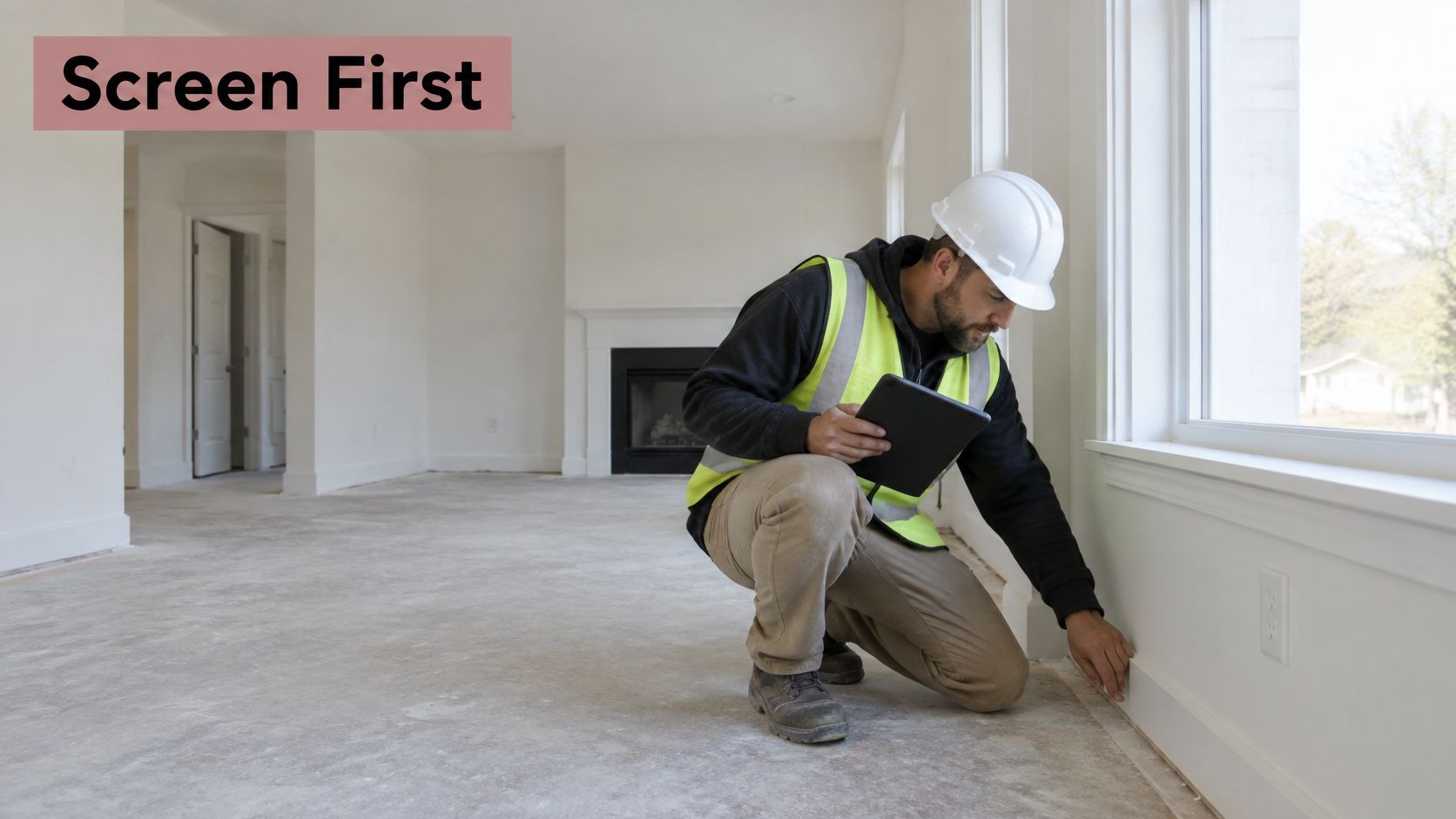
Check the building, the work, and the paperwork
- Construction year: Establish the home's age before treating paint dust as ordinary dirt.
- Disturbed materials: Identify whether workers cut, sanded, or demolished walls, trim, flooring, or insulation.
- Documentation: Collect relevant lead or asbestos test records and any required completion or clearance paperwork.
For a practical comparison, consider a modern condo receiving new flooring. With no suspect materials, water damage, or unresolved contractor concerns, it can proceed toward debris and dust removal. An older North Atlanta bungalow with sanded painted trim needs the lead question resolved first.
A HEPA vacuum isn't a clearance document. Its filtration capability doesn't authorize a general cleaning crew to handle lead or asbestos contamination.
Keep children and pets outside the work zone while these questions remain open. Their contact with floors and low sills makes settled dust especially important to control. Coordinate barriers and dust containment with the contractor instead of letting cleaners discover missing protection after demolition.
For future painting work, Painters North Shore's preparation guide is a useful companion when discussing preparation responsibilities. Preparation and cleanup should be agreed together, not treated as unrelated jobs.
Water damage takes priority
A wet subfloor or damp drywall isn't a dust-only assignment. The CDC's mold-cleanup guidance recommends drying wet materials within 24 to 48 hours when possible, and taking outside materials that can't be cleaned and completely dried within that window.
For example, a plumbing leak behind a newly fitted vanity calls for water removal, safe ventilation, and evaluation of wet porous materials before anyone polishes the sink.
- Clear documentation: Book the ordinary cleanup once the work area is ready.
- Unknown suspect-material disturbance: Pause for testing or professional referral.
- Active hazard: Resolve it rather than buying a larger cleaning package.
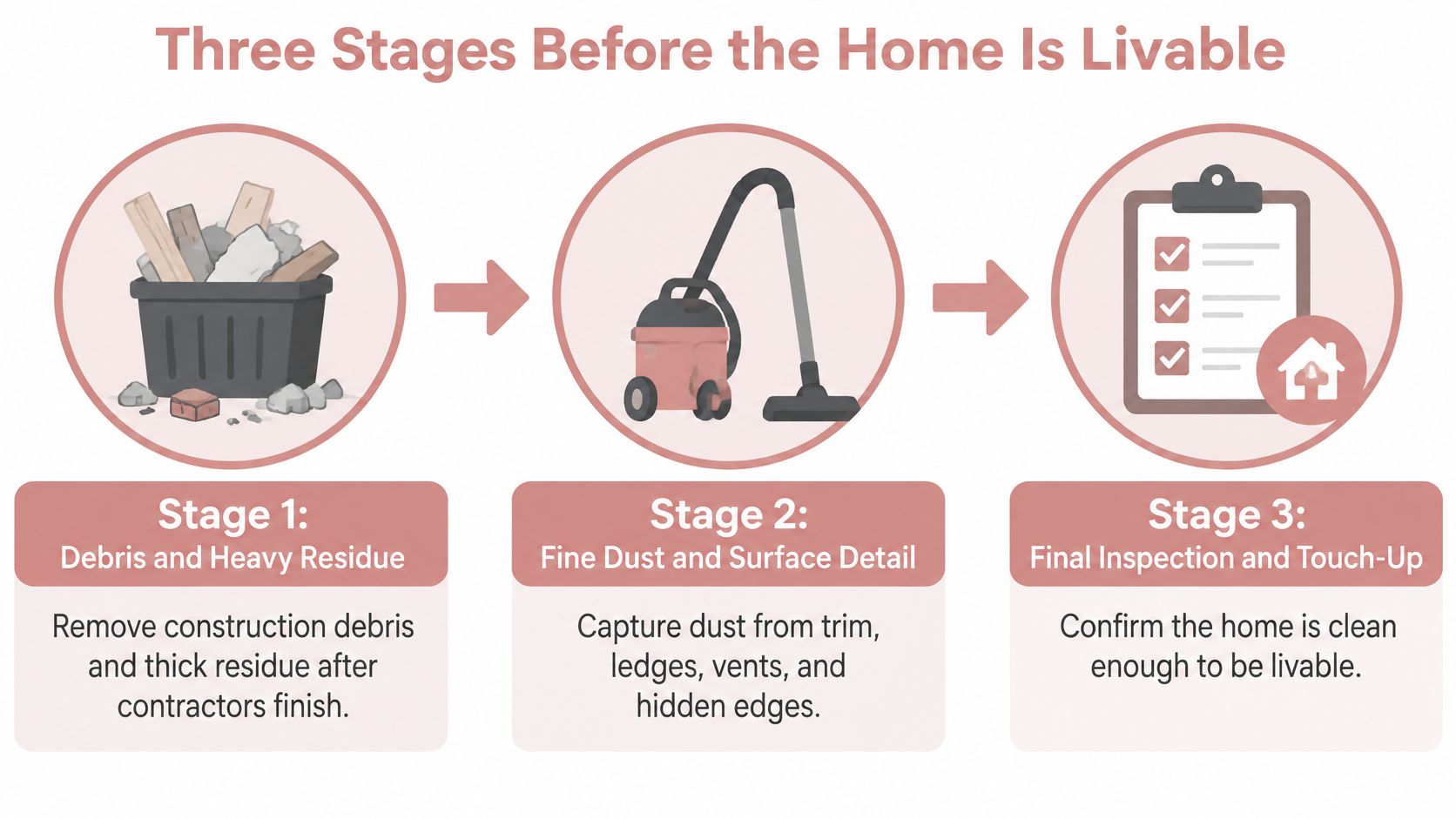
Three Stages Before the Home Is Livable
Residential post-construction stages and ready signals
| Stage | What gets done | Typical timing | Ready signal |
|---|---|---|---|
| 1. Debris and heavy residue | Bag scraps, film, stickers, and chunks before plastic comes down | After contractors finish, with containment maintained | Floors clear of construction waste |
| 2. Fine dust in the work zone and nearby rooms | HEPA vacuum, then wet-clean surfaces, edges, tracks, and vent faces | After debris removal and before final handover | Dark cloth wipe shows no white film |
| 3. Ventilation and reoccupancy check | Air out paint, adhesives, and flooring finishes; cleaner reports only visual and odor cues | Follow product guidance and project-specific ventilation requirements | Odors faded, hazardous work cleared, and any required professional checks complete |
Post-construction cleaning works best as staged passes, not a single visit that ends when the floor shines. The table describes the sequence, not a guaranteed appointment length. A small room with finished trades and controlled dust is a different assignment from an occupied home where workers are still sanding.
The CDC/NIOSH renovation guidance supports a broader approach that includes particulate control, hazardous-material assessment, ventilation before reoccupancy, and appropriate HVAC checks. Those building-level responsibilities extend beyond a cleaner's surface inspection.
The stages below show how cleaning fits into that larger handover.
Clear access, then detail the surfaces
The debris pass makes careful cleaning possible. Bag construction scraps, collect loose chunks, and remove agreed protective film and stickers without damaging new finishes. Confirm which labels should stay, particularly manufacturer information or inspection markings.
For example, schedule this pass after the cabinet installer has finished drilling and adjusting hardware, not while sawdust is still being produced. Keep containment in place while the work zone is cleaned.
The fine-dust pass follows the particles. A bedroom renovation may require attention in the hallway and nearby living room if doors were open. High shelves, window tracks, floor edges, and exposed register faces belong in this inspection.
A dark cloth that stays free of white residue is a useful surface check. It doesn't measure airborne pollutants or substitute for required hazard clearance.
Painting tools also need a separate handover. Guidance on brush care after a painting project from Alex Trend Painters helps distinguish the painter's equipment cleanup from the crew's responsibility for household surfaces.
Check readiness without promising air clearance
The final pass combines touch-ups with a reoccupancy check. If flooring adhesive still needs ventilation under its product instructions, a completed mop doesn't shorten that requirement. Schedule the household's return around the finishes and building conditions, not just the cleaner's departure.
Practical rule: Use the cleaning walk-through to confirm visible conditions, not to declare invisible hazards absent.
Cleaners can report residue, dust, remaining packaging, and noticeable odors. They can't determine chemical concentrations by smell, and a faded odor alone doesn't prove safe air.
Households with infants, older adults, asthma, chemical sensitivities, or pets may need an indoor-air-quality, lead, asbestos, or HVAC professional involved in the return decision. Poor containment during construction can also create work that a final surface clean can't resolve.
For an empty property, distinguish this staged process from ordinary move-in cleaning. Write the affected rooms into the scope before scheduling furniture delivery.
How Crews Capture Fine Dust Instead of Spreading It
The order matters as much as the equipment. A crew that wipes counters before cleaning the dusty fixture above them will have to do the counters again.
The goal is capture first, damp-clean afterward, with containment maintained until the exposed work surfaces are cleaned. Here's the sequence a homeowner should expect to see.
Follow a controlled cleaning sequence
Keep people and pets outside the zone. Clear access lets workers clean without tracking residue into occupied rooms. Don't use the work area as a shortcut through the house.
Confirm airflow protection. Check that supply and return registers were protected during dusty work, and keep heating and cooling off until cleanup controls loose dust. The EPA's air-duct guidance explains why renovation dust should be kept out of the system rather than allowed to circulate.
Collect chunks without creating clouds. Pick up or carefully gather debris into suitable heavy bags. Dry sweeping and compressed-air blowing aren't appropriate shortcuts for a fine-dust cleanup.
HEPA-vacuum from high to low. Work across reachable ceilings, fixtures, walls, shelves, trim, and finally floors and edges. Use attachments that won't scratch newly finished surfaces.
The EPA's renovation work-practice guidance defines a qualifying HEPA vacuum as capturing 99.97% of particles at 0.3 microns, with exhausted air prevented from bypassing the filter.
A conventional shop vacuum doesn't become a qualifying sealed machine because someone fits a HEPA filter. The housing, seals, filter installation, and exhaust path all matter.
This graphic summarizes the basic dust-control flow.
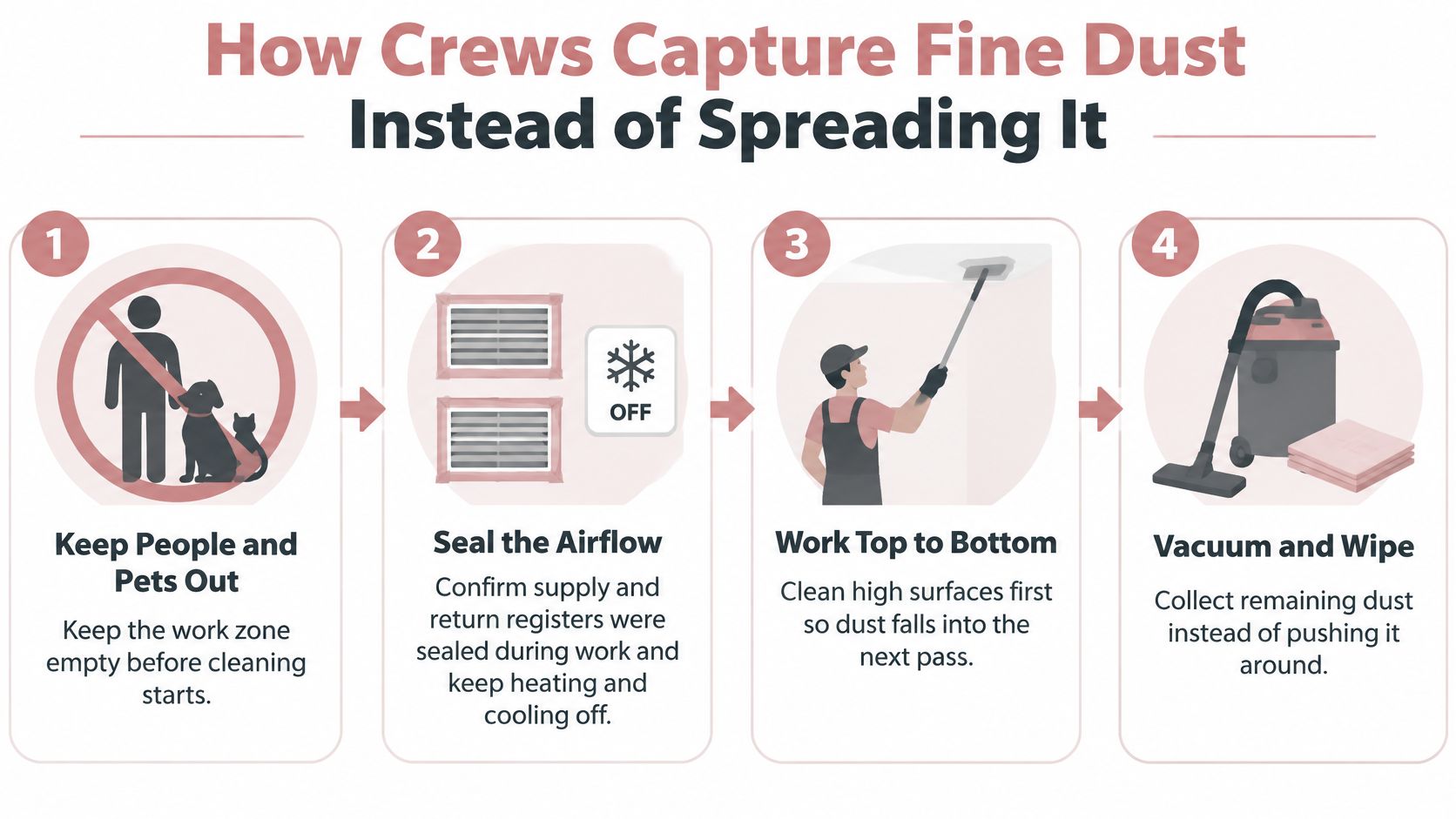
Wet-wipe and wet-mop. Use clean disposable cloths or suitable microfiber on hard surfaces, followed by appropriate floor cleaning with sufficient rinse water. Change cloths and water when visibly dirty so the crew doesn't spread residue between rooms.
Repeat the HEPA pass where needed. After initial dust removal, inspect ledges and edges and repeat vacuuming as appropriate, particularly around sanding, flooring, cabinet, or masonry work.
Finish containment and HVAC coordination. Remove protective materials carefully after exposed surfaces are cleaned. Agree who checks or replaces the HVAC filter before normal operation resumes.
Choose tools that protect the new finishes
Expect a sealed HEPA vacuum, suitable cloths, mops, heavy bags, and safe access equipment for reachable high surfaces. Cleaning solutions must suit the material and its curing requirements; abrasive pads and aggressive scraping can damage brand-new finishes.
Biodegradable products can be requested for household preferences, including homes with children or pets, but that label doesn't make a product harmless or suitable for every surface. Keep occupants away during use and allow cleaned surfaces to dry.
For a sanding-heavy project, a focused drywall-dust cleanup guide can help define the work. Finish with a fresh damp cloth on a sill: visible transfer means that surface needs more attention.
Room by Room Scope for a Whole House
A quote that says whole-house cleaning can still leave important questions unanswered. Does it include cabinet interiors? Window tracks? The garage where the contractor cut flooring?
Use a written room list instead of assuming every accessible space receives the same treatment. The following table is a scope-planning tool, not a promise that every item is automatically included.
Residential post-construction scope by area
| Area | Normally included | Common add-on | Not assumed |
|---|---|---|---|
| Kitchen | Counters, sink, cabinet faces, appliance exteriors, floor | Refrigerator or oven interior | Sealed new appliances |
| Bathrooms | Fixtures, tile, mirrors, exhaust grille, floor | Heavy grout haze or glass film | Specialty glass coatings |
| Bedrooms and living areas | Shelves, trim, baseboards, sills, hard floors, carpet vacuuming | Closet interiors if dust entered | Unpacking personal boxes |
| Windows | Interior glass, sills, and tracks | Exterior glass | Screens that were not removed |
| Laundry, garage, basement | Reachable surfaces inside the work zone | Full garage, basement, or laundry detail | Unsafe or blocked storage |
| HVAC | Register faces if exposed during work | Homeowner-coordinated filter change | Duct cleaning or air balancing |
Walk the kitchen before adding appliance interiors
Say the contractor replaced cabinets and installed a backsplash. The scope should name cabinet tops, faces, hardware, counters, sink, appliance exteriors, trim, and flooring. If dust entered empty drawers or cupboards, explicitly include those interiors before putting dishes away.
The oven interior is a separate task from wiping its door. A newly delivered refrigerator that's still sealed shouldn't be unpacked just because it sits in the kitchen.
Ask the installer about stubborn adhesive, paint, or grout residue before treating it. A cleaner shouldn't improvise with a blade or harsh chemical on new stone, coated glass, or finished wood.
Work downward in the room: reachable ceiling areas and cobwebs, fixtures, high cabinets, shelves, sills and tracks, doors and frames, baseboards, then the floor. That order gives the crew a clear route without repeatedly contaminating completed surfaces.
Follow the dust into a bedroom and bathroom
In a bedroom, move a flashlight along the baseboards and inspect the shelf above the closet door. A closet that stayed closed and protected may need little attention; one used to store tools needs its own scope entry.
For bathrooms, include mirrors, fixtures, tile, and the accessible exhaust grille. Heavy construction haze on glass or grout needs material identification and an agreed removal method, not a promise that ordinary wiping will remove it.
- Laundry and storage areas: Include them when workers used them or dust entered, but don't assume a packed basement can be detailed without safe access.
- Windows: Name interior glass and tracks separately from exterior work and screen handling.
- HVAC: Limit the cleaning scope to agreed accessible faces and filter coordination, not duct interiors or system balancing.
- Personal belongings: Leave packed boxes and sealed items untouched unless unpacking is specifically agreed.
A deep-cleaning checklist helps identify everyday household tasks, but construction residue needs its own room notes. Walk the proposed scope with a dark cloth and flashlight, then mark any dusty surface the written quote leaves out.
Walk-Throughs After Sanding, Painting, and a Leak
Different projects can look equally messy while requiring very different decisions. These scenarios show why the crew needs to know what happened before arriving with equipment.
The work zone should be ready for controlled cleanup, not merely empty of contractors.
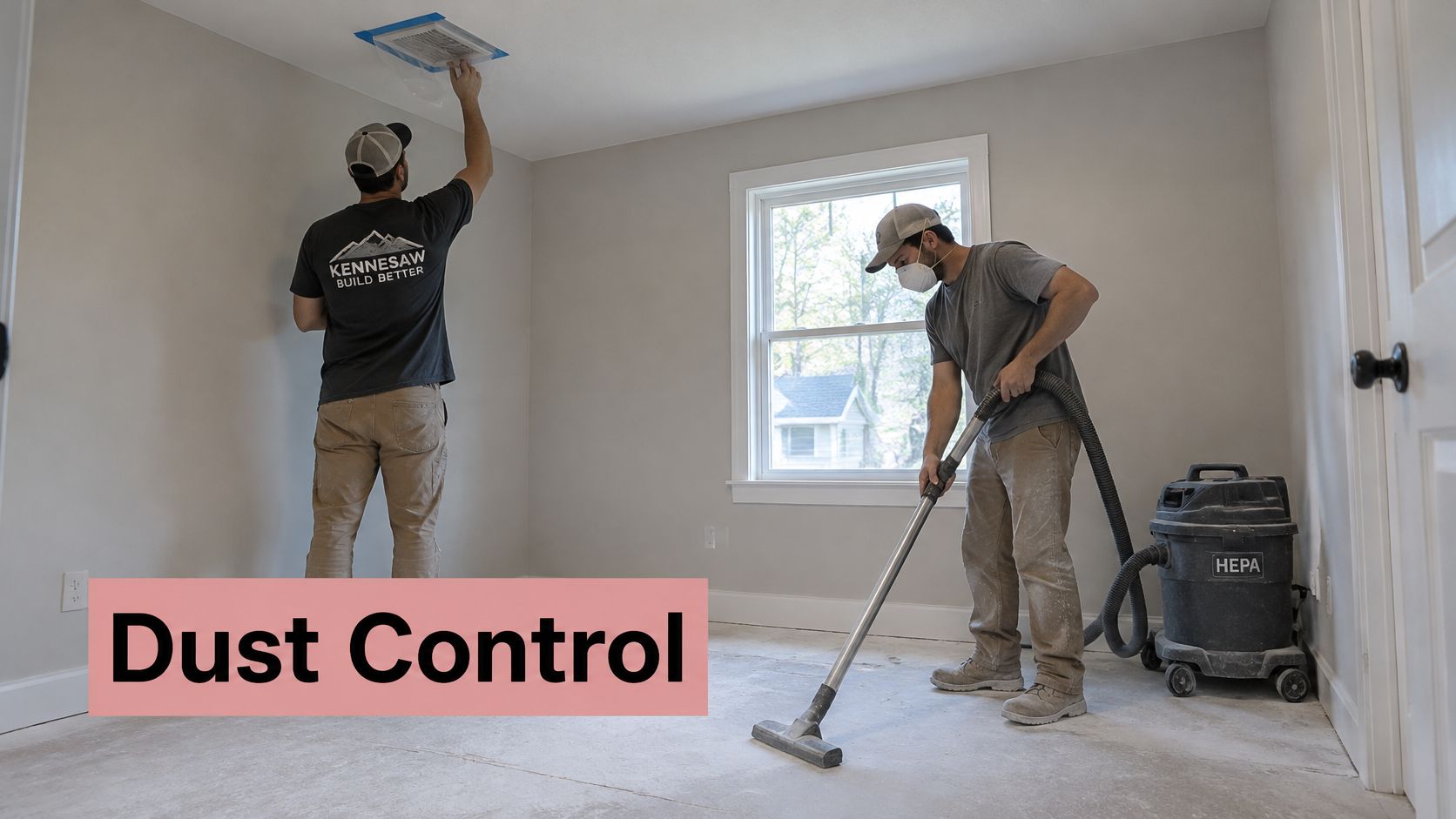
A sanded bedroom in Kennesaw
A homeowner opens the bedroom door after drywall sanding and sees dust on the window trim. The crew keeps the room isolated, leaves the HVAC off, and works through high surfaces, tracks, shelves, baseboards, and flooring before reopening it.
That sequence follows the EPA's Renovate Right cleanup guidance: maintain protection, HEPA-vacuum, then wet-wipe and wet-mop before dismantling containment.
The mistake: sweeping first with the door open. That can turn a bedroom assignment into cleanup in the nursery next door.
Painted trim in an older North Atlanta home
Here, the crew doesn't begin until the relevant paint-hazard questions are resolved. If the disturbance remains undocumented, ordinary cleaning pauses for a qualified professional rather than proceeding on appearance alone.
Once the area is suitable for the agreed cleanup, the crew bags debris in heavy plastic, HEPA-vacuums sills and floors, and damp-wipes appropriate surfaces until fresh cloths stop picking up visible residue. The EPA's lead-safe renovation cleanup instructions describe these collection and cleaning mechanics.
The mistake: treating paint-preparation dust like ordinary household dust. A quick sweep isn't an acceptable substitute for the project's required controls.
This video offers another visual reference for a post-construction cleanup discussion.
A bathroom remodel with a damp subfloor
After a plumbing repair, the tile looks clean but the exposed subfloor is still damp. The immediate job is water removal and drying, not polishing the bathroom for photographs.
Ventilate when safe, and use fans or dehumidification only when electricity is safe. Materials that can't be cleaned and fully dried need evaluation and removal rather than being concealed under new finishes.
The mistake: covering moisture with a cosmetic clean. A fresh-smelling bathroom doesn't establish that hidden materials are dry.
Before requesting a quote, label your project dust-only, possible lead, or water-damaged. That simple description helps prevent the wrong service from being booked.
Confirm Scope, Safety, and the Estimate First
Book after the hazard screen is resolved and the contractor can identify what remains. A useful estimate describes the rooms, methods, exclusions, and handover conditions, not just a total.
There's no useful blanket price for a house that hasn't been scoped. Floor area matters, but so do dust migration, clutter, new finishes, and the difference between light painting residue and extensive sanding.
What changes a residential post-construction quote
| Factor | How the job changes | What to say in the quote |
|---|---|---|
| Home size and room count | More surfaces and floor area add time | Bedrooms, bathrooms, and square footage |
| Dust load | Drywall sanding or masonry needs a fuller HEPA pass than light paint | What was sanded, cut, or demolished |
| Home age and disturbance | Older paint or disturbed insulation can stop ordinary cleaning | Year built and relevant test reports |
| Floors and nearby rooms | Carpet, stairs, and dust in adjacent rooms extend fine cleaning | Which rooms were open during work |
| Add-on areas | Fridge or oven interiors, garage, basement, and windows expand scope | Exact add-ons wanted |
| Access, clutter, products | Blocked rooms and product requests change labor | Entry notes, pets, and product preferences |
Turn the walk-through into a written agreement
For example, consider a home with a sanded bedroom, a dusty hallway, and an oven interior requested. The estimate should name the bedroom and hallway for full dust removal, identify affected adjacent rooms, and list the oven interior separately.
Before signing, confirm:
- Hazard status: Record the building age, disturbance, and relevant documentation.
- Cleaning method: Name HEPA vacuuming, wet wiping, and top-to-bottom order.
- HVAC responsibility: Agree on shutdown during dusty cleanup and who handles the filter.
- Insurance: Our team is professional, trained, and insured. This explanation of an insured cleaning service helps clarify why that matters.
- Entry arrangements: Give clear access instructions if nobody will be home.
- Re-clean terms: Notify us of an unsatisfactory cleaned area within 24 hours; we return to re-clean it at no additional cost.
- Acceptance check: Inspect sills and baseboards with a clean cloth before approving the completed work.
Choose the service that matches the condition
Our quote options include Deep Cleaning, One-Time, Move-In/Out, and Post-Construction cleaning, and we offer a free estimate. The written scope should distinguish construction cleanup from appliance interiors and other extras.
Recurring housekeeping belongs after construction residue is under control. Otherwise, each maintenance visit risks becoming another attempt to finish an unresolved renovation cleanup.
Aquastar Cleaning Services, LLC offers residential post-construction cleanup in Kennesaw and North Atlanta, with customizable scope for affected rooms and agreed add-ons. Visit Aquastar Cleaning Services, LLC to request a free written estimate, and include your project details, hazard documentation, and room checklist so the cleanup can be planned around the home's actual condition.