


The boxes are packed, the moving truck is booked, and you've just noticed grease around the cabinet handles and dust where the sofa used to sit. Your landlord's walk-through is approaching, but it's not clear which marks need cleaning and which were already there.
A move out cleaning service should help you answer that question before anyone starts scrubbing. The useful outcome isn't just a clean property. It's an agreed scope, a clear distinction between residue and wear, and a record of the condition you left behind.
What a Move Out Cleaning Service Covers Room by Room
Move-out cleaning scope by room
| Room | What the cleaner covers | Often missed |
|---|---|---|
| Kitchen | Oven and fridge interiors (add-on), cabinet fronts, range hood, sink and faucet | Cabinet pulls and door edges |
| Bathrooms | Tub or shower, toilet base, sink, mirror, exhaust fan cover | Grout lines and behind the toilet |
| Bedrooms | Closet shelves and rods, doors and frames, baseboards, window sills | Light switches and closet floors |
| Living and dining | Vacuumed carpets and rugs, trim, light switches, mopped hard floors | Blinds and door tracks |
| Laundry area | Appliance wipe-down, cobwebs removed, floors vacuumed | Behind and under appliances |
| Whole home | Ceilings, vents and ledges dusted top to bottom, entry doors and handles | Window tracks and HVAC registers |
This table defines the scope, not the final price. Accessible surfaces belong on the checklist, while appliance interiors, window work and other extras need explicit confirmation. Empty cabinet and drawer interiors should also be named rather than assumed.
A move-out clean is easiest to inspect when the rooms are empty. Boxes inside closets, food in the refrigerator and toiletries around the sink prevent cleaners from reaching the surfaces you're paying to have cleaned.
Look beyond the obvious surfaces
A cabinet front can look clean while its pull still has dried cooking grease underneath. Use a surface-compatible degreaser on a cloth, allow it time to soften the residue, and work around the pull with a soft detailing brush. Don't soak the hardware or let liquid collect along cabinet seams.
Bathroom grout behind the toilet presents a similar problem. A quick mop may pass over the surrounding floor without reaching the recessed line or the edge of the toilet base. A small nylon brush gives better access, but persistent discoloration may be staining or deterioration rather than removable dirt.
Our laundry-area cleaning includes wiping appliances, removing cobwebs and vacuuming floors with environmentally safe cleaning agents. Behind and beneath appliances still needs an access decision. Don't assume a cleaner will disconnect a washer or pull out a heavy dryer.
Practical rule: If a surface matters at handover, name it on the checklist. “Kitchen cleaned” is less useful than “cabinet fronts, pulls, door edges and sink cleaned.”
Control dust before finishing floors
The U.S. Environmental Protection Agency's indoor particulate matter guidance recommends damp dusting, ventilation and consideration of a HEPA-filtered vacuum to help capture particles rather than redistribute them. In practice, work from accessible high ledges and vent covers toward trim and floors.
Use damp microfiber on suitable hard surfaces, then vacuum carpet edges, closet floors and corners before mopping. Inspect HVAC registers and return grilles for settled dust, but don't confuse wiping a register with cleaning the ductwork. Residents with asthma or allergies should stay clear of dust-stirring work.
Check the result with light coming across the surface rather than directly at it. Side lighting makes a dusty shelf, greasy film or missed floor edge easier to see.
Print the table, walk through each room with your lease and move-in photos, and tick every item you've confirmed before booking.
What a Move Out Clean Costs and Why Prices Vary
A useful move-out quote starts with scope and condition, not square footage alone. Floor area tells a cleaner how much ground to cover. It doesn't reveal baked-on grease, pet hair along carpet edges or whether the refrigerator needs cleaning inside.
Consider two otherwise similar rentals. An empty property with maintained bathrooms needs different preparation from one with greasy appliances, crowded storage areas and construction residue. A single advertised price won't tell you whether both jobs include the same work.
Price factors and how they change a move-out quote
| Price factor | How it changes the quote | Example |
|---|---|---|
| Home size and bedroom count | More rooms mean more labor hours | Three-bedroom rental versus a studio |
| Visit condition | Heavy grease or neglect adds time; mold needs separate assessment and is excluded from our cleaning | Kitchen with baked-on oven grease |
| Add-ons | Fridge, oven, garage, basement and window cleaning are extra | Oven interior added to a standard clean |
| Carpets and rugs | Vacuuming is standard; carpet cleaning is a specialist service | Pet-stained carpet needing specialist cleaning |
| Pets and clutter | Pet hair and items to work around add time in every room | Dog hair under beds and sofas |
| Post-renovation dust | Fine residue needs HEPA vacuuming and wet wiping | Bedroom trim sanded before move-out |
| Booking type | Deep, one-time and move-in/move-out cleans are scoped differently | Deep clean versus move-out clean for the same unit |
Compare the work behind the total
Say you're moving out of a studio with a clean kitchen and clear floors. You may only need detailed surface cleaning and the specific extras required by your handover agreement.
Now consider the same studio after a cooking-heavy tenancy with a shedding pet. Degreasing the hood, detailing cabinet edges and extracting hair from carpet edges adds work even though the floor area hasn't changed. Fragrance won't remove that hair, and a quick appliance wipe won't address baked-on oven residue.
We provide free cleaning estimates, and our deep cleaning is available for houses, apartments and condos. Describe the property accurately so the estimate reflects its actual condition rather than an ideal version of it. Our guide to average maid service costs provides additional context when comparing cleaning categories.
Send enough detail for a useful estimate
Include the following with your request:
- Property details: Square footage, bedroom count and bathroom count.
- Current condition: Whether the property is empty, occupied or partly packed.
- Pets and residue: Hair, odors, visible grease or heavy bathroom buildup.
- Requested extras: Oven, refrigerator, windows, garage, basement or specialist carpet work.
- Photos: Clear views of the kitchen, bathrooms and any unusually dirty areas.
Don't pay for restoration disguised as more cleaning. Etched stone, worn flooring and damaged finishes need a different assessment, not repeated scrubbing.
Before choosing between offers, ask the question that makes the totals meaningful: Does the itemized quote list every room and add-on you need?
Deposit and Inspection Rules Renters and Landlords Check
A clean home can still lose deposit money if the file is weak. Inspectors compare removable residue against wear and damage, then match charges to evidence. Grease, soap film and pet hair are cleaning problems. Faded paint, traffic-worn carpet and broken blinds belong in a different conversation.
The Georgia Landlord-Tenant Handbook separates the condition a tenant must return from ordinary deterioration caused by normal use. Treat that line as the scope boundary before anyone labels every mark chargeable.
Cleaning issue versus wear and tear at move-out
| Condition | Classification | What to do |
|---|---|---|
| Grease on kitchen cabinets | Cleaning issue | Clean before the walk-through and photograph |
| Soap scum and hard-water film | Cleaning issue | Clean bathroom surfaces and fixtures |
| Pet hair in carpet | Cleaning issue | Vacuum thoroughly or book specialist carpet cleaning |
| Flattened carpet in walkways | Normal wear and tear | Document it; cleaning will not fix it |
| Faded paint from sunlight | Normal wear and tear | Document it; not a cleaning charge |
| Minor wall scuffs | Normal wear and tear | Clean if removable; note the rest |
| Holes in walls or broken blinds | Damage | Repair or replacement, not cleaning |
Use these examples to sort scope; extent, cause and starting condition still decide the close calls.
Separate the cleaning list from the repair list
Suppose sunlight has faded the paint beside a bedroom window. Photograph the area and compare it with the move-in report rather than asking a cleaner to scrub until the color matches. Abrasive cleaning could turn ordinary fading into finish damage.
Landlords should record cleanable residue separately from maintenance and replacement issues. A room-by-room approach to property management cleaning services helps keep a turnover scope focused on work cleaners can complete.
A receipt shows what you purchased. Condition photos show what was left. Keep both.
Check the rules where the property is located
State requirements differ. Some restrict routine cleaning deductions, require itemized statements or set photo and notice rules, so confirm the official tenant guidance for the property's state before the walk-through.
For a Los Angeles-area disagreement that remains unresolved, mediation for Los Angeles deposit disputes is one dispute-resolution option. It does not make California rules apply to a Georgia rental.
Keep a deposit-protection cleaning record containing dated before-and-after photos, the itemized scope, receipts and the completed checklist. Challenge any charge that describes wear as removable residue, and challenge it with the record rather than memory.
How to Clean and Disinfect Without Damaging Surfaces
Cleaning and disinfection are different jobs. Removing visible residue prepares a surface; applying a disinfectant according to its label addresses the product's specified microorganisms. Spraying everything indiscriminately isn't a better turnover method.
The CDC's home cleaning and disinfection guidance explains that dirt and impurities can reduce disinfectant effectiveness, so clean visibly dirty surfaces before disinfecting them. Routine cleaning may be sufficient in many household situations; use targeted disinfection when warranted rather than treating every wall and floor.
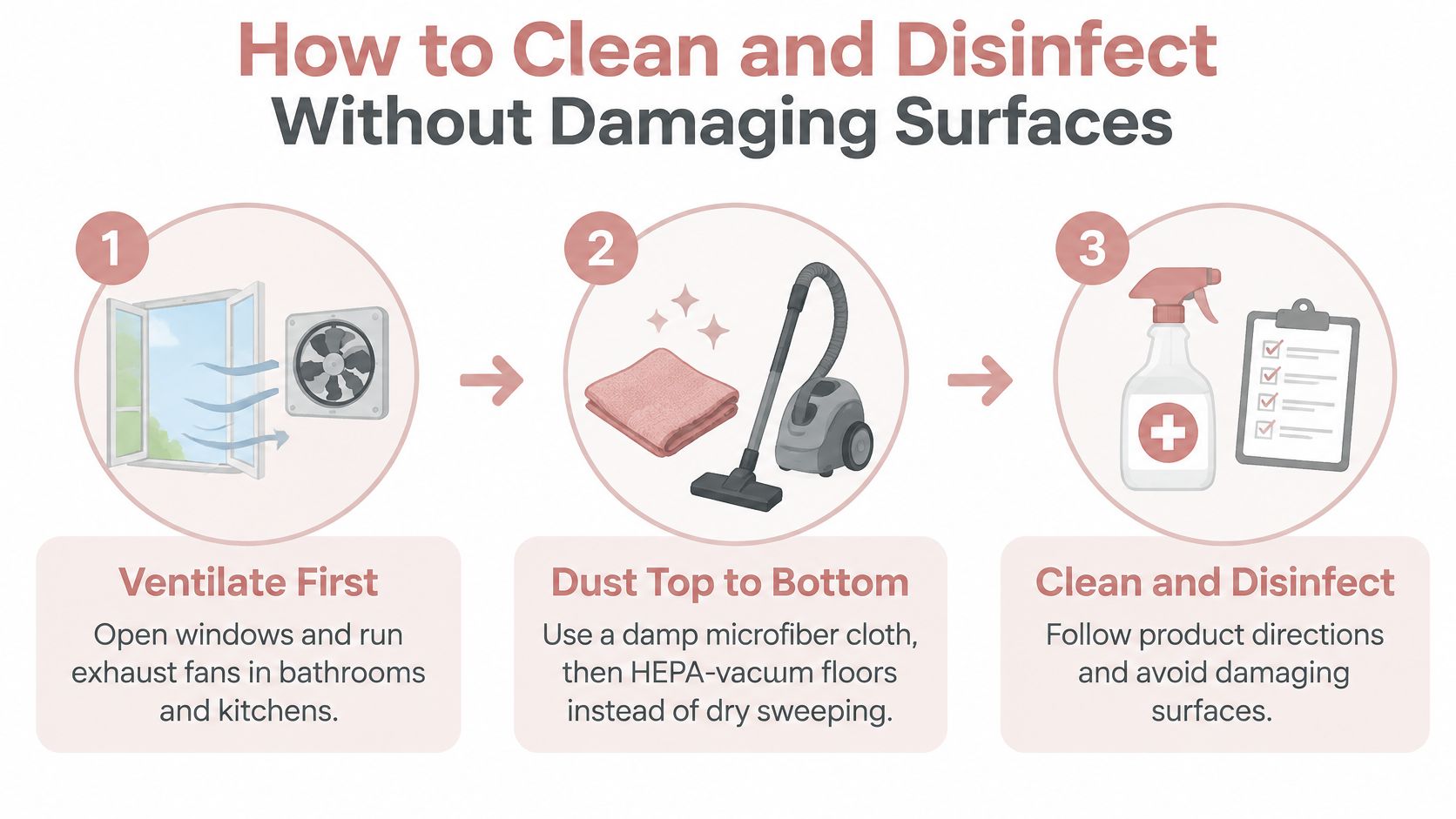
The basic workflow starts with ventilation and controlled dust removal.
Follow a surface-safe sequence
Ventilate first. Open windows when conditions allow and run kitchen and bathroom exhaust fans that discharge outdoors. This helps clear airborne residue and product vapors while you work.
Dust from high surfaces toward floors. Use a lightly damp microfiber cloth on compatible surfaces, then HEPA-vacuum floors rather than dry sweeping fine dust. Keep moisture away from electrical openings and unfinished materials.
Remove visible soil. Clean with suitable soap or detergent and water, using enough agitation to lift grease and grime. Avoid abrasive pads on glossy cabinet finishes, acrylic tubs and other scratch-prone surfaces.
Disinfect selectively. When disinfection is needed, prioritize compatible high-touch points such as door handles, cabinet pulls, faucets, toilet handles and stair rails. Use an EPA-registered product and follow its dilution, ventilation and protective-equipment instructions.
Time the wet contact period. The surface must remain visibly wet for the full label contact time. Wiping early can prevent the product from achieving its claimed result, so use a timer rather than guessing.
Finish as directed. Rinse or wipe when the label requires it, particularly on surfaces with food-contact restrictions. Don't assume air-drying is appropriate for every product and material.
Keep chemicals separate. Never mix bleach with ammonia or other cleaners. Use clearly identified products and clean tools rather than combining leftover solutions in a bucket.
Make the method easy to verify
A toilet handle illustrates the sequence. First remove visible grime with a suitable cleaner, then apply a compatible disinfectant and start the timer. Keep the handle wet for the stated period before completing the label's finishing instructions.
Choose low-odor products where practical, but don't use fragrance strength as a safety test. Household cleaning products can contribute to indoor-air pollution, and a product labeled eco-friendly still needs correct dilution, ventilation and surface compatibility. Never apply a disinfectant to a surface its label doesn't permit.
Our explanation of the difference between sanitizers and disinfectants can help you compare product purposes without treating the terms as interchangeable.
For any documented disinfection work, record pre-cleaning completed, product used, start time, required dwell time and final rinse or wipe. That record is more meaningful than a general statement that the property was sprayed.
Renovation Dust and When the Scope Grows
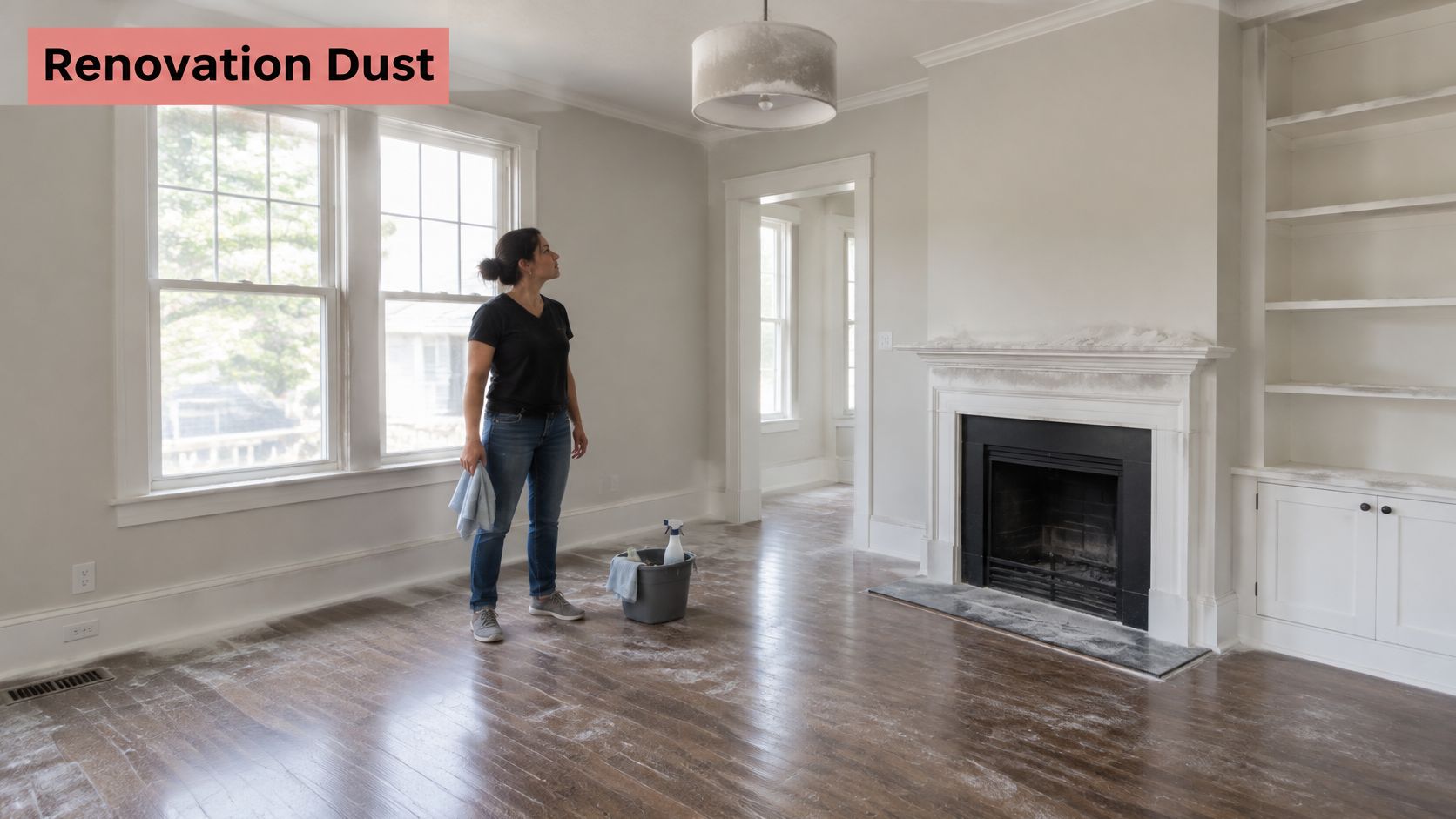
A bedroom repainted the week before handover can still fail its inspection. Fine dust settles on cabinet tops, door jambs and vent covers after the drop cloths come up, and an inspector dragging a finger across a ledge reads it as an unfinished clean.
Treat sanding residue as a separate task
EPA guidance for lead-safe DIY renovations specifies thorough mopping of uncarpeted floors, cleaning walls with a HEPA vacuum or damp cloth, HEPA-vacuuming remaining surfaces and objects, and wet wiping until disposable cloths come away clean, while warning that unsuitable household vacuums can release lead particles back into the air.
A room with recently sanded trim gets cleaned from high surfaces toward the floor, with dirty cloths replaced rather than dragged across fresh areas. Use controlled HEPA and damp-cleaning methods even when lead isn't confirmed, but don't treat a normal clean as proof that a suspected lead hazard is cleared. Sanding that uncovers mold pushes the job outside cleaning scope entirely.
Before work starts, clear the dust zone: box smaller items, shift the furniture you can move yourself, and plan your renovation storage if larger pieces would block access. Crews won't move furniture heavier than 25 lbs, so a partially cleared room leaves dusty surfaces untouched. While the room is empty, photograph paint overspray, tape bleed and sanding marks. Overspray on glass lifts off with the right method; scratched trim is wear that no clean fixes, and noting the difference up front keeps the walk-through focused on residue.
This video provides additional renovation-cleanup context.
Use a written construction dust cleaning scope with these inspection points:
- Upper surfaces: Cabinet tops, ledges and fixtures reachable within a 3-foot ladder limit.
- Detailed edges: Window sills, door jambs and baseboards.
- Final checks: Vent exteriors, floor edges and remaining visible residue.
When dust comes from active renovation rather than a single touch-up, treat it as a different job and request it as post-construction cleaning, rather than expecting a standard move-out scope to absorb it.
How to Choose a Bonded, Insured Move Out Cleaner
Compare providers by what they'll do, how they'll document it and which risks they can reasonably handle. A short quote that says “full clean” gives you less protection than a specific scope with clear exclusions.
Aquastar Cleaning Services, LLC is a family-owned company serving Kennesaw and North Atlanta since 1996, with move-in and move-out cleaning among our services. Our teams are insured and bonded, background-checked and professionally trained. Those credentials matter, but they don't replace agreement about the actual work.
Compare the same criteria
Use this checklist when evaluating competing offers:
- Insurance and bonding: Confirm both rather than treating the words as interchangeable. Our explanation of bonded versus insured cleaning services describes the distinction.
- Room-by-room scope: Get the included surfaces and extras in writing before booking.
- Handover documentation: Request a completed checklist and photos, and establish who will take and retain them.
- Products: Identify the proposed product categories. We offer eco-friendly options, including gentle, biodegradable solutions when requested.
- Service limits: Confirm furniture-moving, biohazard and height restrictions before planning access.
Don't assume a company automatically includes photo documentation or an inspection return visit. Agree on those details before purchase, and keep your own record if they aren't part of the service.
Product choice also needs to match the household. For a property that children or pets will enter soon, discuss residues, ventilation and access during cleaning rather than relying on an eco-friendly label alone.
Limits affect what can be reached
Our cleaners don't move furniture heavier than 25 lbs, clean biohazards such as mold, blood or animal waste, or climb ladders higher than 3 feet. These aren't tasks to add informally once the team arrives.
Suppose a dresser weighs 40 lbs and blocks the baseboard. Arrange for yourself or movers to reposition it before cleaning; don't assume extra cleaning time overrides the weight restriction. Likewise, a high ledge may require a separate access arrangement rather than a taller ladder brought out at the last minute.
Before approving a quote: Resolve blocked access and excluded work. Otherwise, you may pay for a visit that can't reach the area you wanted cleaned.
We offer quotes for Deep Cleaning, One-Time, Move-In/Out and Post-Construction cleaning. Select the category that matches the condition and purpose of the visit, then use the room list to make the scope precise.
When to Book and Confirm Your Move Out Clean
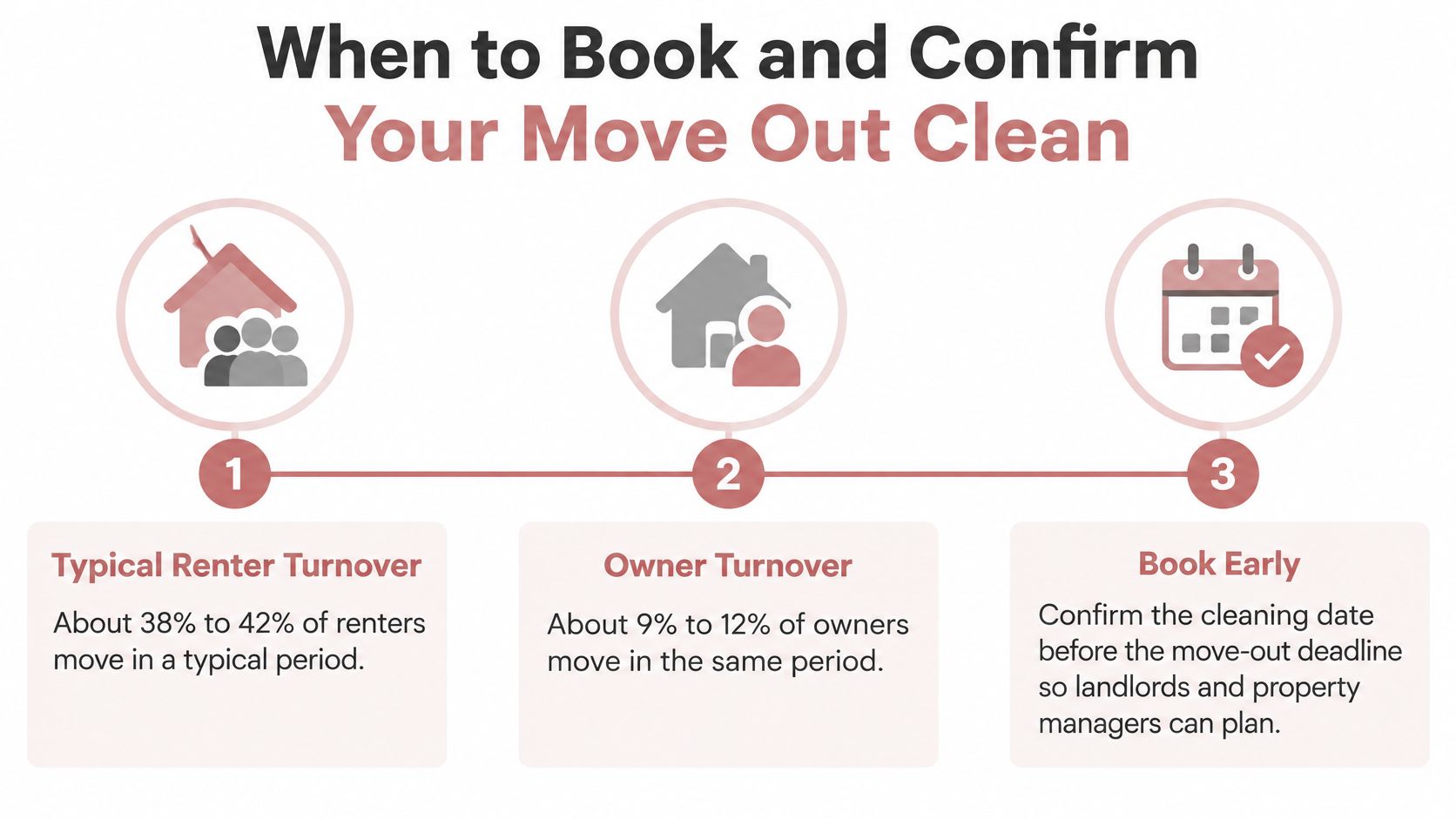
Rental turnover creates recurring cleaning deadlines. A U.S. Census Bureau historical analysis reports renter mobility rates generally ranging from 38% to 42%, compared with 9% to 12% for homeowners, figures drawn from that historical record rather than a forecast for any single property.
That turnover is why move-out slots tighten at month end. Book early, and treat every confirmation as deposit documentation. The itemized estimate, baseline photos and entry notes are what let you separate removable residue from normal wear and damage if a dispute follows the walk-through.
Work backward from key handover
- Several weeks ahead: Request an itemized estimate and compare competing quotes against the same room list.
- During packing: Photograph baseline conditions, remove personal items and clear surfaces.
- Before the visit: Send entry instructions and flag any access restrictions. You don't need to be home; many of our clients arrange entry so they can return to a finished property.
- On cleaning day: Confirm access and the agreed time window in writing.
- Before returning keys: Complete the walk-through and keep the finished record with your move-out file.
For example, a landlord might schedule cleaning the morning after the tenant leaves, with an afternoon inspection only if the confirmed scope and time window allow it. Leave a buffer when possible rather than promising immediate handover.
Cleaning companies fielding the seasonal surge of move-out inquiries can compare approaches in ThroughTheGrapevine.ai's guide to home service lead generation in 2026. On the renter's side, what matters is an explicit booking confirmation well before moving day.
Book by phone or through our online quick quote form, and select Move-In/Out so the estimate is built around a handover-ready scope rather than a general refresh.
Copyable checklist: ☐ Scope confirmed ☐ Quote itemized ☐ Photos taken ☐ Entry arranged ☐ Walk-through booked
Aquastar Cleaning Services, LLC offers customized move-in and move-out cleaning for homes in Kennesaw and North Atlanta, with appliance interiors and other additional services available to match your scope. Visit Aquastar Cleaning Services, LLC to request a free estimate, and include your room checklist, condition photos and handover date so we can help you plan the right clean.