
You wipe the same splatter from the backsplash for the third time, yet the kitchen still smells faintly sour near the trash bin. The counters look presentable, but the oven door is cloudy, the grout beside the stove has darkened, and nobody can remember the last time the range hood filter came out.
That's the point where routine housekeeping stops being enough. A kitchen deep cleaning service should do more than create a temporary shine. It should remove built-up grease, reach neglected surfaces, lower contamination on food-contact and high-touch areas, and leave you with a realistic plan for keeping the kitchen under control afterward.
What a Kitchen Deep Cleaning Service Really Delivers
A quick wipe-down treats what you can see. A professional reset deals with the layers underneath, including baked-on grease, mineral scale, food residue, and contamination in damp or frequently touched areas.
A proper scope may include:
- Range hood degreasing: Crews remove and clean accessible baffles, the hood exterior, and surrounding surfaces where grease settles.
- Appliance interiors: The microwave, oven, refrigerator seals, shelves, and other agreed interior areas receive detailed attention.
- Sink and faucet restoration: Descaling removes mineral deposits, while scrubbing targets the basin, drain area, overflow, and faucet joints.
- Cabinet and touchpoint cleaning: Handles, switch plates, pull-outs, and cabinet fronts are washed and disinfected according to the material.
- Floor and grout work: Tile grout receives mechanical agitation rather than a quick mop that spreads dirty water across the surface.
- Waste-area sanitation: Trash pull-outs, recycling bins, and the floor behind or beneath them are cleaned instead of masked with fragrance.
The hidden areas matter because ordinary kitchens can carry substantial microbial loads even when they look normal. In one multi-household study, 67.0% of food-preparation surfaces, 87.0% of kitchen sink surfaces, and 87.5% of tap knobs showed E. coli contamination. The same research measured total aerobic bacterial counts of 3.3 log CFU/cm² on food-preparation surfaces, 3.7 log CFU/cm² on sink surfaces, and 5.1 log CFU/cm² on tap knobs (multi-household kitchen contamination study).
The places routine wiping misses
Drip pans, sink overflows, refrigerator gaskets, dishwasher door folds, sponge holders, and the underside of cabinet edges rarely receive enough attention during a normal visit. These locations collect moisture and residue, which gives grime a place to remain after the visible surface has been wiped.
Older domestic-kitchen research reached a similar practical conclusion. In a study of 46 kitchens, sink-area surfaces and cleaning cloths had the highest bacterial counts, and rinsing after detergent cleaning was considered critical for removing bacteria (domestic kitchen contamination research).
Practical rule: Ask for a written scope that names neglected areas, not just “full kitchen cleaning.” A polished countertop doesn't prove that the sink overflow, hood filter, or refrigerator gasket was addressed.
A realistic service also sets expectations about access, condition, and time. A heavily greasy kitchen with a crowded layout takes more work than a lightly used open kitchen. The crew size and session length should be confirmed before booking, rather than guessed from a generic online price.
For a clear example of the kind of room-by-room work a local provider may include, review Aquastar's kitchen cleaning services. The useful question isn't whether the kitchen will look better. It's whether the service resets the surfaces that affect food handling, touch contamination, odor, and everyday maintenance.
Routine Cleaning vs a True Kitchen Deep Cleaning Service
Routine cleaning protects the kitchen's day-to-day appearance. Deep cleaning changes the condition of surfaces that routine visits usually leave alone.
| Task | Routine Cleaning | Kitchen Deep Cleaning Service |
|---|---|---|
| Counters and backsplash | Wipe visible crumbs and splashes | Degrease, scrub seams, and detail edges |
| Stovetop | Surface wipe-down | Remove grates or accessible parts, treat cooked-on residue |
| Oven | Exterior wipe | Clean the interior and loosen carbonized spills |
| Range hood | Exterior dusting or wipe | Degrease accessible filters, housing, and surrounding wall |
| Sink | Rinse and wipe | Descale basin, faucet, overflow, drain area, and disposal zone |
| Floors | Vacuum or mop | Edge detail, grease treatment, and thorough mopping |
| Cabinets | Spot-clean obvious marks | Wash fronts, handles, lower edges, and selected interiors |
| Waste bins | Empty | Wash and sanitize bins, pull-outs, and surrounding floor |
| Appliances | Exterior wipe | Clean agreed interior areas, gaskets, trays, and dispenser surfaces |
Consider a family of four cooking dinner every night. A routine visit may remove loose crumbs and fresh splashes, but repeated frying and boiling leave a thin film on the hood, cabinet fronts, backsplash, and nearby floor. Each layer makes the next one harder to dissolve, particularly where heat has partially baked the grease onto metal or tile.
A true reset may involve pulling the stove out to clean behind it, brushing grout, descaling the faucet aerator, washing the microwave interior, emptying the toaster crumb tray, sanitizing trash and recycling bins, wiping baseboards and switch plates, and disinfecting the refrigerator water dispenser. Those tasks aren't decorative extras when food residue and frequent hand contact are involved. They're the difference between maintaining a clean kitchen and trying to recover one.
Which service fits your situation
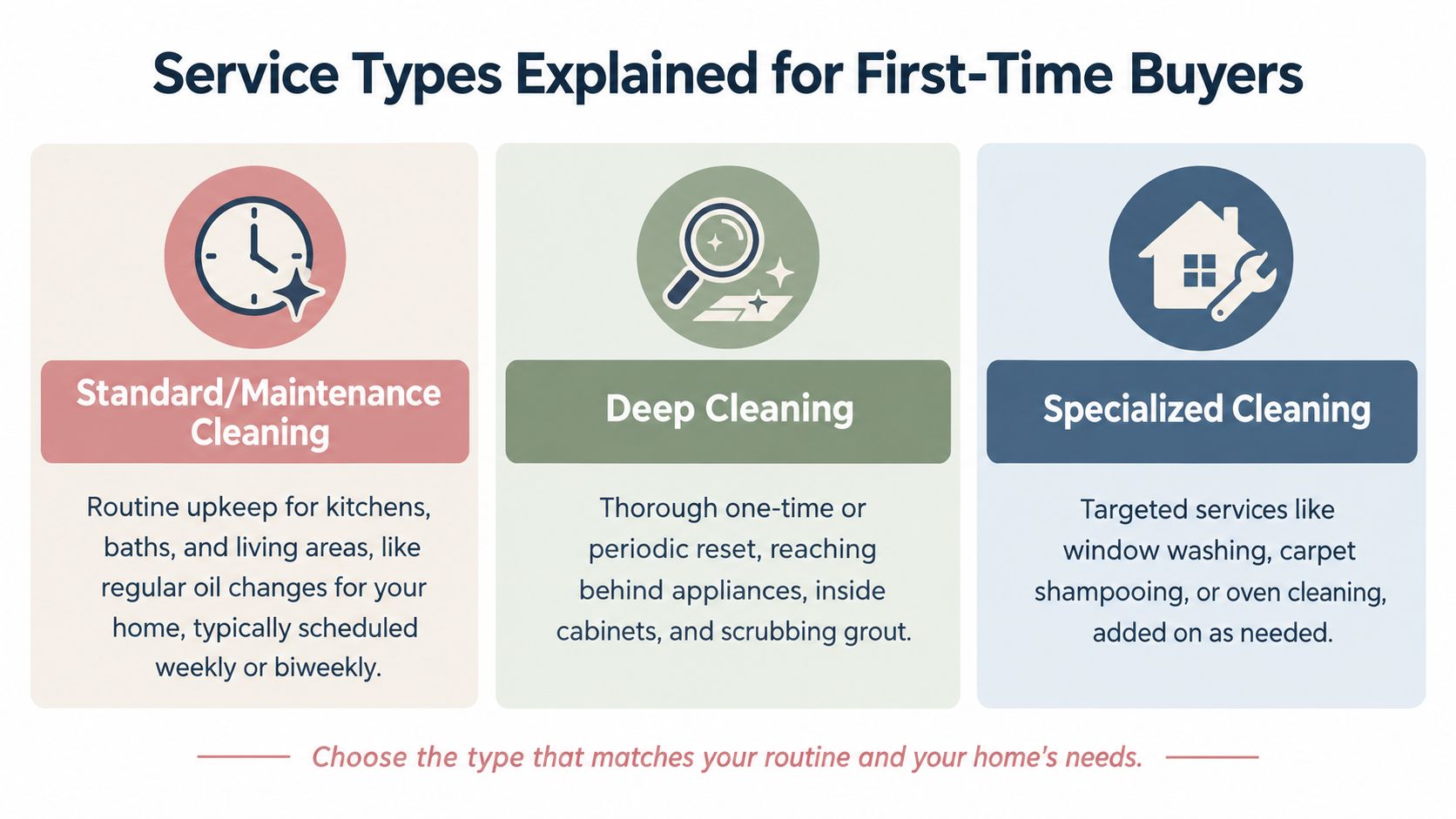
Choose routine maintenance when the kitchen is already under control and the issue is daily dust, crumbs, fingerprints, and fresh spills. Choose a one-time deep clean when buildup has become visible, odors remain after ordinary cleaning, or neglected zones are affecting how the room feels and functions.
Many households need both. A deep clean establishes the baseline, while recurring visits prevent grease and residue from returning to the same level. A quarterly reset can make sense for a busy cooking household, but the right cadence depends on traffic, cooking habits, pets, and climate.
A useful checklist for discussing that first reset is this deep cleaning checklist. Use it to mark priority areas before requesting a quote, so the estimate reflects actual work rather than a vague promise to “clean everything.”
Step-by-Step Process Professional Crews Follow
Order matters because cleaning from the bottom upward creates rework. Loose dust falls, dirty water splashes, and degreaser needs time to work before a technician wipes it away.
A typical example is a three-hour kitchen deep clean handled by a two-person crew in a Kennesaw ranch home. The exact timing changes with condition and access, but the sequence stays consistent.
Start dry, then work downward
The crew begins with dry removal. They sweep ceiling corners, dust light fixtures, remove cobwebs, and collect loose debris before applying wet products. This prevents dry crumbs and dust from turning into muddy residue on freshly cleaned surfaces.
Next come the upper areas, including cabinet fronts, the hood exterior, the top of the refrigerator, and the microwave interior. A microwave may be cleaned before countertops because loosened crumbs and splashes can fall during the process.
The team then handles appliances. They clean the oven interior, treat the range top and drip pans, pull the stove forward when the floor and layout allow it, and wipe the refrigerator exterior and gasket. Crews should use materials suited to the appliance finish, rather than aggressive scrubbing that damages enamel, stainless steel, or rubber seals.
The sink comes later because it becomes a collection point for runoff and debris. Technicians descale the faucet, scrub the basin and overflow, and refresh the disposal area where appropriate. Counters and backsplash follow, including grout brushing between the stove and preparation area.
Control dwell time and cross-contamination
Degreasers work better when they remain wet for the product's recommended dwell time. Spraying and immediately wiping often removes the loose surface film but leaves the bonded layer behind. Mechanical agitation from a suitable brush or pad completes the job.
Trash bins are cleaned outside-in, with attention to lids, handles, rims, pull-outs, and the floor below. Floors come last, first vacuumed and edge-detailed, then mopped with an appropriate degreasing solution.
Food-contact surfaces require a defined sequence: pre-cleaning, washing, rinsing, sanitizing, and air-drying. Detergent residue can reduce chlorine sanitizer effectiveness, and one extension guideline specifies bleach sanitizers at 50 to 100 ppm for food-contact surfaces, with label-specified contact time before wiping or air-drying (food-contact sanitizing guidance).
For a closer look at the responsibilities that should appear in a professional scope, see this guide to house cleaner duties.
Industry guidance also emphasizes cleaning, rinsing, disinfecting according to label directions, and sanitizing food-contact surfaces before reuse. Some foodservice sanitizers require roughly 30 seconds to 1 minute of wet contact time, so a crew that wipes every surface instantly may be moving too quickly (food hygiene cleaning standards).
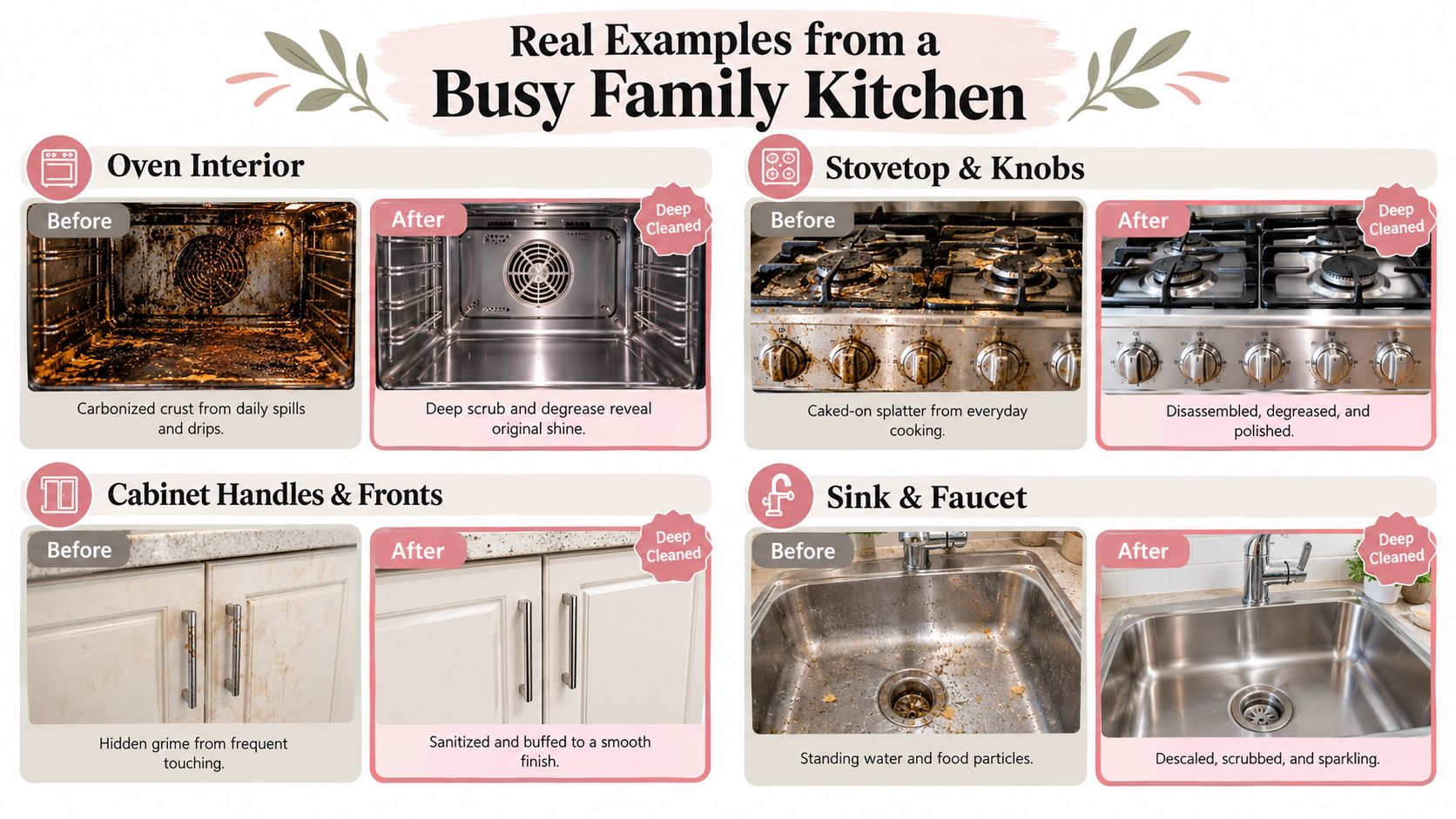
Real Examples from a Busy Family Kitchen
The most revealing results often appear in four areas that receive plenty of daily use but little detailed attention. Each one can look merely “a bit dirty” until the crew works on it.
The oven usually starts with dark carbonized spills on the floor and walls. If smoke begins carrying residue into the room or adjacent cabinetry, the problem has moved beyond appearance. The crew removes racks where possible, applies a product compatible with the oven's finish, allows it to dwell, and uses non-damaging agitation to lift baked-on material.
Afterward, the oven may not look factory-new if the enamel is permanently stained, but loose carbon and greasy residue should be gone. That distinction matters. A responsible cleaner won't promise to reverse heat damage that cleaning cannot remove.

Four zones worth inspecting
The range hood filter often carries a sticky film that homeowners don't notice because it sits above eye level. A crew removes accessible filters, treats them with a suitable degreaser, rinses them thoroughly, and cleans the hood housing and nearby backsplash. The visible change is less tackiness on surrounding surfaces, and the practical benefit is less grease being redistributed during cooking.
The trash area can have a narrow drip line beneath the bin, a sticky pull-out floor, and odor around the base. Ordinary spray-and-wipe cleaning may freshen the surface without removing the residue in seams and corners. Technicians wash the bin, lid, rim, handles, pull-out frame, and floor, then dry the area before replacing the container.
Tile grout between the stove and prep counter is another common trouble spot. Food splashes darken porous joints, while mopping can smear residue rather than lift it. A grout brush, controlled product application, rinsing, and drying produce a more meaningful reset than another pass with a damp mop.
Stovetop controls and cabinet handles show how frequent touch creates a separate cleaning need. Grease transfers from hands to knobs and pulls, then attracts dust. The crew details the seams around controls, washes cabinet fronts, and sanitizes touchpoints with a product appropriate for the surface.
The best before-and-after result isn't always the brightest shine. It's the removal of residue from the places hands, food, moisture, and heat meet.
Ask the crew to point out permanent staining, damaged grout, cracked seals, or corroded metal. Deep cleaning can restore hygiene and appearance, but it can't repair a failed gasket or replace a surface that has deteriorated.
Pricing Factors and Sample Estimates
A kitchen deep cleaning quote changes with the work required, not the room's name. Square footage matters, but layout complexity, appliance access, grease level, clutter, the last professional clean, and selected interior add-ons often matter more.
For a North Atlanta kitchen measuring 180 to 220 square feet, a written estimate should separate labor, the base scope, and optional appliance work. Because providers use different pricing models, there isn't one honest universal price range to publish without a specific company, condition report, and scope.
What should move the estimate
A flat-rate provider may price by kitchen size and condition. An hourly provider may apply a minimum visit, while a tiered package may include selected appliances and charge separately for others. All three models can work if the quote states what the customer receives.
| Scope Item | What's Included | Typical Price Range |
|---|---|---|
| Base kitchen scope | Surfaces, cabinet fronts, sink, backsplash, floors, touchpoints, and agreed accessible areas | Provider-specific written quote |
| Oven interior | Rack removal where possible, interior degreasing, residue removal, and wipe-down | Provider-specific add-on |
| Refrigerator interior | Shelves, drawers, gasket, interior walls, and dispenser area where accessible | Provider-specific add-on |
| Dishwasher interior | Door edges, gasket, accessible filter area, and interior wipe-down | Provider-specific add-on |
| Heavy grease | Extra dwell time, agitation, rinsing, and repeated passes | Condition-based surcharge |
| Post-renovation residue | Fine dust, adhesive, grout haze, or construction-related residue | Condition-based surcharge |
The phrase “typical price range” in a quote should mean something concrete. If a company can't explain whether oven interiors, hood filters, grout, and trash pull-outs are included, compare the scope before comparing the total.
Red flags in a low estimate
An unusually low hourly rate may reflect a shorter visit, fewer technicians, no appliance interiors, or a basic wipe-down presented as deep cleaning. Ask whether degreasing products receive proper dwell time, whether food-contact surfaces are rinsed before sanitizing, and whether the crew brings separate tools for bathrooms and kitchens.
You can also use this cleaning service cost guide as a framework for the questions to ask, not as a substitute for a property-specific quote. The strongest estimate identifies exclusions, access limits, heavy-condition fees, and the process for approving extra work before it begins.
Eco-Friendly Products and When Stronger Agents Are Still Needed
Green cleaning works when the product matches the soil and the technician uses enough dwell time and mechanical action. It fails when “eco-friendly” becomes a label used to justify a quick spray and wipe.
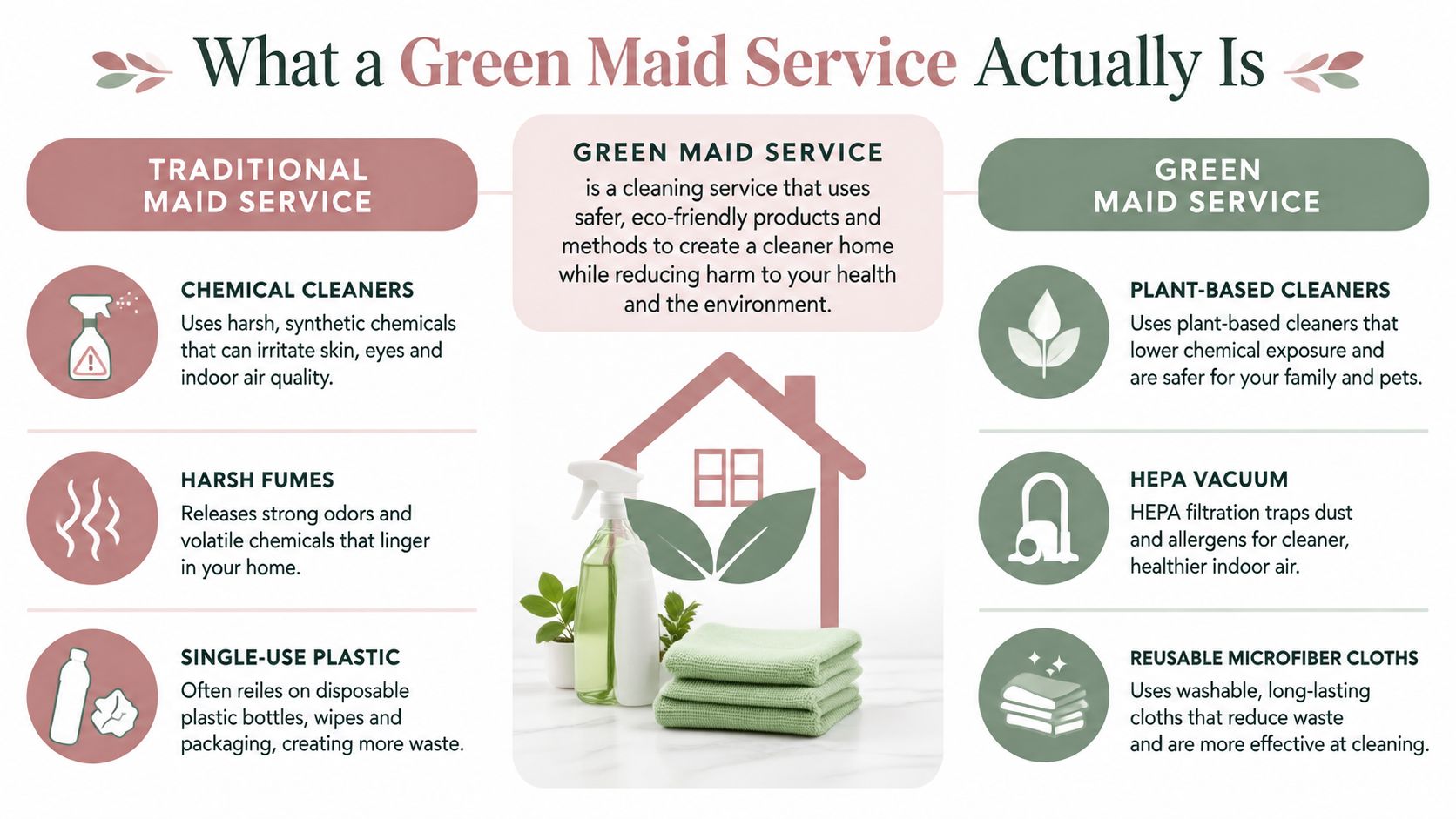
For a household with children, pets, or allergy-sensitive residents, a crew might choose a hydrogen peroxide-based degreaser instead of a caustic lye solution. Citric acid can replace a hydrochloric acid spray for many mineral-scale problems, and microfiber systems can reduce the total chemical volume by improving soil pickup.
These swaps can help protect food-preparation surfaces, reduce harsh fumes, and limit unnecessary chemical discharge. They don't remove the need to rinse surfaces properly, follow product directions, ventilate the area, or keep wet products away from children and animals.
Match the agent to the problem
A mild product may handle fresh grease but struggle with carbonized oven residue. Mineral scale may respond to citric acid, while a heavily neglected surface may require a stronger alkaline formulation and longer controlled dwell time.
The honest limits matter:
- Cutting boards: Use an appropriate food-contact sanitizer, such as an NSF-rated product, when the material and label call for it.
- Severe oven carbon: Mineral spirits or an alkaline oven cleaner may be considered for extreme buildup, but only with careful compatibility, ventilation, and label compliance.
- Porous grout with mold: Chlorine-based remediation may be necessary when green methods can't fully restore the porous material.
Food-contact surfaces need the correct sequence after any cleaner. Wash away soil, rinse detergent residue, apply sanitizer according to the label, and allow the required contact time before drying or reuse. A “natural” product isn't automatically a sanitizer, and a strong disinfectant isn't automatically suitable for every food-contact surface.
Homeowners who want more practical guidance on protecting cabinetry and choosing cleaning methods can browse The Cabinet Coach tag page. When interviewing a crew, ask which product categories they bring, where they use stronger agents, and how they prevent chemical residue from remaining on preparation surfaces.
Aquastar Cleaning Services, LLC offers household cleaning with biodegradable solutions available when requested, along with customizable plans and appliance add-ons. Its non-toxic house cleaning service information can help families prepare specific product questions before booking.
How to Prepare Your Kitchen Before the Crew Arrives
Use the night before the appointment to remove obstacles, not to deep-clean the room yourself. Clear countertops of small appliances, paperwork, school bags, and loose items so technicians can work continuously across the surface.
Empty the dishwasher. That gives the crew somewhere to place cleaned items and allows a full cycle if the service includes it. Pull the trash and recycling bins to the curb or another approved location, which removes odor and gives technicians access to the floor and bin area.
A simple preparation list
- Leave priority items out: Keep only the objects you want cleaned inside the oven, refrigerator, microwave, or cabinets.
- Write the priorities down: Tape a note to the refrigerator naming the zones that matter most, such as the oven, grout, or baseboards.
- Clear upper storage: Move items from the top of the refrigerator and range hood to the dining table.
- Open access: Open side gates and pet areas if the crew needs to move equipment through them.
- Secure pets: Place animals in a quiet bedroom or another safe area during the visit.
- Reduce interruptions: Silence smart speakers if you work from home and need a quieter appointment.
Ask whether the team needs the oven and refrigerator empty, whether the stove can be moved safely, and which items count as add-ons. Those answers prevent lost time and help the crew spend the appointment on the work you value.
Booking, Service Area, and What to Expect After
Book online or by phone with enough notice for your preferred date. During slower seasons, a 48-hour notice window may be workable, while peak periods can require three to five business days for a two-person crew, depending on local availability.
A typical local service area may cover a 25-mile radius around Kennesaw, including Marietta, Acworth, Woodstock, and parts of Smyrna. Homes outside that zone may receive a small travel surcharge, so confirm the service boundary before accepting the estimate.
The appointment experience
Expect a confirmation text on the morning of service, an arrival window, and photo identification for the technicians. A digital walkthrough before and after the job gives both sides a record of priority zones, access limitations, and the finished condition.
A provider may also offer a 48-hour satisfaction guarantee, allowing the crew to return and reclean a zone that doesn't meet the agreed standard. Read the terms carefully, especially exclusions for permanent stains, damaged materials, inaccessible areas, and tasks outside the written scope.
The deep clean should start a maintenance cadence, not end the conversation. Schedule routine visits every four to eight weeks according to household traffic, then set a calendar reminder for the next quarterly deep clean when that interval fits your cooking habits and buildup pattern. Research on kitchen surfaces also shows why timing matters: in a 2025 year-long field study across eight Chinese cities, some bacteria remained below safe thresholds for 15 to 30 hours after disinfection in winter, while that window narrowed to 3 to 6 hours in summer (kitchen-surface persistence research). A deep clean resets conditions, but cooking, touch, moisture, and temperature begin changing them again.
When you request a quote, send photos of the oven, hood, sink, grout, and refrigerator interior. Ask for the written scope, appliance add-ons, product approach, arrival process, and follow-up policy before you book.
Aquastar Cleaning Services, LLC provides recurring housekeeping, one-time kitchen deep cleaning, interior appliance add-ons, and customizable cleaning plans for Kennesaw and North Atlanta homes. Visit Aquastar Cleaning Services, LLC to request a quote and set up a kitchen reset followed by maintenance that fits your household.