


A child spills juice across the living room, a dog tracks mud over the hallway, and your first instinct is to grab the strongest spray under the sink. On hardwood, that instinct can cause the damage it was meant to fix. Too much water can enter board joints, while the wrong cleaner can dull or weaken the finish. Guidance from the National Wood Flooring Association puts the emphasis on dry soil removal, controlled moisture, and finish-compatible products.
These best ways to clean hardwood floors match the method to the problem. You'll find practical options for daily dust, sticky spills, pet accidents, dull traffic lanes, post-construction residue, and floors that need restoration rather than another round of mopping. The right choice depends on your household, the floor's finish, and whether you're removing surface soil or correcting damage.
1. Dry Microfiber Sweeping and Dusting
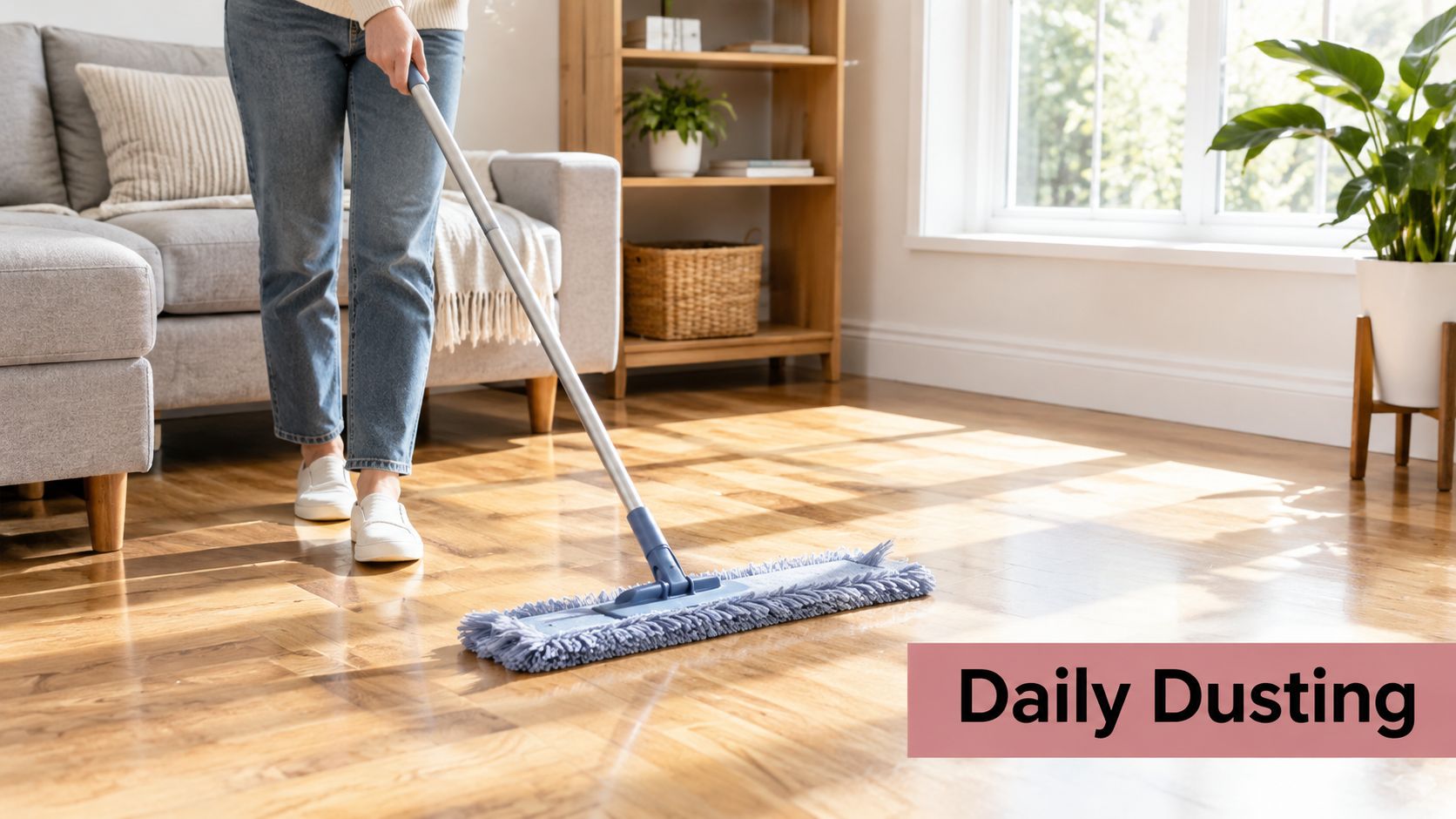
Dry microfiber cleaning is the safest starting point for almost every hardwood floor. A microfiber dust mop captures dust, pet hair, and loose grit without adding moisture, and it helps prevent abrasive particles from being dragged across the finish. The NWFA maintenance guidance recommends sweeping, dust-mopping, or vacuuming with a bare-floor setting, not using a rotating carpet beater bar.
This method fits a busy family home where shoes, crumbs, and pet hair collect around the kitchen and entryway. For example, a family with two dogs might dust-mop the main traffic lanes each day, then vacuum the remaining rooms with the brush roll switched off. That removes grit before foot traffic presses it into the coating.
Use dry cleaning before every wet method
A swivel-head microfiber mop reaches baseboards and corners more easily than a stiff broom. Work in sections, and shake out or replace the mop head when it becomes loaded with dust. Otherwise, you'll redeposit soil instead of removing it.
A post-construction cleanup needs the same discipline. Fine drywall dust should be collected with microfiber or a suitable hard-floor vacuum before any damp pass. Wetting that dust first can spread a film across the boards and make the final cleaning harder.
Practical rule: Remove dry soil first. Wet cleaning should deal with residual film, not loose sand and grit.
Wash microfiber heads regularly in hot water, but skip fabric softener because it can reduce the fibers' ability to collect particles. In a recurring housekeeping visit, dry dusting also gives the cleaner a chance to notice loose boards, finish wear, or a new stain before it becomes a larger problem. For extra dust-control ideas, see this guide to dusting with dryer sheets.
2. pH-Neutral Hardwood Floor Cleaner with Minimal Water
When dry cleaning leaves a dull film or tracked-in residue, use a hardwood cleaner with controlled moisture. Manufacturer guidance for engineered hardwood commonly specifies a pH-neutral cleaner around pH 6–8, applied to the cloth or microfiber pad rather than poured directly onto the floor. Work in small sections, then dry the surface immediately, as described in this engineered hardwood care guide.
This approach suits a household with pets that needs more than dusting but doesn't want residue from repeated heavy washing. A homeowner might spray the approved cleaner onto a microfiber pad, wring it until barely damp, and clean one small section at a time. The floor should never have standing water, visible pooling, or a wet sheen that remains after the pass.
Match the product to the finish
Read the installed flooring or finish manufacturer's instructions before choosing a cleaner. A sealed polyurethane floor may accept a product labeled for that finish, while an oil-finished, waxed, or unfamiliar surface may need a different process.
For a newly refinished floor during move-in cleaning, product compatibility matters more than fragrance or cleaning strength. Test the cleaner in an inconspicuous area first. Stop if the finish turns cloudy, tacky, or discolored, and don't combine products to create a stronger mixture.
- Apply to the mop: Control moisture by putting the cleaner on the cloth or pad, not directly on the boards.
- Work with the grain: Small sections make it easier to avoid missed residue and re-walking a damp area.
- Dry as you go: A clean microfiber cloth can remove remaining moisture and streaks immediately.
Seniors often prefer this method because it keeps floor disturbance low and avoids carrying a heavy, saturated mop. Aquastar's advice on safe floor cleaners for dogs also supports choosing a mild, low-residue product and using as little liquid as the finish requires. For another regional perspective, compare these wood floor cleaners for Richmond.
3. Spot Cleaning and Targeted Stain Treatment
Saturday morning, the floor is mostly clean, but one problem spot keeps grabbing your eye. Handle the mark itself, not the whole room. Spot cleaning keeps water off good boards and lets you solve the actual mess without dragging it wider.
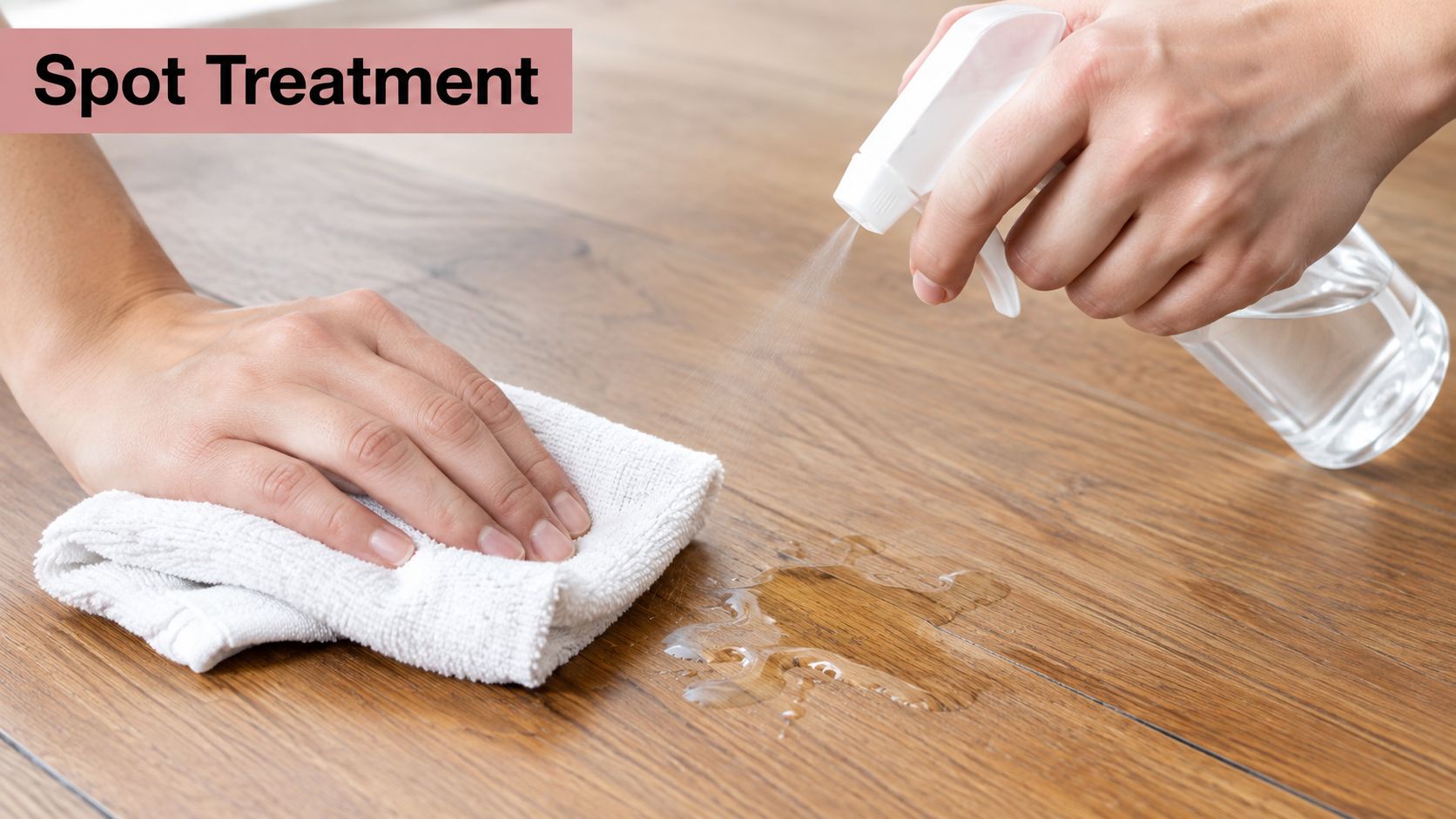
A child drops juice near the fridge. Blot first with a white microfiber cloth, then put a small amount of finish-compatible cleaner on the cloth, not the floor. Work from the outside in so the sticky edge does not spread. Dry the area right away and check the board seams before you walk off.
The right fix depends on what landed there.
Fresh pet urine, dried pasta sauce, nail polish, and a pale ring from a sweating glass all need different handling. Blot organic messes before you clean them. Soften dried residue instead of picking at it, because scraping can mark the finish faster than the spill did. If you are dealing with odor as well as residue, treat those as separate jobs. On sealed hardwood, an enzymatic product can help with organic residue, but use it lightly and remove it as the label directs.
I stick to white cloths for spot work. Colored rags can bleed when cleaner or solvent hits them, and the last thing you want is a fabric dye stain on oak or maple. Test any cleaner in a hidden spot first, especially on floors with an older or uncertain finish.
For greasy splatter by the stove, use only a product approved for that finish and keep the damp area tight to the mark. For dried food under a dining chair, give the residue time to soften, then wipe it away in short passes with the grain. For nail polish, skip random solvents and use a finish-safe method, such as this guide on getting nail polish off hardwood floors.
Water rings are their own category. A light mark may lift with gentle treatment if it has not moved past the finish, but hard rubbing often leaves a dull patch larger than the original ring. If the mark stays put after careful spot cleaning, you are probably looking at finish damage, not dirt.
This approach works well in move-out cleaning. Instead of damp-cleaning every room again, treat the scattered marks that buyers and landlords notice.
4. Buffing and Polishing for Finish Restoration
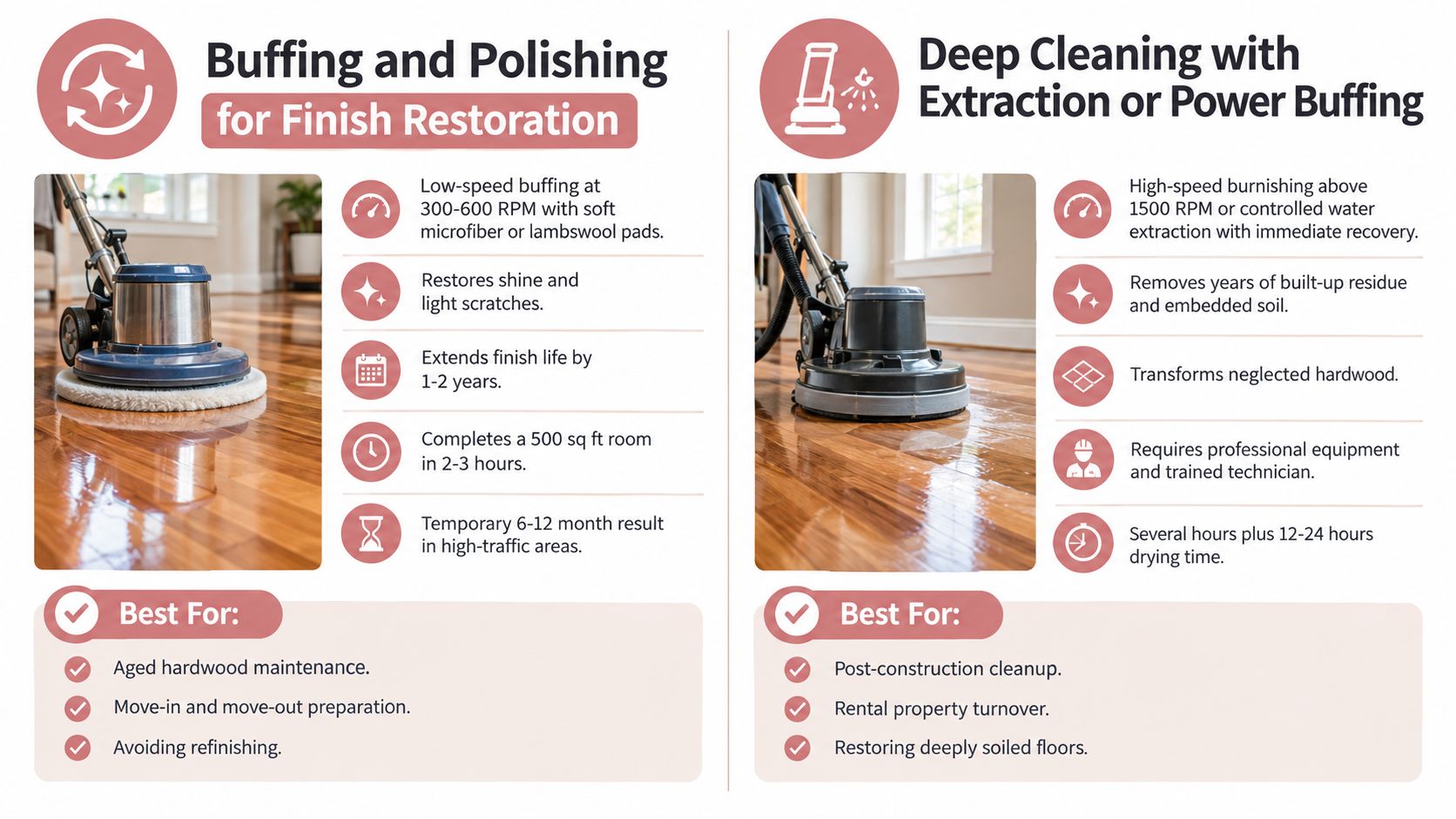
A floor can be clean and still look dull. Traffic lanes, light surface scratches, oxidation, and old residue may make a ten-year-old floor look tired even after careful dusting and damp cleaning. Buffing and polishing can improve the appearance of an existing finish without sanding the boards down.
This option fits a homeowner preparing a property for sale. For example, if the floor has visible paths from the front door to the kitchen but no deep gouges or widespread finish failure, a professional can test a compatible polish in a low-visibility area and work through the room with soft pads.
Use the least aggressive pad that works
A gentle microfiber pad suits a lightly dull residential floor. More aggressive pads may help with heavier surface film, but they also carry a greater risk of leaving marks if the operator uses the wrong pressure or direction. The finish and manufacturer's instructions should determine the product and pad.
Apply polish evenly and avoid over-application. Excess product can create a cloudy or slippery film that attracts more soil. Overlapping passes help maintain consistent coverage, while moving in random directions can leave visible swirl marks.
A polish can refresh a worn finish, but it can't repair deep gouges or wood that has swollen from moisture.
Ventilate the area if the product has noticeable fumes. After buffing, collect pad residue with a clean microfiber mop rather than immediately adding another wet product. A rental turnover may benefit from this approach when the floor needs a visual refresh but doesn't justify full refinishing. For water-related marks, review this guidance on water stains on wood before choosing a polishing treatment.
5. Deep Cleaning with Extraction or Power Buffing
Deep cleaning fits the floor that still looks dirty after proper dry cleaning and a lightly damp pass. A rental turnover with pet residue in the traffic lanes, an estate move-in with sticky buildup along the kitchen perimeter, or a post-construction cleanup with fine dust packed into edges can all justify stronger equipment. In those cases, controlled extraction or power buffing can remove residue that a household mop leaves behind.
These are problem-solving methods, not routine maintenance.
Control moisture before equipment starts
Start with the floor itself. The technician should identify the finish, confirm whether the floor is solid or engineered, and check for open joints, worn finish, cupping, or old water damage before any machine touches the surface. Carpet extraction machines are designed for a different material and can leave too much water behind on hardwood, which raises the risk of moisture getting into seams and weak finish areas.
A practical example is a family room where a dog had repeated accidents near the back door. The floor may need more than spot treatment because residue can spread across the finish and collect dirt. Even then, the goal is controlled cleaning with fast recovery, not soaking the boards. Clear furniture before the appointment so the operator can make even passes, and leave enough drying time before rugs or furniture go back.
Power buffing suits a different problem. If the issue is embedded surface film, dull traffic lanes, or residue left by the wrong cleaner, a machine with the right pad can break that buildup without forcing water into the floor. That makes sense in a home being listed for sale, where the finish looks tired in the entry and hallway but the boards are still sound. It does not fix deep gouges or swelling.
Steam is still a poor default for hardwood because heat and vapor can work into joints and affect finishes, as noted earlier in the article. If you want to compare service types before hiring, browse specialty steam cleaning. For hardwood, ask more specific questions about moisture control, pad choice, drying time, and insurance before approving the job.
If a careful low-moisture clean restores the floor, stop there. If grime stays embedded, hire an insured, bonded professional instead of renting unfamiliar equipment.
6. Preventive Finish Sealing and Protective Application
A sticky juice spill by the fridge, a dog bowl that splashes twice a day, muddy traffic from a back door. Those are the situations where a protective application earns its keep. It slows how fast messes and abrasion reach the finish, which helps in busy kitchens, family homes with young children, and rentals between occupants.
The job starts with the floor you already have. A landlord getting a unit ready for new tenants may only need a compatible recoat in the entry and dining path. A pet-owning household may get more benefit from protecting the area around water stations and the door used for walks. The goal is extra response time for real-life accidents, not a promise that hardwood can handle standing water.
Before any product goes down, identify the existing finish and the floor's condition. If there is old residue, adhesion trouble, or worn-through traffic lanes, sealing over it can leave cloudy patches or uneven sheen. In those cases, the right fix may be cleaning first, recoating, or full sanding instead.
Test the appearance in a closet or another hidden spot. Then clear the room completely, apply thin even coats, and follow the stated cure time all the way through. A floor that feels dry to the touch may still be too green for rugs, chairs, or pet traffic, and rushing that step is how fresh protection gets scarred.
Protection works best when it is targeted.
For a family table area, focus on chair lanes and the path from sink to dining room. For a rear entry, protect the landing zone where grit and damp shoes hit first. For a home being shown for sale, treat the visible traffic lanes that make the finish look tired even when the boards are still in decent shape.
Keep a simple record of the product used and when it was applied. That makes future cleaning and maintenance decisions easier.
Indoor conditions still matter. NWFA care guidance recommends keeping indoor relative humidity between 30% and 50% and temperature between 60°F and 80°F. A sealer helps with surface wear. It cannot stop wood movement caused by poor humidity control.
7. Eco-Friendly Cleaning Using Vinegar, Baking Soda, and Natural Solutions
A common real-life version of green cleaning looks like this. A toddler drops juice near the table, the dog tracks in dirt from the yard, and the household still wants low-odor products on the floor. In that setting, the goal is simple. Clean the mess without leaving residue, dulling the finish, or turning the floor into a DIY experiment.
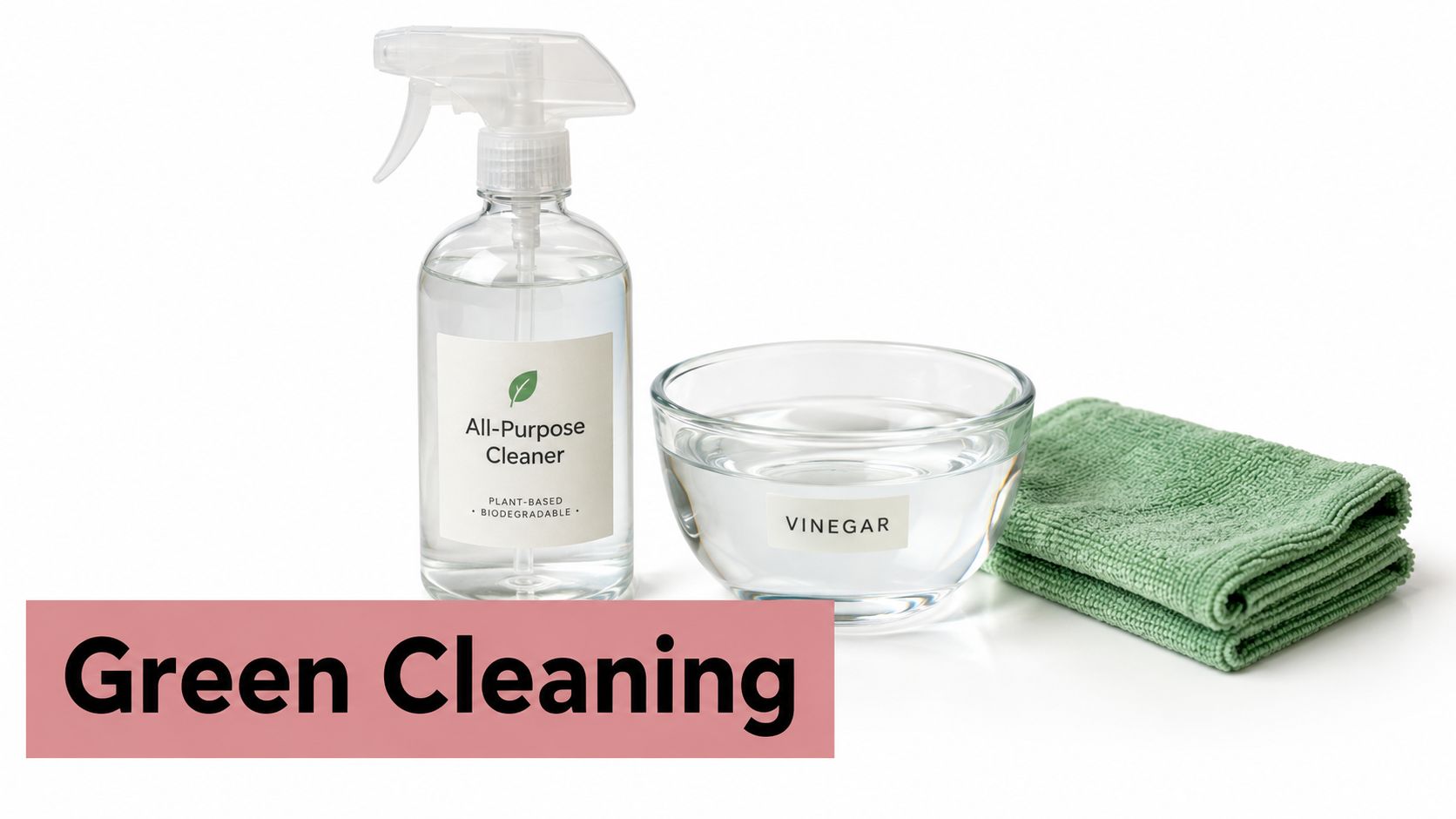
Natural ingredients have limits on hardwood. Vinegar is the one people reach for first, but it is not a default floor cleaner. Lowe's warns that even diluted vinegar can wear away a finish, so it only belongs in the conversation if the flooring manufacturer allows it for that specific floor. If approval exists, test it on a hidden spot first. If it does not, use a labeled hardwood cleaner that is made for low-residue, lower-fragrance maintenance.
Baking soda also has a narrow role. It can help on a tiny mark when worked into a controlled paste, then fully removed, but it is still mildly abrasive. Spreading it across a kitchen or hallway floor is asking for haze and extra cleanup. Essential oils cause a different problem. They add scent, not cleaning strength, and too much can leave the surface slick.
The better question is which method fits the household.
For a family with young children and frequent food spills, use a biodegradable hardwood cleaner on a barely damp microfiber pad for routine wipeups, then dry the spot right away. For a pet household dealing with the occasional accident, skip vinegar and scented mixes. Clean the area promptly with a finish-safe product, keep moisture tight to the spot, and use dry dusting between deeper cleans. For a home being freshened up before showings, avoid homemade blends that can leave film. A clean, neutral-looking floor usually presents better than one that smells strongly of lemon or vinegar.
A few rules keep eco-friendly cleaning from causing avoidable damage. Label any diluted solution clearly. Keep homemade products limited to spot work. Stop using any mixture that leaves drag, haze, or slipperiness.
Aquastar's eco-friendly floor cleaner guidance is a practical reference if you want biodegradable options without guessing which pantry ingredient belongs on hardwood.
8. Professional Hardwood Refinishing and Sanding
Some hardwood floors are past the point where cleaner, buffing, or spot treatment will help. A scratched rental with worn traffic lanes, an older home with black water marks before listing, or a kitchen floor that stayed wet too long usually needs a refinishing assessment. If the finish is gone or the damage has reached the wood, sanding and refinishing is the repair path, not more cleaning.
That judgment matters after moisture exposure. What starts as surface spotting can turn into cupping, staining, or board damage, especially if the floor was cleaned the wrong way or left wet after a spill. If you are dealing with water damage to wood floors, treat it as a restoration problem first and a cleaning problem second.
Treat refinishing as restoration
A contractor sands off the old finish and may remove stain before applying a new protective topcoat such as polyurethane. That can restore color consistency and remove many scratches, but it also brings dust, noise, odor, and several days of disruption. In a lived-in home, that means planning around pets, furniture, work schedules, and rooms you may not be able to use.
Ask for an assessment before you book the job. The contractor should explain the floor's construction, how much usable wood remains, what finish options fit the space, whether stain changes are realistic, and what ventilation or access limits apply. I also recommend choosing the finish system before sanding starts. It prevents rushed decisions once the floor is bare.
Deep scratches and finish failure need repair work. Cleaner will not rebuild missing finish or fix damaged boards.
After refinishing, follow the contractor's curing directions exactly. The floor may need light use only for 7–10 days while polyurethane cures, depending on the product and the installer's guidance. Once that cure window passes, return to routine dry dust control, approved cleaner, minimal moisture, and fast spill pickup.
8-Method Hardwood Floor Cleaning Comparison
| Technique | 🔄 Implementation complexity | ⚡ Resource & speed | ⭐ Effectiveness / quality | 📊 Expected outcomes | 💡 Ideal use cases & key advantages |
|---|---|---|---|---|---|
| Dry Microfiber Sweeping and Dusting | Low, simple, minimal training | Minimal tools; very fast for daily use | ⭐⭐⭐, excellent for dust & hair, not for sticky residue | Keeps surface free of dust, extends interval between deep cleans | Daily/weekly maintenance, pet homes, pre-clean step; low cost, safe for all finishes |
| pH‑Neutral Hardwood Floor Cleaner (Minimal Water) | Low–Medium, requires careful water control | Moderate, product + wrung mop; moderate time per session | ⭐⭐⭐⭐, cleans fingerprints/scuffs with low finish risk | Residue‑free surface that preserves finish longevity | Regular maintenance, post-refinish care, eco‑friendly options; protects finish |
| Spot Cleaning & Targeted Stain Treatment | Medium, needs stain diagnosis & correct product | Low resources; very quick per spot but skill‑dependent | ⭐⭐⭐⭐, highly effective when matched to stain type | Prevents set‑in stains, avoids unnecessary full‑floor cleaning | Immediate spill response, rental turnovers, cost‑effective targeted fixes |
| Buffing & Polishing for Finish Restoration | Medium, equipment or pro; technique‑sensitive | Moderate equipment/time (≈2–3 hrs / 500 sq ft) | ⭐⭐⭐⭐, restores shine, removes light scratches/film | Noticeably improved appearance; can extend finish life 1–2 years | Aged floors, showings, avoid full refinishing; relatively quick cosmetic refresh |
| Deep Cleaning with Extraction or Power Buffing | High, trained technicians required | High, commercial equipment, several hours + drying | ⭐⭐⭐⭐⭐, removes years of embedded residue and film | Transforms neglected floors; deep soil removal; readies for occupancy | Post‑construction, neglected/rental deep cleans, when surface methods fail |
| Preventive Finish Sealing & Protective Application | Medium, may need pro assessment/application | Moderate cost; 24–48 hr cure; periodic reapplication | ⭐⭐⭐⭐, strong preventive protection against stains/scratch | Increased resilience, fewer staining incidents, delays refinishing | Rental properties, homes with pets/children, move‑in protection; cost‑effective prevention |
| Eco‑Friendly Cleaning (Vinegar, Baking Soda, Natural) | Low, simple DIY recipes, easy to use | Minimal cost; safe for sensitive households; may require more frequent use | ⭐⭐⭐, good for light maintenance; limited on heavy buildup | Safer indoor environment, low recurring cost, modest cleaning results | Chemical‑sensitive families, budget‑conscious homes; combine with periodic pro deep clean |
| Professional Hardwood Refinishing & Sanding (Heavy Restoration) | Very high, multi‑stage professional process | Very high cost & time ($3–10+ / sq ft); days of disruption | ⭐⭐⭐⭐⭐, restores to near‑new condition, long‑lasting | New protective topcoat, renewed appearance, extended lifespan 10–15 yrs | Severe damage, pre‑sale major restoration, long‑term investment protection |
Build a Floor Care Routine That Keeps Hardwood Looking New
The best hardwood routine is not the one with the strongest chemical or the wettest mop. It's the one that removes abrasive grit early, limits moisture, respects the installed finish, and escalates only when the condition requires it.
Start with dry microfiber dusting or a bare-floor vacuum. This is the foundation for a home with pets, children, outdoor shoes, or frequent guests because grit can scratch the finish under repeated foot traffic. Use entry mats and runners where they make sense, especially near exterior doors, and remove mud or sand before it spreads through the house.
When the floor needs more than dry cleaning, choose a manufacturer-approved, pH-neutral product and apply it sparingly. Put the cleaner on the mop or cloth rather than pouring it onto the boards. The mop should be barely damp, and you should inspect the surface as you work. If moisture remains visible, dry it with a clean microfiber cloth.
Treat juice, pet accidents, and food marks as soon as they happen. Blot first, test the product in a hidden location, and avoid aggressive scrubbing. A small stain may need a targeted solution, not a whole-room wash. If the finish becomes cloudy, tacky, or discolored, stop adding products and ask for a professional assessment.
Use buffing when the floor is clean but visually dull. Consider controlled deep cleaning when surface methods leave embedded soil or residue. Sealing can support prevention in high-accident areas, but it won't correct poor humidity, standing water, or an incompatible existing finish. Refinishing belongs to floors with deep wear, exposed wood, permanent damage, or finish failure.
Indoor conditions matter between cleaning visits. NWFA guidance identifies relative humidity as a foundational maintenance factor, with approximately 35% to 50% recommended in one maintenance guide to limit seasonal movement. In North Atlanta homes, humid summers and heated winter interiors can create noticeable changes, so a humidity monitor, dehumidifier, or humidifier may complement cleaning when conditions call for it.
When floors need a deep clean without the homeowner handling equipment, Aquastar Cleaning Services in Kennesaw offers recurring housekeeping, deep cleaning, move-in and move-out cleaning, post-construction cleanup, and biodegradable product options. The company serves Kennesaw and North Atlanta, provides customizable plans and documented room-by-room scopes, and uses insured, bonded, background-checked teams. Quotes are available by phone or online at aquastarcleaning.com.
Aquastar Cleaning Services, LLC can build a recurring, deep-cleaning, move-in, or post-construction plan around your hardwood floors, household traffic, pets, and product preferences. Visit Aquastar Cleaning Services, LLC to request a quote and discuss a floor-care routine for your Kennesaw or North Atlanta home.