


You're standing at the kitchen window on a bright North Atlanta morning, but the view looks gray. Pollen and road dust dull the glass, while the driveway has dark algae marks and an oil spot near the curb. It's tempting to grab one pressure washer and handle everything in a single pass. That shortcut can leave streaks on the windows, force water behind siding, damage seals, or send dirty runoff into a storm drain.
Window cleaning and power washing solve different problems. One uses controlled contact to restore glass. The other uses water flow, pressure, and sometimes detergents to clean hard exterior surfaces. The right method depends on the material, the contaminant, the access required, and where the wastewater will go.
Understanding Window Cleaning and Power Washing Needs
A typical spring cleanup makes the difference obvious. A homeowner may see pollen on the screens, haze on the panes, algae across a concrete driveway, and muddy buildup along the garage threshold. The glass needs a method that removes fine particles without scratching or forcing water into the frame. The driveway needs a surface assessment, pre-treatment when appropriate, controlled rinsing, and runoff planning.
Professional window cleaning has developed into a specialized service because homes and buildings increasingly use large glass areas, difficult-to-reach panes, and coated or insulated glazing. The broader professional window-cleaning market was estimated at approximately $160.3 billion in 2025 and projected to reach $325.8 billion by 2034, with a projected compound annual growth rate of 8.2%, according to the global window-cleaning services market outlook. That market includes residential and commercial glass, façades, skylights, and related surfaces.
Power washing is a different trade. It works best on suitable exterior materials where water flow and carefully selected pressure can lift embedded deposits. The U.S. pressure-washing-services segment was projected to reach about $1.3 billion by 2029, based on industry statistics referencing IBISWorld data. That growth reflects demand for driveway, patio, siding, deck, fence, and masonry cleaning, but it doesn't mean every surface should receive the same treatment.
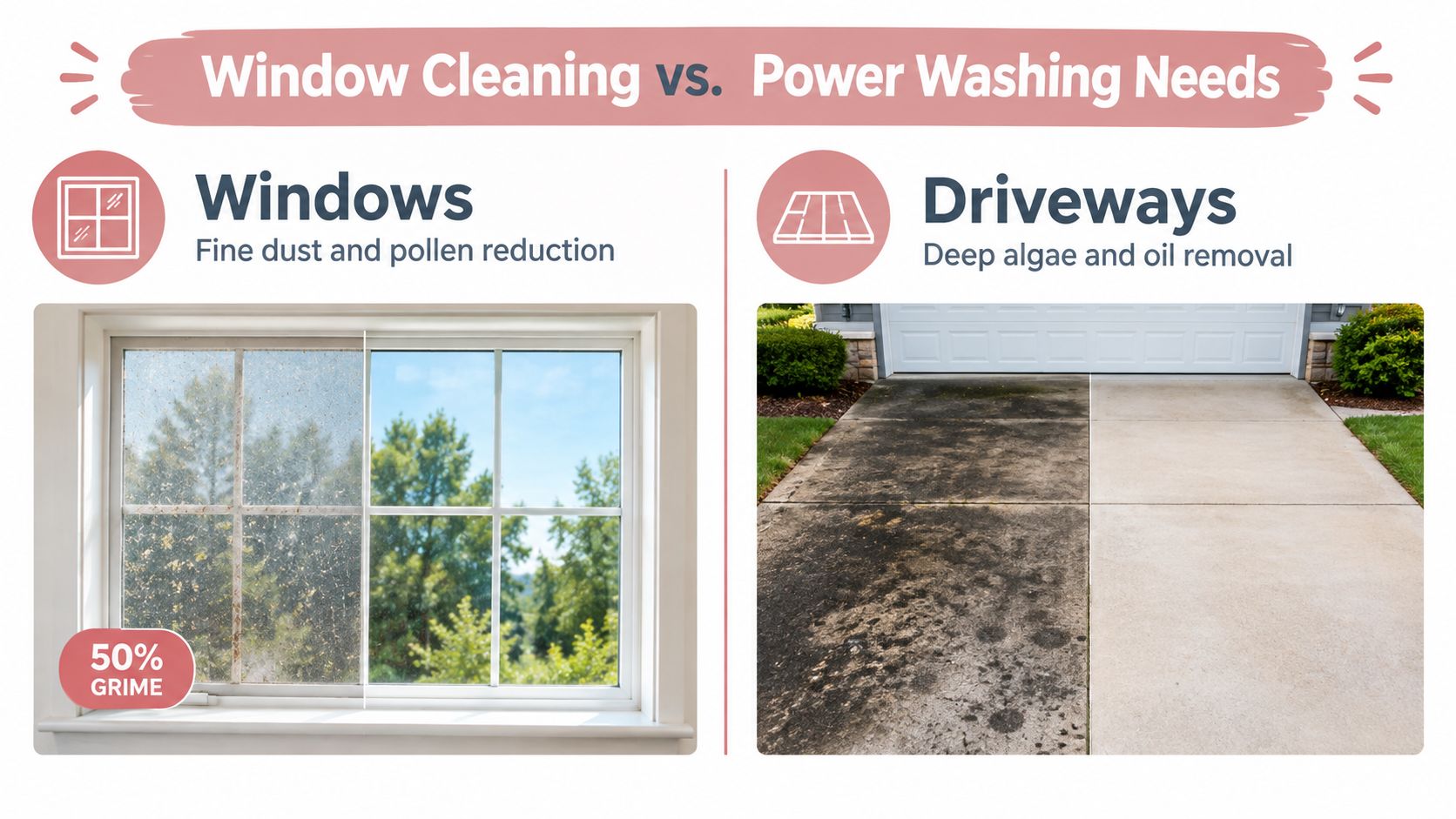
A simple comparison
| Surface or problem | More suitable approach | Main concern |
|---|---|---|
| Exterior glass with pollen and dust | Squeegee, purified water, or controlled manual cleaning | Scratches, streaks, seals, and screens |
| Concrete driveway with algae or embedded soil | Surface-appropriate power washing | Etching, splashback, and wastewater |
| Vinyl siding | Low-pressure cleaning with suitable detergent and rinsing | Water intrusion behind panels |
| Older or fragile windows | Traditional manual cleaning | Cracked glass, failed seals, and leaks |
| Oily or heavily soiled hardscape | Contained cleaning and approved disposal | Polluted runoff |
Glass cleaning can also support daylight maintenance. Laboratory testing of common 3 mm residential glass measured clean-glass visible transmission at approximately 84.91%, while airborne dust, carbon, and mixed particulate deposits reduced transmitted light as buildup increased, according to the glass transmission research. That figure applies to the tested glass, not every insulated, tinted, low-emissivity, or coated window. In practice, clean screens and exterior panes can make a room feel brighter, especially beside roads, construction areas, or pollen-heavy landscaping.
Practical rule: If the surface is designed to provide a clear view, start with the least aggressive method that can remove the soil.
For homeowners comparing equipment, a cold water power washer guide can clarify what cold-water machines handle well. A pressure washer may be appropriate for a concrete walkway, but it isn't a substitute for a window-cleaning system. Local providers such as Aquastar Cleaning Services can also combine residential exterior tasks with broader home-cleaning needs when the project involves more than one surface.
Key Differences in Methods and Equipment
Window cleaning relies on controlled contact, not brute force. A professional may use a washer sleeve, squeegee, lint-free towel, scraper approved for the glass condition, and purified water delivered through a water-fed pole. The operator removes particulate matter from the pane, cleans the edges, checks for residue, and inspects the result from changing angles.
A pressure washer creates cleaning action through water velocity, flow, nozzle concentration, distance, and sometimes chemical assistance. It can remove algae, mold, oxidation, oil residue, and embedded dirt from suitable hard surfaces. The same concentrated spray can damage a window seal, cut a screen, drive water behind a frame, or fracture already-compromised glass.
Pressure is only one setting
The Painting and Decorating Contractors of America identifies several interacting variables that determine power-washing performance, including PSI, gallons per minute, nozzle orifice and type, spray distance, spray angle, chemicals, water temperature, abrasives, and travel speed, as explained in its power-washing industry standards.
PSI describes pressure, while GPM describes water volume. More PSI can increase cleaning intensity, but more GPM can improve rinsing and production without raising force against the surface. A rough cleaning-power comparison may use PSI multiplied by GPM, but that number doesn't tell an operator whether the spray is safe for a painted board, mortar joint, vinyl panel, or wood deck.
A concrete driveway may tolerate a stronger approach than painted siding. Even concrete can suffer from etching when the nozzle is too close, the pass speed is too slow, or the spray pattern is too concentrated. Pre-treatment may loosen biological growth and allow a lower-pressure rinse.
Glass needs a different workflow
A foaming product can help with certain glass-cleaning tasks, but product choice still depends on coatings, residue, and the required finish. This foaming glass cleaner guide offers useful background on how foam products are used around glass.
For residential windows, the safer sequence is usually:
- Inspect the pane, frame, screen, gasket, and surrounding finish.
- Remove loose grit so it isn't dragged across the glass.
- Apply an appropriate solution or purified water.
- Agitate and remove soil with controlled tools.
- Squeegee or rinse in a way that leaves no chemical residue.
- Check edges, corners, reflected light, and nearby trim.
A pressure washer has a place in exterior cleaning, but a window pane isn't a driveway in miniature. For additional glass-care ideas, homeowners can review this non-toxic glass cleaner resource, then confirm that the product is compatible with the actual glazing.
Practical Examples for Common Surfaces
The safest method becomes clearer when you look at actual North Atlanta surfaces. A stamped-concrete patio, a painted deck, vinyl siding, and a second-story window may all be dirty on the same day, but they don't share a cleaning setting.
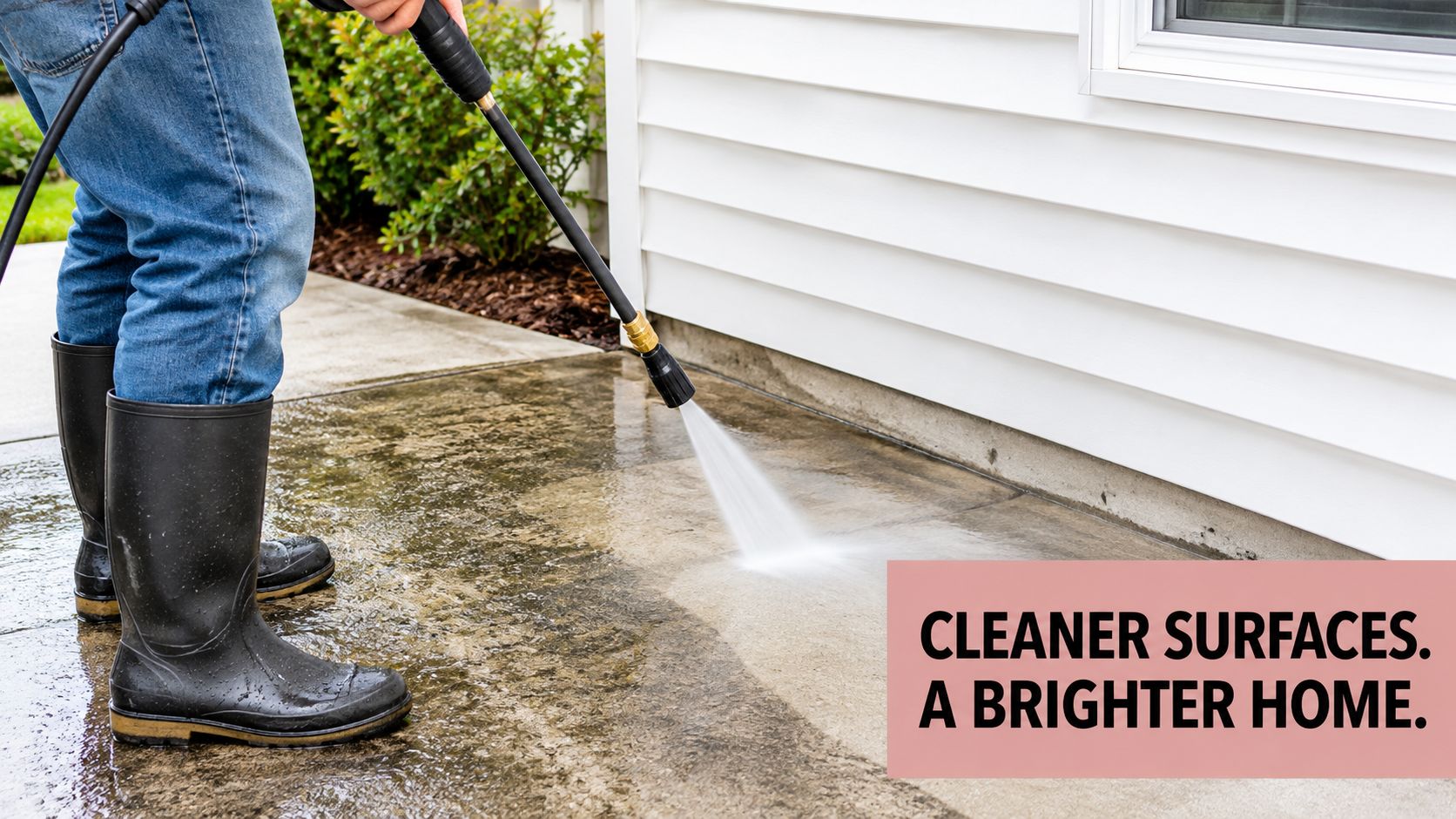
Concrete and masonry
For a concrete driveway, first sweep loose grit and leaves. Identify oil, algae, tire marks, and rust separately because each contaminant may respond differently. Protect garage thresholds, door seals, landscaping, and nearby drains before wet cleaning.
A practical sequence looks like this:
- Dry removal: Sweep or vacuum loose dirt before adding water.
- Test area: Clean a small inconspicuous patch and check for color change or surface marking.
- Controlled passes: Keep the nozzle moving and maintain a consistent distance.
- Rinsing: Use enough flow to remove loosened soil without directing dirty water toward the street.
- Final inspection: Look for stripes, wand marks, remaining oil, and exposed aggregate.
Stamped concrete deserves extra care because concentrated spray can emphasize lines or remove surface treatments. A homeowner looking for driveway-specific technique can use this guide on pressure-washing a driveway as a practical reference.
Siding and decks
Vinyl siding doesn't need maximum pressure. Water aimed upward can reach behind overlapping panels, around windows, or near vents. Keep the spray controlled, work with the siding profile, and avoid forcing water into openings.
Wood decks require even more restraint. A close, slow pass can leave visible furrows in the grain. Painted boards may lose finish, while older wood can splinter under an aggressive nozzle. Pre-treatment and a wider spray pattern often produce a more even result than increasing pressure.
Older and fragile windows
Traditional squeegee cleaning or purified-water cleaning is the better choice for historic, cracked, leaking, poorly sealed, or lead-painted windows. Pressure washing can damage glazing putty, screens, seals, and frames. It can also push water into wall cavities where the homeowner won't see the problem until staining or swelling appears.
The fastest-looking cleaning method isn't always the fastest way to a finished home. Repairing a failed seal or damaged finish takes longer than cleaning carefully.
For a visual example of controlled exterior work, watch the process here:
Safety Considerations and Local Regulations
A Kennesaw driveway can look clean while polluted wash water runs toward a street inlet. Exterior cleaning therefore requires two controls: protect people and property, and manage where water, detergent, oil, sediment, and other residue go.
Window access creates immediate hazards. Ladders can shift on sloped driveways, wet shoes reduce footing, and second-story work increases fall risk. Water near outdoor outlets, extension connections, lights, or other electrical equipment adds another danger. Keep cords, hoses, equipment, and spray paths organized. Do not work around electrical components until they have been made safe. For additional planning, review these fall-safety tips for exterior work.
A U.S. Bureau of Labor Statistics review of fatal occupational injuries involving contractors found that, in 2011, six of the eight fatally injured building-cleaning workers were window washers. That finding, reported in the market and safety overview, shows why professional window cleaning requires access planning, fall-prevention procedures, suitable equipment, and training.
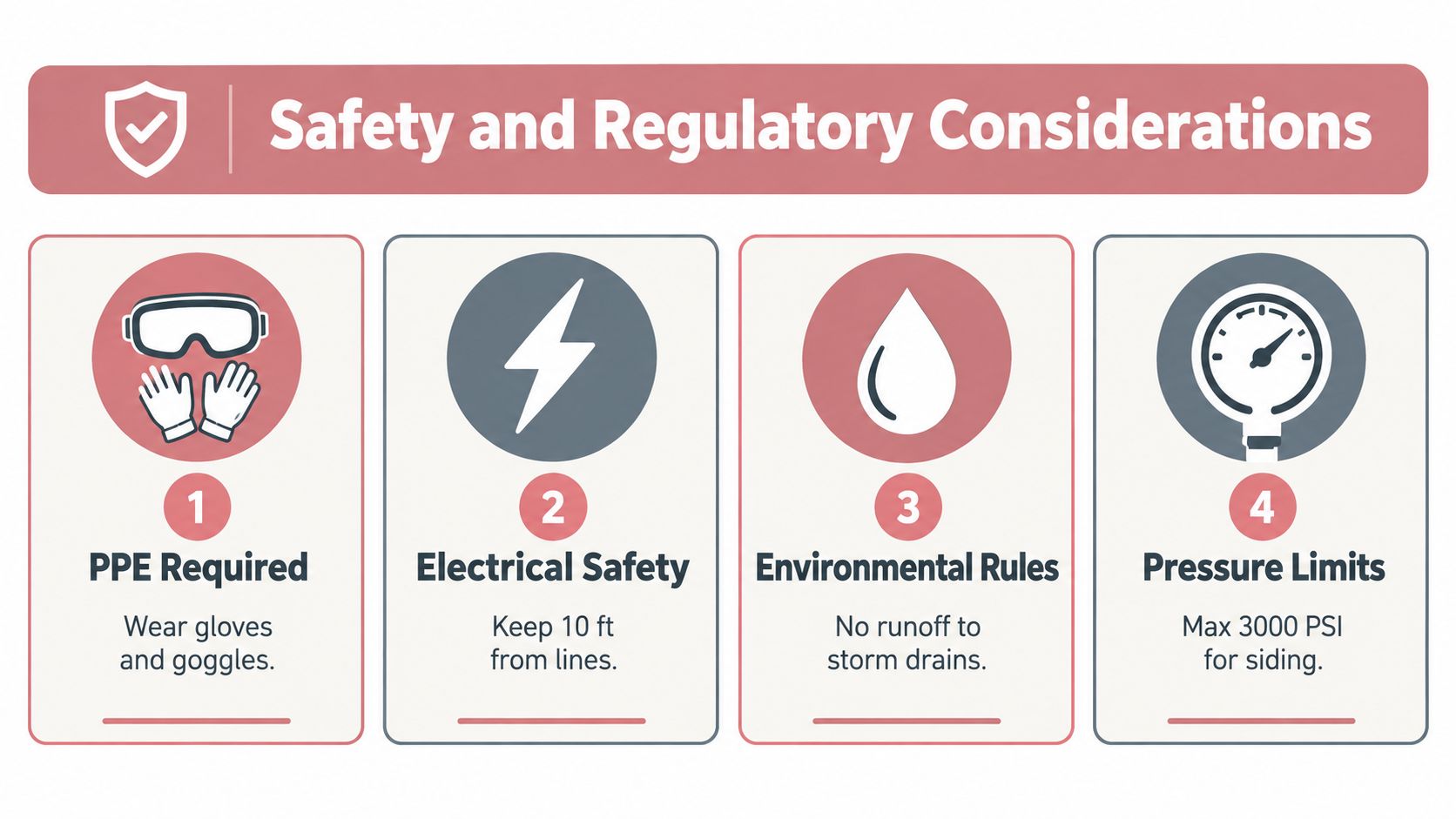
Runoff is part of the job
Pressure-washing wastewater may contain oil, detergents, metals, sediment, and other pollutants. The Bend homeowner pressure-washing guide explains that water entering a storm drain can become an illicit discharge. Its practical measures include dry sweeping, protecting drains, directing uncontaminated water toward suitable planted areas, and collecting or routing contaminated wastewater through an approved path.
The EPA advises capturing wash water when pollutants may be present. Pressurized cold water without soap can create less pollution where wastewater may flow toward a drain, but it does not remove the need to check local requirements. The EPA pressure-washing wastewater guidance helps operators choose a discharge route before work begins.
A North Atlanta decision process
For a Kennesaw driveway that slopes toward a street inlet:
- Locate every nearby storm drain before starting.
- Sweep loose dirt and absorb oil or chemical residue.
- Install a temporary berm, boom, or suitable drain cover.
- Use the lowest effective pressure and water volume.
- Recover dirty water with a wet vacuum or containment system.
- Confirm whether sanitary-sewer discharge is permitted before routing collected water.
Brookhaven guidance recommends washing during dry weather, absorbing oil or chemical spills first, protecting inlets with berms or booms, and diverting suitable water toward permeable areas. It also advises collecting wash water when diversion is unavailable, reducing water use with high-pressure, low-volume nozzles, and considering water-only cleaning instead of hazardous agents such as bleach. These practices appear in Brookhaven's pressure-washing guidance.
Requirements differ between jurisdictions. Eugene guidance, for example, directs mobile operations using soaps, detergents, heated water, or other additives to work where wastewater can be collected and discharged to an approved sanitary sewer or treatment route. Its pressure-washing best-practices document describes enclosed sewer-connected areas, sumps, grit traps, and sealed catch basins. North Atlanta operators should verify the applicable local rule rather than assume biodegradable soap makes storm-drain discharge acceptable.
Bundling Services for Maximum Efficiency
Bundling window cleaning and power washing makes practical sense when the work is sequenced correctly. The crew can address the driveway, siding, patio, screens, and glass during one exterior maintenance plan, while the homeowner avoids coordinating separate arrival windows and repeating preparation.
The order matters. Start with tasks that create the most splash, residue, or airborne debris. Power wash suitable hardscape and siding first, protect the cleaned areas, then clean windows and screens after the exterior dust has settled. If windows are cleaned first and a nearby driveway is blasted afterward, the glass may need to be washed again.
Build the plan around the property
A useful whole-home checklist includes:
- High-access areas: Identify second-story panes, skylights, screens, and fragile frames before equipment arrives.
- Hardscape: Separate concrete, brick, stamped surfaces, wood, and painted materials.
- Drainage: Mark curb inlets, low points, landscaping, and areas where water could collect.
- Interior protection: Close windows, check seals, and protect flooring beneath windows that may be opened.
- Final inspection: Review glass in reflected light and inspect hardscape for stripes, missed edges, or displaced debris.
Bundling can also expose conflicts that a single-service visit misses. For example, a driveway near the front entry may need wastewater containment, while a window above that entry needs manual cleaning rather than spray. Planning both together helps the operator protect the finished surface instead of treating each task as an isolated appointment.
For a busy Cobb County household, the benefit is more than just speed. It's a coordinated exterior refresh that improves the view through the glass while addressing the surfaces people see when they arrive. The plan should still keep methods separate. Combining services doesn't mean combining pressure settings, detergents, or discharge routes.
Scheduling insight: Coordinate the crew, not the cleaning method. One visit can contain several services, but each surface still needs its own inspection and process.
Cost Analysis and Frequency Recommendations
A quote for window cleaning and power washing depends on the work involved, not just the label on the service. Window pricing may reflect the number of panes, pane size, interior access, screens, tracks, skylights, height, and the condition of the glass. Driveway pricing may reflect surface area, slope, access, algae, oil, rust, old coatings, edging, and the time required for runoff control.
Two homes can have similar-looking driveways and receive different quotes. A lightly dusty concrete apron may need sweeping and controlled washing. A driveway with embedded oil beside a storm drain may require absorbent treatment, barriers, wastewater recovery, additional passes, and a disposal route approved for that wastewater.
What changes the price
- Glass quantity and access: More panes, difficult screens, and higher windows increase labor.
- Surface condition: Heavy algae, oxidation, oil, or neglected edges take longer than loose dust.
- Material sensitivity: Wood, painted finishes, historic frames, and coated glass need slower, more careful methods.
- Water management: Berms, wet vacuums, recovery equipment, and approved disposal add operational work.
- Scope: Interior glass, tracks, screens, siding, patios, garages, and driveways may be priced separately.
Frequency should follow exposure and condition. A home beside a busy road, construction site, dense tree cover, or pollen-heavy landscaping may need more frequent glass maintenance than a sheltered property. Driveways in shaded, damp areas can show biological growth sooner than sunny, well-drained surfaces.
Clean before buildup becomes a repair problem, but don't schedule aggressive washing merely because a calendar says so. Inspect the glass for haze and edge residue, check hardscape for algae and slippery areas, and address oil or chemical spills promptly. Homeowners who want broader planning guidance can compare approaches in this power-washing guide for homeowners.
For window-specific budgeting factors, review window cleaning cost per window, then request a scope-based quote that identifies the panes, screens, exterior surfaces, stains, access conditions, and runoff plan. That detail makes quotes easier to compare and reduces surprises on service day.
Aquastar Cleaning Services, LLC offers residential window cleaning and driveway pressure washing for homes in Kennesaw and North Atlanta, with customized cleaning plans and eco-friendly product options when requested. Visit Aquastar Cleaning Services, LLC to request a quote and coordinate a safer plan for your glass, hardscape, and exterior maintenance needs.