


Household chlorine bleach generally does not remove rust, and it can make rust stains set more firmly or look darker. Rust is already an oxidized iron compound, while bleach is an oxidizer, not a rust-dissolving treatment.
That answer challenges advice many homeowners hear when an orange mark appears on a sink, bathtub, towel, grout line, or tool. Bleach works well for some organic stains and disinfection, so it feels like a universal cleaner. Rust is different. The right solution depends on the surface, the source of the iron, and whether another product has already been used.
Why Most People Reach for Bleach First
Bleach has a powerful reputation because it changes what people can see. It can whiten some fabrics, reduce organic discoloration, and disinfect compatible surfaces. If a white bathtub has an orange ring, pouring bleach over it seems like the natural next step.
That instinct often comes from treating every stain as if it were biological or organic. Coffee, mildew residue, and some food stains may respond to oxidizing cleaners. Rust, however, is an iron compound. Bleach may lighten the area around the mark while leaving the iron behind, or it may make the stain more firmly fixed.
Practical rule: A cleaner that makes a stain look paler hasn't necessarily removed the substance causing it.
Consider a white towel washed with iron-rich water. Chlorine bleach may make the towel appear brighter in some areas, but the iron can remain as yellow or orange discoloration. On a porcelain sink, bleach can disinfect the basin without dissolving the rust-colored deposit around the drain.
The question that matters more
Instead of asking only, “Does bleach remove rust?” ask three practical questions:
- What is the surface? Fabric, porcelain, grout, natural stone, stainless steel, and cast iron react differently.
- What caused the mark? The source may be rusty hardware, iron in water, metal transfer, or mineral deposits.
- What product has already touched it? A rust remover or toilet cleaner may be acidic, which creates a serious incompatibility problem if bleach is added afterward.
If you're preparing a bleach solution for an appropriate disinfection task, use a reliable resource such as this guide to how to mix bleach disinfectant. That process is separate from treating rust. Keeping those jobs separate prevents a common bathroom mistake, using disinfectant as though it were a metal-stain remover.
The safer starting point is simple: identify the material first, keep bleach out of the rust decision, and choose a product labeled for that material and stain.
The Chemistry of Bleach and Rust in Plain English
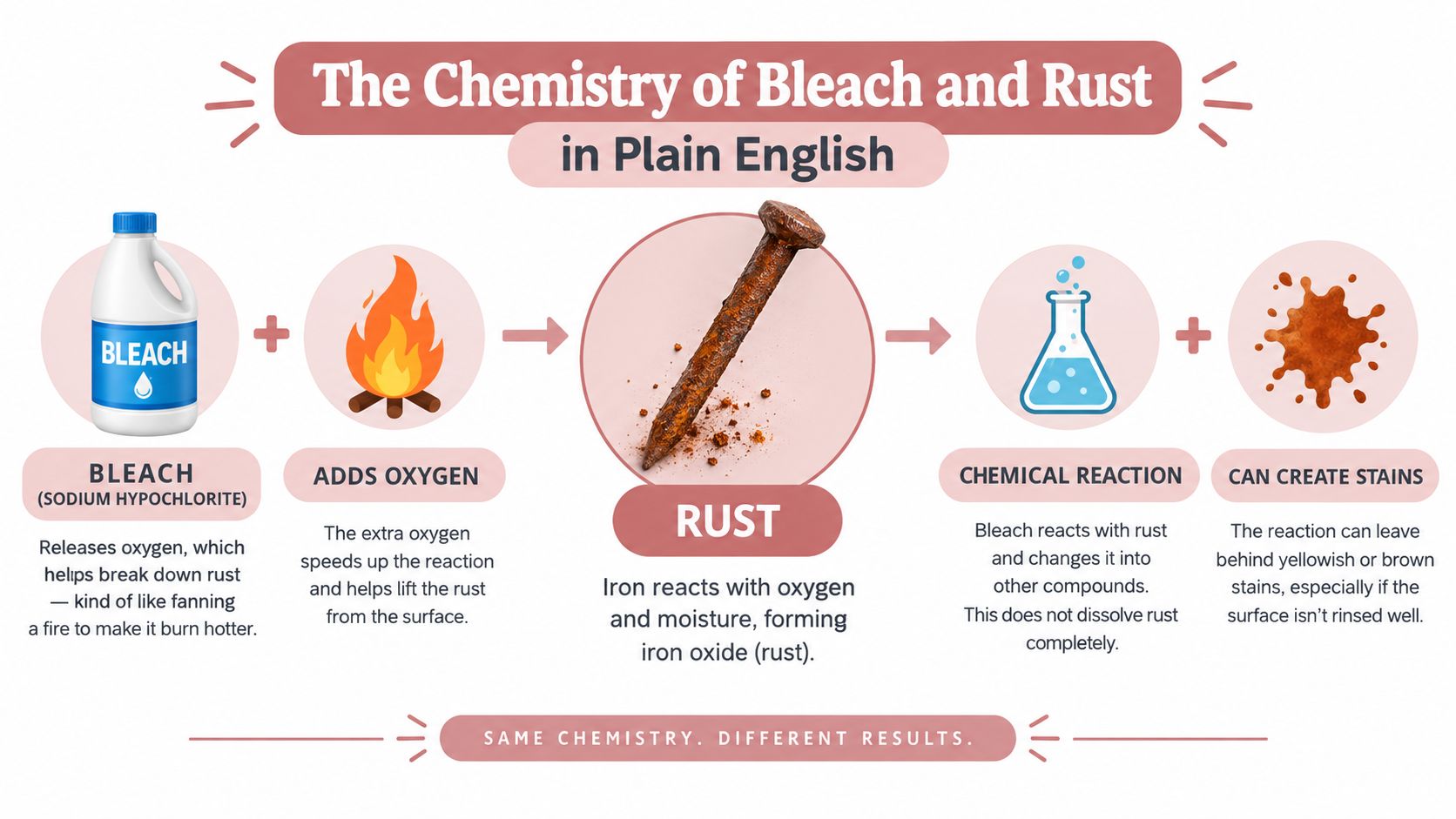
Rust is iron that has already reacted with oxygen and moisture. It commonly consists of hydrated iron(III) oxides and oxyhydroxides, so a rusty nail is not waiting for oxidation to begin. That chemical change has already happened.
Household chlorine bleach usually contains sodium hypochlorite, an oxidizer. Oxidizers can alter many organic stains and microorganisms, but they do not usually provide the acidic dissolution or metal-binding action needed to detach rust from a surface.
Bleach works like a reaction that pushes oxidation further. Rust requires a different response, one that dissolves or chemically releases the iron compound rather than adding another oxidizing reaction. That is why a disinfectant can leave a rust mark unchanged, or make the problem harder to treat.
What the extension guidance means
The University of Georgia Cooperative Extension guidance on iron and rust stains advises against chlorine bleach for rust stains. Its warning is practical: chlorine bleach can set the stain rather than dissolve the iron compounds causing it.
A white shirt may therefore leave the wash with a darker orange-brown mark. Bleach might change nearby organic residue, yet it has not carried out the chemical work needed to release the iron.
A recurring bathroom mark may also come from mineral-rich water, not ordinary dirt. Aquastar's hard-water solutions guide can help distinguish that type of buildup from other stains. Color alone cannot identify the chemistry behind a deposit.
Keep four points in mind:
- Rust is already oxidized.
- Bleach is another oxidizer.
- Oxidation does not dissolve iron.
- A purpose-made rust treatment uses a different chemical approach.
Bleach may disinfect a compatible surface while failing completely as a rust remover. Knowing that difference helps prevent repeated applications that brighten the surrounding area without removing the iron compound.
What Bleach Does to Rust and the Surfaces Around It
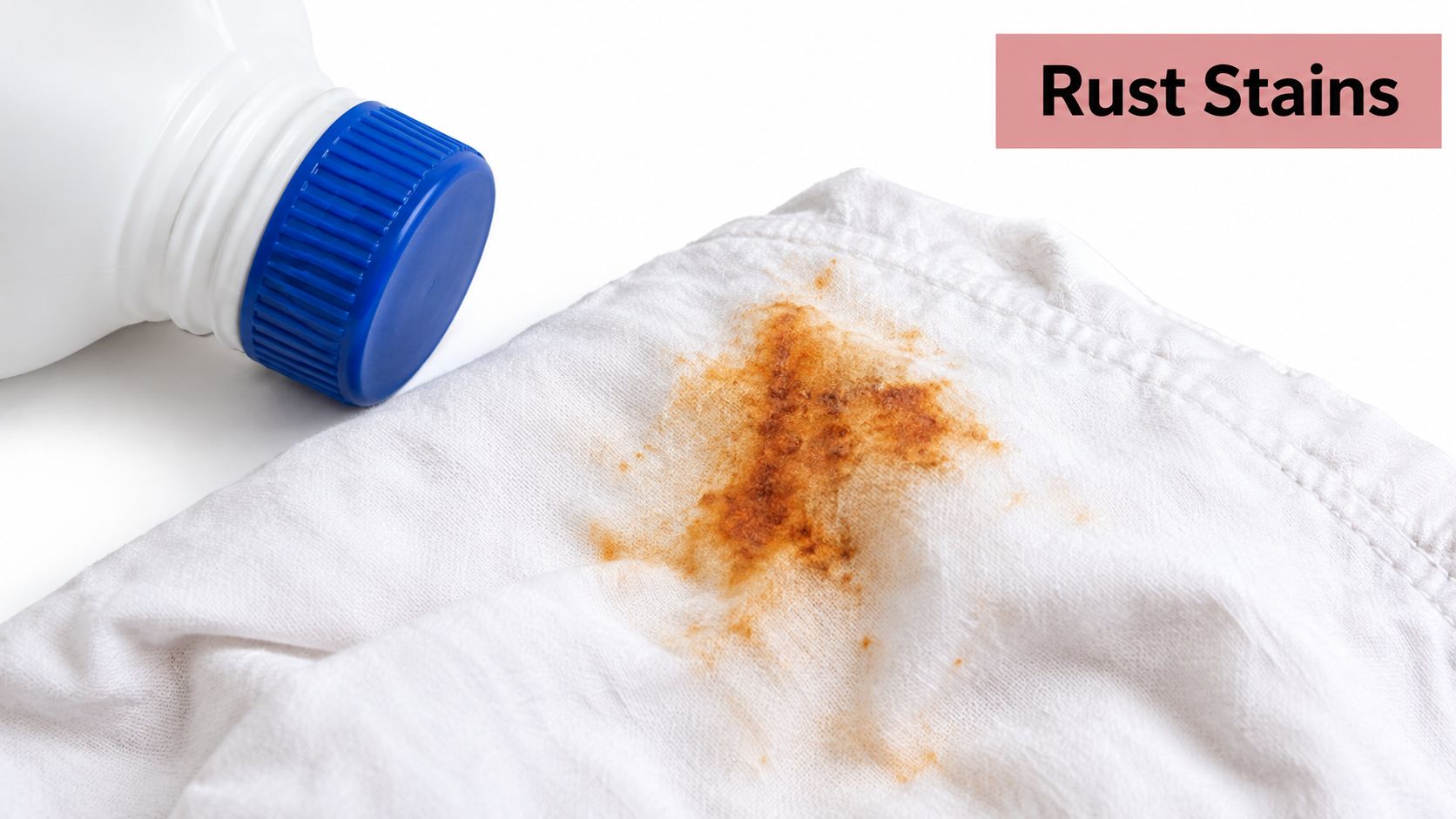
Bleach can change the stain without removing the iron behind it. In water or soil containing iron, chlorine bleach may help produce visible rust-colored discoloration. Kansas State University Extension notes that chlorine bleach can cause rust stains on fabrics exposed to high iron levels. Its guidance recommends checking the care label and considering color-safe oxygen bleach when chlorine bleach is not permitted. Oxygen bleach does not disinfect.
A household using iron-rich well water may see the problem clearly. Repeatedly bleaching white towels can leave yellow or orange marks instead of an even white color. The bleach has not removed the iron and may contribute to the discoloration.
Effects on metal
Bleach can also speed up corrosion. Corrosion testing comparing sodium and calcium hypochlorite reported corrosion-related iron in solution at approximately 1–2 mg/L after 24 hours, compared with about 1 mg/L predicted in solution. These results come from controlled testing, not a promise about household cleaning, but they explain why hypochlorite requires care around iron.
Other scientific reporting has found that chlorine disinfectants can speed corrosion on cast iron, including localized pitting. In plain terms, bleach may attack the metal beneath a rusty mark while leaving the rust in place.
The risk applies to several common items:
- Stainless fixtures, where extended exposure can harm the finish.
- Cast-iron surfaces, where pitting may deepen existing corrosion.
- Steel tools, which should not be soaked in bleach.
- White grout and porcelain, where iron staining may become harder to remove.
- Fabric, where the mark may darken or become more permanent.
University of Georgia Extension also advises against using chlorine bleach with metal objects or in metal containers. A rusty steel tool in a bleach bath is a poor combination, and a metal bucket is not a suitable bleach container.
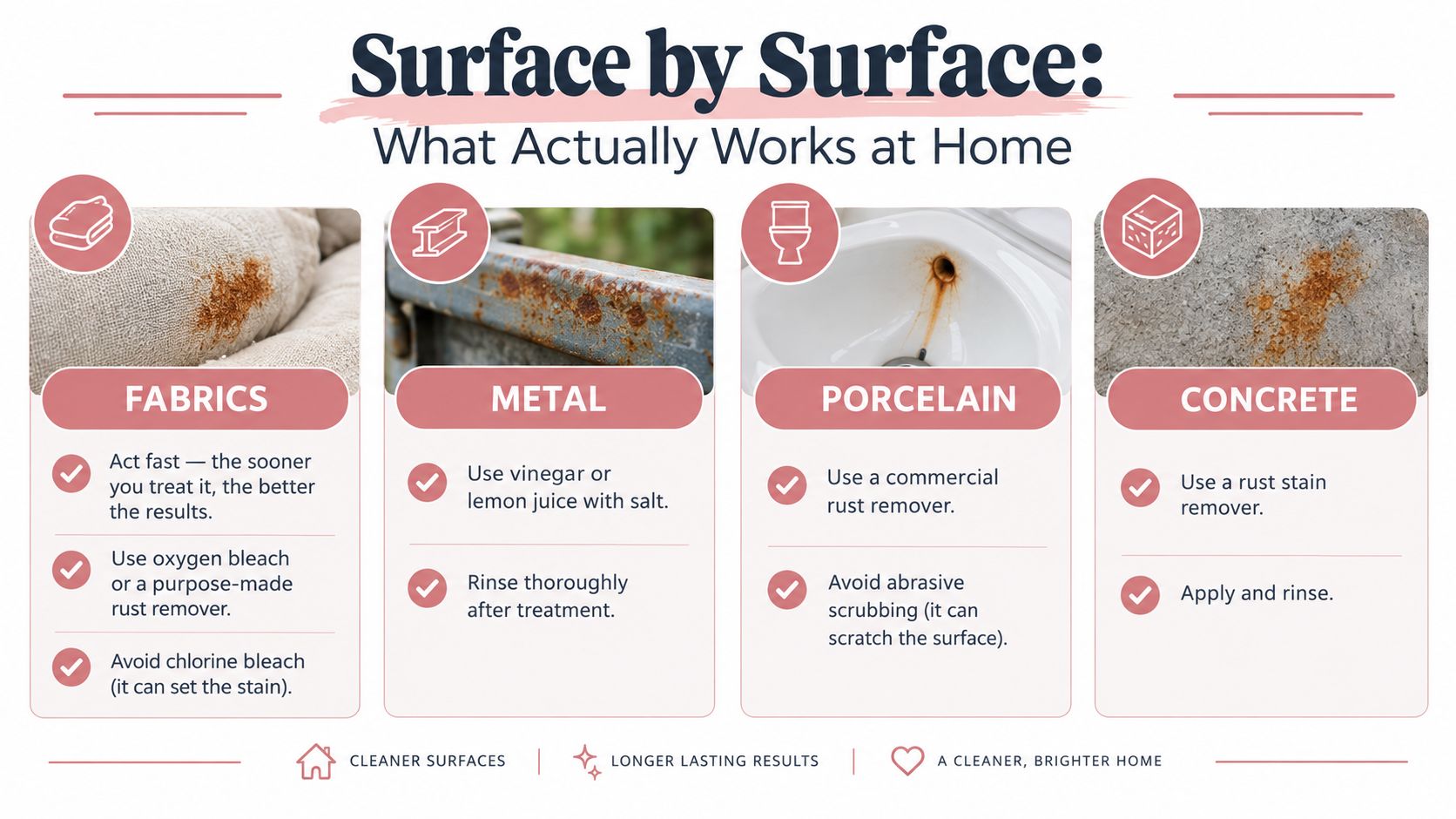
Surface by Surface What Actually Works at Home
Rust treatment starts with the substrate. A method suitable for a white cotton towel may damage natural stone, colored grout, or a polished metal finish.
Fabric
Don't use chlorine bleach as the first response. Check the care label, test a concealed hem, and consider oxygen bleach for compatible washable fabric. Oxygen bleach may help with stains and odors, but it doesn't disinfect.
A purpose-made fabric rust remover may be more appropriate for a stubborn mark. Apply it only as directed, rinse thoroughly, and don't put the garment in a dryer until the stain has been treated.
For example, if a white towel develops orange marks after washing with iron-rich water, repeated chlorine bleaching isn't the answer. Investigate the water source and use a fabric-compatible rust treatment instead.
Porcelain and enamel
A labeled bathroom rust remover can work better than bleach because it is designed for iron deposits. Apply it to a small hidden area first, protect nearby finishes, and rinse according to the label.
Avoid aggressive abrasive scrubbing. A soft cloth or non-scratch pad is safer for a glossy tub or sink. If the stain returns around a faucet, drain, or toilet fitting, inspect the metal source rather than treating the same mark repeatedly.
Grout and tile
Use a product labeled for the specific tile and grout, and test an inconspicuous joint. Oxygen bleach may suit some grout-cleaning tasks, but chlorine bleach shouldn't be the default for iron staining because it can set discoloration and affect surrounding materials.
A bathroom with recurring orange marks may need attention to leaking fixtures, metal shelving, or water quality. Advice about preventing related bathroom problems, such as how to stop mould on bathroom silicone, can help with broader maintenance, but mold care and rust care are different jobs.
Natural stone
Don't assume a stone countertop or floor can tolerate vinegar, lemon juice, or a commercial rust remover. Acids can etch some stone, and bleach can discolor or damage unsuitable finishes. Identify the stone, check the manufacturer's care guidance, and call a professional if the material is unknown.
Stainless steel and tools
Use a specialized rust remover labeled for the surface. Never soak a tool in bleach, and don't place bleach in a metal bucket. Rinse and dry the item thoroughly after treatment, then address the moisture source.
For household cleaning recipes, Aquastar's vinegar cleaning recipe guide may be useful for compatible tasks, but vinegar must never be combined with bleach.
The Dangerous Mistake You Might Already Be Making
A rust stain can turn an ordinary bathroom cleaning routine into a chemical hazard. The risky sequence is simple: bleach goes on first, an acidic rust remover follows, and residue is left behind between applications.
Many rust removers, toilet-bowl cleaners, descalers, vinegar, and lemon juice contain acids. Contact between bleach and an acid can produce chlorine-containing gas. Bleach mixed with ammonia can produce chloramine vapors. These exposures may irritate the eyes, nose, and throat, and can cause coughing, breathing difficulty, chest pain, or severe lung injury. The Canadian transportation safety guidance on improper household-product mixing explains the danger of combining common household products.
A typical bathroom mistake looks like this: someone applies a rust remover to an orange mark in a sink, gives it a quick rinse, then pours bleach over the same area during routine cleaning. An acidic residue can remain, particularly in a poorly ventilated room.
New Mexico State University Extension advises against mixing bleach with toilet-bowl cleaners or rust removers because poisonous gas may result. Its household safety guidance also warns that chlorine bleach and ammonia release a highly toxic gas. University of Georgia Extension gives the same broad warning about combining bleach with other cleaning products.
If bleach and a rust product have both been used, stop adding chemicals. Ventilate the area, keep people and pets away, and follow emergency guidance if anyone develops breathing or irritation symptoms.
Use a boring routine because it works:
- Use one product at a time.
- Read the label before application.
- Rinse the surface thoroughly between products.
- Ventilate the room.
- Never mix bleach with rust removers, acids, vinegar, or ammonia.
- Keep products in their original labeled containers.
Aquastar's guidance on bleach down the drain addresses drain-cleaning questions, but it does not make bleach safe to use over rust remover residue in a basin or toilet.
Safer Alternatives Worth Trying Before You Escalate
No household treatment is safe for every surface. Use the table as a starting point, then check the material, label, and hidden-area test before treating the visible stain.
Rust Treatment Options Compared
| Option | Best surface | How it works | Key safety note | Typical contact |
|---|---|---|---|---|
| White vinegar | Compatible tile, some metal, fresh light deposits | Its acidity can help loosen iron deposits | Never use with bleach; avoid unknown stone | Short contact, then rinse |
| Lemon juice plus salt | Light stains on compatible surfaces or white fabric | Citric acid helps loosen iron, while salt provides mild abrasion | Test first; lemon may affect dyes and stone | Short contact, then rinse |
| Baking soda paste | Gentle spot cleaning around compatible hard surfaces | Provides mild mechanical cleaning rather than dissolving rust | Don't expect it to remove deep iron deposits; avoid forceful scrubbing | Apply briefly and wipe away |
| Cream of tartar paste | Small, compatible household spots | Mild acidity and gentle paste action can help with light marks | Test the surface and rinse completely | Brief contact |
| Hydrogen peroxide | Light organic discoloration near a stain | Oxidizes some organic residue surrounding the mark | It isn't a dependable rust dissolver; test fabrics and finishes | Brief contact |
| Oxygen bleach | Compatible washable fabrics | Helps with some stains and odors without relying on chlorine | It doesn't disinfect and isn't suitable for every textile | Follow the label |
| Commercial rust remover labeled for the surface | Porcelain, tile, fabric, concrete, or metal when specifically approved | Uses chemistry intended to release or dissolve iron deposits | Never combine with bleach; follow the product label exactly | Label-defined contact |
For a fresh, light mark on compatible concrete, household acids may be useful, but porous surfaces need testing because acid can etch or discolor them. A focused car surface rust treatment guide offers a useful reminder that vehicle finishes require their own product decisions, not a bathroom cleaner applied by habit.
Patience is safer than an aggressive soak. Apply a compatible treatment, allow only the label-approved contact time, rinse fully, and repeat gently if appropriate. If the stain remains, stop escalating randomly. Aquastar's citric acid cleaning guide may help distinguish suitable acid-based cleaning from situations where a purpose-made rust product or professional assessment is more appropriate.
When to Stop and Call a Professional Cleaner
Use a simple three-level decision rule.
Small and fresh: A small mark on a known, compatible surface is often a reasonable home project. Test the product in a hidden spot, use gloves and eye protection, follow the label, and rinse completely.
Recurring laundry staining: If white clothing and towels repeatedly develop orange marks, the source may be iron in the water rather than poor washing technique. Investigate the water supply, speak with a plumber or filtration professional, and stop treating the symptom with repeated chlorine bleach.
Stubborn or uncertain: Persistent rust on natural stone, specialty grout, post-renovation surfaces, cast-iron tubs, historic fixtures, or unknown finishes deserves caution. The wrong acid can etch a surface, while bleach can worsen corrosion or discoloration.
Professional help makes sense when
- The stain keeps returning: A leaking fitting, rusty rack, iron-rich water, or outdoor metal object may still be feeding it.
- The substrate is unknown: Don't experiment with acids or bleach on a finish you can't identify.
- The surface is valuable: Historic fixtures, specialty stone, and cast iron can be expensive to replace.
- Chemical history is unclear: If bleach, toilet cleaner, vinegar, or rust remover has already been used, pause before applying anything else.
- Children or pets are present: A professional plan can reduce unnecessary exposure to aggressive products.
Aquastar Cleaning Services, LLC handles whole-home deep cleaning, move-in and move-out cleaning, and post-construction cleanup for households that need careful attention to bathrooms, laundry areas, and fine surface residue. Those services are especially relevant when the stain source or material is uncertain and the homeowner doesn't want to keep experimenting.
A Short Checklist to Take Into the Bathroom
Disinfecting power and rust-removal power are different functions. A product that whitens a mark may leave the iron underneath, so the safer default is to keep bleach out of rust decisions.
Save this checklist with your cleaning supplies:
- Identify the surface: Fabric, porcelain, grout, stone, and metal need different treatments.
- Read the label: Confirm the product is designed for that material and stain.
- Never mix products: Keep bleach away from rust removers, acids, vinegar, and ammonia.
- Rinse between treatments: Don't layer a new chemical over residue from the last one.
- Call for help when uncertain: Persistent stains, unknown substrates, and recurring water-related marks need assessment.
For a broader bathroom routine, use this bathroom deep-cleaning checklist while keeping rust treatment separate from disinfection.
If orange stains keep returning or you're unsure which products are safe for your bathroom, Aquastar Cleaning Services, LLC offers deep cleaning, move-in and move-out cleaning, and post-construction cleanup in Kennesaw and the North Atlanta area. Ask for a surface-conscious cleaning plan that addresses the surrounding buildup without treating rust with bleach or mixing incompatible chemicals.