


You're halfway through ironing a dark shirt when a burst of steam leaves chalky streaks across the fabric. You wipe the bottom of the iron, try again, and get another shower of flakes. Before you reach for vinegar, check what your iron allows. The safest way to clean a steam iron depends on its cleaning mechanism, not just how dirty it looks.
Why Your Steam Iron Spits White Flakes
That dark-shirt moment is a useful warning: the problem may be inside the iron rather than on its shiny underside. Mineral deposits can progressively restrict the steam path, causing uneven steam and releasing white flakes. Wiping the outside won't clear deposits hidden in the steam chamber, as explained in Saga's iron-descaling guidance.
The visible buildup helps you decide where to investigate.
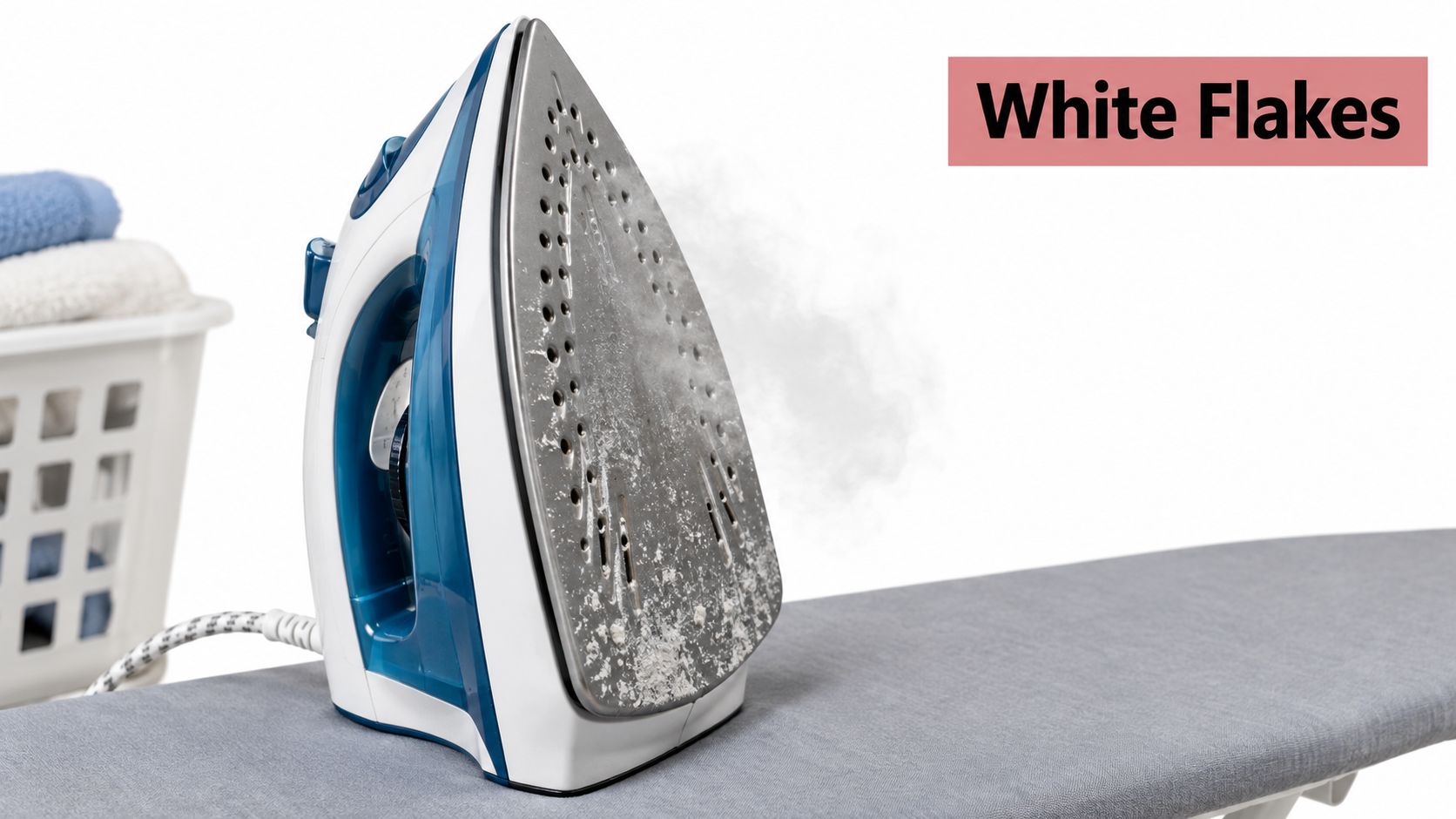
Separate the cleaning zones
Think of iron maintenance as separate jobs rather than a single cleaning recipe:
- Water tank and steam chamber: Internal scale needs the appliance's approved flushing or descaling procedure.
- Anti-calc valve or cartridge: Follow the maintenance instructions for that particular component. Don't assume a cartridge can be treated like a removable valve.
- Soleplate: Exterior residue needs gentle surface cleaning, with special care around the steam openings.
For example, suppose the cooled soleplate wipes clean but the next steam burst still throws flakes onto an old cloth. Scrubbing the plate harder targets the wrong area. Investigate the internal cleaning mechanism instead.
A chalky appearance elsewhere in the kitchen, such as white residue in a dishwasher, may prompt you to investigate your household water too. It doesn't mean the appliances accept the same cleaning chemicals.
Practical rule: Locate the affected component before choosing a cleaner.
A clean-looking soleplate isn't proof that the steam system is clear. Equally, an internal flush isn't a substitute for removing visible exterior residue. Identify the iron's mechanism first, then match the cleaning method to the affected zone.
Identify Your Iron Type Before Cleaning
Start with the model number and manual, not the vinegar bottle. Look for identifying information on the base or body, then examine the controls and reservoir opening without removing unfamiliar parts. For an older or second-hand iron, finding the manufacturer's documented procedure is more useful than guessing from its appearance.
Use the visual checks below to orient yourself.
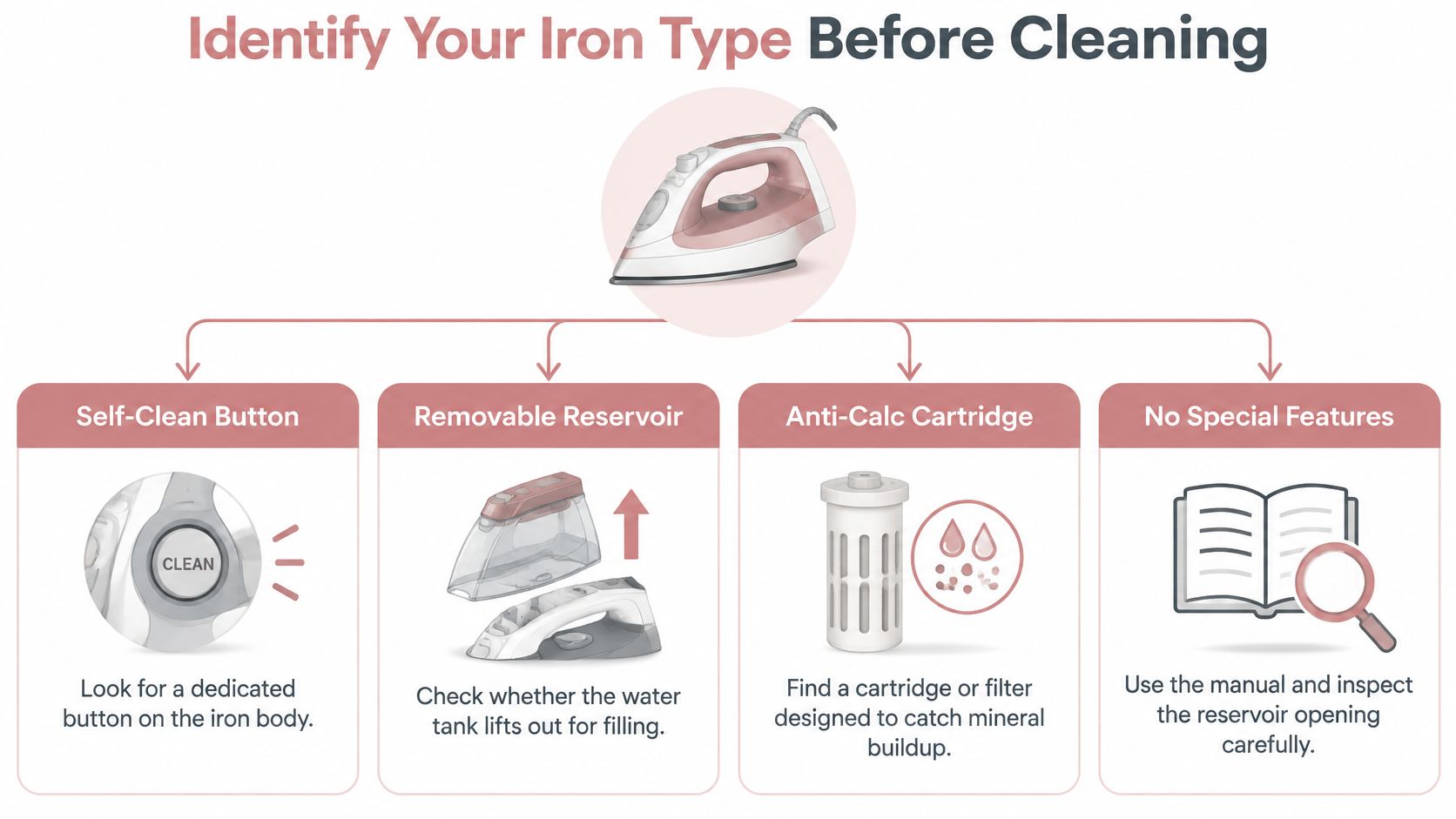
Match the feature to the procedure
- Self-clean button: Look for a dedicated control, then check the required filling, heating, and discharge sequence.
- Removable anti-scale valve: Confirm which part comes out and how the manufacturer says to clean it. Don't pull at an unfamiliar reservoir fitting.
- Anti-calc cartridge: Find the cartridge instructions before attempting to rinse, soak, or replace it.
- Separate boiler: A steam-generator base requires its own maintenance procedure rather than an ordinary iron's reservoir treatment.
A removable water tank is a useful identifying feature, but it doesn't establish chemical compatibility. Neither does the presence of an anti-calc label.
The differences can be substantial: certain Tefal anti-scale valves have a four-hour soak procedure, whereas an Argos iron manual explicitly prohibits descaling products on the soleplate. Permission to treat a removable valve isn't permission to pour the same solution through the appliance.
Write down a simple decision before starting: My model uses the documented self-clean cycle, or My model requires valve maintenance. That makes it harder to mix incompatible procedures.
If you can't identify the model or find its instructions, limit cleaning to a damp, non-abrasive cloth on the exterior. Don't improvise an internal acid treatment.
Clean the Soleplate Safely
The soleplate is easy to reach, which makes it tempting to scrub aggressively. Resist that approach. Use a soft damp or microfiber cloth, work gently around the openings with cotton swabs, and keep steel wool, abrasive pads, and sharp metal tools away from the plate.
Follow this safety sequence before touching the surface.
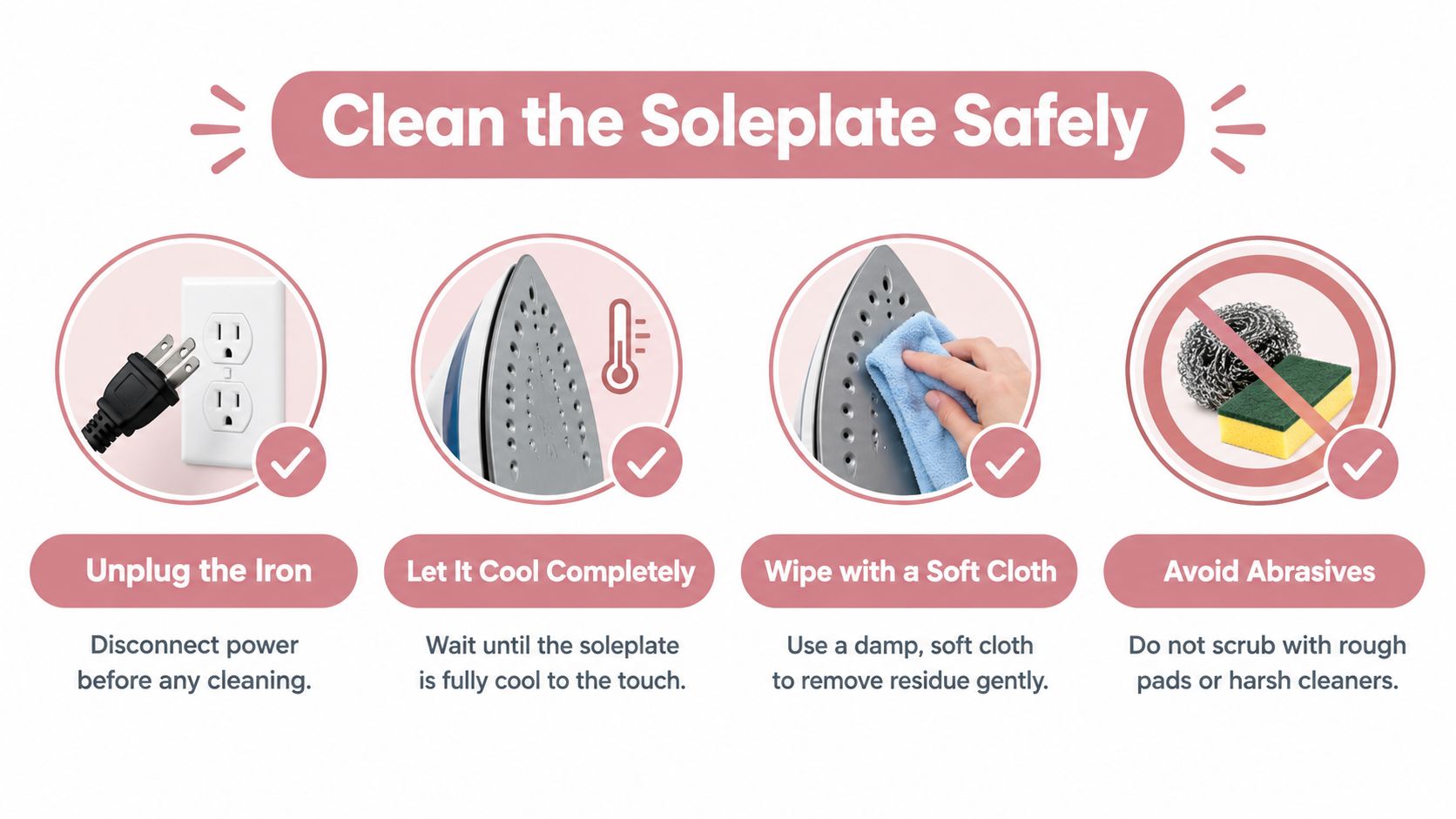
Start with the mildest approved wipe
Unplug the iron and let it cool completely. Dampen the cloth rather than pouring liquid over the appliance, then wipe the plate without flooding the steam openings or electrical housing. Use cotton swabs around accessible vent edges, not as tools for digging inside.
For a model-specific example, Sunbeam's soleplate instructions recommend cleaning after every 30 uses, or sooner when starch or visible buildup appears, using warm soapy water on a cotton cloth or terry towel. For hard-water deposits, that manual permits a 50/50 vinegar-and-water wipe.
- Routine residue: Begin with the gentle cloth method your manual permits.
- Approved mineral treatment: Apply the diluted vinegar mixture to the cloth, not directly to the iron.
- Final pass: Remove remaining residue and moisture with a clean cloth before putting the appliance away.
For example, after a month of frequent ironing, a compatible Sunbeam model might have a chalky film on its plate. Unplug it, let it cool, wipe with a cloth dampened with equal parts vinegar and water, then finish with a clean cloth.
That example is an exterior treatment, not authorization to fill the reservoir with vinegar. If gentle wiping doesn't remove a mark, consult the coating-specific instructions rather than increasing pressure or switching to a rougher pad.
Descaling the Inside Three Ways
Choose the method your manual authorizes. Understanding what a descaling solution is can help you distinguish chemical treatment from a water-only flush, but it doesn't establish whether your iron accepts that solution.
Self-clean flush
Follow the model's preparation and heating sequence first. Breville's VIN306 instructions recommend self-cleaning once every two weeks, more often in very hard water; during discharge, unplug the iron, hold it over a sink with the soleplate downward, and hold the self-clean button so hot water and steam expel impurities.
For a compatible iron used with very hard water, a weekly flush is a practical increased-maintenance example. Keep hands clear of the discharge, and don't mistake the unplugged discharge stage for permission to handle a hot soleplate.
Permitted vinegar descale
Only where the manual allows internal vinegar use, Good Housekeeping's cleaning method uses equal parts distilled white vinegar and water, fills the reservoir about one-third full, and heats at a medium steam setting for 5–10 minutes before steaming onto an expendable cloth until empty. Discard remaining solution safely, rinse the reservoir, then refill and steam with clean water to flush out loosened residue.
Use the manual's timing if it differs. Don't borrow a longer soaking period from another appliance.
Steam-generator boiler rinse
After unplugging and fully cooling a compatible generator, Panasonic's boiler-rinsing guidance specifies draining the tank, removing the designated bottom plug, adding 500–600 milliliters of water, and rinsing the interior several times. Never open a hot boiler or substitute household cleaner for the specified water.
Internal Descaling Methods by Iron Type
| Method | Iron Type | Solution | Run Time | Flush Required |
|---|---|---|---|---|
| Self-clean flush | Model with documented self-clean function | Manufacturer-specified water | Model's cycle | Follow discharge and rinse instructions |
| Permitted vinegar descale | Model explicitly allowing vinegar internally | Approved diluted mixture | Follow authorized heating and steaming time | Yes, clean-water rinse and steaming |
| Boiler rinse | Compatible steam generator | Specified water | Repeated rinses, not an acid soak | Yes, rinse boiler as directed |
Match Water Choice to Your Water Hardness
Distilled water only isn't a universal rule. Your iron's water requirements depend on its design, so read the water section of the manual separately from the cleaning section. Choosing the right water is preventive maintenance, not a replacement for clearing an existing blockage.
Check your water conditions before settling into a routine.
Build a water-choice decision
Miele's operating instructions address increased cleaning in hard-water conditions. Depending on the appliance, water directions may call for tap water or a blend such as 50% tap water and 50% distilled or demineralized water, rather than distilled water alone.
For renters and homeowners who don't know their supply, start with municipal water-hardness information. For background on interpreting hardness, the hard water insights from Praz Pure Water provide a useful companion resource. Keep that general water information separate from the iron manufacturer's compatibility instructions.
- Manual specifies tap water: Follow that direction rather than assuming a different water type must be better.
- Manual specifies a blend: Prepare the stated mixture instead of estimating from habit.
- Instructions are unclear: Don't assume filtered water meets the requirement. Confirm the approved water type with the manufacturer.
For example, if flakes return after an approved flush, review both your water choice and maintenance frequency. Repeated exterior wiping won't address the internal problem, and repeated acid treatment isn't an appropriate substitute for checking compatibility.
This video offers an additional visual reference for iron care.
For wider household planning, consider hard-water solutions alongside appliance-specific care. The practical goal is a water and maintenance routine your particular iron supports.
Mistakes That Damage Steam Irons
Vinegar isn't universally safe inside a steam iron. Expert Reviews' iron-cleaning guidance highlights a manual that prohibits vinegar, descaler, and other additives, directing owners instead to use self-clean at least every 14 days. It also warns against cleaning a hot or plugged-in soleplate, using sharp metal objects in vents, and exceeding an authorized acid dwell time.
A general vinegar cleaning recipe doesn't override those restrictions. The important question isn't whether vinegar removes mineral deposits, but whether the affected components tolerate it.
Match the mistake to the safer response
| Situation | Risky response | Safer response |
|---|---|---|
| A mark won't wipe off | Scrub the coating with steel wool | Check the approved soleplate treatment |
| A vent looks blocked | Push a pin or metal tool inside | Use the authorized flushing procedure |
| Steam remains uneven | Increase acid concentration | Repeat only an approved cycle or seek service |
| Cleaning gets interrupted | Leave acidic liquid in the tank | Follow the model's emptying and dwell instructions |
| The iron is second-hand | Copy a recipe for a similar-looking model | Identify the exact model before internal cleaning |
For example, an older iron with no manual may have a visible self-clean control but no clear preparation instructions. That's a reason to find the documentation, not to fill the tank with vinegar and hope the button handles the rest.
Stronger acid isn't a sensible next step when an approved cleaning cycle hasn't restored steam.
Incompatible additives and over-concentrated acids can damage internal components. If the documented procedure doesn't resolve uneven flow, stop experimenting and contact the manufacturer or an appliance service provider. Protecting the iron and your clothing matters more than forcing another home remedy.
Your Steam Iron Maintenance Routine
Keep a small maintenance note with the iron's model number, approved water type, and cleaning method. Record the soleplate and self-clean intervals established earlier, then adjust only as the manual permits when hard-water symptoms recur. That's easier to follow than trying to remember which online recipe applied to which component.
Finish each session deliberately
- Empty the reservoir: Make this part of putting the iron away after use.
- Check the exterior: Deal with visible starch or residue using the approved cooled-plate method.
- Verify after descaling: Test steam on a white expendable cloth before returning to clothes.
The functional finish line is clear: unobstructed steam from all vents, no white flakes, no lingering odor, and no staining on the test cloth. If any of those checks fail, don't treat a cleaner-looking plate as proof that the job is complete.
Check the manual before any acid touches the iron.
That applies to other acids too. General advice about cleaning with citric acid isn't permission to introduce it into an undocumented steam system.
For a practical household routine, keep appliance-specific tasks on your own checklist and delegate broader cleaning when it crowds them out. You don't need a more aggressive cleaner. You need the right procedure and a manageable schedule.
Aquastar Cleaning Services, LLC is a family-owned company serving Kennesaw and North Atlanta with recurring housekeeping, deep cleaning, and interior oven and refrigerator add-ons, using eco-friendly products and insured, background-checked teams. If whole-home upkeep keeps pushing appliance maintenance aside, visit Aquastar Cleaning Services, LLC to request a customized cleaning plan and free up time for the model-specific care your iron needs.