



Lift the loose flakes, test a hidden seam, work in liquid detergent for 10–15 minutes and wash by the care label, then air-dry before using any dryer. If paint remains, a carefully tested solvent treatment may help, but the fabric decides whether that's a sensible next move.
You finish painting, toss your work clothes aside, and discover a stiff patch on the sleeve when you're sorting laundry. The temptation is to scrub it under the tap or reach for paint thinner. Neither is a good default: dried latex needs controlled removal, and an aggressive cleaner can leave more damage than the original drip.
The Quick Answer for Dried Latex on Clothing
A stiff ceiling-paint drip on a white cotton work-shirt sleeve is a different job from the same drip on an acetate blouse. On the cotton, lift only the film that already stands proud of the weave, then wash with liquid detergent the care label allows. On acetate, scraping hard or reaching for a strong solvent can melt the fiber, so the sensible stop is loose flakes and a label check.
Dried latex is a cured film. Its binder has formed a solid coating around and between the fibers, and water alone rarely reverses that. Still-wet paint is the easier case: remove the excess and flush from the back of the cloth with cool water before a crust forms.
Timing changes the job
The longer that film sits, the harder it is to lift without taking dye or fiber with it. An overnight drip on cotton may still release in a wash. A spot that has soaked through the weave and sat for days may only fade. I would rather leave a faint mark than force a hole.
Practical rule: Remove paint without sacrificing the fabric. A faint mark is preferable to a scraped hole.
Dryer heat is what locks a partial failure in place. It can set whatever discoloration the wash left on the sleeve, so keep the shirt on a rack or a line until you can inspect it in daylight. Only then is a fabric-compatible solvent worth considering, and only after a hidden-seam test. Pressing harder with a spoon pushes the film into clean threads beside the spot.
Before starting, gather:
- Garment information: Fiber content and the complete care label.
- Absorbent materials: A clean white towel and white cloth.
- A blunt tool: A dull spoon or plastic card, not a razor blade.
Match Your Method to the Fabric
The care label comes before the cleaning product. A washable cotton sleeve and an acetate blouse may carry identical paint spots, but they shouldn't receive identical treatment. Blended fibers, dyes, stretch panels, and surface finishes can narrow your options further.
The fabric precautions in Lowe's guide to removing paint from clothes support a conservative approach: start with gentle residue removal and detergent rather than assuming every garment can tolerate a solvent.
Starting method and limits by fabric type
| Fabric | Start with | Escalate to | Avoid |
|---|---|---|---|
| Washable cotton, cotton blend, denim | Lift flakes, then liquid detergent and a cold soak | Isopropyl alcohol after a hidden-seam test | Putting the garment in the dryer before inspection |
| Polyester and nylon, colorfast | Lift flakes, then detergent wash by the care label | Isopropyl alcohol after a hidden-seam test | Hard scrubbing that fuzzes the fabric |
| Acetate and triacetate | Lift loose flakes only, then detergent if the label allows washing | Professional textile cleaner | Acetone, which can melt the fibers |
| Wool and silk | Lift loose flakes with a blunt edge, then gentle detergent only if washable | Professional textile cleaner | Chlorine bleach, hot water, and vigorous scraping |
| Rayon and viscose | Detergent and cool water if washable | Professional cleaner if dye bleeds | Any solvent used without a patch test |
| Dry-clean-only or valuable garments | Stop after lifting easily detached flakes | Professional textile cleaner | Any home solvent |
Make the choice on the actual garment
A colorfast polyester work uniform can start with label-approved detergent treatment. If a raised paint edge remains, a light alcohol test inside the hem may justify further treatment, provided the dry test area shows no change.
An acetate blouse needs a different decision. Lift an already-detached paint speck without tugging, but don't experiment with nail-polish remover. If its label doesn't permit washing, skip detergent treatment and take it to a textile cleaner.
Waterproof and coated garments deserve extra caution. A solvent may alter the finish without releasing the paint, so a successful test on plain fabric doesn't prove that a coated panel is safe.
Stop if you see yarns pulling, surface fuzz, or garment dye transferring onto the white towel. For a valuable uniform or sentimental blouse, the cost of a faded patch may outweigh the benefit of another attempt.
The same fabric-first habit applies to other laundry problems, although the chemistry differs. Our guide to getting grape juice out of clothes addresses that separate type of stain, not a substitute treatment for cured paint.
Choosing a Solvent and Using It Safely
A solvent is a controlled escalation, not the starting point for every garment. If gentle removal and detergent haven't worked, a suitable solvent goes after loose-flake removal and before the final detergent cleanup.
Choose the product before opening the bottle. Read its intended uses, fabric restrictions, protective-equipment requirements, and disposal directions. A product sold for cleaning tools or woodwork isn't automatically appropriate for clothing.
Solvent options for dried latex on clothing
| Option | Suitable use | Key limit |
|---|---|---|
| Isopropyl, or rubbing, alcohol | Dried water-based latex on washable cotton or polyester | Test first; flammable; can affect dyes and elastic |
| Denatured alcohol, 3 tablespoons per quart of water | General diluted cleaning formula considered for light residue, not a validated garment-paint recipe | Test first; ventilate; never mix with bleach or ammonia |
| Dry-cleaning solvent | Patted from the reverse side of washable garments only when the product permits textile spot treatment | Check flammability warnings; ventilate; no dryer until residue is gone |
| Acetone | Not recommended for home use on most fabrics | Can melt acetate and triacetate |
| Mineral spirits or paint thinner | Not recommended for clothing treatment at home | Strong fumes and risk of fabric and skin damage |
Utah State University Extension's greener-cleaners guidance includes 3 tablespoons of denatured alcohol in 1 quart of water as a cleaning formulation, not as a tested dried-latex clothing treatment. That distinction matters: a measured recipe isn't proof that it's safe for your sweatshirt.
For example, someone considering that dilution for a gray cotton sweatshirt should first confirm that the alcohol product permits the proposed use. Only then would they measure it, dampen a cotton ball, and test the inside seam. I would choose a textile-labeled option over adapting a general household formula.
Keep solvent treatment separate from appliance use
Work with ventilation, suitable gloves, and no flames, cigarettes, pilot lights, or other ignition sources. Apply a small amount to a white cloth rather than saturating the garment. Don't combine alcohol with chlorine bleach, ammonia, or other cleaners.
Solvent-contaminated clothing must not go straight into either appliance. The Everyday Fixes paint-stain guide emphasizes removing solvent thoroughly before laundering, following the product label, and keeping affected clothing out of the dryer.
Rinse and safely air out the garment as the product directs. If it's heavily soaked, or you can't establish how to remove the product safely, stop and consult a textile professional rather than assuming a wash cycle will solve it.
A paint remover can introduce a fire hazard even when the original paint was water-based.
Don't add household powders to make a stronger mixture. Our baking soda stain-removal guide addresses other cleaning uses, not a reason to combine baking soda with a paint solvent.
For paint left on nearby woodwork, Hayes Painting and Decorating's paint removal tips for Cumming homeowners provide surface-specific context. Keep trim-removal products and techniques separate from garment care.
How to Remove Dried Latex Paint Step by Step
For a practical example, take a washable navy cotton T-shirt with a dried spot about the size of a coin. Confirm that the paint was water-based latex, protect the work surface, and keep untreated clothing away from the job.
Use this process overview to keep the treatment controlled.
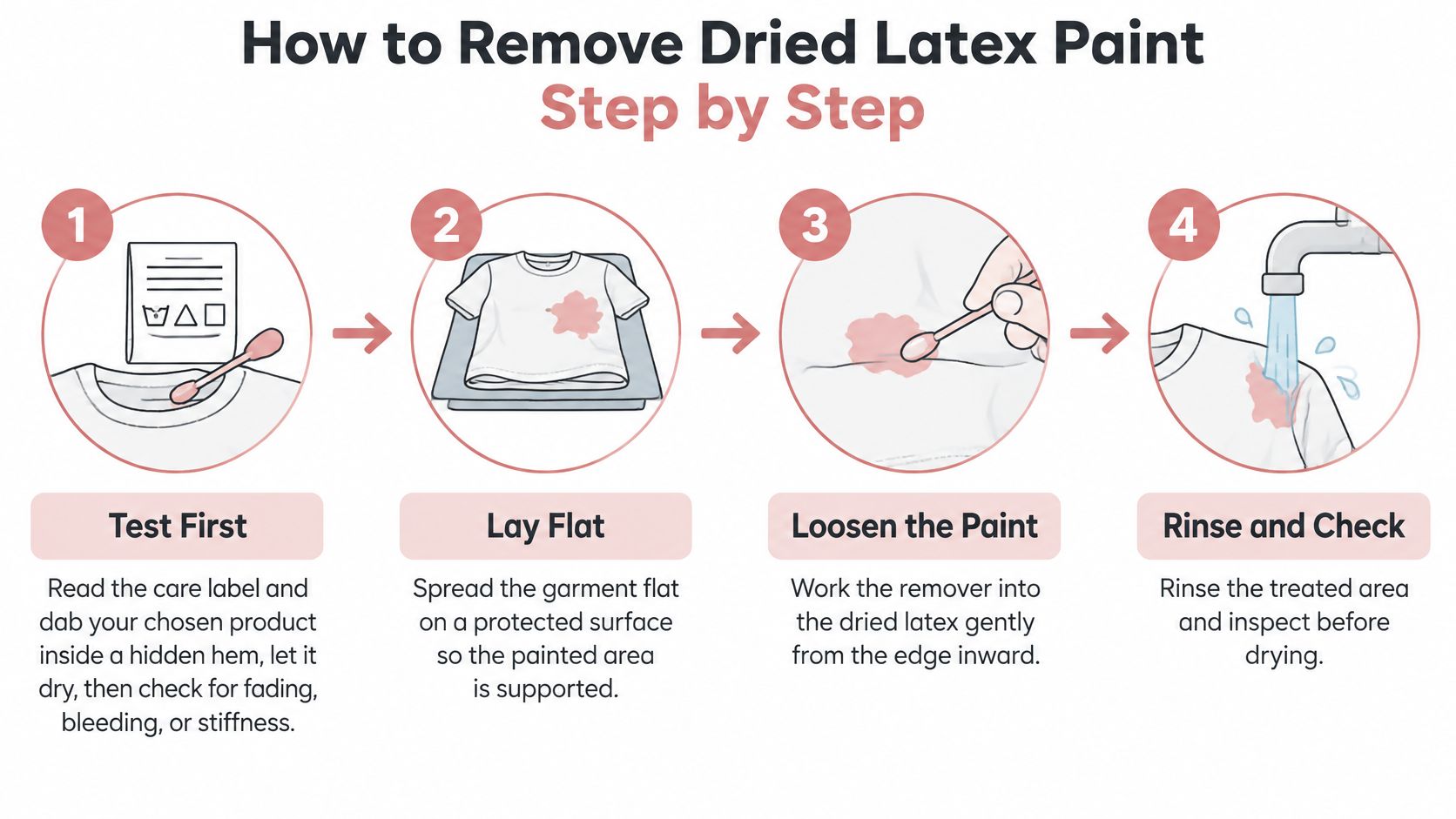
Prepare and loosen the residue
Read the care label and test a hidden seam. Dab your proposed treatment inside the hem, let it dry, and check for fading, bleeding, stiffness, or finish changes, a precaution recommended by Utah State University Extension's stain-removal guidance. Don't treat the visible navy fabric just because the test patch looks unchanged while wet.
Arrange an absorbent backing. Lay the stained area paint-side down over a clean white towel so loosened pigment can transfer out of the shirt rather than onto another layer. Keep the back of the shirt clear of the treatment area, a common oversight when working on a sleeve or folded T-shirt.
Lift loose flakes without digging. Turn or reposition the supported fabric as needed to reach the painted surface, gently flex it, and slide a dull spoon or plastic card beneath already-loose edges. Stop if fibers pull or fuzz; trying to shave the fabric clean can remove yarn along with paint.
Treat stubborn residue only if the patch test passed. Return the paint-side down onto the towel, dampen a white cloth with a small amount of suitable isopropyl alcohol or textile-approved dry-cleaning solvent, and pat from the reverse, working from the outer edge toward the center. Avoid flooding the spot or brushing outward, which carries loosened pigment into clean fabric.
Transfer, wash, and inspect
Move to clean absorbent material as paint transfers. Shift the stained area onto a fresh towel section and replace the treatment cloth when it picks up pigment, rather than pressing the same dirty patch against the shirt. On the navy T-shirt, look for paint-colored transfer and a smaller, flatter mark, not navy dye on the towel.
Follow with liquid laundry detergent. Once any solvent has been removed according to its label, gently work detergent through the affected area and allow the pretreatment dwell described earlier. Don't let loosened paint dry back onto the fibers while you leave the garment unattended.
Rinse from the reverse, then wash separately. Cold water and a little dish soap are supported as a post-treatment rinse in Utah State University Extension's household-stain guidance; rinse the soap out before machine washing at the care-label temperature. Don't put a still-solvent-contaminated shirt into the washer, and don't add dish soap to the machine.
Air-dry and examine the fabric in daylight. Check both the surface and the spaces between yarns for remaining paint, repeating gentle treatment only if the fabric remains sound. Dryer use comes only after the stain and solvent residue are gone, not merely because the shirt has completed a wash cycle.
For the T-shirt, a promising result is a progressive reduction in the raised deposit with no change to the navy background. If the white towel turns navy instead of the paint's color, stop. More solvent isn't the answer to dye loss.
A related demonstration can help you judge the handling motion, but your garment and product labels still set the limits.
Learning how to remove dry latex paint from clothing means judging progress without demanding a perfect result at any cost. A softened spot isn't necessarily a removable spot, and repeated rubbing can wear the fabric before the remaining pigment releases.
Keep different stains on separate treatment paths. The methods in our guide to removing chocolate stains address food residue, not hardened paint film.
Mistakes That Set or Spread Paint
Suppose someone attacks a navy polo's paint spot with a stiff brush, rubbing outward until the stained area doubles in size. A later, gentler attempt might recover only part of that spread, while the brushed surface stays fuzzy. That's a hypothetical example of why more force doesn't mean better removal.
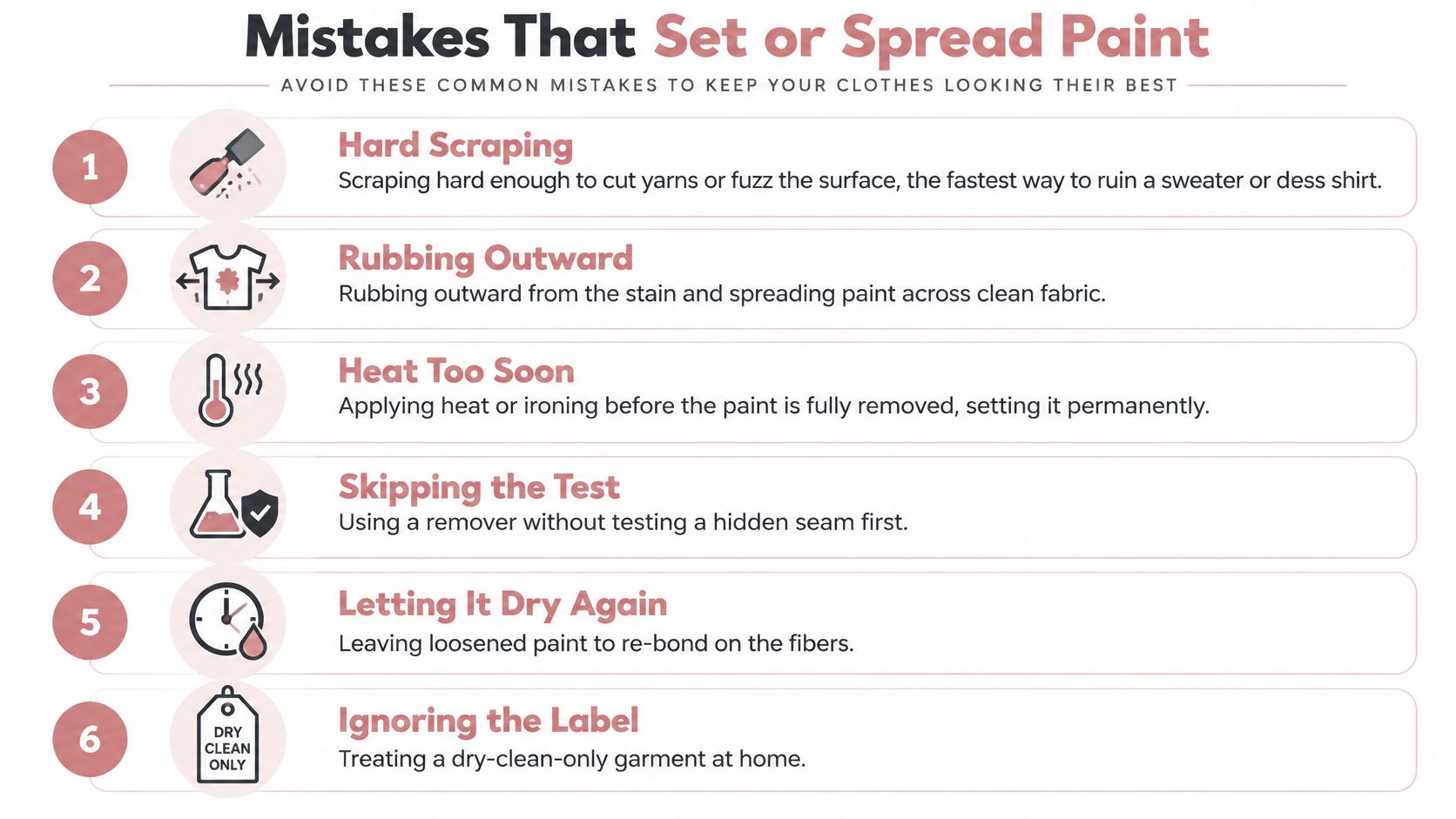
The BroomBook paint-removal guide identifies aggressive scraping, outward rubbing, missed colorfastness tests, premature heat, and home treatment of delicate garments as common failure modes. It also warns against mixing products or putting solvent-treated clothing directly into laundry appliances.
Wrong moves and their replacements
- Scraping down to bare fabric: This can cut yarns on a dress shirt or snag a sweater. Lift detached material and leave firmly bonded paint for controlled softening.
- Rubbing outward: This drags loosened paint onto clean cloth. Work from the outside boundary toward the center, with clean absorbent material underneath.
- Skipping the dry patch-test check: A wet test can hide a change in color or finish. Let the hidden area dry before judging it.
- Using heat to finish quickly: Ironing or tumble-drying a still-marked garment can make residual discoloration permanent. Our guide to washing in hot water explains why hotter washing isn't a universal solution.
- Experimenting on delicate or dry-clean-only clothes: A paint speck doesn't cancel the care label. Stop before a small mark becomes a damaged panel.
- Mixing cleaners: Adding bleach or ammonia to alcohol doesn't create a better remover. Keep products separate and follow their individual directions.
Use this visual reminder to avoid damage while treating the spot.
Don't leave loosened residue to dry onto the polo again. Complete the appropriate rinse and detergent cleanup rather than abandoning the garment midway through treatment.
Stop when the fabric changes, not only when the paint stops changing.
Before another attempt, run a short check:
- Label read: The proposed treatment suits the garment.
- Seam tested: The dried test area remains unchanged.
- Towel positioned: Pigment has a clean place to transfer.
- Dryer excluded: The garment will be inspected after air-drying.
Know When to Stop and Call a Professional
Home treatment has reached its limit when removing more paint means risking the garment. Stop for any of these signs:
- Physical damage: Yarns pull, fibers fuzz, or the surface thins.
- Dye loss: Garment color appears on the white towel.
- Stubborn bonding: Old, heavily attached paint won't release gently.
- Restricted care: The label says dry-clean-only.
- High stakes: The item is valuable, delicate, or irreplaceable.
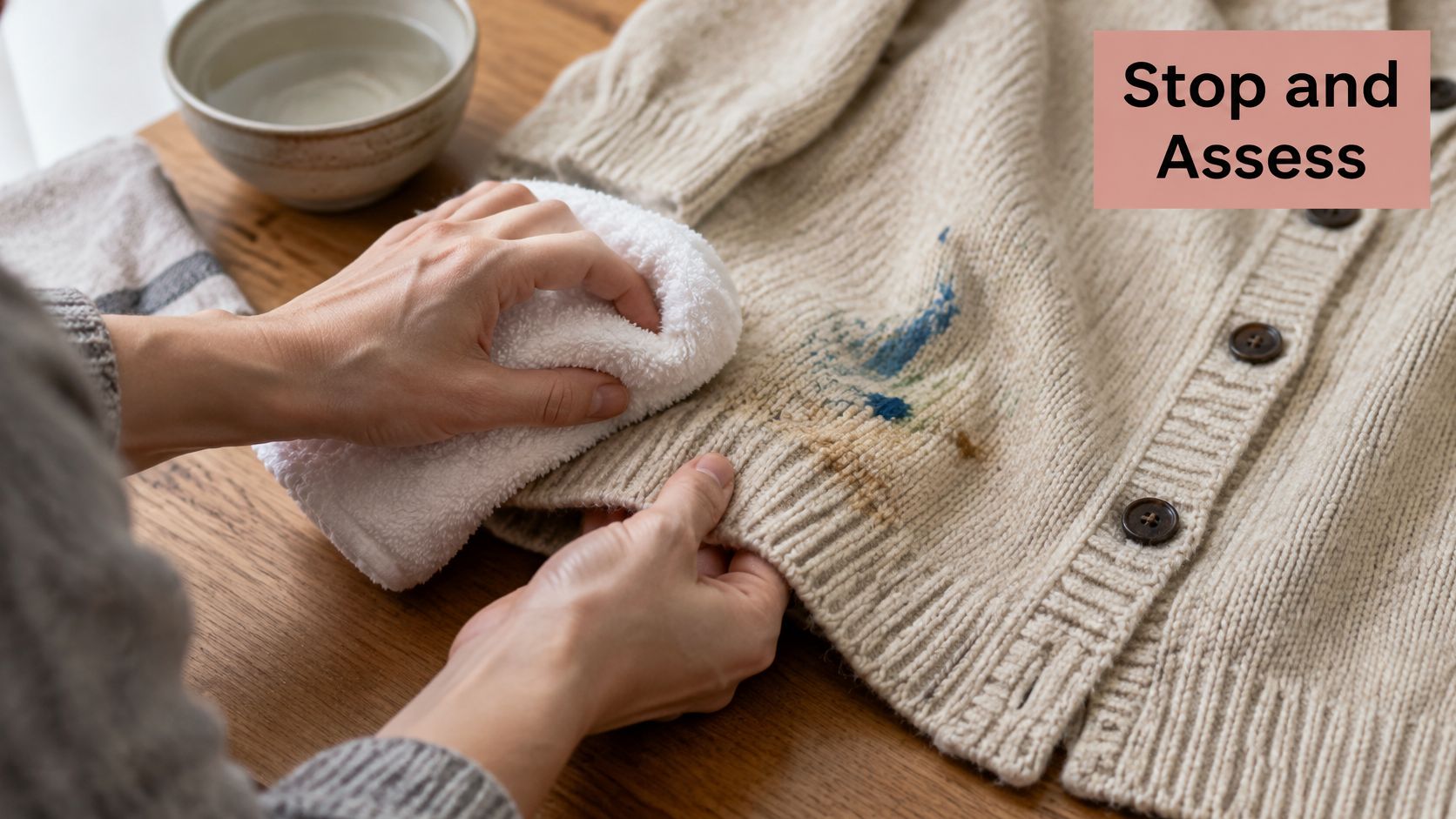
A wool coat spattered during a hallway repaint is a good example. Lift only flakes that detach without resistance, then take the coat to a textile cleaner and identify the paint and any treatment already applied. A professional can assess specialized solvent treatment under controlled conditions, though complete removal still isn't guaranteed.
Gentle handling matters especially on knitted garments.
Our guide to choosing a dry cleaner can help with that next decision. Bring the paint container information if available, rather than asking the cleaner to guess what's on the coat.
Keep garment restoration separate from the surrounding cleanup. At Aquastar Cleaning Services, LLC in Kennesaw, our laundry-area cleaning includes wiping appliances, wiping and washing the dryer, removing cobwebs, and vacuuming and mopping floors with environmentally safe cleaning agents. We don't leave until the entire home is spotless; garment stain treatment remains a separate task for the appropriate home method or textile specialist.
Aquastar Cleaning Services, LLC offers post-construction and household cleaning for paint dust and residue left around your home, including the laundry area. Visit Aquastar Cleaning Services, LLC to request a cleaning plan for affected surfaces while keeping delicate or solvent-treated clothing with a qualified textile cleaner.