


Only 40% of recent movers received their full security deposit back, while 59% of landlords who withheld some or all of a deposit cited cleaning costs. Thorough tenant move out cleaning, backed by dated photos, receipts, and a room-by-room checklist, gives you a far stronger handover record than a rushed final sweep.
Cleaning isn't just about making an empty rental look pleasant. It can affect whether you recover a substantial household expense, especially when appliances, bathrooms, floors, cabinets, and hidden dust are left for an inspector to find. Zillow's 2024 Consumer Housing Trends Report found that 87% of recent renters paid a security deposit, with a typical deposit of $750, but only 40% received the entire amount back.
The practical answer is to treat cleaning as both a physical job and an evidence job. Clean to the lease and move-in report, then document the empty property before returning the keys.
Why Move-Out Cleaning Decides Your Deposit Outcome
A rushed final sweep can leave behind the exact details that trigger a deposit deduction. The oven may still contain baked-on grease, refrigerator drawers may hold spills, and a bathroom floor may look clean until someone checks behind the toilet. The English Private Landlord Survey 2024 found that 59% of landlords who withheld some or all of a deposit cited cleaning costs, second only to property or contents damage at 63%.
The practical risk is easy to miss. A renter removes every box, vacuums the visible floor, and wipes the kitchen counters, but leaves grease on the hood filter and soap buildup around the shower track. The landlord finds those areas after the keys are returned. Without dated photos showing the final condition, the tenant may have little evidence beyond a claim that the unit was cleaned.
Separate wear from cleanable neglect
Ordinary deterioration differs from dirt left through neglect. California's rental guidance on normal wear and tear distinguishes ordinary aging from excessive dirt, tenant-caused damage, unauthorized alterations, or missing property. Alberta guidance makes a similar distinction between routine cleaning and cleaning required after extraordinary or abnormal use, although the legal test varies by jurisdiction.
A few small picture-hanging marks do not carry the same significance as large wall holes. Normal carpet aging differs from thick pet stains, while light household dust differs from caked-on grease or abandoned rubbish. Your lease, inventory, and local rules set the applicable standard, so a generic checklist cannot replace them.
Think like an inspector
Clean the areas you can prove you addressed, not only the areas you can see from the doorway. Use a move-out cleaning checklist for landlords to compare visible tasks with commonly missed details, especially when the lease says the property must be “professionally cleaned.” Photograph each completed room from the doorway, then capture close-ups of appliances, fixtures, floors, and any condition that could later be disputed.
For legal context, review this guide to move-out cleaning costs in Texas from The Law Office of Bryan Fagan, PLLC. It does not replace local legal advice, but it shows why lease wording, cleaning standards, and a clear handover record matter.
How to Plan Your Move-Out Cleaning Timeline
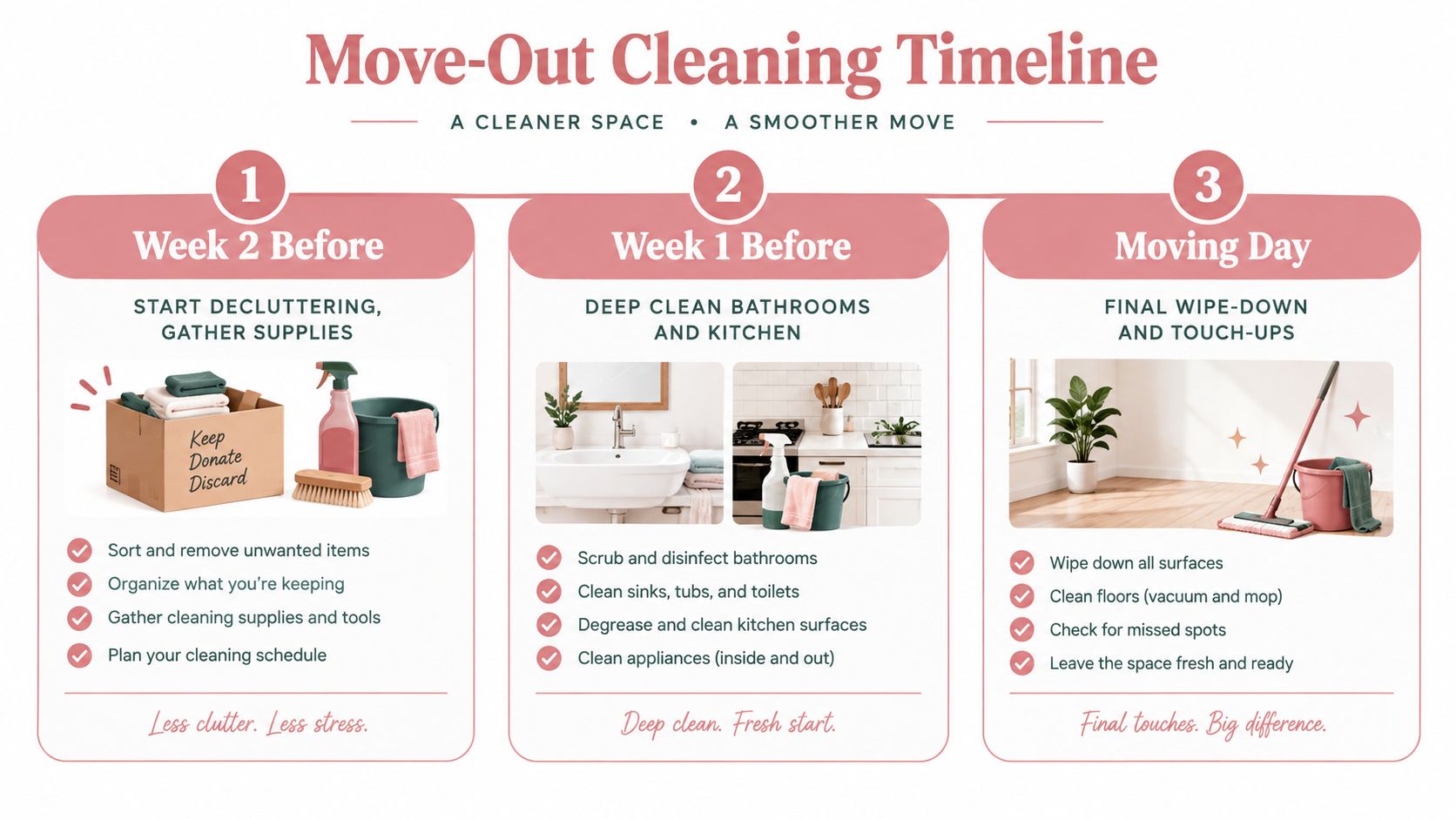
Start earlier than the day you move. Packing creates dust, moving furniture exposes hidden debris, and repairs or contractors can undo a clean surface. A workable schedule leaves the detailed work until the property is empty while giving you time to correct missed areas.
Three weeks before leaving
Read the lease and find the move-in inspection report before buying supplies. Check whether the agreement mentions carpet cleaning, windows, garages, patios, appliance interiors, receipts, or professional service. If the landlord has a written cleaning standard, request it before you begin.
At this stage, remove clutter and unused belongings. Order garbage bags, microfiber cloths, a HEPA vacuum or suitable vacuum, a microfiber mop, scrub brushes, a squeegee, gloves, detergent, and compatible floor products. If you'll need movers or storage support, use a detailed resource to find moving help near you before the schedule becomes crowded.
During the final week
Clean spaces that won't be disturbed again. Empty and wipe cabinets, closets, drawers, medicine cabinets, and storage areas as they become free. Start on difficult appliance interiors, but don't finish floors until furniture and boxes have gone.
Schedule carpet work after dusty repairs, painting, construction cleanup, or heavy moving activity. Cleaning too early often creates rework. A tenant who steam-cleans carpet before movers carry boxes through the property may pay for the same task twice.
Use the moving cleaning checklist to divide responsibilities if several people are helping. Assign rooms rather than vaguely asking everyone to “clean,” and require each person to check hidden surfaces before marking a room complete.
On moving day
After the last item leaves, remove rubbish from indoor and outdoor spaces. Photograph pre-existing damage before cleaning if you haven't already, then clean from high to low and from cleaner areas toward dirtier ones. Finish with floors, touchpoints, and a daylight inspection.
Leave enough time for a landlord or property manager walkthrough. If the inspection can't happen immediately, preserve your photos, video, receipts, and completed checklist before handing over the keys.
Room-by-Room Cleaning Priorities That Protect Your Deposit
A good tenant move out cleaning plan follows the way dirt falls and the way inspectors look. Remove loose debris first, work from ceilings and ledges downward, clean kitchens and bathrooms with detergent, then finish floors and frequently touched points. Visible soil must be removed before disinfection because organic material can reduce disinfectant performance, as explained in EPA cleaning and disinfection guidance.
Kitchen
The kitchen deserves deliberate work, not a quick wipe. Empty every cabinet, drawer, and pantry shelf. Clean the range hood, filter, stovetop, burner pans, oven racks, broiler or oven drawer, refrigerator shelves, freezer compartments, microwave, dishwasher seal, sink, backsplash, and floor edges.
For example, wiping the oven door while leaving grease inside the oven doesn't create a defensible result. Photograph the interior after cleaning, including racks and drawers, because those images show exactly what you completed.
Bathroom
Clean the toilet inside and outside, including its base and the area behind it. Scrub the shower, tub, grout, glass, tracks, sink, vanity, faucet, mirror, cabinet interior, exhaust-fan grille, and floor. Mineral residue may need a product compatible with the fixture, and mildew or heavy buildup may require more than routine wiping.
Disinfect only relevant touchpoints after detergent cleaning and drying. The Head Start product guidance explains that a disinfectant must remain visibly wet for the label's contact time, which commonly ranges from 1 to 10 minutes depending on the product and claim. Never mix bleach with acids, ammonia, or other cleaners.
Bedrooms and living areas
These rooms often look finished before they're inspection-ready. Dust ceiling fans, vents, ledges, light fixtures, window sills, tracks, blinds, baseboards, door edges, switch plates, outlet covers, closet shelves, rods, and floors. Remove hooks, command strips, nails, personal items, and rubbish according to the lease and local requirements.
A practical example is the closet floor. It may be hidden while furniture is present, but once the room is empty, dust, hair, and small debris become obvious. The U.S. Air Force rental cleaning checklist is useful because it includes windows, tracks, cabinets, appliances, bathrooms, and storage areas rather than focusing only on visible countertops.
Practical rule: If you couldn't photograph it clearly after the room is empty, you probably haven't inspected it closely enough.
DIY Cleaning Versus Hiring Professionals, What Makes Sense
DIY cleaning gives you control over timing, products, and the order of work. It also shifts every risk to you. If you're physically able, have enough time, understand the lease, and can clean after all belongings leave, doing the work yourself may be sensible.
The trade-off appears when the property needs appliance detailing, carpet work, high windows, or heavy residue. A rushed DIY clean can leave the oven, bathroom grout, cabinet tops, and window tracks unfinished. It can also leave no independent service record if the landlord questions the result.
DIY is usually practical when
You have access to the property after it is empty and can return to missed areas. You can also compare each room with the move-in report and photograph the completed work. Use microfiber cloths, a HEPA vacuum where practical, detergent, compatible brushes, and separate cloths for kitchen and bathroom work.
DIY becomes less attractive when moving logistics consume the available time. Cleaning around boxes is inefficient because you can't reach baseboards, closet floors, or spaces beneath appliances. Cleaning before repairs or carpet treatment can create duplicate work.
Professional help reduces coordination risk
Before booking, ask what the service includes and excludes. Confirm whether appliance interiors, cabinets, windows, carpet, garages, patios, heavy debris, wall marks, and post-construction residue require separate scope or add-ons. Ask whether the company supplies a checklist, provides an invoice, uses insured teams, and can schedule after the property is empty.
In Kennesaw and surrounding North Atlanta communities, Aquastar Cleaning Services, LLC provides move-in and move-out cleaning for rental or sale readiness, interior appliance add-ons, custom checklists, online quote options, and biodegradable solutions when requested. The family-owned company has operated since 1996, uses insured and bonded teams, and reports cleaning more than 4,000 homes yearly.
That option still doesn't guarantee a deposit return. Your lease may require work outside a standard service, and professional cleaning doesn't fix repairs, carpet damage, mold remediation, paint splatter, or appliance malfunction. Use this guide to choosing a cleaning company to compare scope, records, safety practices, and availability before you book.
How to Document Your Cleaning Work and Defend Your Deposit
A receipt proves that you paid for a service. It doesn't automatically prove that the finished property met the required standard. Strong evidence connects the move-in condition, the cleaning performed, and the empty property at handover.
Build the record before cleaning
Request the original move-in inspection report and the landlord's written cleaning requirements. Photograph pre-existing marks, damage, stains, appliance condition, and areas that may need repair rather than cleaning. Record meter readings or appliance condition where relevant, and keep all communication in writing.
For example, if the oven was heavily soiled at move-in, photograph it before cleaning and again after cleaning. That comparison may help distinguish an existing condition from residue created during your tenancy. The U.S. Army move-in and move-out checklist shows why a pre-move-out inspection and a post-departure comparison are more reliable than memory.
Photograph the empty property
Take clear, dated images after belongings and rubbish are removed. Use the same path through the property each time so your record is easy to follow.
- Room views: Photograph each wall, floor, ceiling, doorway, and major fixture.
- Appliance interiors: Open the oven, refrigerator, freezer, microwave, dishwasher, and drawers when included in scope.
- Hidden surfaces: Capture cabinets, closets, window tracks, baseboards, exhaust grilles, and toilet bases.
- Existing marks: Include close-ups of stains, holes, scuffs, chipped paint, or damage you couldn't safely repair.
- Final proof: Save the photos and any walkthrough video to your own email or secure storage before returning the keys.
The purpose isn't to create a perfect marketing gallery. It is to show condition at a specific point in time. A practical before-and-after cleaning photo guide can help you frame comparable images rather than taking random snapshots.
Keep scope and payment records
Retain professional invoices, appointment confirmations, receipts for specialist work, completed checklists, and messages about inspection timing. Note what the cleaner did not include, such as repairs or carpet treatment, so you don't accidentally present a cleaning invoice as proof that every lease obligation was completed.
Evidence is strongest when it answers three questions: What was there at move-in, what did you do, and what condition existed when you handed the property back?
Final Walkthrough Checklist Before You Hand Over the Keys
The last inspection should be deliberate, not a frantic search for anything you may have missed. Open every cabinet and drawer. Look inside closets, appliances, storage spaces, and the area beneath or beside movable equipment.
Walk from the entry through each room with a flashlight held at a low angle. Daylight and angled light reveal streaks, grease film, hair, dust, and residue that overhead lighting hides. Check door edges, switch plates, handles, faucets, flush levers, appliance controls, and window tracks.
The final pass
- Remove everything: Check cupboards, closets, drawers, garages, patios, balconies, laundry areas, and rubbish containers.
- Match the lease: Confirm appliance interiors, carpets, windows, filters, keys, and other specified items.
- Inspect floors last: Vacuum or sweep after all heavy movement, then damp-mop compatible hard surfaces.
- Check safety: Ventilate areas after cleaning and follow every product label for drying and reentry.
- Create evidence: Photograph the empty rooms, keep receipts, complete the checklist, and record the handover time.
- Request the walkthrough: If possible, ask the landlord or manager to inspect with you and note any agreed condition.
A detailed move-out cleaning checklist can serve as a final reference, but your lease and move-in report remain the controlling documents. If a condition requires repair, replacement, pest treatment, or remediation, record it separately instead of claiming that ordinary cleaning solved it.
Use a room-by-room scope such as Aquastar's move-out cleaning checklist, then correct problems before the keys change hands. Preparation won't guarantee a deposit refund, but it gives you a cleaner property, a clearer record, and a stronger response if someone later disputes the handover condition.
Aquastar Cleaning Services, LLC offers move-in and move-out cleaning for rental readiness in Kennesaw and surrounding North Atlanta communities, including custom room-by-room checklists and interior appliance add-ons. If your move-out deadline is approaching, request a personalized quote through Aquastar Cleaning Services, LLC and schedule the cleaning after your belongings and repair work are complete.