


You mopped yesterday. This morning there's hair along the baseboards, grit by the back door, and a fresh set of paw prints crossing the kitchen. That's normal in a dog home. Learning how to keep floors clean with dogs isn't about chasing a spotless floor. It's about exposure control, meaning you remove dander, soil, and moisture often enough that they don't build up, and you dry paws and floors so dampness doesn't create a second problem.
Daily and Weekly Floor Cleaning Schedule
Most dog homes need a two-minute daily entry check, pet-zone vacuuming three to four times a week, and one full weekly pass. Don't wait until hair is visible. By then, dander has already settled into carpet, rugs, and corners.
The EPA guidance on indoor biological allergens identifies pets as important allergen sources linked to rhinitis, nasal congestion, hives, and asthma symptoms, and it stresses routine vacuuming and hard-surface cleaning. Allergen control depends on repeated removal, not one big clean. A 2021 study of floor dust from 182 homes in Finland and 284 urban homes in Germany also found greater bacterial richness and diversity in homes with dogs, which supports regular whole-floor cleaning rather than spot work alone.
A Schedule You Can Actually Keep
| Task | Frequency | Time needed | Why it matters |
|---|---|---|---|
| Check and shake out entry mat | Daily | 2 minutes | Stops grit and paw dirt from spreading |
| Vacuum feeding area and entryway | 3-4 times a week | 10 minutes | Catches hair and dander where dogs spend time |
| Vacuum whole home, rugs on both sides | Weekly | 30 minutes | Removes dander that settles into fibers |
| Damp-mop sealed hard floors | Weekly, plus after muddy days | 15 minutes | Lifts residue that dry sweeping leaves behind |
| Wash dog beds and removable rugs | Every 1-2 weeks | One laundry load | Removes shed hair and odor |
| Clean baseboards, thresholds and under furniture | Monthly | 20 minutes | Hair collects in edges and gaps |
| Professional carpet cleaning | Every 3-6 months | Half day | Heavy shedders need it sooner |
For example, a Lab that eats in the kitchen and sleeps by the couch will load those two zones first. Vacuum them midweek even if the bedrooms can wait. For more detail on the dander side, see these practical ways to reduce pet dander at home.
How to Adjust It
- Heavy shedders: Add one extra pet-zone vacuum pass, especially in spring and fall.
- Muddy days: Add a damp mop that day. Don't wait for the weekly slot.
- No carpet: Drop the carpet rows and put that time into edges and entryways.
- Allergies in the house: Keep the weekly pass fixed, even when floors look fine.
Simple test: If hair is back on the sofa within two days, your schedule is too light.
Tools and Products for Dog-Safe Floors
Buy for your floor types, not for every possible mess. Three or four well-matched items beat a cupboard of products you'll never use correctly.
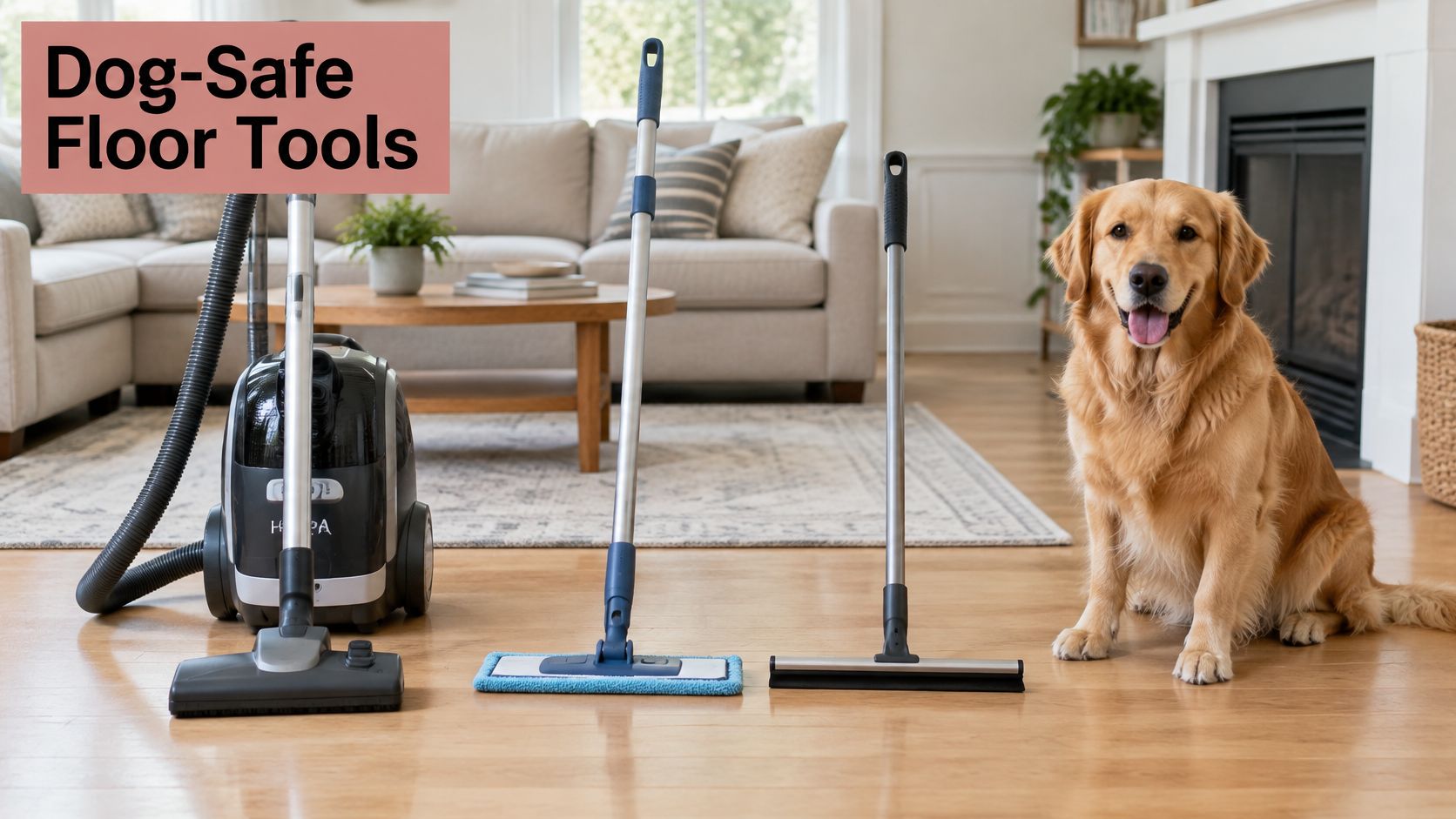
These core tools cover most dog homes.
| Tool or product | Best floor type | Main job | Eco-friendly note |
|---|---|---|---|
| HEPA-filter vacuum | Carpet, rugs, upholstery edges | Captures dander and fine dust | Sealed filtration, no cleaning chemicals needed |
| Microfiber flat mop with washable pads | Sealed hardwood, laminate, vinyl, tile | Damp-mops dander and mud | Machine-washable pads cut disposable waste |
| Rubber squeegee | Hard floors | Pulls hair into piles before vacuuming | No chemicals or disposables |
| Pet-safe floor cleaner | Sealed hard floors | Routine damp-mopping | Choose biodegradable formulas that name the floor types they suit |
| Enzyme cleaner | Carpet and hard floors | Breaks down urine odor compounds | Biodegradable; check label for surface safety |
| EPA-registered disinfectant | Hard surfaces named on the label | Used only after waste accidents | Follow label contact time and use sparingly |
| Washable absorbent entry mat | Entryways | Traps wet paws and grit | Machine-washable and reusable |
A Practical Starter Set
For example, a home with living room carpet and kitchen tile can start with a HEPA vacuum, one microfiber mop, and an enzyme cleaner. Buy disinfectant only for accidents. That's enough for routine work.
Cleaning and disinfecting aren't the same job. The CDC distinction between cleaning and disinfecting pet areas is clear: detergent removes soil first, and disinfectant kills remaining germs only when the situation warrants it and it stays wet for the label contact time. Check our guide to safe floor cleaners for dogs before using a new product on sealed or oiled wood.
If you're adding rugs to protect wood, choosing rug pads for hardwood from Giorgi Bros. Furniture is a useful reference for keeping rugs stable without damaging the finish underneath. Never use bleach or harsh disinfectants on paws, since dogs lick residue. Keep those products on the floor only.
How to Clean Floors in Three Stages
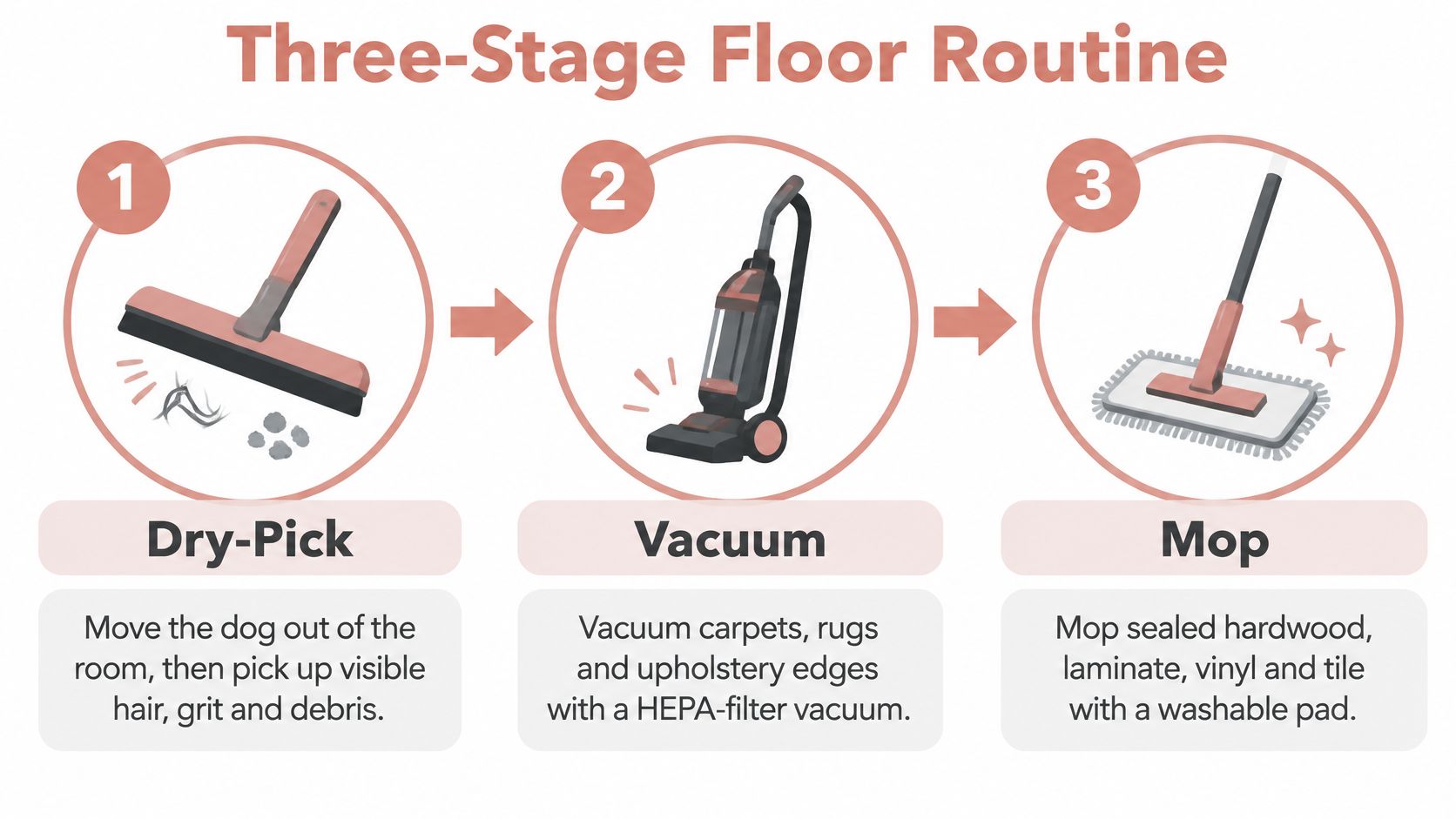
Use the same three stages every time. The order matters more than effort. If you mop before you remove dry hair, you're just pushing wet clumps around.
This visual sums up the sequence.
The Three Stages
- Dry-pick first: Move the dog out of the room. Pull visible hair, grit, and debris into piles with a rubber squeegee or dry cloth. For example, clear kibble under the bowl and grit at the door before any machine comes out.
- Vacuum second: Use a HEPA-filter vacuum on carpets, rugs, edges, baseboards, and floor joints. Start in the cleanest area and work toward the entryway, so you don't drag dirt back across finished rooms.
- Damp-mop last: Mop sealed hard floors with a surface-compatible cleaner. Wring the pad until it's barely damp, then let the floor dry fully before the dog returns.
The reasoning is simple. Dry sweeping can send dander back into the air. HEPA filtration traps fine particles instead of recirculating them, and damp wiping lifts what vacuuming leaves behind, as described in Cleveland Clinic guidance on living with pet allergies. Wait for loose dust to settle before vacuuming, especially after shaking out a rug or dog bed.
This short video shows the basic movement and pacing.
A Worked Example
Take a 60-pound shedding Labrador in a home with living room carpet and kitchen tile. Move the dog to the yard, squeegee the tile entry, vacuum the living room carpet and rug edges first, then work toward the kitchen. Mop the tile last. The full pass takes about 45 minutes, and the kitchen stays closed until it's dry.
Don't undo good vacuuming with a dry broom. You'll lift fine dust you just trapped and spread it again.
Mistakes That Undo the Work
- Skipped edges: Baseboards and thresholds collect hair that migrates back within hours.
- Soaked wood: A dripping mop can damage seams and finish.
- One-sided rugs: Vacuum both sides when feasible, or trapped grit works through.
- Early return: Wet paws on a wet floor recreate prints and spread cleaner residue.
Floor-by-Floor Care Rules
Floor type decides the method. Match water, product, and pressure to what's under the dog.
| Floor type | Best method | Avoid | Note |
|---|---|---|---|
| Sealed hardwood | Damp-mop with pet-safe cleaner, wringing mop until barely damp | Soaking the seams and harsh cleaners | Wipe urine quickly and dry the boards |
| Laminate | Damp-mop with surface-compatible cleaner | Saturating the joints | Follow the manufacturer finish guidance |
| Vinyl and tile | Remove soil with detergent and water, then damp-mop | Harsh disinfectant left on the surface | Disinfect only after waste accidents |
| Carpet and rugs | HEPA vacuum on both sides, cleanest area first | Dry broom after vacuuming | Vacuum after loose dust settles |
For example, a wet-pawed Labrador hits a tile entryway first. Squeegee the hair, use detergent on muddy prints, then make one damp mop pass. The hardwood hallway beyond it gets only a barely damp mop, with no standing water in the seams.
For wood-specific detail, follow these best ways to clean hardwood floors and check finish guidance before trying anything new. Don't soak any floor to chase a cleaner result. You're trading surface damage for a short-term shine.
How to Stop Muddy Paws From Tracking Dirt
Most tracked dirt crosses the floor within a few steps of the door. Win there and the rest of the house stays cleaner with less mopping.
Set up a three-part station: a washable absorbent mat, a towel, and a shallow basin. Keep it assembled. If you have to hunt for supplies while a wet dog shakes in the foyer, you've already lost.
After a Dry Walk
Wipe each paw pad and lower leg with water or a damp cloth, clean between the toes, then dry thoroughly. For example, after a dry sidewalk walk, a 30-second wipe at the mat stops dust and pollen from reaching the couch and bedding. Tall grass brings more pollen, so don't skip the lower legs on those days.
After a Muddy Walk
- Fill the basin: Use lukewarm water, placed beside the door.
- Dip one paw at a time: Gently loosen dirt with your fingers.
- Check closely: Look between the toes and around nails for grit or burrs.
- Pat dry: Dry pads and the spaces between toes, not just the tops.
- Mop after: Clean the entry floor only once the dog is dry and clear.
This order follows practical guidance on cleaning and drying muddy dog paws, which stresses thorough drying and warns against bleach or harsh disinfectants on paws. For example, after a 20-minute rainy walk, a basin, towel, and mat prevent prints across hardwood far better than an extra mop pass later.
Drying rule: A clean but damp paw is unfinished work.
Prolonged moisture can soften skin and create conditions where irritation thrives, so don't leave floors persistently damp either. Watch for recurring redness, odor, licking, or limping. Those signs need veterinary attention, not more cleaning.
How to Clean Dog Accidents Without Spreading Them
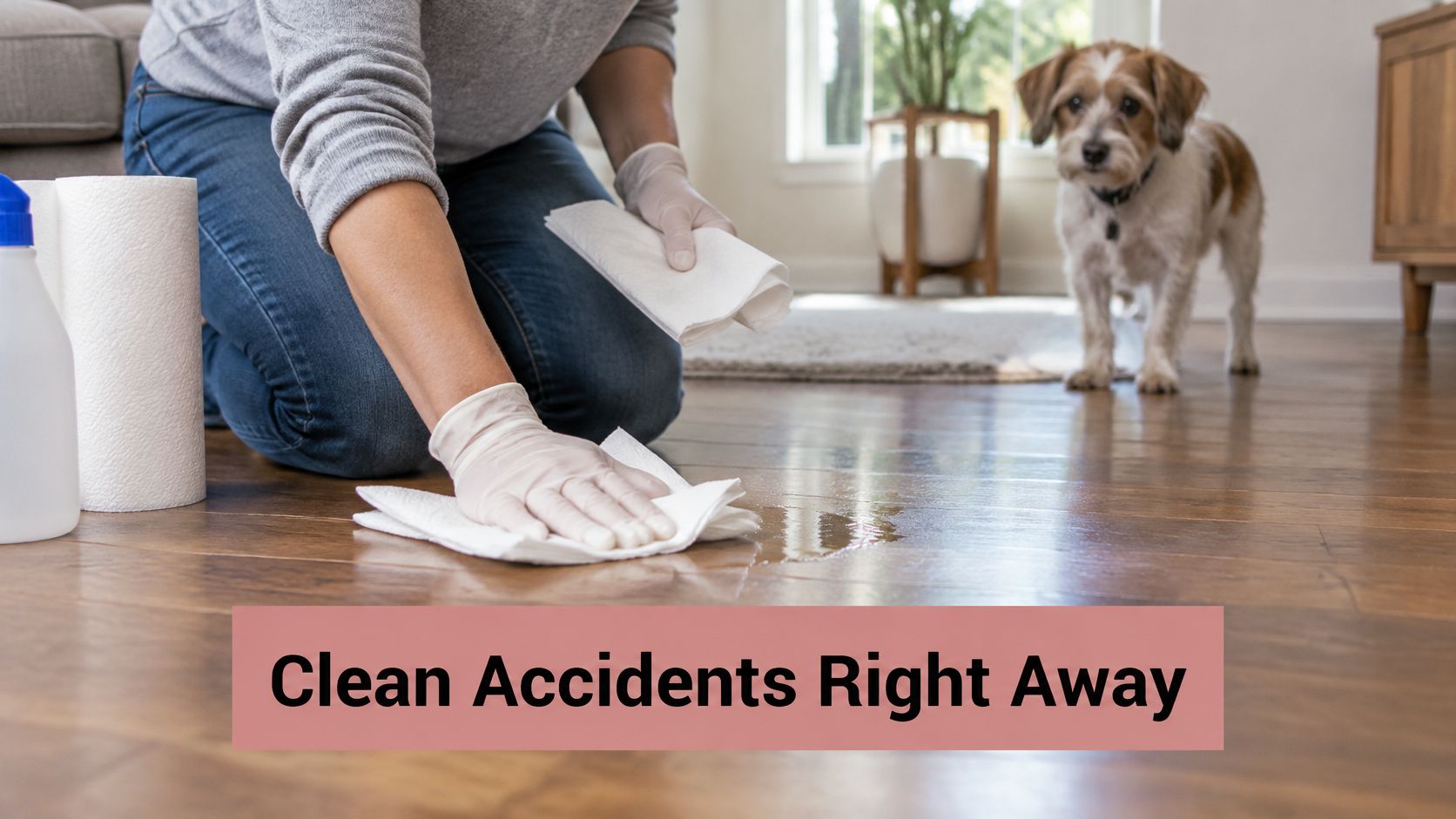
Clean accidents right away. Don't let urine, feces, or vomit dry on the floor, and don't start by vacuuming or scrubbing. Both moves spread contamination before you've contained it.
This is the containment-first position to start from.
The Six-Step Protocol
- Glove up: Put on disposable gloves before you touch anything.
- Lift and seal: Remove solids or absorb liquid with paper towels and seal waste in a bag.
- Clean first: Wash visible soil with detergent or soap and warm water.
- Disinfect only if warranted: Use an EPA-registered disinfectant only if its label covers that floor type.
- Respect contact time: Keep the surface visibly wet for the time printed on the label.
- Finish cleanly: Rinse or wipe residue if required, ventilate, keep the dog off until dry, discard gloves, and wash hands with soap and water.
Soil reduces disinfectant effectiveness, so cleaning must come first. That's central to CDC guidance on cleaning before disinfection, along with label concentration, application method, and contact time.
Two Practical Examples
Vomit on tile: For example, lift material with disposable towels, clean with detergent, then apply a suitable disinfectant and let it sit. Don't mop around it first.
Urine on hardwood: Blot quickly, clean gently, and dry the boards without soaking seams. For product choices, see this guide to dog urine cleaner for hardwood floors.
Don't mix chemicals, vacuum untreated biological material, use high-pressure spraying, or apply disinfectant to the animal. This care matters most in homes with children, older adults, or anyone with a weakened immune system.
Choose Your Routine and Start This Week
A clean-looking floor isn't allergen-free. Dog allergens come from dander, saliva, and urine, not just hair, and they can remain in carpet and furniture for months. Your goal is exposure control, not sterilization.
Answer five questions. Does anyone have asthma or allergies? Do you have carpet or rugs? Do you have a heavy shedder or more than one dog? Does the dog get on beds or sofas? Do floors show damp paw prints after walks?
Each yes adds one step. For example, allergies mean a HEPA pass when the sensitive person is out and dog-free bedrooms. Damp prints mean a drying station at the door. A heavy shedder means an extra vacuum or mop day.
For example, a family with a child who has asthma and two dogs might run a daily entry check, vacuum the living room three times a week, and keep bedroom doors closed. That targeted plan beats polishing every floor daily. Our broader house cleaning guidance for pet owners can help you set priorities room by room.
Start this week with one schedule row, set up the entry station, and track hair on the sofa and paw prints at the door for two weeks. If you can't keep up, a recurring plan from Aquastar Cleaning Services (aquastarcleaning.com) can cover heavy-shedding weeks. Ask any provider to price in pets, visit frequency, and clutter.
If dog hair, paw prints, and high-traffic floors are outpacing your weekly routine, Aquastar Cleaning Services, LLC offers recurring and deep cleaning in Kennesaw and North Atlanta with plans shaped around pets, priority rooms, and product preferences. Visit the site to request a quote and set a schedule that keeps your floors manageable between your own daily entry checks.