


You open the fridge for milk and get hit by a sour smell. There's a sticky ring under the jam, a container of soup you can't date, and something pink dried under the meat drawer. Wiping the visible shelf won't fix the soup or the drip you can't see. Cleaning a refrigerator is a food safety task first. Discard and temperature come before shine. A fridge can look fine and still spread bacteria from a small raw meat leak to cheese, fruit, or leftovers you'll eat without cooking.
Choosing Between a Quick Clean and a Deep Clean
You have three different jobs, not one. A quick clean keeps a normal week under control. A deep clean resets every surface. A contamination clean responds to a leak or spoiled food. Picking the wrong one wastes time or leaves risk behind.
Say you unload groceries on Sunday. You toss last week's greens, wipe the door shelf, and move older yogurt forward. That's a quick clean. Before guests visit in spring, you empty everything, wash drawers in the sink, and sanitize. That's a deep clean. If a package of ground beef leaks onto the shelf below, you stop, discard exposed food, wash, and sanitize that day. That's a contamination clean.
Opening the door to decide which job you're facing looks like this.

Quick Clean, Deep Clean and Contamination Clean Compared
| Method | Time Needed | Empties the Fridge | Sanitizes | Best Situation |
|---|---|---|---|---|
| Quick clean | 10-15 minutes | No | No | Routine weekly upkeep |
| Deep clean | 1-2 hours | Yes | Yes | Seasonal reset, before or after guests |
| Contamination clean | 30-60 minutes | Yes, discard as needed | Yes | After a raw meat leak or spoiled food |
A quick clean never replaces sanitizing after contamination. Soap removes the pink juice you can see. It doesn't finish the job on a shelf that held raw meat. The same logic applies after a power outage. If perishable food sat warm too long, discard first, then wash and sanitize before you restock.
I would match the method to the risk, not to how dirty the fridge looks. A small invisible drip under a crisper can matter more than crumbs on a shelf. If you're building this into a whole home reset, our deep cleaning checklist for the rest of the house helps you sequence the kitchen with other rooms.
A clean that skips the sanitizing step after contamination is not a food safety clean.
How to Deep-Clean a Refrigerator Step by Step
Say it's Sunday and a package of raw chicken leaked overnight. Juice ran under the drawer and onto a tub of hummus. Don't just wipe the puddle. Work in order, discard first, wash second, sanitize last.
The sequence below maps the job from discard to reload.
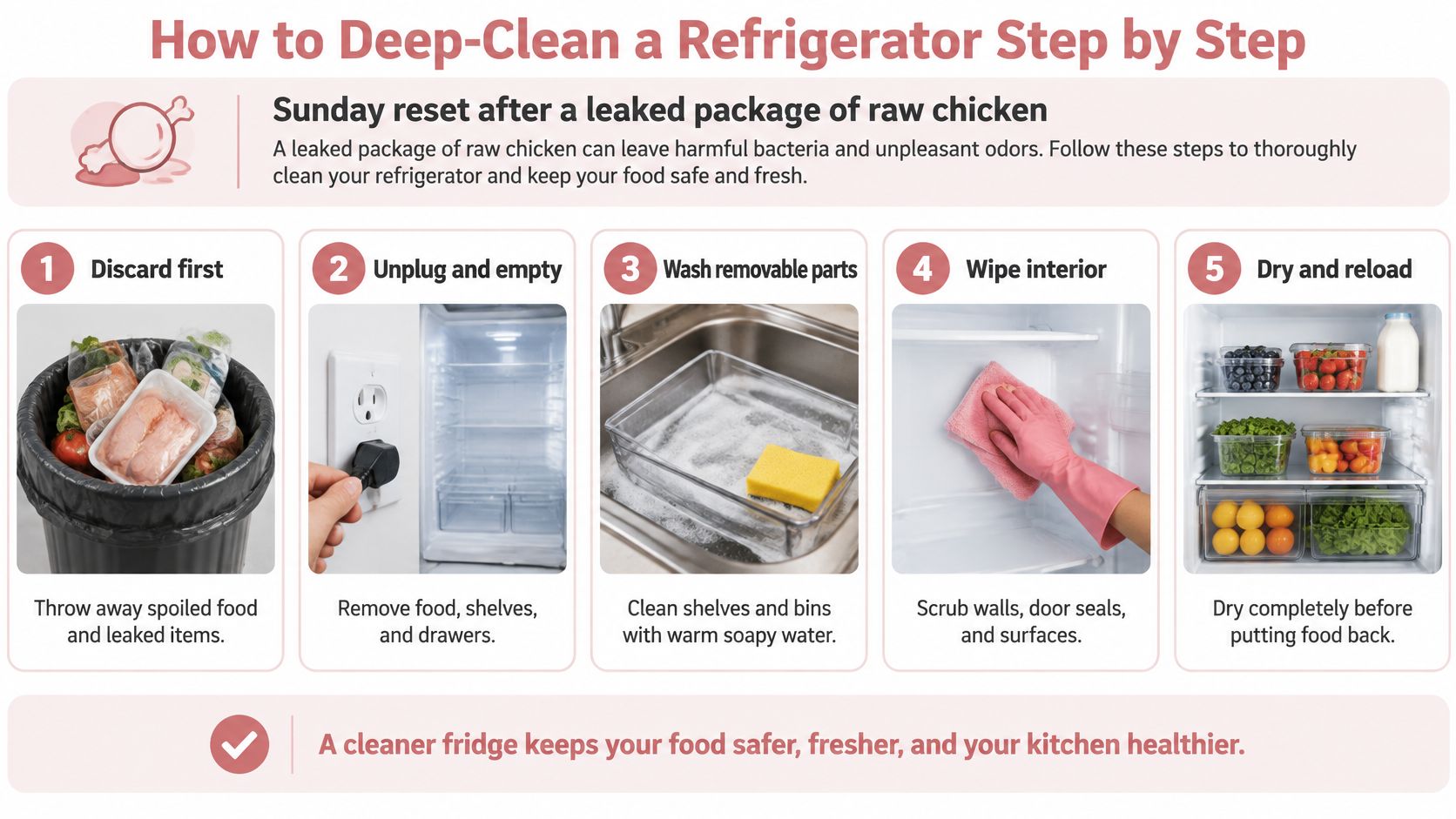
The Nine Steps
- Discard first. Throw out spoiled or expired food and anything the chicken juice touched. Discard cooked leftovers and raw poultry or ground meat once they have passed their safe storage window. For example, soup cooked Monday goes by Thursday or Friday.
- Move perishables to a cooler with ice packs. The CDC refrigerator cleaning guide says to limit unrefrigerated perishable food to no more than 2 hours. Use 1 hour when the room is above 90°F. Leaving food out too long is the most common failure.
- Remove shelves, drawers, and bins. Let cold glass reach room temperature before washing. Sudden hot water can crack it.
- Wash removable parts in hot, soapy water. Rinse with clean water and dry completely. A soft brush helps on drawer tracks where juice collects.
- Wash the empty interior. Scrub walls, ceiling, floor, door, and gaskets with hot, soapy water. Work into corners, handles, and the drain channel with an old toothbrush.
- Rinse with a clean, damp cloth. Change the rinse water if it turns cloudy. Soap left behind can flavor food.
- Sanitize food-contact surfaces with a diluted unscented liquid chlorine bleach solution made according to the label's dilution directions, then let them air-dry. Sanitizing before washing fails because grease and protein block the sanitizer.
- Return shelves and wipe every container before restocking. Don't put a sticky jam jar back on a clean shelf. Place raw meat on the bottom shelf, in a tray, so drips can't fall on ready-to-eat food.
- Check the temperature. Wait until the fridge is back at 40°F or below before you consider the job done.
Wash your hands, counters, and any towels you used before reuse. A towel that wiped chicken juice will undo your work if you dry a clean shelf with it.
If you want to watch the empty, wash, and reload order before you start, this walkthrough shows the pace.
I would keep raw chicken, ground beef, and seafood in shallow trays from now on. One tray turns the next leak into a five minute wash instead of a full reset. For the counters, stove, and sink around the fridge, see our guide on how to clean a kitchen in a safe order.
A finished job is simple to judge. Surfaces are dry, there's no sour or chemical smell, containers are clean outside, and the thermometer reads 40°F or below.
Choosing Safe Cleaners and Avoiding Harsh Chemicals
Food and ice pick up residue and fumes. That's the rule that decides every product. If a cleaner leaves scent, film, or grit behind, it can end up on butter, cut melon, or ice cubes. Choose products that rinse clean, and rinse even gentle ones.
For example, a lemon scented spray left on a shelf can leave a taste on uncovered butter. The shelf looks clean. The butter tells you it isn't finished. The FDA food safety tips during an outbreak notes a sanitizing dilution of 1 tablespoon of unscented liquid chlorine bleach per gallon of water and warns against products that leave fumes, tastes, or damage.
Cleaner Choices Compared
| Cleaner | Use It For | Practical Note |
|---|---|---|
| Warm water and mild dish soap | Routine washing | First choice for shelves, drawers, walls |
| Unscented liquid chlorine bleach, diluted | Sanitizing after washing | Remove all food first, follow the dilution |
| Equal parts white vinegar and water | Odors and mildew | Wipe, rinse, dry, repeat if needed |
| Baking soda and water paste | Light stains | Gentle on plastic bins and door shelves |
| Solvent cleaners or abrasive powders | Do not use | Can damage finishes and taint food or ice |
Soap, vinegar, and baking soda handle most routine jobs. They're cheap, they rinse well, and they don't perfume the fridge. Keep bleach only for the sanitize step after washing, not as your everyday wipe. If you prefer lower impact products elsewhere too, our eco-friendly cleaning tips for home use cover swaps that still rinse clean.
Pay extra attention to door handles, gaskets, corners, drainage areas, vents, and cracks. Those spots hold residue after flat shelves look done. A toothbrush with soapy water works better there than a stronger chemical.
- Never mix bleach with vinegar or ammonia. The mix creates dangerous fumes.
- Wear gloves when you sanitize and keep food out until surfaces dry.
- Use dedicated cloths for the fridge. Don't rotate in a cloth you used on the floor.
- Ventilate the kitchen while sanitizing. Open a window or run the exhaust fan.
For mixing, storage, and label checks beyond the fridge, the cleaning chemical safety tips from Estimatty are a useful reference to keep with your supplies.
Defrosting the Freezer and Fixing Odors at the Source
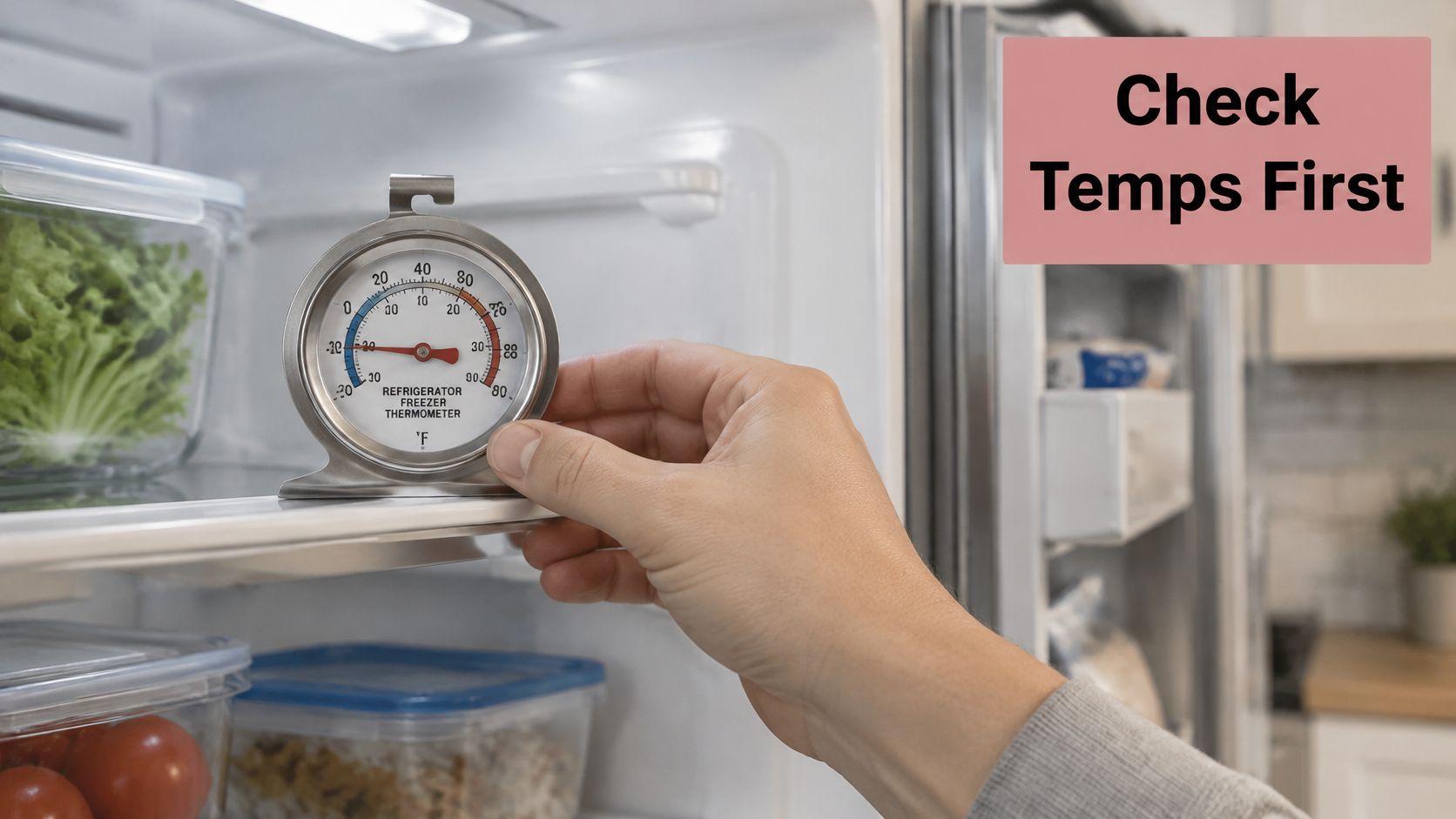
Start with temperature, not fragrance. The USDA guide to keeping food safe during emergencies says a refrigerator should be kept at 40°F (4°C) or below and a freezer at 0°F (-18°C) or below. Use an appliance thermometer rather than the dial, because temperature varies between shelves and the door.
After cleaning, place the thermometer inside and wait for the reading to stabilize before returning perishable food. Food held above 40°F for more than 2 hours should generally be discarded, and the limit falls to 1 hour above 90°F.
A thermometer check inside a clean fridge looks like this.
Manual Defrost Steps
- Move frozen food into a cooler with ice packs. Group items tightly so they stay frozen longer.
- Unplug and leave the door open. Put towels and a shallow tray under the melt water.
- Defrost when ice builds to about 1/4 inch thick. Never chip ice with knives or metal tools. You can puncture a line or crack plastic.
- Dry all surfaces, plug in, and wait for 0°F before restocking. Wet shelves refreeze into new ice fast.
I would defrost on a day when the freezer is already low. For example, plan it after you've used up frozen soup and vegetables that week. Less food in the cooler means less risk and less rushing.
Find the Odor Source
An open box of baking soda only masks odor. It doesn't remove salmon juice under a drawer. Say the fridge smells of fish days after salmon night. Pull the crisper drawer out, wash the well underneath, and dry it. That fixes what baking soda can't.
Check in this order. Look for spoiled food first, then the drip pan, then door gaskets, then the space under the crisper. Wipe gasket folds with soapy water and dry them. A dirty or torn gasket also leaks cold air, so odor and warm spots can come from the same seal.
Practical rule: Remove the source, wash it, dry it fully, and only then use an odor absorber.
How Often to Clean Each Part of the Fridge
A fridge schedule should protect food before it polishes shelves. Many home refrigerators run warmer than 40°F (4°C) without obvious signs, so the thermometer check belongs with discards and spill cleanup, ahead of appearance tasks.
Recommended Cleaning Frequency for Each Part of the Fridge
| Task | How Often | Why It Matters |
|---|---|---|
| Wipe spills | Immediately | Stops bacteria from spreading from raw meat drips |
| Check dates and discard old food | Weekly | Removes food past its date or showing spoilage |
| Check temperature with a thermometer | Monthly | Confirms the fridge stays at 40°F (4°C) or below |
| Wash shelves, drawers and bins | Monthly | Removes crumbs, residue and sticky spills |
| Clean door gaskets | Monthly | Keeps seals tight so cold air stays inside |
| Vacuum condenser coils | 2-4 times a year | Supports airflow and cooling efficiency |
| Full interior deep clean | Every 3-6 months | Removes hidden residue and lingering odors |
Work from safety to shine. Raw meat drips and expired food get the fastest response because they carry the highest risk. Shelves and gaskets come next, since residue and loose seals create warm spots. Wash first, then sanitize food-contact surfaces if needed; sanitizer works poorly on crumbs and grease.
The rows people skip most are gaskets and coils. Crumbs hide in gasket folds and weaken the seal. Dust and pet hair on coils make the fridge work harder to stay cold. Neither job needs harsh products. Use a cloth, a soft brush, or a vacuum.
In a house of four with a toddler, keep milk, eggs, and leftovers at eye level so dates are easy to scan. A short check after dinner can cover dates and door shelves before the week gets busy. If kids share that job, family chore routines with rewards can keep it consistent without reminders.
Do not overpack after you clean. Cold air needs room to circulate, and blocked vents create warm pockets near the door. The fridge check also fits better inside a wider routine; our house cleaning schedule for a busy family shows one way to place it.
The schedule is working when there is no sour smell after three days, no sticky film on shelves, and the thermometer reads 40°F (4°C) or below.
Decide Whether to Clean Yourself or Call a Pro
A fridge that smells clean and holds 40°F or below is a do-it-yourself job. The weekly date check, the monthly shelf wash, and the gasket wipe each take minutes. Call in help when the stakes or the mess run higher: a raw meat leak that dripped under the crisper, a power outage that left food warm, or a household with a toddler, pets, or someone with a weaker immune system. Those cases call for a deeper clean because sanitizer only works on surfaces that are already free of residue, and the residue sits where a cloth cannot reach.
Say juice leaked under the crisper twice in one month and the odor keeps coming back. The spill has moved into seams and wells you cannot scrub by hand, so book a professional interior clean to reset it, then keep the weekly date checks yourself. Our page on fridge cleaning service as an add-on explains what that service covers.
Do three things today.
- Write the schedule on the calendar, the Sunday check and the monthly wash.
- Check the thermometer and record the reading on the fridge door.
- Book help if the deep clean is bigger than one safe session.
If your fridge needs more than a quick wipe, Aquastar Cleaning Services, LLC offers refrigerator interior cleaning as an add-on to house cleaning. Book a reset before guests, after a leak, or as part of a seasonal deep clean, and keep your own weekly checks simple after that. Visit Aquastar Cleaning Services, LLC to request a free estimate and choose a time that fits your week.