



Clear toys, clothing, and papers before the housekeeper arrives. With these items put away, the team can focus on cleaning surfaces rather than sorting. Keep the list focused on the work you want done and the rooms that need attention.
Housework is recurring, so a written routine can make tasks easier to repeat. The U.S. Bureau of Labor Statistics 2024 American Time Use Survey reports that 80% of people engaged in household activities on an average day, spending approximately 2.0 hours on them. Use a checklist to make daily planning easier with Fluidwave.
The first cleaning generally takes longer than a recurring visit. Its duration depends on the home's condition and the agreed work. Choose a schedule that fits your home and needs, such as weekly or bi-weekly service. A written list helps clarify priorities from visit to visit and keeps the routine practical.
1. Top-to-Bottom Dusting Ceiling Fans Shelves and Baseboards Last
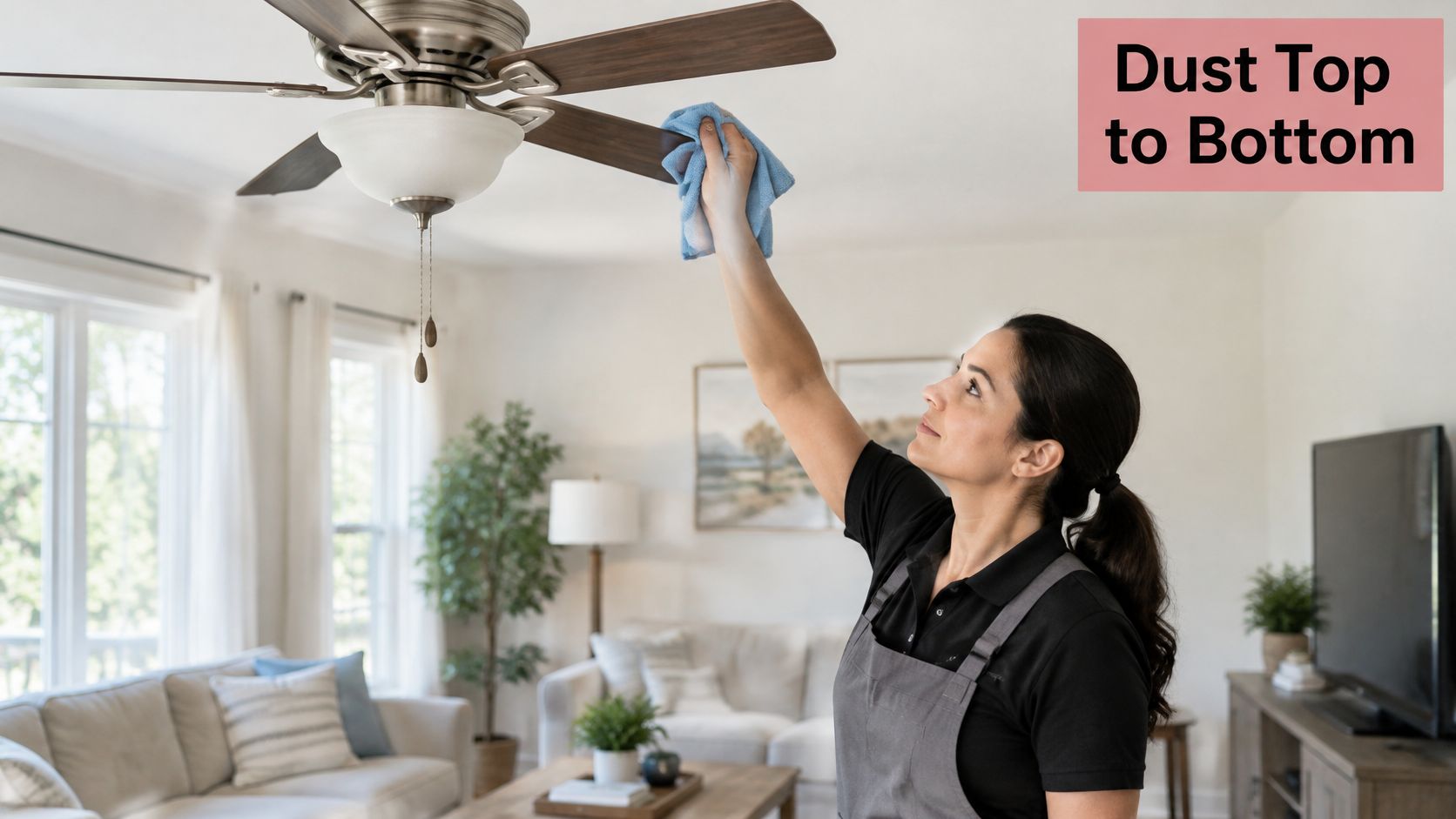
Dust falls. Clean the high surfaces you can reach safely, then finish low, or you wipe the same shelf twice.
I schedule this weekly or bi-weekly. Plan 20 to 30 minutes for living areas and bedrooms in an average sized home. A heavy dust of accessible surfaces sits near 30 minutes. A maintained home is closer to 20.
Where to Start in Each Room
Start from the floor: light fixtures within reach, cabinet tops, and door frames. Wipe ceiling fan blades only when you can reach them without a ladder higher than 3 feet. Leave higher blades alone.
Then furniture, electronics, and window sills. Baseboards and trim go last, right before floors.
In a living room, wipe door frames and the top of the entertainment center, then the TV stand and coffee table. Vacuum the hardwood last so fallen dust leaves the room.
In a bedroom, a reachable ceiling light comes before nightstands and the dresser. Shelves run top to bottom. That sequence is the same one used in a top-to-bottom house cleaning routine.
Microfiber matters more than spray. A Scottish National Services Scotland literature review found microfiber products were marginally more effective than standard cleaning products for removing soil and debris, with stronger performance when used with detergent rather than water alone.
Practical rule: Dry microfiber lifts loose dust. Lightly dampened microfiber handles sticky spots without leaving a wet film.
Pet and child note: Skip scented polish on low furniture kids touch. A damp cloth picks up pet hair and dust. Keep pets in a secure area so they do not cross a room mid-pass. Work one room at a time, fold the cloth into quarters, and turn it to a clean side as each section loads up.
2. Bathroom Sanitizing and Descaling Toilets Showers and Faucets
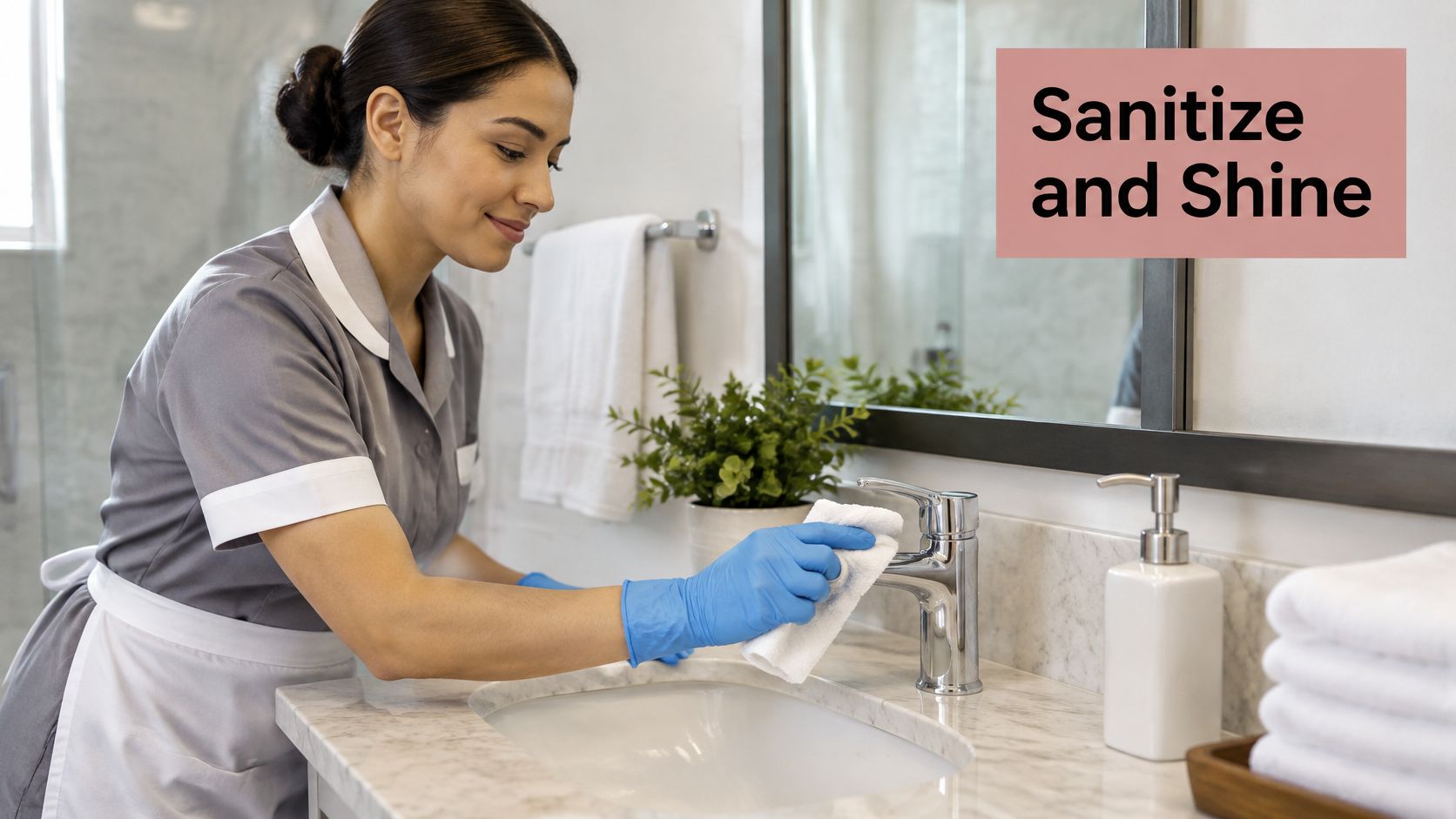
Bathrooms need cleaning and, at times, disinfection. They're not the same job. I put a full scrub on a weekly schedule, allowing 20 to 30 minutes per full bath, with quick touchpoint wipes between visits in busy homes.
Clean visible soil first. The CDC guidance on when and how to clean and disinfect your home advises regularly cleaning surfaces such as light switches, doorknobs, and countertops, while other surfaces should generally be cleaned when visibly dirty. It also states routine disinfecting is usually unnecessary unless someone's sick or at higher risk.
When disinfection fits, clean with soap and water first, then disinfect. The CDC cleaning and disinfecting guidance notes the surface must stay visibly wet for the full label-specified contact time. Wiping it dry early wastes the product.
A Workable Order of Work
- Toilet first: Bowl, seat, exterior, handle, and base, using a dedicated cloth.
- Shower and tub next: Soap scum on tile and glass, then rinse well.
- Sink and faucet last: Descale, buff chrome dry, and polish the mirror.
Take a master bath in a Cobb County home as an example. Clean the toilet from rim to base, wipe shower glass with diluted vinegar for hard water spots, and buff the faucet dry. In a DeKalb County guest bath, mop last so dirty water doesn't splash clean fixtures.
Pet and child note: Keep disinfectants off tub floors until rinsed and dry. Store products closed and out of reach, and ventilate while you work.
3. Kitchen Degreasing and Appliance Cleaning Range Hood Microwave and Refrigerator
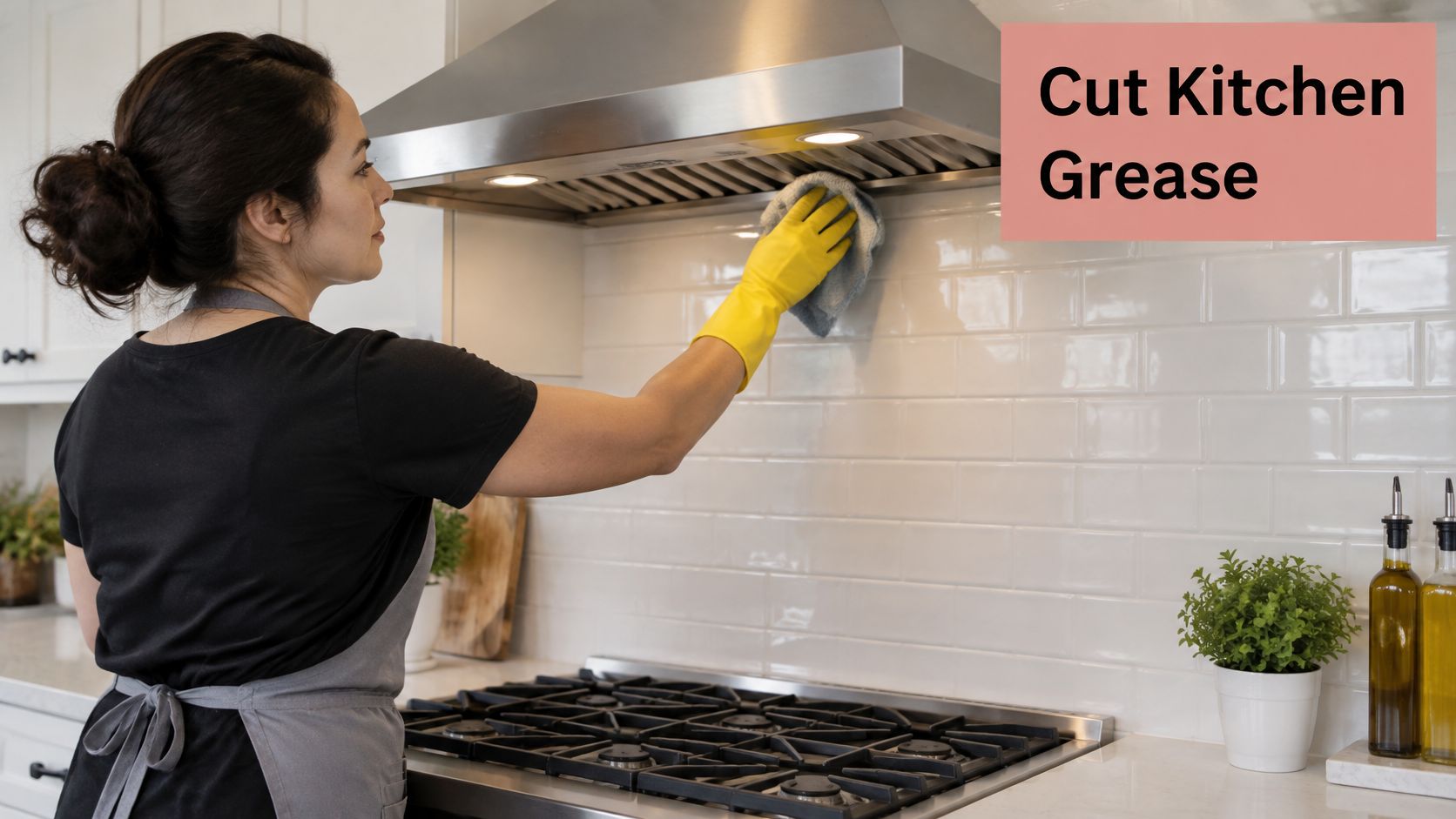
Counters look clean while grease hides above the stove. I schedule degreasing bi-weekly, allowing 30 to 45 minutes for a family kitchen, and I treat appliance interiors as a rotating or add-on task you confirm in advance.
Start high again. Pull the range hood filter, soak it in warm water with dish soap, and degrease the backsplash while it soaks. Wipe cabinet fronts and pulls, because oil and fingerprints collect where hands land.
For a Kennesaw family kitchen, that's the exact sequence. The filter soaks, the backsplash gets a biodegradable degreaser, and the stovetop gets cleaned after drips fall. Nothing's cleaned twice.
Two Appliances People Skip
For a North Atlanta apartment microwave, heat a bowl of water with lemon slices for three minutes. Steam loosens splatter, then a microfiber cloth wipes it clean without hard scrubbing.
Don't ignore the dishwasher. In a December 2024 survey of 984 U.S. homeowners, the Frontdoor home maintenance survey found 43% reported not cleaning their dishwasher drain or filter. Add filter rinsing to a monthly kitchen pass and you'll cut odors fast.
Use a separate cloth inside the refrigerator. It prevents odor transfer and keeps food surfaces cleaner. Toss expired items only with the client's okay, wipe shelves, and dry them before food goes back.
Pet and child note: Choose a low fragrance degreaser for food zones, rinse counters where kids prep snacks, and let surfaces dry before bowls or lunchboxes go down.
4. Floor Care by Surface Type Vacuum First Then Mop With the Right Method
Floors show your work first, and they punish the wrong method. Put hard floors on every weekly or bi-weekly visit, allowing 25 to 40 minutes for main areas depending on hair, grit, and furniture.
This example shows the right flat mop pressure and path for hardwood.
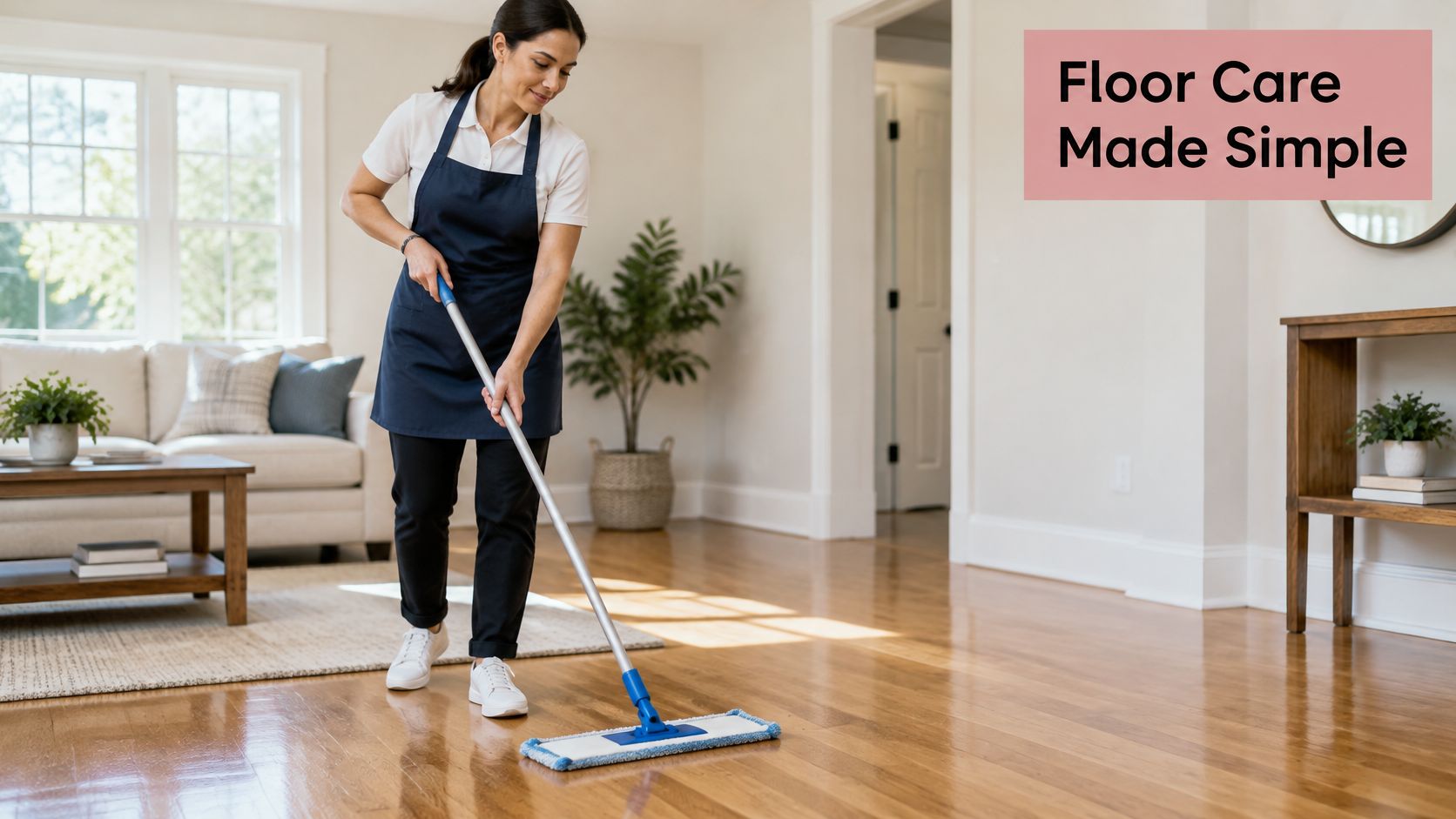
Vacuum before you mop. Grit left behind scratches finishes and turns mop water gray in minutes. Use a soft-brush head on hardwood and laminate, then mop damp, not wet.
In an open concept Cobb County home, vacuum the hardwood first, then use a barely damp microfiber pad. There's no standing water and no streaks. For tile in a Fulton County townhouse, sweep, mop with a diluted biodegradable cleaner, then rinse with a second damp pad.
Match the method to the surface. Our best ways to clean hardwood floors guide covers damp mopping technique, and you should still check the flooring manufacturer's care label before you pick a product.
Watch the walking pattern in this clip, then copy the overlap on each pass.
Pet and child note: Keep kids and pets off until floors are fully dry. Damp mopping dries faster than a soaked mop, so it's safer and cleaner. Change pad or water when it looks cloudy.
5. Post-Construction Dust Removal HEPA Vacuuming and Top-Down Wiping
Renovation dust isn't normal dust. It's fine, it floats, and it resettles for days. This is a one-time post-project clean, often taking several hours, and it should happen only after the crew finishes all work.
Don't dry sweep it. The OSHA crystalline silica construction information prohibits dry sweeping or dry brushing when those methods could contribute to respirable crystalline-silica exposure, unless safer alternatives such as wet sweeping or HEPA-filtered vacuuming aren't feasible. A broom puts settled dust back into the air.
Sequence That Controls Dust
- HEPA vacuum first: Floors, ledges, window tracks, vents, and horizontal trim.
- Damp wipe second: Cabinet tops, shelves, fixtures, and inside cabinets.
- Floors last: Vacuum again if needed, then damp mop.
For a kitchen remodel in Kennesaw, vacuum exhaust vents and cabinet tops before any wiping. If you wipe first, you'll smear drywall dust into paste. In a new North Atlanta bathroom, damp wipe window tracks and fixtures, then clean grout lines to remove cement residue.
Change vacuum bags or empty canisters often on post-construction jobs. A loaded filter blows fine dust back out.
Ventilation helps when outdoor air allows it. The EPA ventilation guidance for cleaning says increasing ventilation during and after cleaning can reduce exposure to cleaning products and particles resuspended during cleaning.
Pet and child note: Keep children and pets out until dust is removed and floors are dry. Seal collected debris in bags before you carry it through clean rooms.
6. Move-Out and Move-In Handover Checklist Inside Cabinets Ovens and Window Tracks
A handover clean succeeds or fails on hidden spots. Landlords check inside cabinets, oven racks, and window tracks, not just counters. Schedule this as a one-time clean after moving out, allowing several hours based on size and condition.
Walk the property first if you can. Agree on the scope with the landlord, tenant, or agent before anyone starts. That prevents disputes later.
Areas Inspectors Actually Check
- Kitchen storage: Empty cabinets and drawers, vacuum crumbs, wipe inside.
- Oven and refrigerator: Racks, drip areas, shelves, and door seals.
- Details: Window tracks, baseboards, interior doors, switch plates, and outlet covers.
For an apartment turnover in DeKalb County, empty and wipe every cabinet, soak oven racks, and vacuum window tracks before the final floor clean. You'll catch grit that would otherwise spread across fresh floors.
For a Cherokee County home sale, clean baths and the kitchen to listing standard, then wipe doors and switch plates. Photos after cleaning help document condition. Our move-out cleaning checklist lays out that handover order room by room.
We don't move furniture heavier than 25 lbs, clean biohazards such as mold, blood, or animal waste, or climb ladders higher than 3 feet. Put those limits in the plan upfront.
Pet and child note: For move-ins, rinse food shelves and tub surfaces well, ventilate, and let everything dry before kids unpack or pets explore.
7. Laundry Area Cleaning Washer Drum Dryer Lint Trap and Linen Refresh
Laundry rooms collect lint, detergent drips, and musty moisture in a small space. Add this room monthly, allowing 15 to 20 minutes, and clean the lint trap during everyday use, not just on service day.
Start with the washer. Wipe the door seal and gasket, rinse the dispenser drawer, and leave the door open so the drum dries. A closed, damp drum grows odor fast.
In a Kennesaw laundry room example, wipe the washer seal, rinse the drawer, empty the dryer lint trap, and vacuum lint from behind reachable edges. Then mop the floor, because lint falls during the appliance work.
In a North Atlanta townhome utility room, run a washer cleaning cycle only if the manufacturer allows it, then dry the drum and gasket. Don't assume vinegar fits every machine. Check the manual first.
Check the trap housing too: Lint builds past the screen. Wipe the slot and the top of the dryer, not just the filter itself.
We include wiping appliances, removing cobwebs, and vacuuming and mopping laundry floors with environmentally safe cleaning agents. That keeps the room from undermining clean clothes.
Pet and child note: Wash pet bedding separately and dry it fully. Store detergent pods and cleaners up high or latched, and wipe folding counters before kids' clothes land there.
8. Eco-Friendly Product Use for Homes With Children and Pets
Gentler products only help if you use them correctly. For homes with kids and pets, I recommend this approach on every visit, with dilution and drying built into the routine rather than added as an afterthought.
More disinfectant doesn't mean a healthier home. The CDC guidance on cleaning and disinfecting says cleaning with soap and water removes most germs in most household situations, while disinfection is generally needed when someone is sick or at higher risk. It also warns never to mix bleach with other cleaners.
Build two modes into your list. Use routine cleaning for normal weeks, with soap, water, and biodegradable products. Switch to illness-response cleaning when someone's sick, focusing on handles, faucets, toilet handles, and switches with proper contact time.
In a Cobb County home with a toddler, clean floors and counters with a biodegradable, fragrance-free cleaner, then let the kitchen air dry before the child returns. In a Cherokee County home with two dogs, wash pet areas with a plant-based solution and dry bedding fully before dogs come back.
Ask about allergies and sensitivities before the first visit. Keep labels readable, note dilution on spray bottles, and ventilate during and after cleaning. Even laundry details matter, which is why our guide to cleaning the lint trap belongs in the same whole home plan.
Time note: Eco-friendly products don't add much time if you pre-mix correctly and work room by room. The significant time saver is not re-cleaning residue left by overusing product.
How each housekeeping routine compares by frequency, time, and household safety
Use this table to set a practical cadence and budget time by room. Actual duration depends on the home's condition and the agreed work.
| Item | Suggested Frequency | Time Estimate | Child and Pet Notes |
|---|---|---|---|
| Top-to-Bottom Dusting: Ceiling Fans, Shelves, and Baseboards Last | Every recurring visit | 20 to 30 minutes | Handle delicate items carefully; use an extension tool safely, and avoid climbing ladders higher than 3 feet. |
| Bathroom Sanitizing and Descaling: Toilets, Showers, and Faucets | Every recurring visit | Allow extra time for grout and hard-water buildup | Ventilate as needed; keep children and pets away until disinfectant contact time is complete and surfaces are dry. |
| Kitchen Degreasing and Appliance Cleaning: Range Hood, Microwave, and Refrigerator | Bi-weekly; appliance interiors as agreed | 30 to 45 minutes for degreasing; interiors add time | Keep children and pets away while cleaning, and let surfaces dry before they return. |
| Floor Care by Surface Type: Vacuum First, Then Mop With the Right Method | Every recurring visit | Allow time for the home's floor area and surface types | Keep children and pets off floors until fully dry. |
| Post-Construction Dust Removal: HEPA Vacuuming and Top-Down Wiping | Once after construction; repeat passes may be needed | Several hours, with more time if dust remains | Keep children and pets out of the work area until dust removal is complete. |
| Move-Out and Move-In Handover Checklist: Inside Cabinets, Ovens, and Window Tracks | Once per move or property handover | Several hours, depending on the home's condition and agreed tasks | Keep children and pets away from cleaning products and wet surfaces. |
| Laundry Area Cleaning: Washer Drum, Dryer Lint Trap, and Linen Refresh | Monthly | 15 to 20 minutes | Keep children and pets clear of appliances and the work area; use environmentally safe cleaning agents. |
| Eco-Friendly Product Use for Homes With Children and Pets | Every visit when requested | Allow time for product application and drying | Store products out of reach; let surfaces dry before children or pets return. |
Treat the times as planning estimates, not fixed allowances. A first cleaning generally takes longer than a recurring visit, depending on the home's condition and the agreed work. Set priorities and confirm the scope before booking.
Turn the Checklist Into a Routine That Fits Your Schedule
A home with muddy dog paws, school backpacks, and daily cooking may need weekly attention. A quieter home can often go longer between visits. Set the schedule around how quickly bathrooms, floors, and kitchen surfaces collect dirt, then adjust it when household routines change.
Weekly visits suit busy households and pet owners who want frequent upkeep. Bi-weekly visits work for homes where dust, bathrooms, and floors remain manageable between cleans. Monthly visits can maintain a home when residents handle counters, dishes, and quick floor passes in between. These are starting points, not fixed rules.
Many households also add a seasonal deep clean on top of their regular schedule; the American Cleaning Institute 2024 national cleaning survey found 80% of U.S. adults reported that they or someone in their household engaged in spring cleaning at least once a year. A deep clean reaches accumulated buildup, while recurring visits help maintain the home between those resets.
Set priorities before choosing tasks. List the rooms that need attention, any pets, product preferences, and the areas that bother you most. That may mean shower glass, fan blades, pet hair on hardwood, or grease behind the stove. A customized checklist keeps the visit focused on your home's actual needs.
Make the Plan Easy to Repeat
Keep the checklist visible and specific. Record which cloth is for bathrooms, which product is suitable for hardwood, and which rooms should remain closed until floors dry. Clear instructions help maintain consistent visits when schedules shift. For commercial teams, cleaning crew schedule management with Pebb can help organize staff schedules.
Aquastar Cleaning Services offers recurring house cleaning on weekly, bi-weekly, or monthly schedules, as well as deep, one-time, and move-in or move-out cleaning. Many customers choose deep cleaning before recurring service, during seasonal cleaning, or before or after hosting guests. The first cleaning generally takes longer than a recurring visit, depending on the home's condition and the agreed work.
Before the first visit, share your layout, priorities, product preferences, and entry instructions. Keep pets in a secure area where they will not interfere with cleaning. Many clients provide entry instructions so they can return to a clean home.
Aquastar Cleaning Services, LLC serves Kennesaw and North Atlanta homes. Whether you clean yourself or hire help, keep the same room-level checklist and follow its order. Work from top to bottom, clean before disinfecting, and allow surfaces to dry before children or pets return.
Aquastar Cleaning Services, LLC offers recurring, deep, move-in or move-out, and post-construction cleaning for Kennesaw and North Atlanta households. Share your priorities, pets, and product preferences, then visit Aquastar Cleaning Services, LLC to request a customized cleaning plan.