



You carry breakfast out of the kitchen, set a glass of milk beside the couch, and an elbow sends it across the rug. Or you find the spill under the couch the next afternoon, when the damp patch has already turned sour. Either way, knowing how to get milk out of carpet means dealing with what's left inside the fibers, not just making the surface look dry.
Start with dry white towels, not a bucket of water. You'll get a better result by removing milk in controlled passes, checking how far it soaked, and drying the backing and pad before trying to improve the smell.
What to Do in the First Hour
Blot fresh milk immediately. Milk contains water, lactose, proteins, and fats, so evaporation alone leaves material behind. That residue can feel sticky and develop a sour odor as it sits in warm carpet.
U.S. guidance summarized in this food time and temperature document says perishable foods such as milk shouldn't remain at room temperature for more than 2 hours, or 1 hour above 90°F (32°C). Those are food-consumption limits, not carpet-cleaning deadlines, but they reinforce the practical point: don't leave a fresh spill until after work.
Spill timing and first action
Use the carpet's condition as well as the spill's age to choose your starting point. A recently tipped bottle can already have reached the pad, while an older splash may be confined to dried residue in the pile.
| Situation | What You See or Smell | First Action |
|---|---|---|
| Fresh spill, under 1 hour | Wet, liquid pooled on the surface | Blot with dry white towels right away |
| Dried residue | Crusty or tacky patch | Scrape off solids with a rounded spoon, then vacuum before treating |
| Soaked through to the pad | Damp when pressed, sour odor | Stop adding water and plan for extraction |
| Spill older than a day | Sour smell, possible yellow ring | Treat, dry fully, then deodorize |
Say you notice the breakfast spill while the milk is still pooled on top. Lay a folded white towel over it and press straight down, moving to a dry part of the towel as it becomes wet. Work inward from the edge rather than wiping across the patch.
First-response rule: Remove liquid before introducing cleaning liquid. A wet carpet doesn't need more water until you've absorbed what you can.
Keep shoes, children, and pets away so nobody tracks milk into another room. Find the row that matches your spill, gather towels and a rounded spoon, and check the carpet fiber before choosing a cleaner.
Carpet Fibers and Mistakes That Set Milk Stains
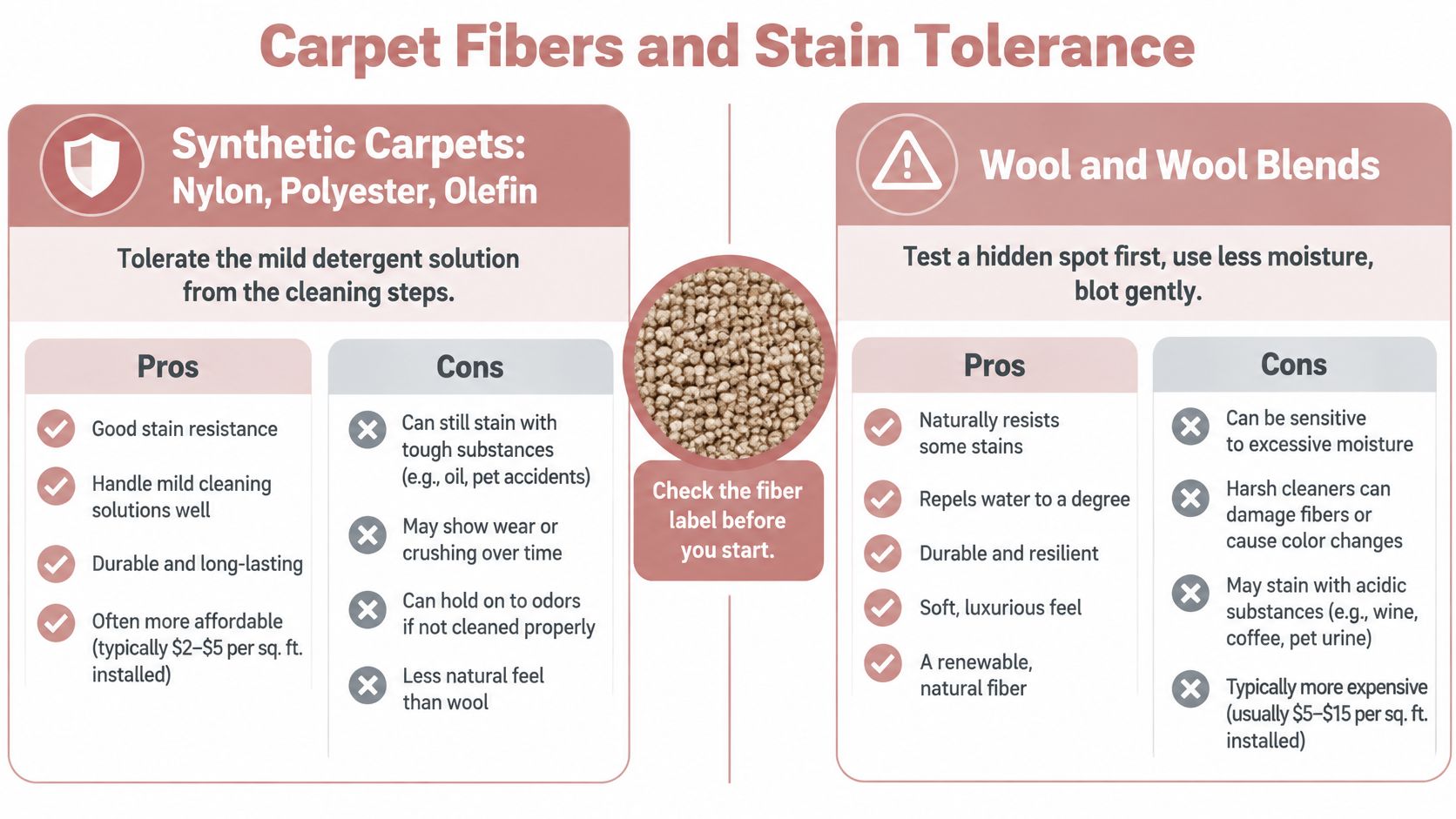
Check the fiber label before you push harder on a stubborn patch. Synthetic carpets such as nylon, polyester, and olefin generally tolerate the mild detergent treatment below, provided the carpet's care instructions allow it. Wool and wool blends need less moisture, gentler blotting, and a product specifically suitable for the fiber.
The distinction matters because milk is both a protein- and fat-based stain. House Cleaning Central's milk-stain guidance supports cautious product selection, hidden-area testing, and avoiding heat that can make protein stains harder to remove.
Safe starting point by carpet fiber
| Carpet Fiber | Safe Starting Point | Avoid |
|---|---|---|
| Synthetic (nylon, polyester, olefin) | Cool water and the diluted detergent from the steps, after a colorfastness test | Hot water, strong solvents, saturating the backing |
| Wool or wool blend | Start with cool water only; use minimal wool-safe detergent if needed, blot gently, and test first | Hot water, alkaline or harsh products, scrubbing |
The comparison below highlights the different handling each fiber group needs.
Avoid solving one stain by creating another
Over-wetting can produce a larger ring and extend drying. That's especially frustrating before a rental inspection, when the original splash disappears but a broad damp outline remains. Don't pour cleaner around the spot to make the edges match.
For chocolate milk, remove the milk residue first, then assess the remaining color. Cocoa, flavored additives, formula, and cereal introduce other ingredients, so increasing detergent strength isn't a reliable answer to a lingering brown mark. Test any separate color treatment before using it.
- Skip heat: Don't use hot water, a hairdryer, or concentrated heater airflow on the stain.
- Don't mix products: Use a single compatible cleaning approach rather than combining household chemicals.
- Check safety claims: An eco-friendly label doesn't establish suitability for every fiber, child, or pet. Follow the product directions and ventilate the room.
Keep the damp patch inaccessible until it's dry. If repeated family spills are influencing a future flooring choice, this guide to carpet for households with kids and pets can help you compare practical priorities without confusing stain tolerance with stain immunity.
How to Blot and Clean a Milk Stain in Six Steps
Gather a rounded spoon, dry white towels, a mist sprayer, mild liquid dishwashing detergent, and cool or lukewarm water. Use plain white cloths so you can see residue transferring without risking dye from a colored towel.
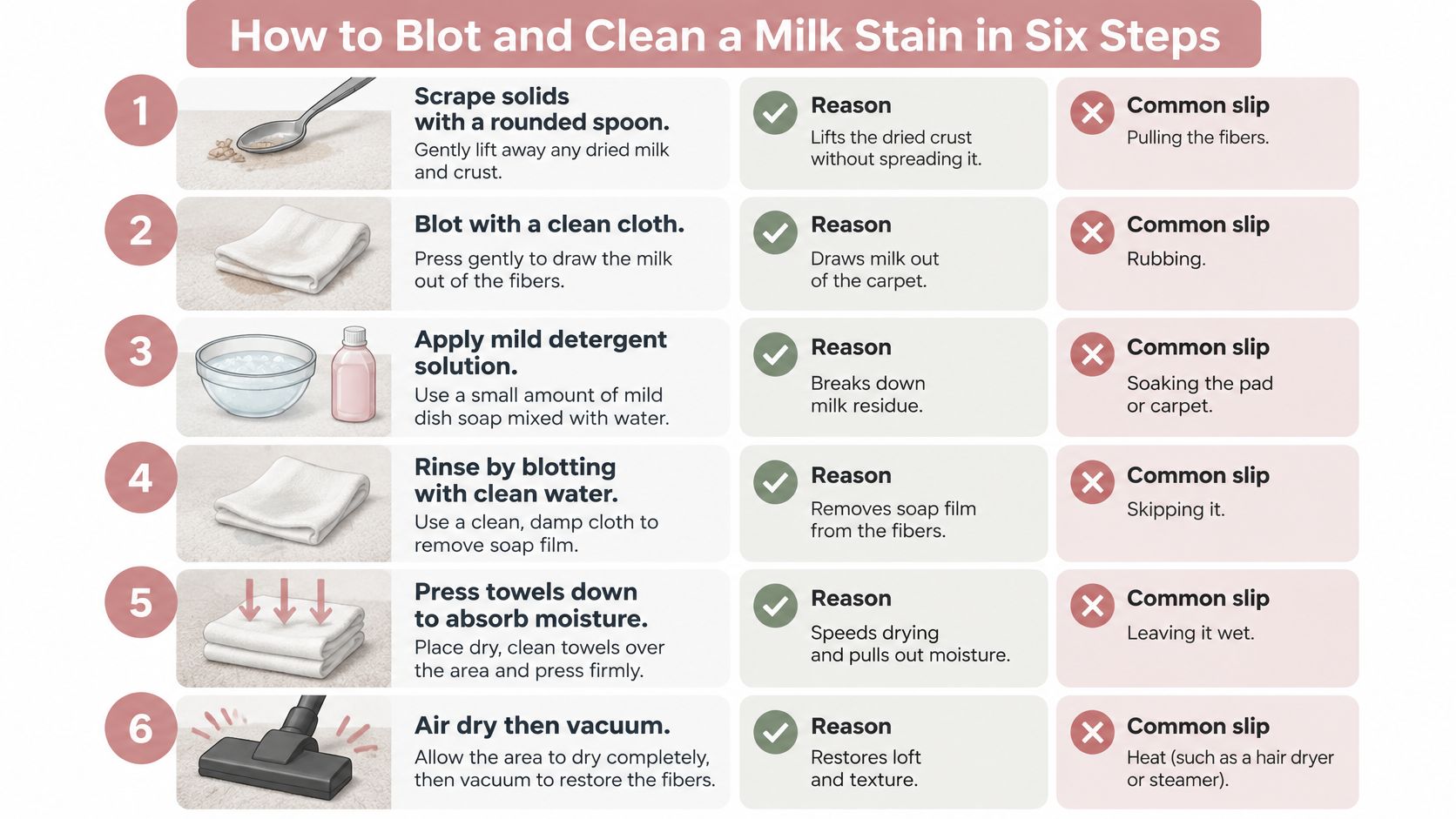
This visual gives an overview of removal, moisture control, and finishing. Keep testing and rinsing in the sequence described beneath it.
Lift, blot, test, and rinse
Lift away solids with a rounded spoon. Scoop up cereal or thickened milk, and loosen dried crust with the spoon's edge held gently against the pile. Don't dig underneath the fibers or pull upward on attached tufts.
Press with a dry white towel. Work from the outside toward the center, changing to clean towel sections as milk transfers. Rubbing spreads the spill and roughens the pile instead of drawing liquid out.
Pretest in a hidden area. Dampen a cloth with your intended solution, apply it discreetly, and check for color transfer or changes in texture after it dries. Stop if the cloth picks up carpet dye or the fibers look different.
Mix a weak detergent solution and put it on the towel. The Carpet and Rug Institute's milk spot guide specifies a maximum of 1/4 teaspoon liquid dishwashing detergent per 1 cup of lukewarm water. Don't increase that concentration or pour the mixture directly onto the carpet.
Blot the affected fibers with the dampened towel. Rotate to a clean section as milk residue transfers, then pause when the cloth stops lifting residue. Continuing to add solution after that point mainly adds moisture.
Mist with clean lukewarm water and blot after each rinse. Repeat controlled rinsing until no soapy film remains, rather than flooding the area to flush it. Leftover detergent can attract soil and leave a visible patch.
Working through a dried patch
For a crust beside the dining table, loosen the brittle material first and vacuum the detached particles. Then use the damp white cloth around the perimeter, moving inward without grinding the softened residue into the carpet. Keep the water cool or lukewarm, not hot.
If you're considering household powders afterward, review baking soda's role in stain removal before adding another substance to the pile. Powder isn't a replacement for this cleaning and rinsing process.
The video below provides another visual reference for handling a carpet spill.
Set used towels aside for laundering. Cleaning milk out of carpet isn't the same as sanitizing fabric, and BacteriaFAQ.com's explanation of what actually sanitizes your laundry is useful when deciding how to handle those cloths.
A successful cleaning pass leaves a lighter spot, no expanding ring, and a towel that comes away clean. It doesn't establish that the backing or pad is dry.
Extract and Dry the Pad Before Residue Rots
The pad can remain contaminated after the pile looks clean. Milk solids lodged below the surface won't reliably come out through surface blotting alone. Extraction removes liquid from deeper layers, while airflow and humidity control help the remaining moisture evaporate.
After rinsing, use a wet vacuum rated for liquid pickup or a carpet extraction machine to remove as much moisture as possible. Make suction passes without continually dispensing more solution. Never use an ordinary dry household vacuum on wet carpet.
Check beneath the surface
For example, suppose a hypothetical 2-foot patch in a basement family room looks dry on top but smells sour when you kneel beside it. If an edge is safely accessible, lift it carefully and press a clean paper towel against the pad. Moisture transfer or a sour smell underneath tells you not to judge the result by the pile alone.
Don't pull apart a tightly secured installation just to investigate. If you can't inspect it without risking damage, leave that check to a carpet professional.
A dry-looking surface isn't proof of a dry pad. Check the layer that absorbed the spill.
Aim fans across the carpet and run a dehumidifier to reduce room humidity. Keep the area exposed rather than replacing furniture over it. EPA mold-course guidance says carpet and backing should generally dry within 24–48 hours; damp padding also needs attention because retained moisture can support mold growth.
Decide whether drying is progressing
If milk reached the pad, stop chasing it with additional rinse water and move toward controlled extraction. A persistent sour smell after complete drying may require repeated professional extraction rather than another surface treatment. This explanation of deep carpet cleaning helps distinguish that work from routine vacuuming.
Use these checkpoints before introducing deodorizing powder.
Drying checkpoints before you deodorize
| Check | Target | If It Fails |
|---|---|---|
| Carpet surface | Dry to the touch, no wet spots | Keep fans running and add a dehumidifier |
| Pad under a lifted edge | Dry, no damp or sour smell | Continue extraction and drying |
| Total drying time | Within the drying window above | Call a professional if it remains damp beyond that window |
Remove the Sour Smell After the Carpet Dries
Odor treatment waits until the carpet and pad are dry. Don't scatter baking soda over a wet milk patch and expect it to pull the contamination out. You can end up with damp powder mixed into residue that still needs removal.
For a cleaned, completely dry area, Oh So Spotless's milk-cleaning guide describes applying baking soda across the affected patch, gently working it into the pile, leaving it overnight, and vacuuming the following morning.
Treat the whole affected patch
Say the spill happened beside a high chair. Cover the cleaned area rather than only the pale mark in the middle, gently distributing powder toward the base of the fibers without scrubbing. Keep children and pets away while it sits.
The image shows powder application, which belongs after cleaning and complete drying.
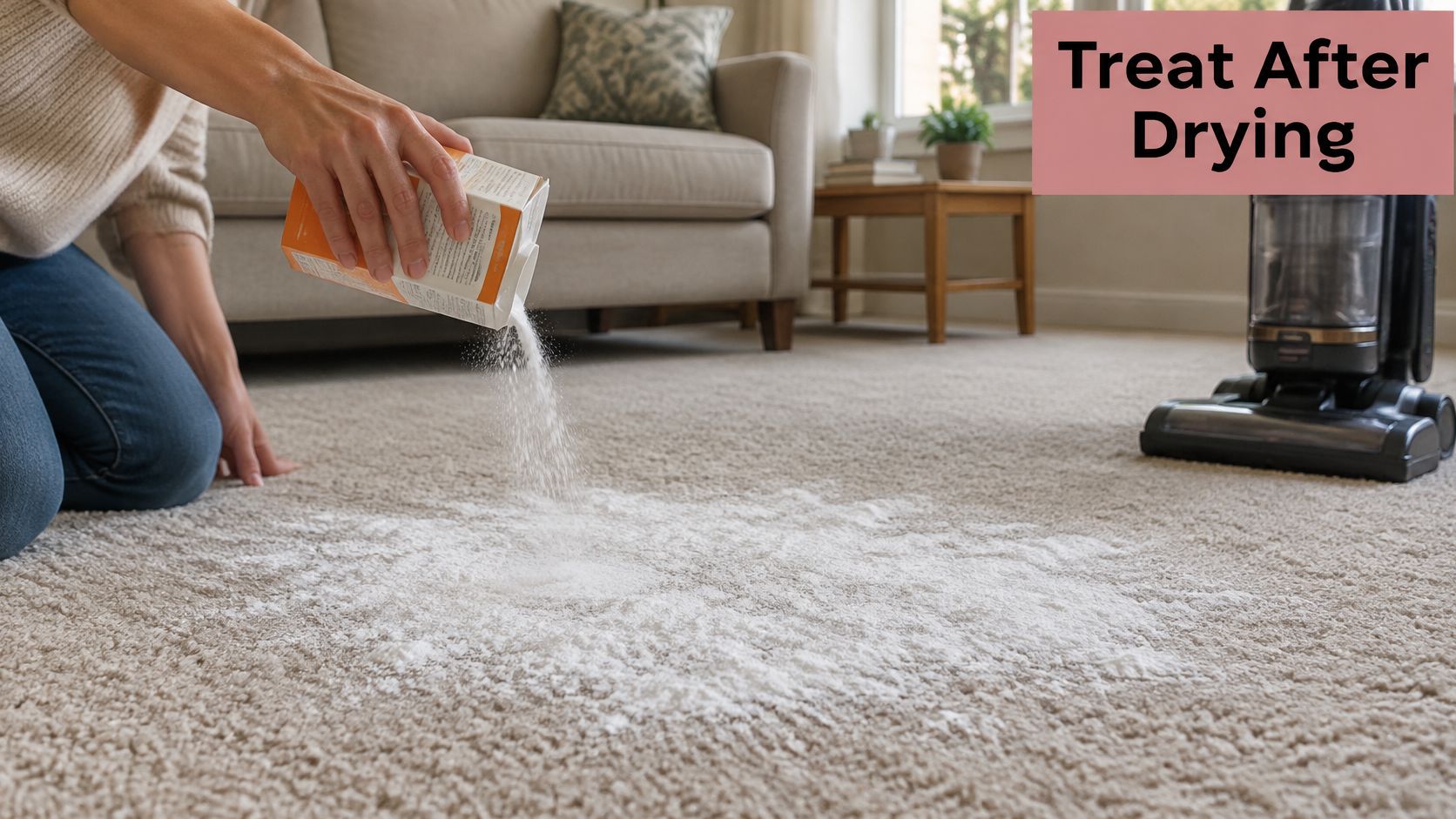
Vacuum slowly in several directions to collect powder from the pile, provided your carpet and vacuum instructions permit its use. Don't keep adding fresh layers if the first treatment doesn't help.
Odor check: Assess the result without air freshener running nearby. You need to know whether the sour smell remains, not whether perfume covers it.
For a smell that seems tied to dampness, Eagle Restoration's moisture and odor advice offers related context. Our guide to removing vomit smell from carpet also addresses why organic spills need residue removal rather than fragrance alone.
If the milk smell returns, don't repeat the powder treatment indefinitely. The remaining material may be below the fibers, so return to extraction and drying assessment instead.
Decide Between DIY and a Professional Carpet Cleaner
Stop DIY wetting when the pad won't dry, the odor returns after drying, or discoloration or mold-like growth appears. Those signs call for an assessment of the backing, padding, and possibly the surface underneath, not a stronger homemade mixture.
Flooring Clarity's spoiled-milk removal guide highlights the overlooked problem: a carpet can look clean while organic residue remains underneath. Baking soda and fragrance can reduce how noticeable the smell is, but they don't extract milk embedded in padding.
Recognize a spill beyond towel cleanup
A tipped baby bottle can release more milk than its small visible stain suggests. A refrigerator leak can spread beneath nearby carpet before you discover it. When towels can't absorb the volume, extraction may be the appropriate starting point.
For example, suppose a refrigerator leak soaks a hypothetical 4-by-6-foot area. After an initial extraction pass, stop dispensing water and arrange professional cleaning rather than repeatedly washing the same broad patch. Tell the technician whether the liquid reached the pad and what products you've already applied.
The warning signs matter more than how hard you're willing to scrub.

Choose removal rather than another cover-up
Before booking, understand the difference between carpet cleaning and steam cleaning. Describe the milk spill and its depth rather than requesting heat as the solution. If you see suspected mold, seek appropriate assessment instead of treating it as an ordinary stain.
At Aquastar Cleaning Services, LLC, we offer professional carpet cleaning for spills that exceed safe home treatment, along with driveway pressure washing. If an area is unsatisfactory, we return to re-clean it at no additional cost; we don't clean biohazards such as mold.
Photograph the patch, note when the spill happened, and record your cleaning attempts. If any warning sign appears, call a professional before adding more water.
Aquastar Cleaning Services, LLC offers carpet cleaning to help address milk spills that home blotting and rinsing haven't resolved. Visit Aquastar Cleaning Services, LLC to discuss the affected area, its drying condition, and any returning sour odor so you can arrange an appropriate next step.