A standard whole house cleaning in the U.S. usually runs $120 to $280, and a deep clean typically runs $240 to $500. That's the honest starting point, but if you live in North Atlanta, the primary consideration isn't just the range. It's what makes your home land at the low end, the middle, or the top.
Expect to pay $450 to $1,000 for a typical whole-home duct cleaning, and in many homes the final price comes down to three things: your home's size, your vent count, and the condition of the ductwork. Nationally, some cost guides also place the average at $389, with most homeowners paying $271 to $509 for a standard single-family home when the job is straightforward.
If you're in Kennesaw, Marietta, or Roswell, you're probably looking this up for a reason. Maybe there's dust back on the furniture a day after cleaning. Maybe the house smells musty when the AC kicks on. Maybe someone in the family keeps waking up stuffy and you're starting to wonder what's sitting inside the vents.
That's where duct cleaning gets confusing. Plenty of companies advertise a low number. Then the quote changes once they're in the driveway. A useful guide has to do more than throw out a national average. It has to show what affects the bill in North Atlanta homes, and what a real service should include so you can tell the difference between a thorough cleaning and a cheap blow-through.
Is It Time to Clean Your Air Ducts
A lot of homeowners don't start with price. They start with a problem.
In Kennesaw and Marietta, a common story goes like this: the AC runs fine, but there's always a layer of dust on the bedroom furniture, the return vent looks dark around the edges, and the house gets that stale smell after a rainy week. Then someone pulls off a vent cover and sees buildup inside the boot. That's when the search for AC duct cleaning cost starts.
What usually triggers the call
Some triggers are practical. Others are emotional.
Dust that keeps coming back: You clean on Saturday, and by Monday the shelves already look dull again.
Allergy complaints indoors: The house feels worse than outside, especially when the system runs often.
A musty vent smell: That usually gets more attention than visible dirt because people notice it every time the air starts.
After remodeling or repairs: Drywall dust and construction debris make people question what got pulled into the system.
The cost matters, but so does whether the service is justified. The EPA says duct cleaning is generally only appropriate when there are confirmed issues such as visible mold growth, vermin infestation, or excessive dust and debris buildup, and it should be handled on an as-needed basis through EPA guidance on whether you should have air ducts cleaned.
That's why the smart first step isn't booking the cheapest coupon. It's checking whether you have an actual contamination issue. If what you're seeing looks suspicious around supply or return vents, this guide on identifying and preventing vent mold gives a practical way to tell when a vent problem may be more than ordinary dust.
Dust alone doesn't always mean you need duct cleaning. Visible contamination, airflow restriction, odor, moisture issues, and pest evidence matter more.
For a baseline, projected 2026 pricing from HomeAdvisor's air duct and vent cleaning cost guide puts the U.S. average at $389, with most homeowners paying $271 to $509 for a standard single-family home. That's a starting point, not a promise. In North Atlanta, local labor, access, vent count, and contamination level decide the actual number.
What a Professional Duct Cleaning Service Includes
A proper duct cleaning job isn't someone sticking a shop vacuum near a register for twenty minutes. You're paying for source removal, which means technicians loosen contamination inside the system and pull it out under negative pressure instead of just moving dust around.
What the process should look like
A legitimate service usually follows a sequence like this:
Inspection first The crew checks the supply and return sides, looks at accessible duct runs, and notes signs of heavy buildup, moisture, or damaged sections.
System preparation Registers are sealed or controlled so the vacuum can create pressure through the system instead of losing suction all over the house.
Vacuum hookup A high-powered vacuum system is connected to the ductwork to capture loosened debris.
Agitation tools inside the ducts Brushes, air whips, and similar tools break loose dust and debris from interior surfaces.
Final verification The technician confirms the system has been cleaned thoroughly and that nothing was damaged in the process.
The source-removal method and industry benchmark pricing are described in COIT's duct cleaning cost overview, which notes that proper cleaning begins with agitation devices and vacuum extraction, with labor typically taking 3 to 8 hours at $90 to $125 per hour depending on system size and accessibility.
What should be included, not skipped
A thorough job should address more than the easy-to-reach supply vents.
Look for a quote that clearly spells out cleaning of:
Supply ducts
Return ducts
Registers and grilles
Air handler components that are part of the service scope
The full system area being quoted, not just “accessible vents”
That's one reason homeowners should pay attention to service descriptions, not just price. A company that explains scope in detail usually gives you a more honest picture of what you're buying. If you want to know more about the company behind this site, the Aquastar Cleaning Services background page explains its service philosophy, though duct cleaning quotes anywhere should still be judged by process, scope, and transparency.
Practical rule: If a whole-house duct cleaning quote sounds cheap enough that it couldn't possibly cover several hours of labor and specialized equipment, it probably doesn't include a real whole-house cleaning.
What doesn't work
The low-end scam version is simple. A crew shows up with a coupon price, removes a few vent covers, does a quick pass near the openings, then starts pushing sanitizer, mold treatment, or extra vent charges.
That's not the same as cleaning the system. If the quote doesn't describe negative pressure, agitation tools, and the specific parts included, ask more questions before you let anyone start.
Key Factors That Drive Your AC Duct Cleaning Cost
A homeowner in Kennesaw might pay for a straightforward one-system cleaning, while a similar-size house in Roswell comes in much higher because the ducts are split across two attic zones with tougher access. That kind of price gap is common in North Atlanta. The quote usually follows labor, vent count, access, and whether the system has a basic dust problem or a contamination problem.
Home size and system size
Bigger homes usually cost more to clean because there is more ductwork, more registers, and more time on the equipment. That sounds obvious, but square footage alone does not tell the whole story. A compact 2,400-square-foot ranch can be easier and cheaper than a 1,900-square-foot two-story home with awkward attic runs.
For a general size-based benchmark, This Old House's air duct cleaning cost guide notes that larger homes tend to fall into higher pricing ranges because of added vents, longer duct runs, and more labor. In North Atlanta, that usually shows up fast once you move from a smaller townhome to a larger Marietta or East Cobb house with multiple branches and returns.
Vent count and returns
Vent count is one of the clearest pricing drivers, and it is one homeowners can check for themselves in five minutes.
Some Georgia companies charge $25 to $50 per vent, according to Sunset Air's Georgia duct cleaning cost guide. If your home has 12 supply vents and 2 returns, the count matters. If a company only asks about "vents" and skips returns, ask them to spell out exactly what they are counting before you compare quotes.
Local homeowners frequently get tripped up. One contractor in Kennesaw may price by total openings. Another may quote a flat rate that excludes returns or charges extra for larger grilles. Same house, different math.
Labor time and access
Access changes the job more than homeowners expect.
Labor for duct cleaning runs $90 to $125 per hour, and many jobs rise or fall on access, crew time, and contamination level, as outlined in NerdWallet's air duct cleaning cost breakdown. Ducts in a cramped attic, tight crawlspace, or second-floor chase usually take longer than ducts with open, reachable runs.
I have seen this play out in plenty of North Atlanta homes. A one-story house in Marietta with open basement or garage access is often simpler than a Roswell home where the crew has to work around attic decking, low rooflines, and long insulated flex runs in summer heat. The square footage on paper may look similar. The labor load is not.
If your attic ductwork also leaks conditioned air, cleaning will not fix that side of the problem. Homeowners dealing with high attic heat loss should also read about saving energy with duct insulation.
Contamination level and add-ons
A basic dust cleaning is one price. Rodent droppings, nesting material, standing moisture, odor, or visible growth change the job and the risk.
NerdWallet's breakdown notes that add-ons like pest control at $108 to $261 or mold removal at $1,223 to $3,753 can push the final bill far above the base cleaning price. If moisture, slime, odor, or visible growth is part of the problem, the job becomes about more than just “cleaning the vent.” At that point, homeowners should slow down, ask what is being treated, and make sure the contractor can explain why that extra work is needed.
One system or more than one
This is a major price jump in North Atlanta.
A smaller condo or townhome in Kennesaw may have one system. A larger Roswell or East Cobb home often has separate systems for upstairs and downstairs. More than one unit usually means more trunks, more returns, more registers, more setup, and more labor time.
That is why homeowners should be careful with low flat-rate offers. A company can advertise a whole-house special, then charge more once they confirm you have two systems instead of one. Reviewing a provider's home cleaning and maintenance service options can help you see whether they explain scope clearly or keep the details vague.
AC Duct Cleaning Prices in Kennesaw and North Atlanta
Most homeowners in North Atlanta don't care what a nationwide average says unless they can connect it to a house that feels like theirs. Fair enough. Local pricing matters because metro Atlanta labor rates, travel, home layouts, and competition all shape the quote you'll receive.
A useful Georgia comparison point
One of the better local reference points comes from Decatur. According to Homeyou's Decatur air duct cleaning cost guide, an average-sized home there typically costs $275 to $350, based on home size and number of vents. The same guide notes that a 1,500 sq. ft. home with 10 vents would be at the low end.
That doesn't mean every Kennesaw or Roswell home will fall into that exact range. It does give you a realistic metro-area anchor. In practical terms, many straightforward North Atlanta jobs for smaller homes or townhomes may land around the lower end of regional pricing, while larger homes or homes with more returns, more vents, or contamination issues move upward fast.
What homeowners in Kennesaw, Marietta, and Roswell should expect
Here's the practical way to think about local pricing:
Smaller townhome or condo: Often the lowest end if the system is accessible and the ductwork is in ordinary condition.
Mid-size family home: Usually lands in the middle because there are more vents, longer duct runs, and more labor.
Older or larger home: More likely to need extra time, especially if the house has attic runs, multiple units, or signs of moisture or pests.
If you live in Kennesaw and want a local household service reference point from the same company behind this site, the Kennesaw home cleaning service area page confirms the local footprint, but your duct quote should still come down to system-specific details, not just ZIP code.
A simple way to rough out your own range
Use vent count first. If a contractor prices by vent, your count gives you a quick estimate before anyone visits.
Here are two practical examples:
Home type
Vent example
Rough effect on price
Smaller Kennesaw townhome
10 vents
Usually closer to the lower end of local market pricing if contamination is light
Mid-size Marietta home
16 vents
Typically higher because there's more ductwork volume and longer labor time
When homeowners count vents and returns before calling, they ask better questions and get better quotes.
That matters because vague pricing is where people get burned. A company says “whole house,” but means only a limited number of openings. Another company includes unlimited vents, but not the return side or the main system components. The local number only helps if you know what's included.
Sample Estimate Scenarios What You Might Pay
The easiest way to understand AC duct cleaning cost is to look at homes that resemble your own. These aren't promises or universal rates. They're practical North Atlanta examples built from the pricing models and cost drivers already covered.
Three local-style examples
Scenario
Home Details
Services Needed
Estimated Cost Range
Kennesaw townhome
Around 1,500 sq. ft., 10 vents, one HVAC system, light dust buildup
Standard full-system duct cleaning with routine debris removal
$225 to $450
Marietta family home
Around 2,000 sq. ft., 16 vents, one system, pet hair and moderate dust
Standard duct cleaning with more vent coverage and longer labor time
$400 to $800
Roswell larger home
Around 3,000 sq. ft., multiple vents, heavier buildup or contamination concerns
Full cleaning plus potential contamination-related add-ons depending on findings
$450 to $900 before major remediation
What these scenarios mean in real life
The Kennesaw townhome example is the cleanest case. The square footage and vent count line up with lower-end pricing models, and there's no sign of pests or mold. This is the kind of home where a straightforward quote is most likely to stay straightforward.
The Marietta family home is where the bill starts stretching. More vents mean more openings to clean and more duct length to cover. Add pets, heavier return buildup, and furniture that makes access slower, and the labor side moves up.
The Roswell larger home is where homeowners need to be careful with assumptions. A big house can still be routine if the ductwork is accessible and cleanable without complications. But if the crew finds contamination that needs specialty treatment, the number can change quickly because major mold or pest-related work sits outside basic duct cleaning.
Use your house as the template
Try matching your home to the nearest scenario by answering these questions:
How big is the home?
How many supply vents and returns do you have?
Is the system easy to access, or buried in attic and crawl areas?
Are you dealing with ordinary dust, or something more serious like odor, visible growth, or pest evidence?
If your house sits between two examples, expect the quote to land somewhere between them. That's why broad online averages only help so much. The details of your home push the price far more than the headline number.
DIY Duct Cleaning Versus Hiring a Professional
A lot of homeowners ask the same honest question. Can't I just vacuum out the vents myself and save the money?
You can clean the visible parts. You can remove a grille, wipe it down, and vacuum what you can reach near the opening. That's useful housekeeping. It is not the same as cleaning the duct system.
What DIY can do
DIY work is fine for surface maintenance:
Vacuuming vent covers
Wiping dust from registers
Cleaning around return grilles
Replacing filters on schedule
Those steps help the house stay cleaner. They also help you notice early warning signs like dark buildup, debris, or unusual moisture.
Where DIY falls short
Household vacuums don't create the kind of negative pressure a professional setup does. They also can't reach deep into trunk lines and branch runs with agitation tools designed for duct interiors.
The bigger issue is diagnosis. The EPA advises that duct cleaning should only be performed after the contaminant source, such as water intrusion, is identified and controlled, otherwise the cleaning only gives temporary results, according to the NIH fact sheet on HVAC duct cleaning. That source problem is often what a homeowner can't safely evaluate alone.
If moisture, slime, odor, or visible growth is part of the problem, the real job isn't just “cleaning the vent.” It's finding out why the contamination is there.
When professional service makes sense
Hiring a professional makes more sense when:
Situation
Better choice
Light dust at the vent opening
DIY surface cleaning
Heavy internal buildup, odor, or debris
Professional duct cleaning
Moisture or suspected contamination
Professional inspection and source correction
Fragile or hard-to-reach ductwork
Professional handling
For households that also care about gentler products and low-residue cleaning practices around the rest of the home, this page on environmentally friendly cleaning options is worth reading. It's separate from duct cleaning itself, but the same common-sense rule applies. Use the right method for the job, not just the cheapest one.
How to Get an Accurate Quote and Avoid Scams
A lot of North Atlanta homeowners get trapped the same way. They see a coupon for whole-house duct cleaning at a price that would not even cover a crew's time in Kennesaw, Marietta, or Roswell, book the visit, and then the actual sales pitch starts at the front door.
The fastest way to overpay is to compare headline prices instead of written scope. In this market, a serious quote usually reflects travel, labor, time at the air handler, and the number of supply and return runs. If one company is dramatically below the rest, assume the price is incomplete until they prove otherwise.
The red flags to watch for
The National Air Duct Cleaners Association, or NADCA, is a certification body worth checking when you screen companies, and low-price bait-and-switch offers are a known problem, as noted in BKV Energy's discussion of duct cleaning costs and scams.
Watch for these warning signs:
Ultra-low whole-house specials: These offers are often built to get inside the home, then raise the bill with add-ons.
No written scope: “Whole house” is not a scope of work.
Mold claims made on sight: A contractor should show you what they found and explain what they can and cannot diagnose.
Pressure to approve extras immediately: Good companies explain the issue, the fix, and the price before they start.
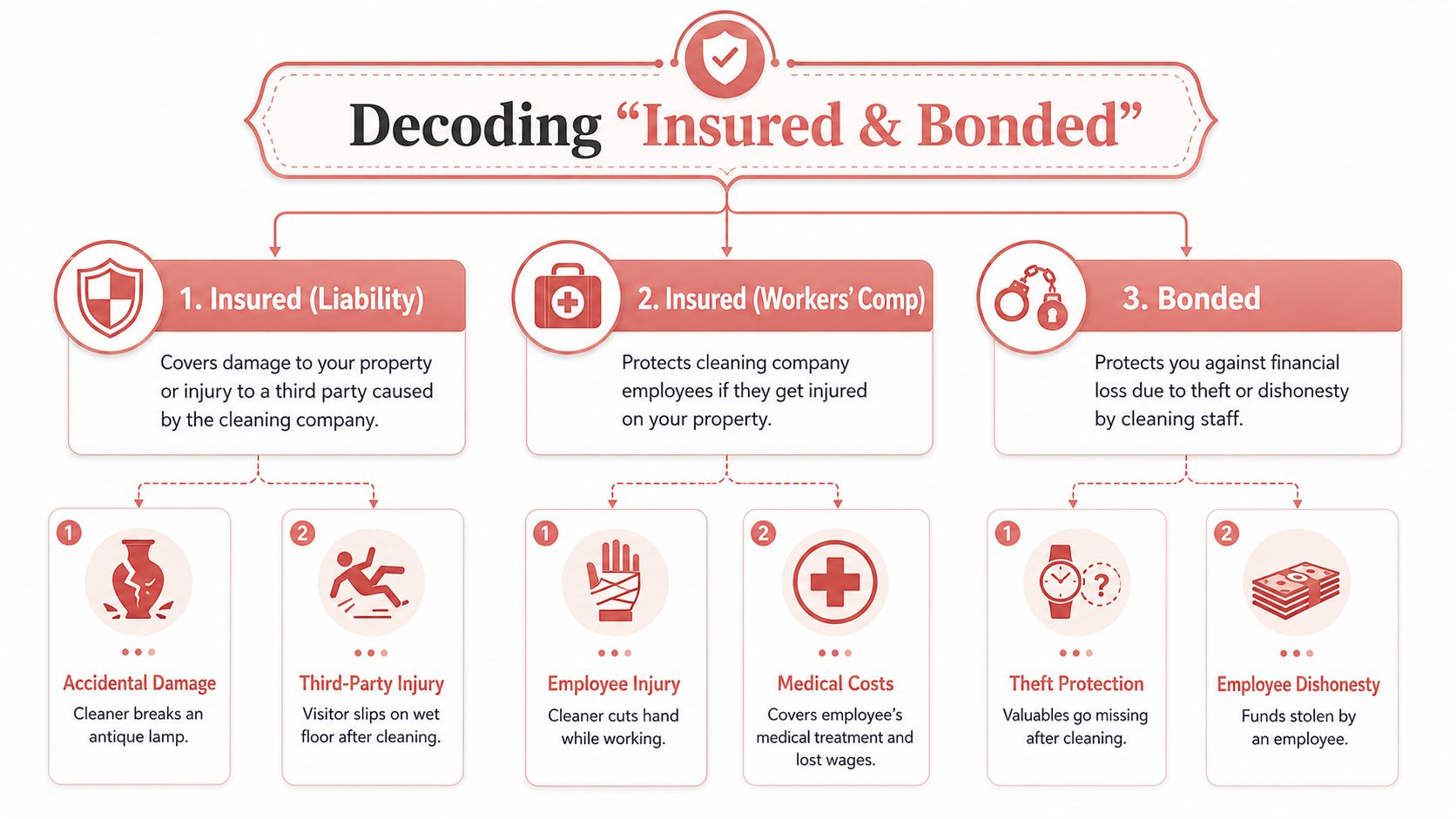
Vague answers about insurance, training, or process: If they clean ducts every day, they should be able to explain the job in plain English.
Questions worth asking every contractor
Ask direct questions and listen for direct answers.
What parts of the system are included in this quote?
How many supply vents and return vents does that price cover?
Are the trunk lines, branch runs, and air handler components included?
What would make the price go up once your crew arrives?
Will you show photos or video before and after the job?
How do you handle suspected mold, pests, or damaged ductwork?
Can you send the estimate in writing before I book?
Local pricing can vary more than homeowners expect. An older Marietta house with awkward attic access can price differently than a newer Roswell home with easier duct runs, even if the square footage looks similar on paper. That is why the best quote is based on the system, not just the house size.
How the price is built Flat rate, per vent, by system, or a minimum service charge plus extras.
Exactly what gets cleaned Supply vents, return vents, trunk lines, branch lines, blower area, and any excluded components.
What changes the final bill Heavy debris, pest contamination, difficult access, damaged ducts, or requested add-on treatments.
What proof you get after the work Photos, video, or a walkthrough at the end of the job.
Cheap duct cleaning gets expensive fast when the truck arrives and the scope changes. Clear paperwork protects you.
If you want to compare against a local company that puts the scope in writing, use this North Atlanta duct cleaning quote request form. Whether you hire them or someone else, the rule stays the same. Get the details in writing, ask what is excluded, and do not let anyone sell fear instead of service.
Saturday morning starts the same way for a lot of Kennesaw families. You mean to get coffee, take the kids to Swift-Cantrell Park, maybe finally sit down for an hour. Instead, you're wiping bathroom counters, chasing dust on the stairs, and wondering how the kitchen floor got sticky again.
You're probably doing what most busy homeowners do. You found a cleaner through a neighborhood group, a referral, or a quick search. The rate looks fair. The messages are friendly. The person says they're insured. That sounds good enough, so you move on to schedule the first visit.
You finally get the renovation you wanted. The paint is dry, the new cabinets look great, the floor color is exactly right, and for a few hours it feels finished.
Then the light hits the room sideways.
There it is on the windowsill, on the trim, inside the drawer tracks, on top of the fridge, and somehow on the far side of the house where no one even worked. You wipe it once, and it comes back. You vacuum, and the room still smells dusty. A day later, the floor has that chalky film again.
That frustration is real, but this isn't just a housekeeping nuisance. Construction dust cleaning has to be handled differently from normal household dust because the fine particles left after sanding, cutting, and drywall work don't behave like lint or pet hair. They move through the air, settle into vents and textures, then lift again when the HVAC turns on or someone walks through the room.
Beyond the Grime The Unseen Danger of Construction Dust
A common scene goes like this. A homeowner finishes a kitchen remodel, wipes the counters, vacuums the floor, and opens the drawers to start putting things back. By evening, the drawer bottoms feel gritty again. The pendant lights look dull. The dining table has a pale film on it even though it was cleaned that morning.
That happens because post-renovation dust often includes ultra-fine particles, including silica from drywall. In a post-renovation environment, construction dust can account for over 76% of the most dangerous fine particles, PM2.5, and those particles are too small for standard vacuums. Proper HEPA filtration captures 99.97% of particles as small as 0.3 microns, which is why ordinary household cleanup tools often leave the underlying issue behind (fine particulate construction dust findings).
A lot of homeowners think the issue is visible residue. The bigger issue is what you can't see. Fine dust gets into return vents, lands on textured walls, sits on top door trim, and hangs in the air long after the room looks presentable.
Construction dust cleaning isn't just about making a room look finished. It's about making the air safer to breathe.
That matters even more if you have kids, pets, asthma, allergies, or anyone in the house who reacts quickly to airborne irritants. If you're already trying to reduce harsh residues and choose safer products, Aquastar's approach to environmentally friendly house cleaning fits that same mindset. Clean shouldn't mean pushing more irritants around.
Gathering Your Dust Fighting Arsenal
Before you start wiping anything, get your tools together. The wrong setup wastes time and stirs up more dust than it removes.
Safety gear that belongs on your body
You need protection before the first pass starts.
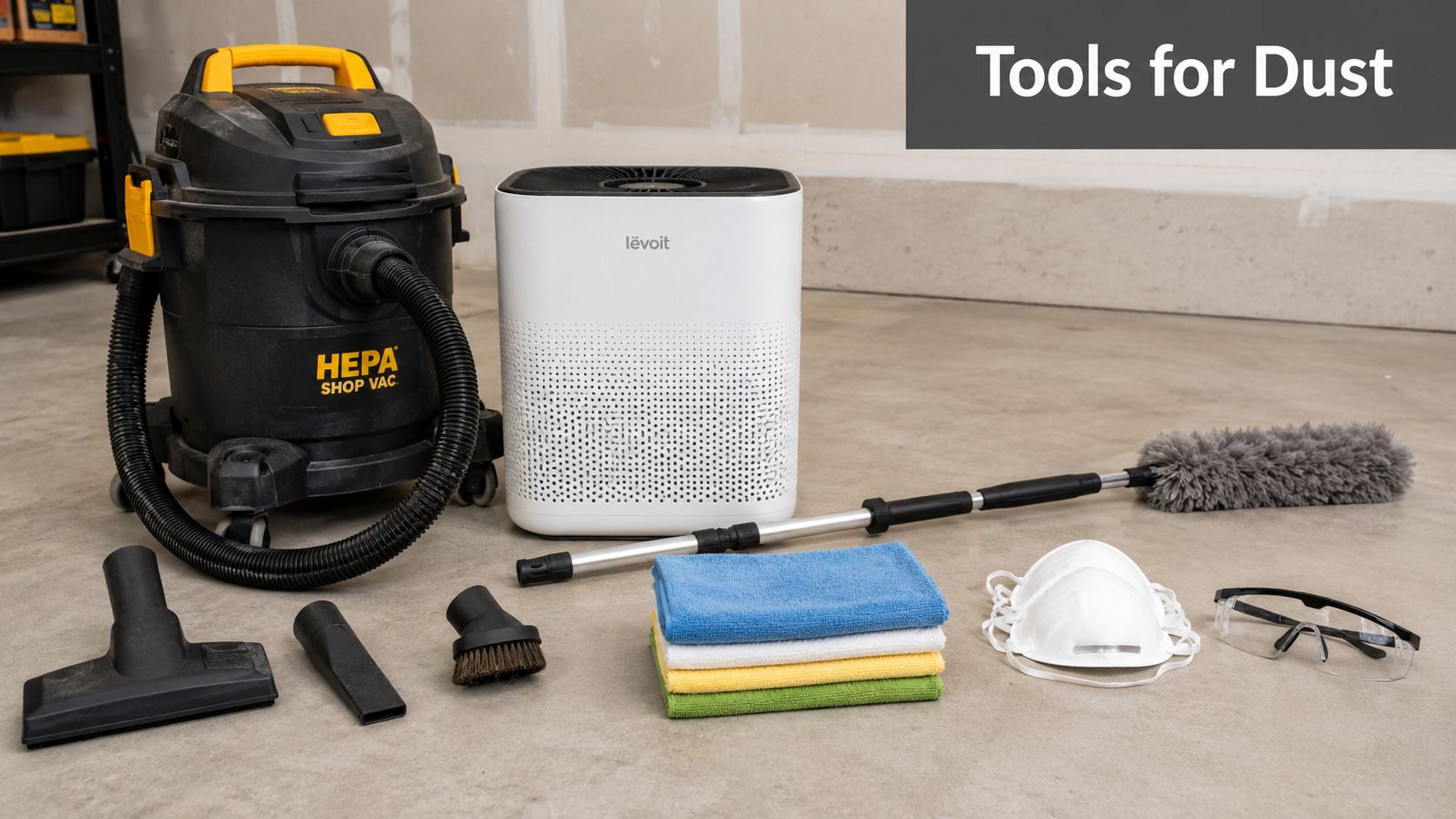
N95 or better respirator: Fine dust becomes airborne the minute you disturb shelves, trim, or floors. A basic cloth face covering won't do the same job.
Safety goggles: Ceiling dust, drywall crumbs, and wood particles drop straight down when you clean overhead fixtures or fan blades.
Gloves: They help when you're handling debris, cleaning solutions, and rough-edged residue around trim or hardware.
A practical example. If you're cleaning a bathroom after tile cutting and sanding nearby, wear goggles even if the room looks mostly clean. The first vacuum pass around exhaust fans and light fixtures can knock loose fine debris you didn't realize was sitting there.
Dust capture tools that actually work
At this point, most DIY jobs go off track.
HEPA-filtered vacuum: This is an essential tool. The filter matters more than the brand name. You need a machine designed to capture fine particulate, not blow it back into the room.
Soft brush attachment: Use it on ceilings, walls, shutters, trim, and vent covers so you lift dust instead of scratching paint.
Microfiber cloths: Keep a stack ready. They hold fine dust far better than old T-shirts or paper towels.
Extension pole or high-reach duster head: High shelves and tops of cabinets collect a shocking amount of residue.
Tack cloths for detail zones: These are useful on certain hard surfaces and trim details, especially after the main dust load is removed.
Practical rule: If a tool creates a visible dust cloud, stop using it.
A standard upright vacuum is a common problem. It may pick up chunks, but on fine drywall dust it often leaves that familiar chalk smell in the room. The same goes for feather dusters and dry sweeping.
For carpeted rooms near a renovation area, a HEPA machine is the better first pass. If dust has settled deep into fibers, getting help from carpet cleaning experts can make sense after the main dust removal is done.
Cleaning solutions that won't create a bigger mess
Dry dust comes first. Damp wiping comes after. So your liquid supplies should be simple and surface-appropriate.
Keep these on hand:
pH-neutral cleaner: Good for many finished hard surfaces after vacuuming.
Bucket with measured water, not soaking cloths: Overwet cloths push dust into corners and leave streaks.
Wood-safe oil for stuck dry residue on finished wood floors: Use it sparingly to soften hardened bits before gentle removal with a plastic putty knife.
Eco-friendly biodegradable products: These are a good fit when children, pets, or sensitive occupants will return quickly after cleanup.
For air support during cleanup, some homeowners also look at targeted airflow tools or air purification diffusers that help manage airborne particles in problem areas. They're not a substitute for proper removal, but they can support the process.
If you don't want to buy, store, and maintain all this equipment for one renovation, Aquastar Cleaning Services, LLC is one practical option for post-remodel cleanup using eco-friendly products where requested.
The Room by Room Top Down Cleaning Method
The sequence matters more than effort. If you clean floors first and ceilings second, you'll clean the same room twice.
Start by seeing the workflow at a glance.
The method that works best is simple but disciplined. First use HEPA vacuuming to remove bulk dust, then follow with damp microfiber wiping. This two-step sequence is proven to reduce airborne particulate matter by 97% compared with single-method approaches (two-step dust removal method).
Start high and stay dry first
Seal the work area as much as you can and create sensible ventilation without blasting dust into the rest of the house. Then begin with the highest surfaces in the room.
Ceilings, crown molding, fan housings, recessed light trims, the tops of window casings, and the upper corners of walls come first. Use the HEPA vacuum with a soft brush attachment. Move slowly. Fast passes fling dust around.
A practical example. In a kitchen remodel, don't stop at the visible cabinet fronts. Vacuum the top edge of the upper cabinets, the lip above the range hood, and the top of the refrigerator enclosure if there is one. Those areas drop dust for days if they're skipped.
For rooms with vaulted ceilings, chandeliers, beams, or high ledges, professional high-reach cleaning can save a lot of time and risk. Home ladders and improvised dusting tools often make a mess or create a safety problem.
Respect the settling pause
One of the best trade secrets is doing less for a short time.
After the first overhead vacuum pass, leave the room alone and let disturbed particles settle. The 30-minute settling rule gives suspended dust time to drop before you vacuum again. In real homes, this is the difference between chasing the same haze all afternoon and successfully removing it.
Leave the room, close the door if you can, and come back after the dust has had time to fall. The second pass is usually more productive than the first.
This is especially useful in bedrooms with textured walls, in living rooms with fabric furniture nearby, and in hallways where foot traffic keeps stirring particles back up.
A simple room rhythm looks like this:
First pass overhead: Ceilings, walls, vents, lights, door tops.
Pause: Let loosened dust settle.
Second pass mid-level: Trim, shelves, wall art backs, switch plates, cabinet faces.
Final lower pass: Baseboards, floor edges, and then floors.
Here's the video walkthrough if you want to visualize the flow before starting.
Move from dry removal to damp capture
Once loose dust is removed, switch to damp microfiber cloths. Not wet. Damp.
For painted drywall and wood trim, use a damp microfiber cloth and wipe from top to bottom, then dry the surface afterward to prevent damage or dust redistribution. This matters on fresh paint, matte finishes, and detailed trim where oversaturation can leave marks or lift residue back into the air.
A practical example. On white baseboards after sanding nearby, one dry cloth pass often just lines the dust up along the top edge. A lightly damp microfiber cloth grabs it. Then you follow with a dry cloth on the painted surface if needed.
Another example is cabinet interiors. Pull drawers out if possible. Vacuum drawer boxes, runners, corners, and hardware recesses first. Then damp-wipe the sides and bottoms. If you skip the tracks, every open-and-close motion throws fine dust back into the cabinet.
Room-specific trouble spots people miss
Different rooms hide dust in different ways.
Kitchen and dining areas
Above cabinets: This is often the heaviest dust shelf in the room.
Inside drawers and silverware organizers: Dust settles there even when drawers are closed during construction.
Under counter lips and stool rails: Fine powder clings underneath, not just on top.
Light fixture canopies and pendant stems: They collect dust that falls onto clean counters later.
Fabric and static make these rooms tricky. Vacuum window sills, blinds, lampshades that can be safely cleaned, closet shelves, and the tops of doors. If there are electronics nearby, dust around them carefully after the main airborne load is reduced.
Bathrooms and laundry areas
Fans, exhaust covers, towel bars, and vanity light bars trap residue fast. Remove vent covers if you can do so safely, vacuum them, then wipe them before reinstalling. Check the top edge of mirrors too. It often holds a pale line of dust long after the glass looks clean.
Hardwood floors and finished wood
If you find dried construction residue stuck to the finish, don't scrape it dry with a metal blade. Soften the material carefully with wood oil, then lift it gently with a plastic putty knife. That method avoids the gouges that happen when someone gets impatient and attacks the spot with a razor scraper.
Clearing the Air Your HVAC System is Key
A house can look clean and still blow dust back into every room because the HVAC system became a storage bin during the project. That's why construction dust cleaning has to include the air side of the home, not just the visible surfaces.
Shut it down before you spread it
Turn the HVAC system off before the main cleanup starts. If air is moving while you're vacuuming and wiping, the system can pull loose dust into returns and push it into rooms you haven't touched yet.
Cover supply and return vents in the active work zone with plastic sheeting or painter's tape while the heavy cleaning is happening. Don't leave covers on permanently. The goal is temporary dust control while you remove the bulk of the contamination.
A practical example. During a hallway bath renovation, the bathroom may be the work zone, but the return vent in the hall can pull that dust through nearby bedrooms. If the system keeps running during cleanup, the dust migration gets worse.
Bring the system back online strategically
Once the main surface cleaning is finished, uncover vents and put in temporary low-cost fiberglass filters to catch the next wave of airborne residue as the house goes back to normal use. Then run the fan continuously for a period to pull suspended dust through filtration.
After that initial catch period, replace those temporary filters with fresh pleated filters. Don't keep using the same dust-loaded filter and assume the job is done.
If you're exploring whole-home add-ons for air management after a renovation, some homeowners review shop HVAC air purification systems as part of a broader indoor air quality plan. That kind of equipment supports cleaner airflow, but it doesn't replace duct inspection or proper dust removal.
Know when ducts need professional attention
You don't need duct cleaning after every project, but some signs are hard to ignore:
Dust puffs from vents: If you see visible dust blowing out after cleanup, the system likely holds more debris.
Registers re-coat quickly: Clean vent covers that turn dusty again almost immediately point to ongoing recirculation.
The smell lingers when the fan starts: A chalky, dry odor after the fan kicks on often means fine residue remains in the system.
For homeowners who need deeper home support after a remodel, additional house cleaning services can cover the non-construction areas that still caught the overflow.
Common Cleaning Mistakes That Keep Your Home Dusty
Most failed cleanup jobs don't fail because the homeowner didn't work hard. They fail because the sequence was wrong.
Starting with a mop
This feels logical. The floor looks dusty, so you mop it.
But if loose dust is still sitting on trim, walls, sills, and fixtures, that wet floor becomes a landing pad for everything above it. On hard floors, the result is often a gritty slurry along edges and corners. On textured tile, it can pack residue into grout lines.
A practical example. After drywall sanding near a foyer, wet-mopping first often leaves muddy white streaks at baseboards and door jambs. Vacuuming first would have removed the bulk dust and made the damp pass much cleaner.
Using a broom or feather duster on fine dust
These tools move visible dirt well enough in everyday life. They perform badly on renovation residue.
Dry sweeping launches a cloud. Feather dusters flick particles into the air and onto nearby surfaces. Then people wonder why a table they just cleaned looks dusty again by dinner.
If the room looks worse five minutes after you start cleaning, the tool is wrong.
Cleaning bottom-up
A lot of people wipe counters, vacuum floors, then remember the ceiling fan and upper trim. Now the room is dirty again.
The hidden version of this mistake is skipping the places that don't sit at eye level. Top door frames, closet shelves, the top edge of blinds, the lip above window trim, and the tops of appliances all leak dust back into the room over time.
Spots that trigger repeat dusting
Closet headers and shelf supports
Inside cabinet hinges and drawer runners
Vent grilles and return covers
Light fixture tops and fan motor housings
Behind toilets, washer units, and refrigerators
Those aren't fussy details. They're the reason dust "comes back."
Using the wrong vacuum and trusting the room because it looks clean
One of the biggest misconceptions in construction dust cleaning is thinking visible cleanup equals finished cleanup. It doesn't.
Many homeowners don't realize drywall dust contains silica, a known respiratory irritant. Standard vacuums and basic cleaning methods fail to contain it, allowing it to enter HVAC systems that then become dust reservoirs and recirculate harmful particles long after visible cleaning is done. In some cases, that means professional-grade filtration and even professional duct cleaning are needed (drywall dust and HVAC contamination).
That explains a familiar problem. The room looks fine, but each time the heat or air kicks on, a faint film reappears on dark furniture or window sills. The issue isn't that the table was missed. The issue is that the dust source was never fully contained.
Oversoaking painted walls and trim
People often scrub too hard when they see chalky residue on paint. Freshly painted drywall and wood trim don't respond well to soaked rags and aggressive pressure.
A damp microfiber cloth works better than a dripping sponge. It traps residue without driving water into seams, leaving drip marks, or smearing muddy streaks across flat paint.
DIY Dust Battle vs Calling in the Professionals
DIY construction dust cleaning is possible, especially after a small project with limited sanding and good containment. But it isn't quick, and it isn't cheap once you count the right vacuum, filters, respirators, cloths, floor-safe cleaners, and the time needed for repeated passes.
Professional service costs can make more sense when the dust spread beyond one room, the HVAC was running during the job, or someone in the home is sensitive to airborne particles. The national average cost for professional post-construction cleaning in 2026 ranges from $210 to $379, with extensive jobs reaching $592 or more, and that price reflects a multi-phase process that includes a final clean and a follow-up clean for resettled dust (2026 post-construction cleaning cost range).
The trade-offs in plain terms
Factor
DIY Approach
Professional Service (like Aquastar)
Equipment
You buy, rent, or borrow the vacuum, PPE, cloths, and specialty tools
Team arrives with purpose-built equipment and supplies
Time
Often stretches across multiple days because of repeat settling
Usually handled as a planned cleaning sequence
Method
Easy to skip vents, trim tops, tracks, and resettling passes
Built around full-room workflow and overlooked zones
Air quality follow-up
Homeowners often stop after visible cleanup
Follow-up cleaning is more likely to be built into the process
Surface risk
More chance of scratching wood or oversoaking paint
Better fit when you have delicate finishes or custom work
Cost
Lower out-of-pocket if you already own the right gear, higher in labor and time
Cash expense is higher, but it covers labor, equipment, and repeat passes
When DIY is reasonable
DIY can work if the project was small and contained. Think a single-room refresh, light trim work, or a small repair where dust barriers stayed in place and the HVAC wasn't spreading residue through the house.
It also helps if you already own a true HEPA vacuum and don't mind spending your weekend doing slow, methodical detail work. That's the part many people underestimate. This isn't one wipe-down. It's repeated top-down cleaning with waiting periods and follow-up checks.
When calling a pro is the smarter move
Call for help when dust reached multiple rooms, settled into soft furnishings, or keeps returning after you've already cleaned carefully. The same goes for homes with babies, seniors, asthma, pets, or anyone who reacts strongly to air quality changes.
If you're hiring in North Atlanta, ask direct questions:
Insurance and job type: Have they handled post-construction or post-remodel cleanup before?
Equipment: Are they using HEPA-filtered vacuums and microfiber-based dust removal?
Follow-up expectations: Do they address resettling dust in the scope?
Satisfaction process: What happens if dust appears again in overlooked areas?
If you'd rather hand the job off, Aquastar Cleaning Services is the local service page to review for homeowners who want recurring housekeeping support plus one-time deep or post-remodel cleaning options in the North Atlanta area.
If you're tired of wiping the same dust for the third time and want a methodical clean that addresses surfaces, air movement, and the frustrating resettling phase, contact Aquastar Cleaning Services, LLC.
Saturday morning usually starts the same way. You mean to clean the bathroom first, then notice the ceiling fan dust, the greasy stove hood, the fingerprints on the hallway wall, and the pet smell that has settled into the rug. Without a plan, deep cleaning turns into half-finished jobs and a tired afternoon.
You've got the keys. The lease is signed or the closing is done. Boxes are waiting in the truck, and the place looks empty enough to seem clean at first glance.
Then you notice the details.
There's a sticky cabinet shelf in the kitchen. A ring around the bathroom faucet. Dust sitting on top of the door frames. A faint film inside drawers where you were about to place dishes, towels, and baby clothes. That's the moment it becomes clear a new home can be vacant and still not feel fresh.
Your New Home Deserves a Truly Fresh Start
A proper move in cleaning service starts where a quick wipe-down stops. Empty rooms make dirt easier to see, but they also reveal the grime the last occupant lived around for years. Cooking residue on upper cabinets, hair and dust packed behind toilet bases, fingerprints on light switches, soap film inside showers, and fine dust inside closets are all common in homes that looked “pretty clean” during a showing.
I've seen this many times over the years. A client walks into a house with freshly painted walls and clean-looking floors, then opens the refrigerator area, checks the cabinet corners, or runs a hand across a baseboard and gets a different story. The home isn't necessarily neglected. It just hasn't been reset.
That reset matters more now than ever. The global Move In Cleaning Services market was valued at USD 12.5 billion in 2024 and is projected to reach USD 20.3 billion by 2033, with growth tied to hygiene awareness and real estate activity, according to this move-in cleaning market analysis. People are paying attention to what “move-in ready” means, and they should.
Practical rule: If you wouldn't place your toothbrush, plates, or clean sheets on it without wiping it first, it probably needs professional attention before move-in day.
A real move-in clean is about ownership. You start with sanitized bathrooms, degreased kitchen surfaces, wiped shelving, clean floors, and details handled before furniture blocks access. That's the hidden value. Once beds, sofas, and storage bins are in place, many of the dirtiest edges become harder to reach and easier to ignore.
A practical example: cleaning the inside of an empty hall closet takes minutes. Cleaning that same closet after coats, bins, and shoes are stacked inside takes three times the effort and often gets postponed for months.
What a Professional Move-In Clean Includes
A move-in clean is deeper than recurring housekeeping. Regular service maintains a home that someone is already living in. A move-in service prepares an empty or mostly empty space for safe, comfortable use from day one.
The biggest difference is access. When the home is empty, a cleaning team can reach cabinet interiors, shelf corners, baseboards behind where furniture will go, and the lower edges of walls that usually stay hidden. That's where old grime collects.
What gets cleaned and why it matters
In kitchens, the work usually goes beyond counters and sink tops. A good team wipes cabinet faces, cleans inside cabinets and drawers, removes crumbs from tracks, sanitizes pulls and knobs, degreases backsplash areas, and wipes light switches. In bathrooms, they address soap film, hard water buildup, toilet exteriors, drawer interiors, vanity fronts, and the floor edges around the base of fixtures.
A lot of first-time clients are surprised by the hidden contamination issue. A 2025 study found that 34% of visually “clean” rental units contained detectable levels of indoor allergens or chemical residues, according to this article discussing hidden residues in rental units. That tracks with what cleaning crews see in the field. A floor can shine and still have residue along the perimeter, and a bathroom mirror can sparkle while the vent cover above it holds dust.
For households comparing options, it helps to look at the scope the same way you'd compare any house cleaning services. The question isn't just “What's the price?” It's “What's included, and what's left for me to discover later?”
Standard vs. Add-On Move-In Cleaning Tasks
Service Area
Standard Included Tasks
Common Add-On Services
Kitchen
Wipe and sanitize counters, sink, faucet, cabinet fronts, outside of appliances, backsplash, floors
Inside oven, inside refrigerator, inside dishwasher detail, interior windows
Wipe interiors, remove loose dust and debris, sanitize shelves
Adhesive residue removal, drawer liner removal
Entryways and Hallways
Dust trim, wipe doors and handles, clean floors, remove cobwebs
Extra wall washing, specialty floor detailing
What DIY often misses
DIY cleaning usually handles the obvious surfaces first. That's normal. People focus on countertops, toilet bowls, and floors they can see standing up. The hidden labor is lower, tighter, and slower.
Here are a few practical examples of what often gets missed:
Top edges: The tops of door frames, window trim, and cabinet crowns hold fine dust that drops later.
Touch points: Door knobs, switch plates, cabinet handles, and faucet levers collect residue from repeated use.
Storage interiors: Drawers and cabinets may look empty but still contain crumbs, hair, dust, or sticky spots.
Floor perimeters: Mops rarely lift buildup where flooring meets baseboards, especially in kitchens and baths.
A home can be empty, bright, and still need hours of restorative cleaning before it feels clean enough to unpack into.
Your Room-by-Room Move-In Cleaning Checklist
A strong checklist helps you judge quality before the cleaners arrive and after they leave. It also helps you avoid vague promises like “deep clean” without any detail behind it.
Here's a visual version first.
Kitchen
The kitchen tells you quickly whether the service is thorough or rushed. It's the room where grease, food residue, dust, and hand oils overlap.
Cabinets and drawers: Wipe interiors, exterior faces, handles, hinges area, and shelf corners. Example: a drawer may look empty but still leave grit on clean silverware liners if it wasn't wiped inside.
Counters and backsplash: Remove residue, not just crumbs. Grease mist from cooking often settles on vertical surfaces.
Sink and faucet: Clean and sanitize the basin, faucet base, handles, and the garbage disposal opening area if present.
Appliance exteriors: Wipe fronts, handles, side edges if accessible, and the floor area around them.
Floors: Vacuum edges first, then mop. Otherwise the grit gets pushed into corners.
For a more detailed look at kitchen-focused work, it helps to review a dedicated page on kitchen cleaning services, especially if the kitchen is the room you're most concerned about.
Bathrooms
Bathrooms need more than a disinfectant spray and a fast wipe. They need friction. Soap film, old splatter, mineral deposits, and hair residue don't lift from product alone.
Shower and tub: Scrub tile, grout lines, shelves, tracks, hardware, and glass.
Toilet: Clean the bowl, seat, lid, hinges, outside surfaces, and floor area around the base.
Vanity: Wipe drawers or cabinet interiors, sink basin, faucet, and backsplash.
Mirror and fixtures: Polish mirror edges and remove residue around mounting points.
Vent cover and floor edges: These often get skipped in basic cleaning.
A practical example: if the shower looks clean from the doorway but still has a dull band where the glass door meets the frame, the job isn't finished.
Here's a short video walkthrough that helps visualize the level of detail a proper clean should cover.
Bedrooms and living areas
These rooms are simpler, but they still matter because they're where dust falls after you move in and start running fans, opening windows, and making beds.
Check for:
Closet shelves and rods
Window sills and tracks
Baseboards and door trim
Light switches and outlet covers
Ceiling fan blades and light fixtures
Corners where cobwebs collect
Carpet edges or hard-floor perimeter dust
For landlords and short-term rental hosts, room-by-room standards matter even more because turnover cleaning has to be repeatable. This guide on for managing property cleanliness is useful if you're trying to build a system instead of relying on memory.
Hallways, entryways, and general detail work
These are the last areas many people notice and the first areas guests see.
Small-detail test: Look at the front door edges, the switch plate near the entry, and the baseboard behind the door swing. If those are clean, the crew probably paid attention everywhere else too.
A solid move-in checklist also includes wiping baseboards, removing cobwebs, dusting vents within normal reach, and cleaning the inside lip of window sills. Those aren't glamorous tasks, but they're what make the home feel reset.
Understanding Move-In Cleaning Prices and Quotes
Most clients want a number first. That's understandable. But the only way to judge a quote fairly is to know what drives it.
The main cost drivers are the home's size, its condition, how much detail work is included, and whether the home is empty enough for the crew to move efficiently. A house with clean-looking rooms but sticky cabinets, pet hair in closet corners, and dust settled after repairs will price differently from a well-maintained vacancy.
The labor is the price
This is the clearest benchmark clients should know. A 1,500–2,000 sq. ft. 3-bedroom house requires a 2-person team working 4–6 hours for a proper move-in clean, based on move-in cleaning benchmark data. That labor time is why move-in cleaning costs more than maintenance cleaning.
A practical example makes this easier to picture. Two houses can have similar square footage, but one has clean empty shelves and lightly used bathrooms, while the other has sticky kitchen cabinet interiors, hard water buildup, and dust from patch-and-paint work. The second house may take much longer even though the floor plan looks nearly identical on paper.
What a transparent quote should mention
A good quote usually accounts for several things at once:
Property size: Square footage and number of rooms affect labor hours.
Current condition: Grease, soap film, dust, pet residue, and vacancy length all matter.
Scope: Inside cabinets, inside appliances, interior windows, and heavy-detail work may change the quote.
Access and timing: Empty homes are faster to clean than partially occupied homes with boxes in the way.
If you're requesting estimates, ask what's included and what isn't. “Deep clean” means different things from one company to another. Clear scope beats a cheap surprise every time.
If you're ready to compare options or request a detailed estimate, use a contact page that allows you to describe layout, condition, and add-ons clearly, such as this move-in cleaning quote contact form.
The fairest quote is the one that ties price to labor and scope, not the one that sounds lowest before anyone has looked at the actual work.
How to Prepare for Your Move-In Cleaning Service
The best move-in clean happens when the house is ready for the crew to work without obstacles. You don't need to pre-clean. You do need to make the space accessible.
If the cleaners have to work around stacked boxes, disconnected utilities, or a garage full of loose items, they lose time that should have gone into detail work. Preparation isn't about making things easier for the company. It's about getting better results for yourself.
What to do before the team arrives
Turn on utilities: Water and electricity need to be active. Cleaners can't sanitize sinks, test lighted work areas, or mop properly without them.
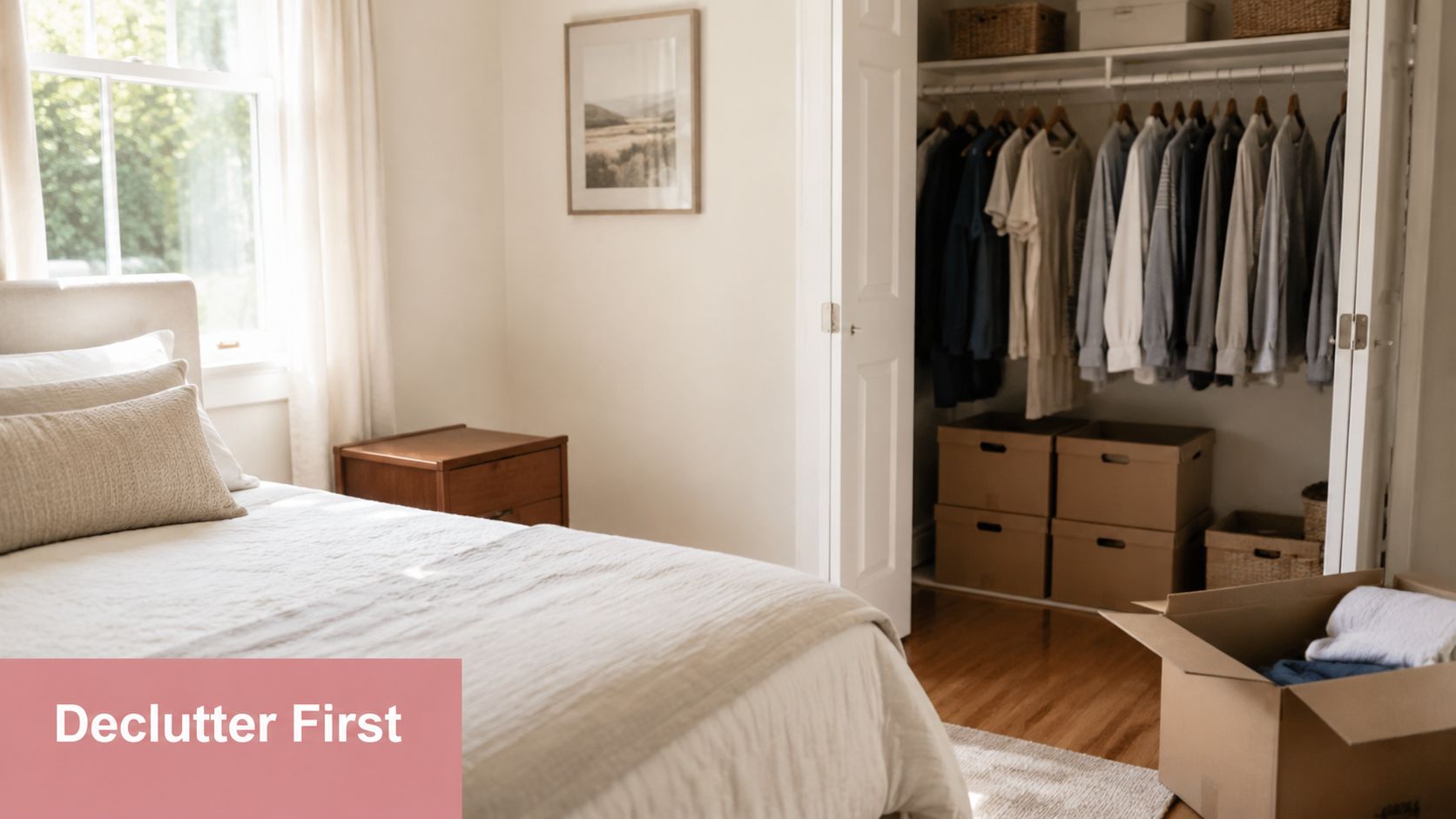
Empty the home as much as possible: Furniture-free rooms allow better access to baseboards, closet interiors, and floor edges.
Remove loose items: Packaging, hardware, paint cans, and small renovation leftovers slow the process and create safety issues.
Provide entry details: Gate codes, lockbox instructions, alarm notes, or key arrangements should be settled the day before.
Flag special concerns: If one bathroom has heavy buildup or one cabinet has adhesive residue, mention it in advance.
What not to waste time doing
Don't scrub before the crew arrives. Don't feel pressured to “clean for the cleaners.” Your job is logistics, not labor.
A practical example: if you spend an hour wiping counters but leave kitchen drawers full of shelf paper scraps and sawdust from a recent repair, the team still has to stop and rework the space. It's better to clear access than to do partial cleaning.
Choosing a Trustworthy Cleaning Partner in North Atlanta
Access is the biggest trust issue in move-in cleaning. You're often handing over keys, alarm instructions, or entry codes before your furniture is even inside. That's why professionalism isn't a luxury item in this service. It's part of the job.
In Georgia, a cleaning company should be properly registered, carry sufficient general liability insurance, and maintain safety data sheets for the chemicals it uses. One industry example notes that a Georgia-based cleaner must carry $1M general liability insurance and maintain an SDS library, as outlined in this guide to U.S. cleaning service compliance standards. Those details protect the client and set a baseline for responsible operation.
What to check before you hire anyone
A trustworthy company should be willing to answer basic questions clearly. If answers are vague, that's a problem.
Insurance and registration: Ask directly whether the business is insured and properly registered.
Scope in writing: You need a clear service list, especially for inside cabinets, appliance interiors, and window interiors.
Product transparency: Families with children, pets, or sensitivities should ask what products are used and whether eco-friendly options are available.
Problem resolution: Ask how missed items are handled and how quickly re-service happens when needed.
A lot of confusion starts with poor paperwork. If you want to understand what written protections matter, this guide to essential clauses for cleaning contracts is worth reviewing before you book.
Why local experience matters
Experience shows up in the details, not just in the sales pitch. A seasoned crew knows how to separate normal move-in cleaning from conditions that may require extra attention, such as pest debris, visible mold, or heavy post-repair dust. They also know how long detailed work takes and won't promise a whole-house reset in an unrealistically short window.
For homeowners in Kennesaw, Marietta, and the wider North Atlanta area, one local option is Aquastar Cleaning Services, LLC, which provides residential cleaning and move-in or move-out service with customizable scope and eco-friendly product options.
If a cleaner can't explain what happens when something goes wrong, you don't have a service plan. You have a gamble.
Your Move-In Cleaning Questions Answered
Do I need to be there during the cleaning
Not usually. Many clients arrange entry through a lockbox, keypad, garage code, or realtor access. What matters most is clear communication about how to enter, how to secure the home when finished, and how you want updates handled.
How far ahead should I book
As early as you can once you know your possession date. Move schedules change often, and cleaning works best when it happens before furniture delivery. If you wait until the truck is booked and utilities are being switched over the same day, your options get tighter.
Do cleaners bring their own supplies
Most professional teams do. It's still smart to ask in advance, especially if you want eco-friendly or low-fragrance products. If you have stone counters, delicate finishes, or a child with sensitivities, mention that before the appointment.
What if the home looks clean already
That's common. Visual cleanliness doesn't always mean the home has been reset at a move-in standard. Hidden residue in cabinets, dust on vents, soap film, and neglected floor edges are exactly why empty-home cleaning is its own service.
What happens if something is missed
That's where a satisfaction process matters. Industry data shows that 28% of post-move-in tenant disputes in large markets stem from undiscovered issues like bio-contaminants left by inadequate cleaning, according to this article on move-in cleaning disputes and liability concerns. A professional company with a clear satisfaction guarantee gives you a way to report issues and get them addressed before they turn into a bigger conflict.
Can a move-in clean handle everything hazardous
No. Standard move-in cleaning can address routine grime, dust, residue, and sanitizing. It doesn't automatically replace specialized remediation for visible mold, pest infestation, biohazards, or major contamination. If a cleaner finds that kind of condition, the right answer is to pause and discuss the next step, not to wipe over it and pretend it's solved.
If you're moving into a home in Kennesaw or the greater North Atlanta area and want a clear, detailed scope before move-in day, Aquastar Cleaning Services, LLC offers residential move-in and move-out cleaning with customizable options, practical quoting, and support for busy households that want the space cleaned before the first box is unpacked.
You're standing in the cleaning aisle, staring at two bottles that both promise a safer home. One says sanitizer. The other says disinfectant. Both mention germs. Both look useful. Neither makes the choice feel simple.
That confusion is normal. Most homeowners don't need more chemistry terms. They need a clear answer to a basic question: what should I use on the kitchen counter, the bathroom faucet, the kid's high chair tray, or the dog's food area?
The difference between sanitizers and disinfectants matters because the goal changes from room to room. Sometimes you're trying to make a surface safer for food prep. Sometimes you're trying to reduce the spread of illness. Sometimes plain cleaning is enough. When you know which is which, shopping gets easier, cleaning gets safer, and you stop using stronger products than the job requires.
Sanitizer or Disinfectant Which Do You Really Need
A homeowner I talk to often has the same story. They've got raw chicken on the cutting board, sticky fingerprints on the fridge handle, and a bathroom sink everyone touched during cold season. They grab one spray and use it everywhere because that feels easiest.
That's where mix-ups start.
The right question isn't “Which one is stronger?” The better question is “What am I trying to do on this surface?” If you're dealing with a food-contact area, your goal is different from cleaning a toilet handle after someone in the house has been sick. One job is about lowering bacteria on a surface used for food. The other is about killing a broader range of germs on a high-touch surface.
Here's the simplest way to think about the difference between sanitizers and disinfectants:
Household situation
Best choice
Why
Cutting board after washing
Sanitizer
Helps make a food-contact surface safer
Baby high chair tray after meals
Sanitizer
Good fit for food-contact surfaces
Toilet handle during flu season
Disinfectant
Better for high-touch surfaces where illness spread is a concern
Bathroom doorknob after someone recovers from a virus
Disinfectant
Used when viral transmission risk matters
Dusty bookshelf
Cleaner only
Dirt removal matters more than sanitizing or disinfecting
Coffee table with visible crumbs
Cleaner only, sometimes sanitizer
Depends on who uses it and how often it's touched
A lot of homeowners also want broader home health habits, not just product advice. If you're thinking about illness prevention beyond surface care, this guide to infection control strategies gives helpful context on where cleaning fits into the bigger picture.
For everyday home care ideas, Aquastar also keeps a library of practical articles in their house cleaning resource center.
Practical rule: Use the least aggressive product that still matches the job.
That one habit solves most of the confusion. You don't need a disinfectant for every surface in the house. You also don't want to rely on a sanitizer when someone's trying to stop the spread of illness from a high-touch bathroom surface.
The Science Behind the Clean A Numbers Game
The clearest way to understand the difference between sanitizers and disinfectants is to look at what the EPA requires each one to do.
What the numbers actually mean
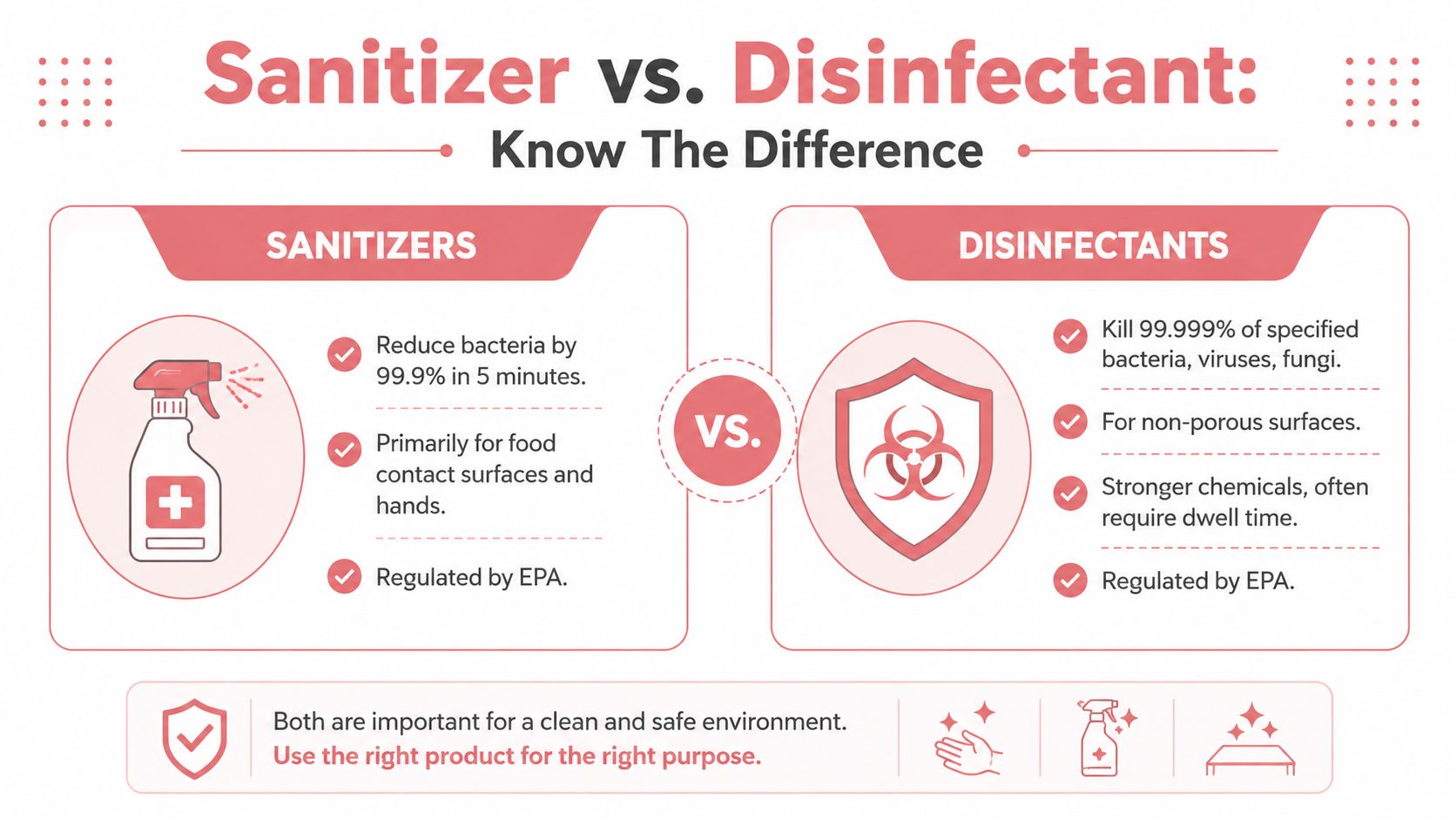
A sanitizer for a nonfood contact surface must reduce at least 99.9% of bacteria within a 5-minute contact time, which is a 3-log reduction, while a disinfectant for a nonfood contact surface must destroy at least 99.999% of bacteria, which is a 5-log reduction. That means disinfectants are 100 times more effective in bacterial reduction than general-purpose sanitizers, according to Solenis on the number of nines.
99.9% sounds close to 99.999%, but in germ reduction they are not the same job.
“Log reduction” sounds technical, but the idea is simple. Picture clearing marbles from a jar. A 3-log reduction removes far more than the eye can see, but a 5-log reduction goes much further. That extra jump is why disinfectants are used when a greater degree of pathogen elimination is critical.
The labels make both products sound like they do everything. They don't.
The EPA says sanitizing isn't intended to kill viruses, while disinfecting kills viruses and bacteria. Hillyard also notes that disinfectants are regulated as antimicrobial pesticides, usually used at higher concentrations and with longer contact times, while sanitizers are used at lower concentrations for shorter periods and are a fit for food-prep settings when used correctly. Their overview on cleaning, sanitizing, and disinfection is useful if you want the regulatory side in plain language.
That's why the spray-and-wipe habit causes problems. If the label says the surface needs to stay wet for a period of time, a quick swipe won't give the product time to work.
A simple shopping mindset
When you shop, don't ask which bottle is “best.” Ask:
Food surface or not: If it touches food, think sanitizer first.
Virus concern or not: If someone's sick or the area is high-touch, look harder at disinfectant labels.
Can the surface stay wet long enough: If not, the product may not perform as intended.
Does the home need gentler products: Homes with kids, pets, or sensitivities need extra label-reading.
If eco-minded cleaning matters in your routine, Aquastar shares more about eco-friendly cleaning choices that help homeowners reduce harsh chemical use without giving up good housekeeping habits.
A Practical Guide for Your Home When to Use Each
Theory is useful. The actual test is what you do at 7:15 p.m. with dinner half-made and the sink full.
For a residential kitchen, a sanitizer makes sense on food-contact surfaces like cutting boards and dishware to reduce bacterial load to a safe level, while a disinfectant fits high-touch bathroom surfaces like doorknobs and toilet handles where the goal is to kill viruses and help prevent illness transmission, as explained in this practical guide from Nyco Products.
In the kitchen
The kitchen is where people over-disinfect most often.
If you made a sandwich on a plate, wiped a few crumbs off the counter, and there was no raw meat involved, regular cleaning may be enough. If you washed a cutting board that held raw chicken, that's when sanitizing matters. The same goes for a child's high chair tray, reusable dishware, or a countertop section where food is prepared often.
Use examples like these:
Cutting board after raw chicken: Clean first, then sanitize.
High chair tray after lunch: Clean off food, then sanitize before the next meal.
Kitchen island with unopened mail on it: Clean if dusty or sticky. You usually don't need to sanitize or disinfect it just because it exists in the kitchen.
Sink after rinsing produce: Clean first. Sanitize if it's part of a food-prep routine.
In the bathroom
Bathrooms are where disinfectants earn their keep.
A toilet flush handle, faucet handle, light switch, and bathroom doorknob get touched constantly. If someone in the home has an upset stomach, a cold, or another contagious illness, these are the surfaces to focus on. The same is true for the trash can lid and the area around the toilet base if splashing is a concern.
Dirty surface first. Germ-killing product second. If grime is still sitting there, the product can't do its best work.
In living spaces and bedrooms
Not every remote control needs a chemical event.
In living rooms, bedrooms, and entryways, use a simple three-part filter:
Is the surface visibly dirty? Clean it.
Does it get frequent hand contact? Consider sanitizing.
Has someone been sick, or is the area high-risk? Disinfect high-touch non-porous spots.
Good practical examples include:
TV remote during normal weeks: Clean or sanitize.
TV remote after a family member has been sick: Disinfect if the label supports that surface.
Nightstand with dust and books: Cleaner only.
Door handles near a sick child's room: Disinfect.
Kids' areas and pet zones
Parents and pet owners need a little more judgment, not just stronger products.
A play table used for snacks may need sanitizing. A plastic toy bin with visible smudges may only need cleaning. A litter box area, pet feeding mat, or mud-tracked back door floor may need thorough cleaning first, then a product choice based on what the surface is used for and who contacts it.
For larger-space workflows, commercial settings often use tools designed for optimizing facility hygiene efficiency, but in a home, careful product choice and consistent routine matter more than fancy equipment.
If you like simple household alternatives for low-risk daily messes, these distilled vinegar cleaning ideas can be helpful for routine surface care where disinfection isn't the goal.
How to Read Product Labels and Find EPA Approval
The product label is where the truth lives. Front-of-bottle language is marketing. The back label tells you what the product is meant to do.
What to look for first
Start with the claim itself. Does the bottle say sanitizer, disinfectant, or both? Then check what organisms or uses are listed. Don't assume a disinfectant kills everything. Don't assume a sanitizer does anything for viruses.
The EPA's guidance is direct: “Sanitizing... is not intended to kill viruses,” while “Disinfecting kills viruses and bacteria.” The same EPA page also notes that many consumer products are only certified for bacteria unless they are specifically tested for broader claims, and it warns that overuse of disinfectants can contribute to “superbugs.” You can review that language on the EPA page about products that disinfect, sanitize, and clean.
The small print matters
A product label usually gives you four things homeowners often miss:
Surface type: Some products are for non-porous surfaces only.
Contact or dwell time: The surface may need to stay wet for the listed time.
Pre-cleaning directions: Some labels require you to clean visible soil first.
Use limitations: Food-contact surfaces often have different instructions from bathroom or utility surfaces.
If a bottle says “kills” but lists only certain uses, stick to those uses. If it requires pre-cleaning, don't skip that step.
A fast wipe on a dry cloth may spread product around, but it doesn't guarantee the label claim was met.
A quick label-reading routine in the store
When you're comparing two products, do this:
Read the actual product type.
Check whether it's meant for food-contact or nonfood-contact surfaces.
Look for the EPA registration information.
Find the dwell time.
Confirm whether the surface must be cleaned before use.
This is especially important with bleach-based products. Homeowners often use them too casually, including in places they shouldn't, like drains or mixed with other cleaners. If you want a safer perspective on that topic, Aquastar's article on using bleach in household drains is worth reading before you reach for the bottle.
Common label myths
A few myths cause most mistakes:
Myth
Better way to think
“If it smells strong, it must work better.”
Smell doesn't prove the right use or enough contact time
“Disinfectant is always better than sanitizer.”
Stronger isn't always the right fit
“One spray can handle every room.”
Surface type and risk level matter
“If I wipe immediately, I'm done.”
The label may require the surface to stay wet
Safe Use for Kids Pets and Eco-Conscious Homes
Families with children and pets usually don't want the strongest chemical in every room. They want a clean home without unnecessary residue, fumes, or overuse.
That's the right instinct.
Use stronger products only where they help
If a toddler eats off a high chair tray, a food-safe sanitizing approach makes more sense than defaulting to broad disinfection every time. If the dog tracks mud near the back door, the first job is cleaning the dirt away. If someone in the home is sick and keeps touching the same bathroom faucet, that's where a disinfectant becomes more reasonable.
For food safety in a home kitchen, one practical example is a diluted bleach sanitizer made with 1 teaspoon per 4 cups of water, left on a food-contact surface like a cutting board for at least one minute to meet the required food-surface sanitizing standard, according to Foodbuy's guide to cleaning, sanitizing, and disinfecting.
That example is useful because it shows two things homeowners often skip. Dilution matters. Contact time matters too.
Safer habits for sensitive households
A safer routine usually looks like this:
Ventilate the room: Open a window or run the fan when using stronger products.
Store bottles high and secure: Don't leave them under a sink a child or pet can reach.
Let surfaces dry as directed: Especially tables, floors, and pet areas.
Avoid using more product than needed: More isn't better if the job only calls for basic cleaning or sanitizing.
Keep food and water bowls separate from active cleaning: Clean the area first, then return bowls after surfaces are ready.
Everyday eco-minded choices
A lot of daily cleaning doesn't need disinfectant at all. Soap, water, microfiber cloths, and a good routine handle a surprising amount of household mess. For glass and mirrors, many homeowners also prefer gentler products that reduce heavy fragrance and residue. Aquastar shares one helpful option in this guide to non-toxic glass cleaner.
If your goal is a healthier home overall, not just cleaner counters, it also helps to think beyond sprays and wipes. Prevention matters. Sealing entry points, reducing crumbs, and using pet-friendly pest management can lower the need for stronger interventions later.
Choose products the same way you'd choose medicine. Match the treatment to the problem, not to your worry.
That approach keeps homes safer, especially where babies crawl, kids snack on the go, and pets spend time on the floor.
The Aquastar Approach to a Healthy and Clean Home
A healthy home isn't just about owning the right bottle. It's about using the right method on the right surface, in the right order.
That's where many homeowners get stuck. They know the difference between sanitizers and disinfectants in theory, but real life is busy. The bathroom needs attention, the kitchen needs resetting, the dog tracked in dirt, and the playroom floor is covered in snack crumbs and blocks.
Professional cleaning works best when it respects the science instead of treating every room the same. As noted by Hillyard, disinfectants are regulated as antimicrobial pesticides that kill various bacteria and viruses, but they must be applied to pre-cleaned surfaces with the proper dwell time to be effective, while sanitizers are used at lower concentrations for shorter periods and only claim bacterial reduction for the surfaces they're designed for. That distinction matters in a real home because overusing harsher products doesn't automatically create a healthier environment.
What this looks like in practice
A thoughtful home-cleaning approach usually follows a pattern:
Visible dirt gets removed first: Grease, crumbs, soap scum, and dust have to go.
Food areas get the right follow-up: Kitchen prep surfaces need a different approach from toilet handles.
High-touch zones get more attention when illness risk rises: Bathroom fixtures and commonly touched non-porous surfaces matter more then.
Sensitive households need product choices with care: Kids, pets, and scent-sensitive adults all change the equation.
Why homeowners value consistency
The biggest benefit of a structured routine is peace of mind. You don't have to guess whether the same spray should go on the high chair tray, the bathroom switch plate, and the dog bowl mat. You build a system that fits the surface and the situation.
That's also why consistent whole-home care beats random spot cleaning. A home feels better when the kitchen, bathrooms, bedrooms, and living areas all get attention with purpose, not just speed.
If you'd rather stop second-guessing every label and every room, Aquastar Cleaning Services, LLC can help you keep your home clean with a thoughtful, whole-home approach that respects food-contact surfaces, high-touch areas, and the needs of families with kids, pets, and eco-conscious preferences.
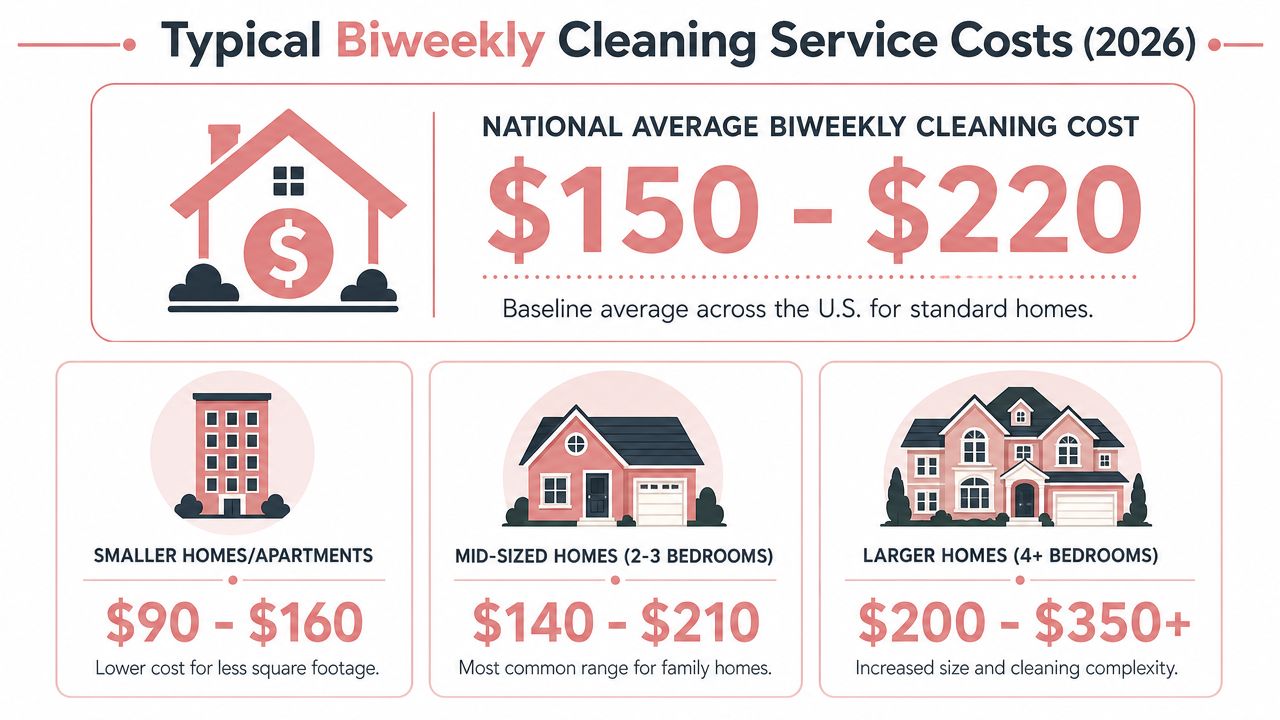
Your biweekly cleaning service cost depends on your home's size, condition, cleaning needs, and requested extras. For an Aquastar estimate, start with our house cleaning cost calculator, select Bi-Weekly Cleaning, and enter your home's square footage. Our team will confirm final pricing, the work included, and availability before booking.