Before attempting bird nest removal, leave the nest undisturbed and check the species, nesting activity, location, and applicable protections. A nest that looks empty is not automatically cleared for removal. For a nest in a vent, chimney, roof space, or another difficult location, seek qualified help before disturbing it or closing the opening.
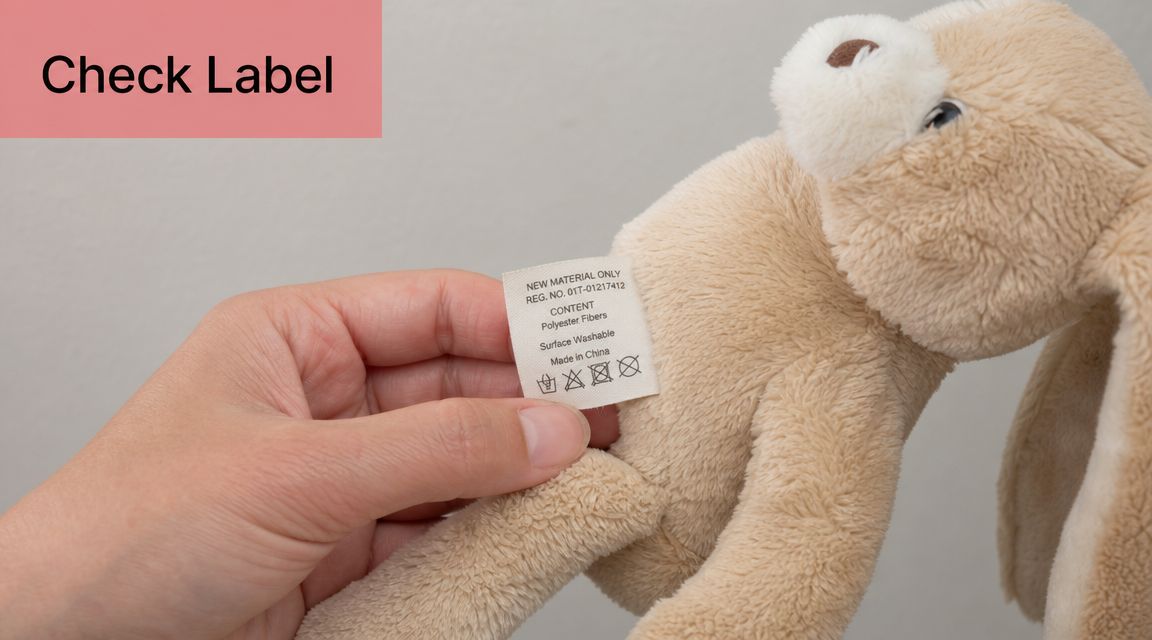
A favorite stuffed animal usually doesn't get dirty all at once. It happens in layers. Bedtime snuggles, car rides, snack crumbs, a little cough syrup on the ear, a mystery smell after a sleepover. Then one day you pick it up and realize this poor bear, bunny, or dinosaur needs help.
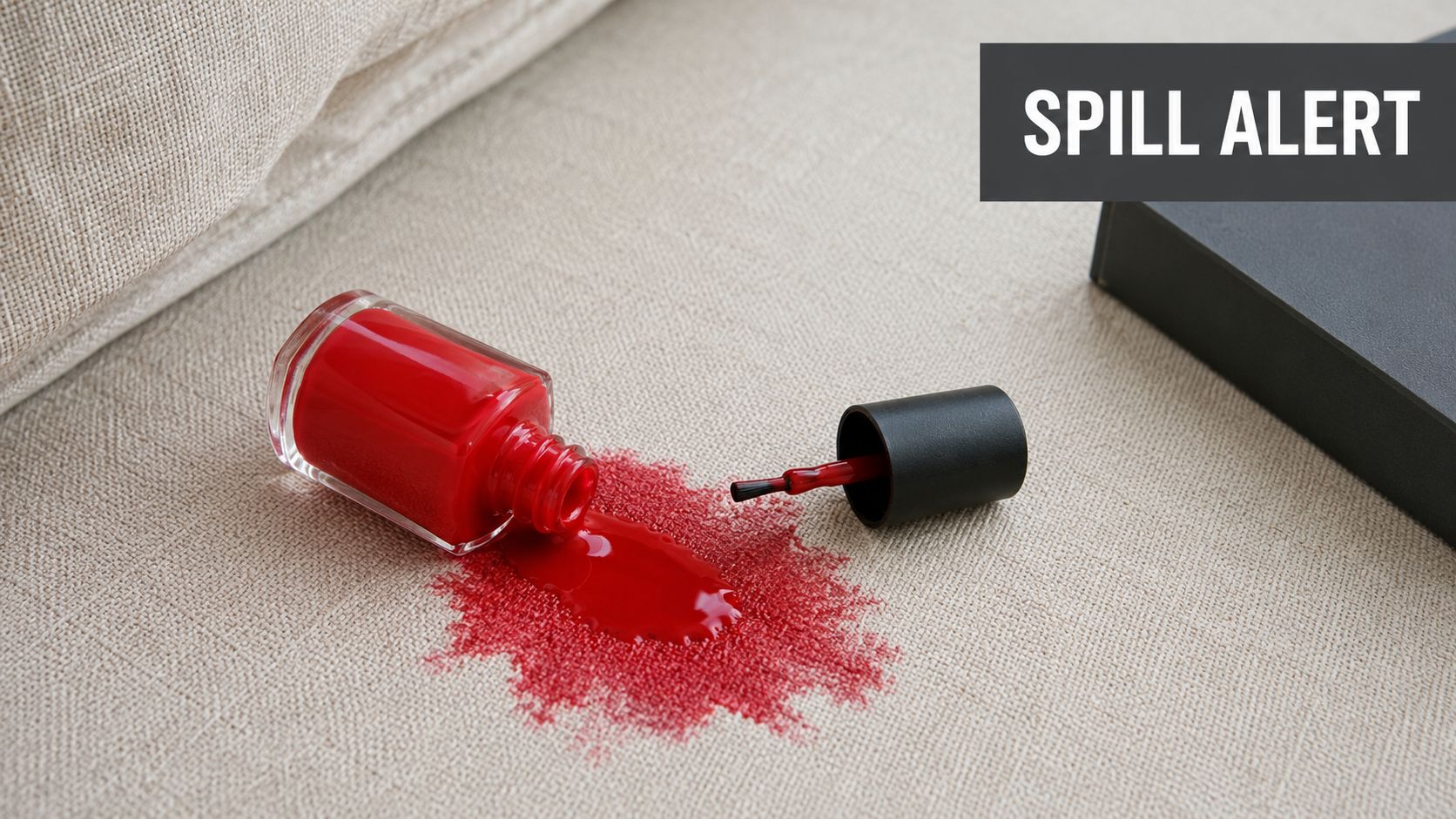
A toppled nail polish bottle on a sofa feels worse than it often is. The stain looks dramatic, the color spreads fast, and it's common to make the same mistake in the first few seconds. They wipe.
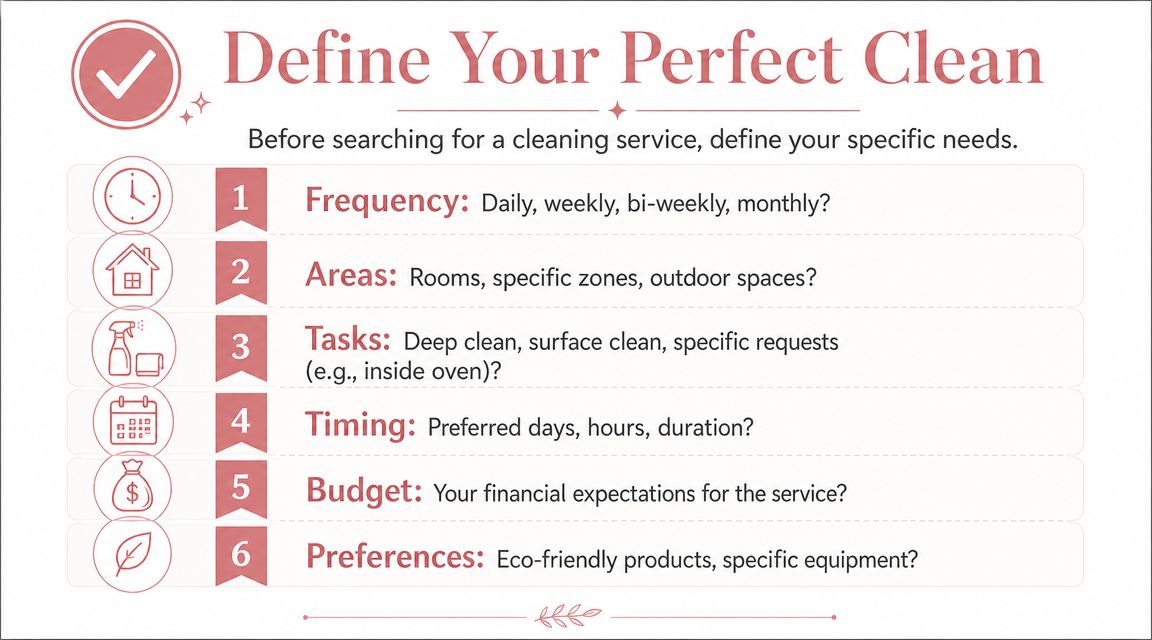
You need a cleaner fast. Maybe it's a wool blazer that picked up a mystery odor, a silk dress with a makeup mark at the collar, or a comforter you've been meaning to deal with for months. North Atlanta has plenty of options, but the hard part isn't finding a shop with good stars. It's finding one that fits the way you live.
You're probably doing what most North Atlanta homeowners do at first. You open a few tabs, search for cleaners near you, read a handful of reviews, and then get stuck because every company starts sounding the same.
Living with pets often means living with a film of fuzz on baseboards, a couch that seems to hold onto every hair, and that familiar cycle of sneezing right after you fluff a pillow or sit down on the rug. A lot of people think they're fighting pet hair alone. They're not. They're also dealing with pet dander, which is lighter, stickier, and much better at spreading through a home.
That's why random cleaning tips usually disappoint. If you want to know how to reduce pet dander in home settings in a way that yields lasting results, you need to work in layers. First, reduce what the pet releases. Second, remove what settles into fabrics and on surfaces. Third, clean the air so disturbed particles don't keep circulating. Then, if the home still feels loaded with allergens, use a professional deep clean as a reset.
Understanding the Battle Against Pet Dander
Pet dander isn't the same thing as pet hair. Hair is visible. Dander is made up of tiny skin flakes, and those flakes ride along with loose fur, fabric dust, and air movement. They collect in all the places homeowners tend to underestimate: drapes, upholstered dining chairs, throw pillows, bedding, closet corners, and HVAC return vents.
That sticky behavior is why people clean one room, feel better for a day or two, then notice symptoms again. Dander keeps moving. Sit on a sofa, shake out a blanket, or turn on the system fan, and particles can become airborne again.
Why a layered plan works better
The most effective approach is a hierarchy of control. Start with the animal, because that's the source. Then target the surfaces where dander builds up. After that, use filtration to capture what's still floating around.
Practical rule: If you only clean the floor but ignore the pet, the fabrics, and the air, you're doing maintenance on one quarter of the problem.
For homes with dogs that shed heavily, grooming and coat management matter because they affect how much material enters the house in the first place. If you want extra help on that side of the problem, this guide to reducing dog shedding is a useful companion to the cleaning steps below.
A second issue is consistency. Dander control works best when the house has a repeatable routine, not a once-a-month blitz. That's also why many homeowners benefit from building their cleaning habits around proven housekeeping systems like the practical articles collected in Aquastar's house cleaning resource library.
What people usually get wrong
A lot of homes waste effort on the least effective tasks. Air fresheners don't remove dander. Quick lint-rolling one cushion doesn't fix the upholstered chair beside it. Dry dusting often shifts particles around instead of trapping them.
What does work is simple and structured. Groom the pet. Clean the reservoirs. Filter the air. Repeat on a schedule you can keep.
Start at the Source with Proactive Pet Care
The first win comes before you plug in a vacuum. If the pet is releasing loose skin flakes and hair all over the house every day, the cleaning load never stops. Good grooming lowers what enters the home in the first place.
Brush outside when you can
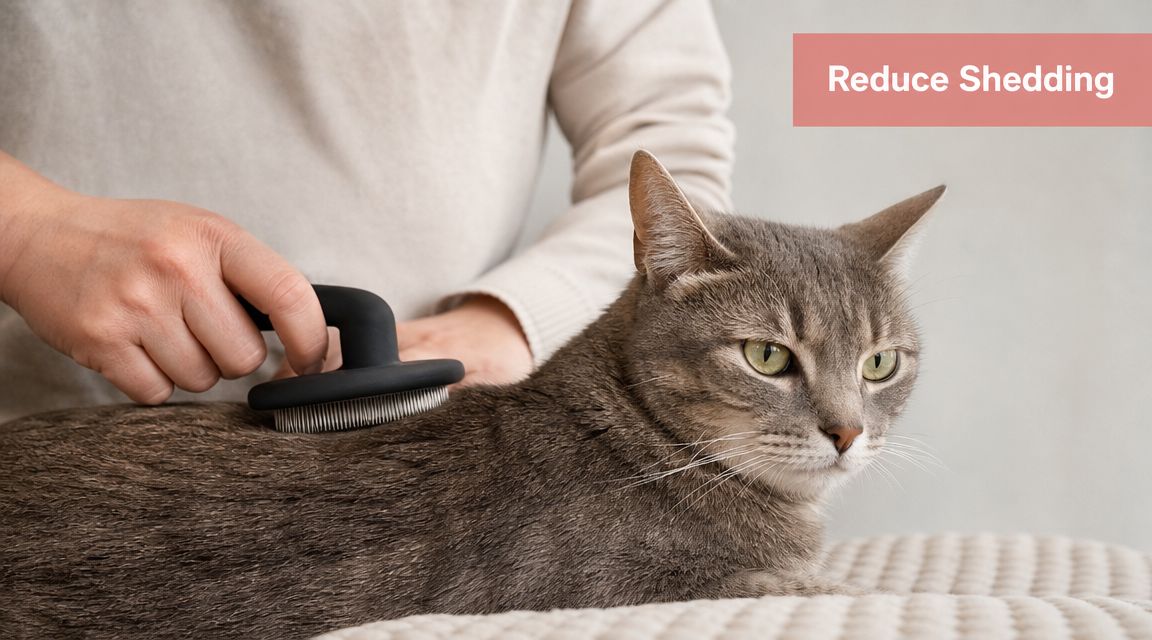
Brushing is one of the simplest forms of source control. Daily brushing, ideally outdoors, removes loose hair and skin flakes before they land on your rug, bed, or sofa. It also keeps those particles from getting worked deeper into upholstery by paws and body contact.
In practice, this can be very basic:
For dogs with heavier coats: Brush at the same time each day near the back door, patio, or garage threshold before they settle on indoor furniture.
For indoor cats: Use a slicker brush or grooming glove in one controlled spot, then vacuum that spot right after.
For multi-pet homes: Assign each pet a towel or mat during grooming so you're not spreading loosened debris across the room.
A practical workflow for dander control is to combine source control with particle capture. Brush and bathe pets on a schedule, then immediately remove released particles with HEPA-grade vacuuming and a true HEPA air cleaner, as explained in this guide on managing pet dander with source control and filtration.
Bathe carefully, not aggressively
Bathing can help, but overdoing it backfires. Harsh shampoos or overly frequent bathing can dry the skin and worsen flaking. That means more loose material, not less.
A better approach is to:
Use a pet-safe shampoo that supports skin health instead of stripping oils.
Follow veterinary guidance on bathing frequency rather than creating an arbitrary daily or near-daily routine.
Dry the coat thoroughly so damp fur doesn't leave extra residue on fabrics.
Vacuum right after grooming because a surprising amount of dander drops during drying and brushing.
If you're comparing coat-care products, this overview of deshedding shampoo for dogs helps explain what to look for in formulas designed for shedding control.
Support skin health from the inside too
A pet with irritated skin often sheds more flakes into the environment. While cleaning won't fix an underlying skin issue, owners can help by keeping up with fresh water, a good diet, and vet checkups when they notice itching, over-grooming, hot spots, or dull coat texture.
Grooming isn't cosmetic here. It's preventive cleaning before the mess ever reaches the couch.
For homeowners who want to keep the cleaning side gentler too, Aquastar shares practical approaches to environmentally friendly house cleaning, which can fit well in pet households where children, animals, or sensitive adults react to harsh products.
Your Weekly Dander-Busting Cleaning Routine
Once dander gets into the house, fabrics become the main storage zone. Carpets hold it. Sofas trap it. Bedding collects it fast. The fix isn't a vague promise to “clean more.” It's a recurring routine with the right tools.
The non-negotiable tools
If you're serious about reducing dander, use equipment that traps particles instead of pushing them back out.
Tool
What to use it on
Why it helps
Sealed HEPA vacuum
Carpet, rugs, upholstery, pet beds, stairs
Captures fine debris without re-aerosolizing it through exhaust
Damp microfiber cloths
Shelves, tables, baseboards, blinds
Picks up dander instead of flicking it into the air
Hot-water laundry cycle
Bedding, pet blankets, pillow covers
Removes buildup from the fabrics closest to people and pets
Washable mop head
Hard floors
Pulls settled debris off the floor after vacuuming
A weekly plan works better when each day has a narrow job. Here's a simple example I'd give a client who wants a realistic system.
Monday, reset the soft surfaces: Vacuum rugs, carpet edges, and the sofa. Lift cushions and get into seams where dander packs in.
Midweek, handle fabrics: Wash pet bedding, throw blankets, and your own bedding. Don't forget the pillow the dog sleeps on in the den.
Friday, whole-floor pass: Vacuum all floors, then mop hard surfaces after the loose material is removed.
Weekend, detail the contact points: Wipe side tables, windowsills, baseboards, crate tops, and the ledges behind furniture.
One of the best habits is to clean in the order dander moves. Start high with shelves and blinds, then furniture, then floors. If you vacuum first and dust second, you'll have to do the floor again.
Here's a visual summary of a simple routine you can keep up with:
Where people waste effort
Dry dusters, fluffy feather dusters, and quick passes with lightweight vacuums often make people feel productive without removing much. The same goes for heavily scented sprays used in place of physical removal. If dander is sitting in woven upholstery or buried in carpet pile, fragrance doesn't solve anything.
A better room-by-room sequence looks like this:
Bedroom first. This room matters most because long exposure during sleep can be miserable for sensitive people.
Living room next. Focus on couch arms, under cushions, drapes, and area rugs.
Pet zones last. Crates, feeding mats, favorite corners, and the area around windows where pets sit.
If a room has fabric, it needs more than a quick wipe. Dander settles into texture.
For stubborn residue on hard surfaces, simple methods can still help when used correctly. Aquastar's article on cleaning with distilled vinegar in practical ways can be useful for general housekeeping, though for dander itself, physical capture with microfiber, vacuuming, and laundering does the heavy lifting.
Clear the Air with Smart Filtration Strategies
Surface cleaning deals with what has landed. Filtration deals with what keeps floating back up. Walk across a rug, fluff a dog bed, or open a curtain, and tiny particles can re-enter the air. That's why a house can look clean and still feel irritating.
Use filtration as support, not as the whole plan
For people sensitized to furry pets, the most effective long-term strategy is pet removal, according to a peer-reviewed review of indoor environmental interventions. That same review notes that central HVAC systems with properly maintained filters can help reduce transport of airborne allergens indoors, but they are supportive measures rather than substitutes for source control. You can read that guidance in the review on indoor environmental interventions for pet allergen exposure.
That distinction matters. Air cleaners help, but they can't compensate for a pet sleeping on every bed, thick fabric everywhere, and missed vacuuming.
Best places to run an air purifier
Placement matters more than people think. A purifier hidden behind a chair in a dead corner won't help as much as one placed where air can move freely.
Try this setup:
Bedroom: Put a unit in the room where the most sensitive person sleeps. Keep that room pet-free if possible.
Main living area: Place a purifier near, but not blocked by, the pet's favorite zone.
Home office: If you work from home and symptoms hit during the day, this room often deserves its own unit.
If you're comparing options, looking through examples of specialized air cleaners for pets can help you understand the kind of machines designed for homes dealing with recurring pet debris and odor.
Make your HVAC system part of the solution
Many homeowners ignore the biggest air-moving machine in the house. Your HVAC system already circulates air through multiple rooms. If the filter is neglected, it can't do much to support dander control. If it's properly maintained, it becomes a useful second line of defense.
A practical setup looks like this:
Area
Good practice
Common mistake
HVAC return air
Keep vents clear and replace filters on schedule
Blocking returns with furniture or forgetting filter changes
Portable purifier
Run it in high-use rooms consistently
Turning it on only when guests arrive
Bedroom policy
Keep pets out if allergies are a problem
Letting pets sleep on bedding and hoping the purifier handles it
Clean air strategy works best when the room is already under control. Filtration should support cleaning, not replace it.
Choose Dander-Resistant Surfaces and Furnishings
If you've ever cleaned a leather chair and a plush sofa back to back, you know the difference immediately. One wipes down in minutes. The other keeps releasing hair and fine debris every time you touch it. Material choice changes how hard the whole house is to maintain.
Compare what traps dander and what releases it
Some surfaces are easier to keep clean.
Higher-trap material
Lower-trap alternative
Practical result
Wall-to-wall carpet
Hardwood, laminate, tile, or vinyl
Hard floors are easier to vacuum and damp mop thoroughly
Heavy fabric sofa
Leather or tightly woven seating
Smooth surfaces don't hold as much embedded debris
Thick drapes
Blinds or washable curtains
Window coverings become easier to wipe or launder
Decorative throw pillows everywhere
Fewer washable covers
Less fabric means fewer reservoirs
This doesn't mean you have to replace your whole home at once. Small swaps matter. A washable slipcover on one favorite chair can make maintenance dramatically easier than trying to deep-vacuum every seam all week.
Budget-friendly changes that help right away
For most households, the realistic move is not renovation. It's editing the room.
Use washable covers: Put them on sofas, pet-favorite armchairs, and window-seat cushions.
Cut back on fabric clutter: Fewer throws, fewer decorative pillows, fewer layered textiles.
Choose easier pet zones: A washable mat under the pet bed is much easier to manage than wall-to-wall carpet beneath it.
Replace hard-to-clean décor: Open baskets, fabric bins, and heavy valances all collect dust and dander.
A lot of families with pets also struggle with carpet choice. If you're weighing surfaces for a future update, Aquastar's guide to the best carpet choices for kids and pets is a practical place to compare trade-offs.
What this looks like in a real room
Take a typical family room. Replace the shag area rug with a lower-pile option or remove it. Swap three decorative throw blankets for one washable blanket. Put a washable cover on the dog's favorite couch cushion. Change long drapes to something you can wipe or toss in the wash.
That room becomes faster to clean every single week. More importantly, your cleaning starts removing dander instead of chasing it.
Quickly Reduce Dander Before Guests Arrive
Your friend with pet allergies is coming over tomorrow night. You don't need a perfect house. You need a short, focused sprint that lowers exposure in the rooms they'll use.
The day before
Start with the spaces your guest will sit in and walk through. Vacuum the living room, hallway, and guest bathroom floor. Then vacuum upholstered seating, especially armrests, cushion seams, and the spot where the pet usually naps.
Next, wash what can be washed. Throw blankets, removable cushion covers, and any bedding if your guest may use a bedroom all matter more than polishing decorative items.
The fastest visible improvement usually comes from cleaning fabrics first, not counters.
If you have portable air purifiers, run them in the main living area and the guest room or bedroom the night before. Keep the pet out of those rooms once they've been cleaned.
The day of the visit
In the morning, do a quick damp-cloth wipe of coffee tables, side tables, dining chairs, and bathroom surfaces. Don't dry dust. You want to capture particles, not send them airborne right before guests arrive.
A few hours before they come over:
Confine the pet to one easy-to-clean zone
Do a final vacuum pass on entry paths
Change into clean clothes if your pet has been on you
Open seating options that the pet hasn't used recently
If the visit is longer than a dinner, set up one lower-exposure room in advance. Freshly laundered bedding, no pet access, and an air purifier running steadily can make that room much more comfortable than the rest of the house.
When to Call for a Professional Deep Clean
Sometimes the problem isn't your routine. It's the backlog. Dander can build up deep in carpet fibers, under large furniture, in upholstery seams, along baseboards, and in the fabric layers people don't clean well during weekly upkeep. That's when a deep clean acts like a reset.
Signs DIY cleaning isn't enough
A professional deep clean makes sense when:
You've just moved in: The previous pet owner's residue may still be in the home.
You're preparing for a baby or a sensitive family member: A baseline reset can make regular upkeep much easier.
Your home still feels dusty fast after cleaning: That usually means reservoirs remain in deeper layers and neglected edges.
You've fallen behind for months: Weekly maintenance works best after accumulated debris is removed.
The benefit isn't just labor. It's thoroughness across the whole home at once. When a team cleans under beds, along trim, across upholstery contact points, and through the rooms that get skipped in normal life, your regular routine starts working better afterward.
For pet households, that reset is often the difference between “I'm always cleaning” and “the house stays manageable.”
If pet dander keeps building up faster than you can control it, Aquastar Cleaning Services, LLC can help you reset the home and make your regular upkeep easier to maintain. For homeowners in Kennesaw and the greater North Atlanta area, their customizable house cleaning services include recurring visits, one-time deep cleans, move-in and move-out cleaning, and eco-friendly product options for households with pets, children, or sensitivities.
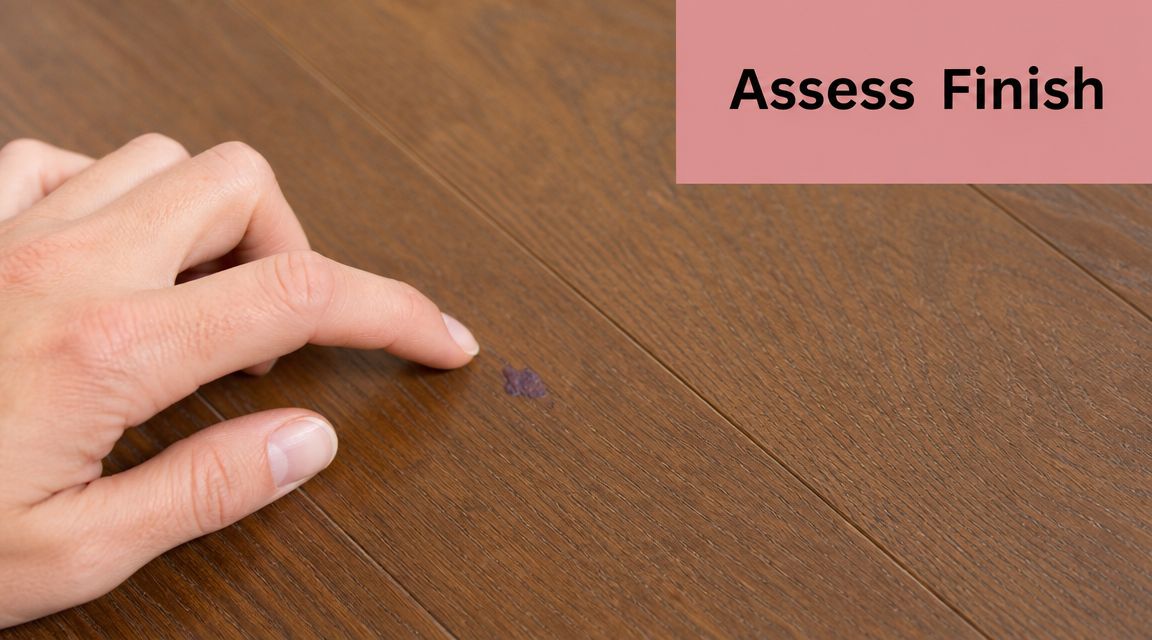
Wondering how to get nail polish off hardwood floors? Start by protecting the existing finish. Gently blot fresh polish without spreading it, then check the flooring or finish manufacturer's instructions before treating any remaining mark. Dried polish, an unknown finish, or visible surface damage calls for advice from a wood-floor professional rather than repeated experiments with solvents.
You usually notice it all at once. The fingerprint haze around the light switch. The dark rub line in the hallway where bags and shoes keep grazing the paint. The faint film in the kitchen that makes the whole room look a little dull even after the counters are clean.
Most walls don't need aggressive scrubbing. They need the right method. If you clean the walls with too much water, the wrong sponge, or too much pressure, you can leave shiny spots, streaks, or color loss that look worse than the original grime. That's why the safest approach starts with knowing what you're cleaning. Paint finish matters. Material matters. Even the order matters.
Why Your Walls Need More Than a Quick Wipe
You finish the usual cleaning, step back, and the room still looks off. The counters are clear. The floor is done. But the wall by the light switch has a dull handprint haze, the hallway has a gray scuff line, and the kitchen paint looks slightly sticky near the stove.
That is usually the point where people grab a damp rag and scrub the obvious mark. It works for about thirty seconds. Then the spot flashes in the light, the edges dry unevenly, or the paint turns a little shiny. I see this most often on flat and matte paint, which can hold soil easily but also marks up fast if you use too much pressure.
Walls collect more than dust. They pick up body oils, cooking residue, aerosol overspray, pet contact, and moisture film. Different rooms leave different problems behind, and different surfaces react differently to cleaning. A quick wipe can smear greasy buildup on satin paint, burnish matte paint, or push water into wallpaper seams.
The small marks that change a room
A wall does not need heavy staining to make a room feel tired. In real homes, the trouble spots are predictable:
Near switches, door frames, and thermostats you usually see finger oils and darker smudges.
In hallways and stairwells repeated contact leaves rubbery gray scuffs and low-level abrasion.
In kitchens a thin film of grease settles slowly and makes paint look dull.
In bathrooms and laundry areas humidity helps residue cling, especially on textured surfaces.
On glossy paint and tile marks show as streaks.
On matte paint and unsealed surfaces the bigger risk is color lift or shiny rubbing marks.
One good habit is to check the wall in daylight from an angle. That shows residue, streaking, and patchy cleaning fast.
Wall cleaning works best as a targeted job. Some walls need a full wash. Some need spot work with a lighter touch. The key is matching the method to the finish so you do not trade dirt for damage. If you want a practical routine that fits into regular upkeep, these house cleaning tips from Aquastar help keep wall buildup from getting out of hand. If you prefer lower-residue products, there are also sustainable cleaning options that can work well on washable surfaces when used sparingly.
Gather Your Damage-Free Cleaning Toolkit
The best wall-cleaning kit is simple. What matters isn't having a cabinet full of products. It's having tools that control dirt, moisture, and pressure.
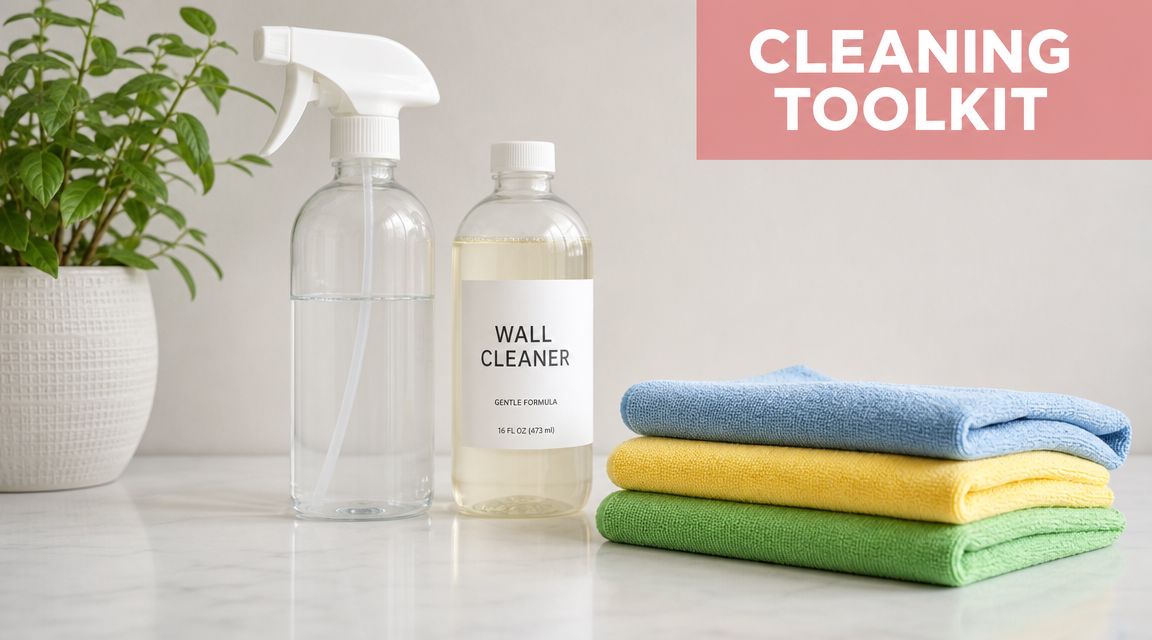
A pro setup usually includes microfiber cloths, two buckets, a soft sponge, a vacuum with a brush attachment, and one mild cleaner. That's enough for most painted walls in good condition.
What each tool actually does
Microfiber cloths trap loose dust and grime instead of smearing it around. Old T-shirts and bath towels tend to push soil across the surface.
A vacuum brush attachment handles cobwebs, baseboard-edge dust, and dry debris before moisture turns it into mud.
Two buckets keep your wash water separate from your rinse water. That sounds fussy until you see how much cleaner the wall stays.
A spray bottle helps with control. Spray the cloth, not the wall, when you're working on delicate paint.
A soft absorbent drying cloth removes leftover moisture before it dries into marks.
Technical guidance for painted walls is consistent on this point. Use non-abrasive materials, avoid oversaturating sponges, rinse when needed so residue doesn't stay on the surface, and use a two-bucket method with a soft drying cloth, as noted in this paint-safe wall cleaning guidance.
The safest starter solutions
For most walls, start with warm water plus a small amount of dish soap. That's the workhorse mix. It's gentle, easy to control, and suitable for routine soil.
For grease-prone spots, add a little white vinegar to the cleaning approach. For stubborn marks, use baking soda paste only as a targeted treatment, not as an all-over scrub.
If you prefer low-waste refills and gentler product choices, these sustainable cleaning options are worth a look. The big win is control, not fragrance or foam.
For households trying to reduce stronger chemicals, Aquastar also shares practical ideas on eco-friendly home cleaning that fit everyday maintenance.
One quick demo helps more than a long explanation:
Use enough solution to lift dirt, not enough to soak drywall. A wall should feel lightly cleaned, not freshly mopped.
Clean Painted Walls Based on Their Finish
Most wall-cleaning mistakes arise when people treat every painted wall the same. The safer approach is to match the method to the finish.
Most guides mention mild soap and warm water, but they often leave out the biggest risk. Flat and matte paints burnish and lose pigment more easily than satin or semi-gloss. Lowe's guidance, as discussed in this finish-aware wall cleaning article, advises testing a hidden area first and starting with the gentlest method before you escalate.
Flat and matte paint
Flat paint hides wall imperfections well. It does not forgive rough cleaning.
If you have a smudge near a bed, sofa, or switch plate on a matte wall, start dry. Use a microfiber cloth or vacuum brush first. If the mark remains, lightly dampen a cloth and dab the spot. Don't scrub in circles. Don't lean in hard. Don't keep reworking the same area.
A practical example: a dark thumbprint beside a closet door often comes off with a barely damp cloth and one gentle pass downward. Three extra passes usually create the shiny patch people regret.
Best approach:
Start dry first and remove dust.
Use minimal moisture on the cloth.
Work in a small test spot behind furniture or near trim.
Stop early if the paint starts looking lighter or shinier.
Eggshell and satin paint
Eggshell and satin are easier to live with. They still need care, but they tolerate light washing much better than flat paint.
This is the finish I'd choose for homes with kids, pets, or busy hallways because routine marks come off more reliably. For ordinary scuffs, use a mild dish soap solution on a microfiber cloth, wash a small area, then wipe with clean water and dry.
A common real-life job is the dining-room chair line. The backs of chairs tap the wall over time and leave a dusty gray arc. On satin paint, that usually responds well to gentle, straight-line wiping with a slightly damp cloth. If the first pass lightens the mark, switch to a clean section of cloth instead of rubbing harder with the dirty one.
On satin finishes, pressure causes more problems than the cleaner does.
Semi-gloss and gloss paint
Semi-gloss and gloss are the most washable of the common wall finishes. You'll often see them on trim, doors, kitchens, bathrooms, and laundry rooms because they handle moisture and repeated cleaning better.
That doesn't mean they're indestructible. Abrasive pads can still scratch them, and soap residue can still dull the surface if you skip the rinse step.
Good uses for this finish-specific method:
Greasy fingerprints by pantry doors Use a mild soap solution, wipe with a soft sponge or microfiber cloth, then rinse and dry.
Splash marks on painted kitchen walls Clean in small sections so the residue doesn't dry before you remove it.
Bathroom trim and doors Use slightly more moisture than you would on flat paint, but still wring the cloth well.
A simple finish guide to remember
Paint finish
Safest method
What to avoid
Flat or matte
Dry dust first, then barely damp spot cleaning
Scrubbing, soaking, abrasive pads
Eggshell or satin
Mild dish soap solution with microfiber, then rinse and dry
Heavy pressure, dirty rinse water
Semi-gloss or gloss
Gentle washing in small sections, rinse, then dry
Abrasive scrubbers, leaving cleaner residue
Safely Wash Wallpaper and Tiled Walls
Wallpaper and tile need different instincts. With paint, you're protecting the finish. With wallpaper, you're protecting both the surface and the adhesive. With tile, the tile itself is usually durable, but the grout and residue buildup need attention.
Wallpaper needs a dry-first mindset
Start by figuring out what kind of wallpaper you have. Vinyl-coated wallpaper is usually more forgiving than natural fiber or older paper wallpaper. If you're not sure, assume it's delicate.
Use the vacuum brush attachment or a dry microfiber cloth first. For dusty wallpaper in a guest room or hallway, that may be all it needs. If you have a small mark on a washable wallpaper, test a hidden area and wipe gently with a barely damp cloth. Never soak seams or edges. That's where lifting starts.
A practical example: if you see a handprint next to a stair rail on wallpaper, clean the spot only. Don't wash the whole panel unless the material is clearly washable and the test area dries clean.
Tiled walls need residue control
Bathrooms and kitchen backsplashes collect different messes. Bathroom tile gets soap film, moisture residue, and mildew-prone buildup. Kitchen tile gets grease mist and cooking splatter.
Historically, wall cleaning has long been part of routine home hygiene in moisture-prone spaces. Cleaning guidance cited in this home hygiene overview advised consumers to use bleach or bleach-based cleaners to remove mildew and to clean shower walls while surfaces are wet.
For regular tiled walls, this works well:
Bathroom tile after showers Wipe while the surface is still damp, especially where soap film collects.
Kitchen backsplash tile Use a mild soap solution first. For stubborn greasy film, bring in a little vinegar.
Grout lines Use a soft brush or old toothbrush with baking soda paste for targeted grime.
If you're dealing with ceramic surfaces and grout haze, this detailed guide on how to clean ceramic tile is a useful companion.
Don't attack grout with brute force. Short, controlled brushing with the right paste beats hard scrubbing every time.
How to Remove Stubborn Scuffs and Stains
The mark that worries homeowners most is usually a small one. A black scuff in the hallway. A greasy thumbprint near the pantry. Tape residue that seems harmless until it pulls color or leaves a shiny patch. The safest fix depends on what made the mark and what kind of wall you're touching.
Start by slowing down. On matte paint, hard rubbing can burnish the surface and leave a shiny spot even after the stain is gone. Satin and gloss paints give you more room to work, but they still streak if cleaner is too strong or if residue is left behind. Painted drywall also behaves differently from tile, sealed paneling, or washable wallpaper.
Match the treatment to the mark and the finish
A sneaker scuff, cooking grease, crayon, and adhesive each need a different approach. Use the least aggressive method that has a real chance of working.
Stain Type
Recommended Cleaner
Technique
Scuff marks
Damp microfiber cloth, then a tiny amount of baking soda paste if needed
Rub lightly in a small area, wipe clean, and dry at once. Use extra caution on matte paint
Grease
Mild dish soap mixed with warm water, then a little vinegar if soap leaves film
Clean in small sections, rinse with a separate damp cloth, then dry to prevent streaks
Crayon
Warm damp cloth first, then mild soap
Soften the wax, lift gently, and avoid pressing color deeper into flat paint
Ink
Mild cleaner on a cloth first
Blot, don't scrub. Test first, especially on low-sheen paint and wallpaper
Sticky residue
Mild soap or a small amount of vinegar on a cloth
Loosen gradually and peel or lift with patience. Don't scrape painted drywall
For greasy film or adhesive haze, white vinegar often helps break residue without turning the job into heavy scrubbing. Our guide to cleaning with distilled vinegar gives a few safe ways to use it around the house.
What works, and what causes new damage
Use a fresh part of the cloth every few passes. Dirty microfiber redeposits grime and creates a faint halo that shows up after the wall dries.
Keep water under control. A cloth should be damp, not loaded. Too much moisture can soften paint, creep into seams, and leave drip marks that are harder to fix than the original stain.
Abrasive pads are where people get into trouble fast. They can remove the mark, but they also flatten texture, dull satin finishes, and leave gloss paint looking scratched under side light.
Magic erasers need the same caution. They work by micro-abrasion. I only use them as a last resort on durable finishes, and never as the first choice on matte paint unless the owner understands it may change the sheen.
For sticky leftover residue from tape, labels, or wall decals, this DIY guide for clean walls gives helpful removal ideas. Test first, especially on flat paint and printed wallcoverings.
Two common problem spots
The wall beside a kitchen trash pull-out often collects a gray, greasy film around hand height. Dry dust it first so you're not grinding grit into the paint. Then wipe with a mild soap solution using a microfiber cloth. If a dull film remains, follow with a light vinegar wipe, rinse with a clean damp cloth, and dry the area so satin or semi-gloss paint doesn't streak.
Kids' rooms are different. Crayon near the baseboard usually has a waxy layer plus a color stain underneath. Warm the wax with a damp cloth, lift gently, and then clean only the remaining color. On matte paint, stop as soon as the mark is acceptable. Chasing perfection often leaves a shiny patch that stands out more than the original scribble.
Wall Cleaning Maintenance and When to Call Aquastar
A wall usually does not look dirty all at once. The change is gradual. Light switch smudges darken, hall corners pick up hand oils, and kitchen walls collect a thin film that makes paint look tired long before it looks obviously stained.
Regular upkeep prevents the kind of scrubbing that causes trouble later. That matters most on flat and matte paint, where aggressive cleaning can leave shiny burnished spots. Satin and semi-gloss give you a little more room, but they still show streaks if cleaner residue is left behind or if one patch gets overworked.
A simple maintenance rhythm works better than waiting until every room needs a full wash.
A practical maintenance rhythm
Weekly or as needed Spot clean high-touch areas like light switches, door frames, stair walls, and the corner people brush past with bags or laundry baskets.
Monthly Check kitchens, bathrooms, and kids' rooms for splatter, humidity film, and scuffs. These rooms usually need attention first.
Seasonally Dust walls, vents, trim lines, and the tops of baseboards before grime settles in. On textured walls, dry removal first makes later washing much safer.
Before hosting, moving, or listing a home Do a full wall check in daylight. Side light reveals streaks, drip marks, and sheen changes that overhead lighting hides.
I tell homeowners to match the cleaning effort to the finish, not just the stain. Matte paint gets the gentlest touch and the fewest repeat passes. Satin can handle light washing better, and gloss usually cleans up fastest, but glossy paint also shows every streak if you rush the drying step.
Sometimes the smarter call is to stop before a small mark becomes a bigger cosmetic problem. If the wall has unknown paint, older touch-up patches, smoke residue, grease spread across a large area, or wallpaper seams starting to lift, a DIY wipe-down can create uneven color or visible clean spots.
For homeowners in North Atlanta who want help with recurring upkeep, move-related cleaning, or a careful top-to-bottom refresh, Aquastar offers house cleaning services built around real homes and realistic schedules.
If you'd rather skip the trial and error, Aquastar Cleaning Services, LLC can help with deep cleaning, recurring housekeeping, and move-in or move-out cleaning across Kennesaw and the greater North Atlanta area. If your walls, trim, kitchens, and bathrooms need a careful refresh, reach out for a personalized quote and get the job handled without risking streaks, burnishing, or paint damage.
You step into the shower, look down at the grout, and see it again. Dark specks in the corners. A pink film along the caulk. Maybe a gray shadow on the ceiling above the spray line. It's one of those problems that makes a bathroom feel dirty even when the rest of the room is clean.